
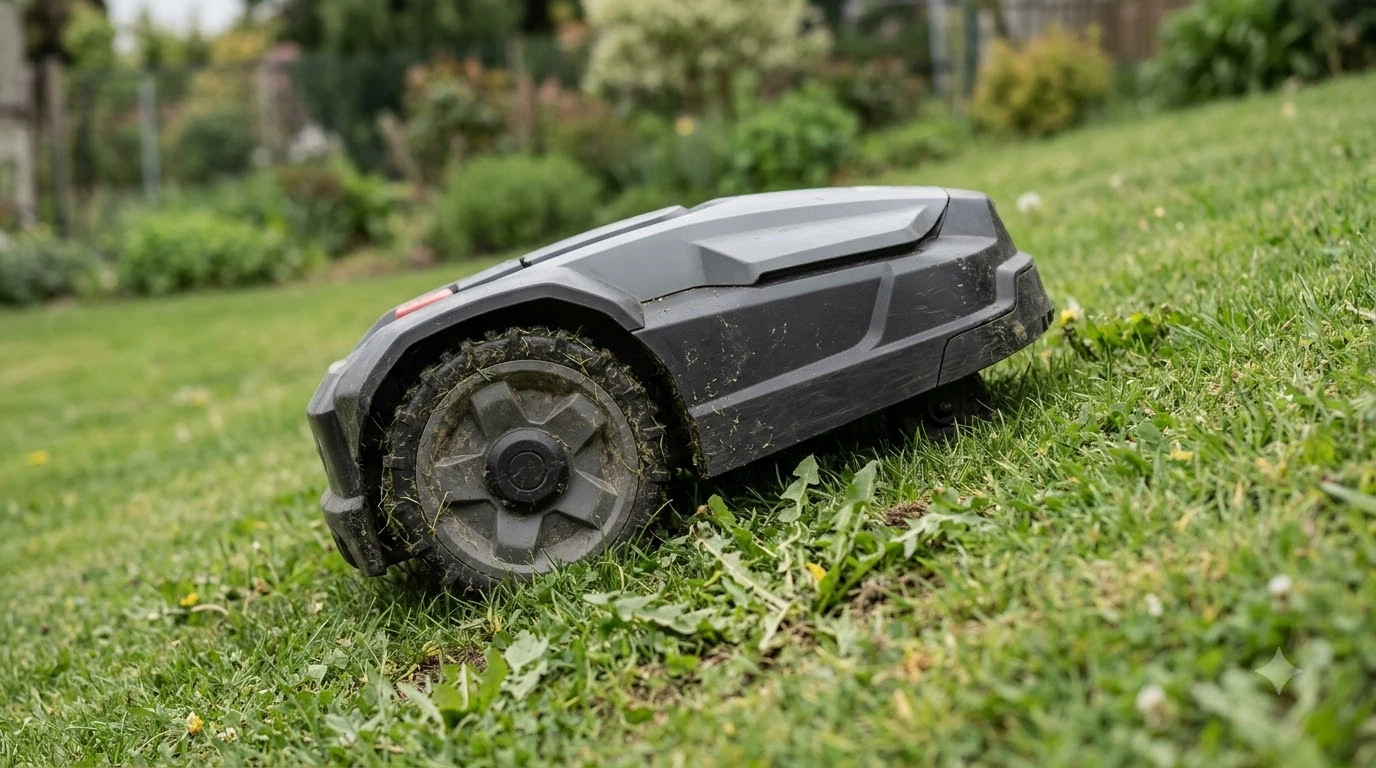

A robot mower for a yard with flagstone walkways set in grass works well when the stones sit flush with the soil and the mower can cross or turn on them without catching its deck or mistaking the path for an obstacle. Getting clean results depends on three details: stone height relative to the turf, how the mower navigates boundaries, and how wide the grass joints are between slabs. With a few layout adjustments, an automated mower can trim right up to the stone edges and save hours of weekly string-trimming.
The short answer
- Flush stones are the golden rule: Flagstone set level with the soil lets wheels and pivot-style razor blades pass overhead without scraping rock or jamming front casters.
- Vision sensors need overrides: Camera-guided mowers often treat pale or wide flagstones as non-grass barriers unless you create a vision-off zone or RFID crossing channel.
- Boundary wires give exact edge control: Placing a perimeter wire roughly 4 inches from flush stone edges lets the mower straddle the border and cut grass right against the rock.
- Wide turf joints stay neater than narrow gaps: Grass strips narrower than a mower’s cutting disc leave ragged tufts that still need occasional string-trimmer touch-ups.
- Higher cut settings protect blades: Raising the cutting height keeps spinning razors safely above minor seasonal frost heave or settled stone corners.
Why flagstone walkways challenge robot mowers
Natural flagstone introduces irregular edges, color shifts, and subtle height changes that confuse sensors and snag low-slung mower decks.
Unlike poured concrete sidewalks with crisp, straight borders, flagstone paths combine jagged sandstone, slate, or limestone slabs with living turf or creeping groundcover. Because natural stone varies in thickness, individual slabs frequently settle unevenly over wet springs or freeze-thaw cycles. A lip of even half an inch can catch a small front caster wheel, causing the robot to halt, reverse repeatedly, or trigger a tilt error.
Blade safety is the second mechanical hurdle. Most residential robot mowers use small, free-swinging razor blades mounted on a spinning disc beneath the chassis. According to the Segway Navimow i-series User Manual, these blades rely on centrifugal force to stay extended and fold inward if they strike a hard object, yet repeated strikes against raised stone lips dull the edges fast and chip the steel. Keeping the cutting deck high enough to clear the highest stone corner prevents premature blade wear.
Navigation systems react differently to stone depending on how they see the yard. Older random-bounce machines with buried boundary wires simply drive until they detect the wire signal, oblivious to whether they are rolling over grass or rock. Newer AI-camera and LiDAR models actively distinguish green turf from non-grass surfaces. Without map adjustments, a vision-equipped mower may brake sharply at the edge of a wide flagstone path, treating the walkway as an impassable wall and stranding itself on one side of the garden.
How different navigation systems handle stone paths
Choosing the right guidance technology determines whether your mower crosses flagstone freely or treats your garden path like a fenced-off hazard.
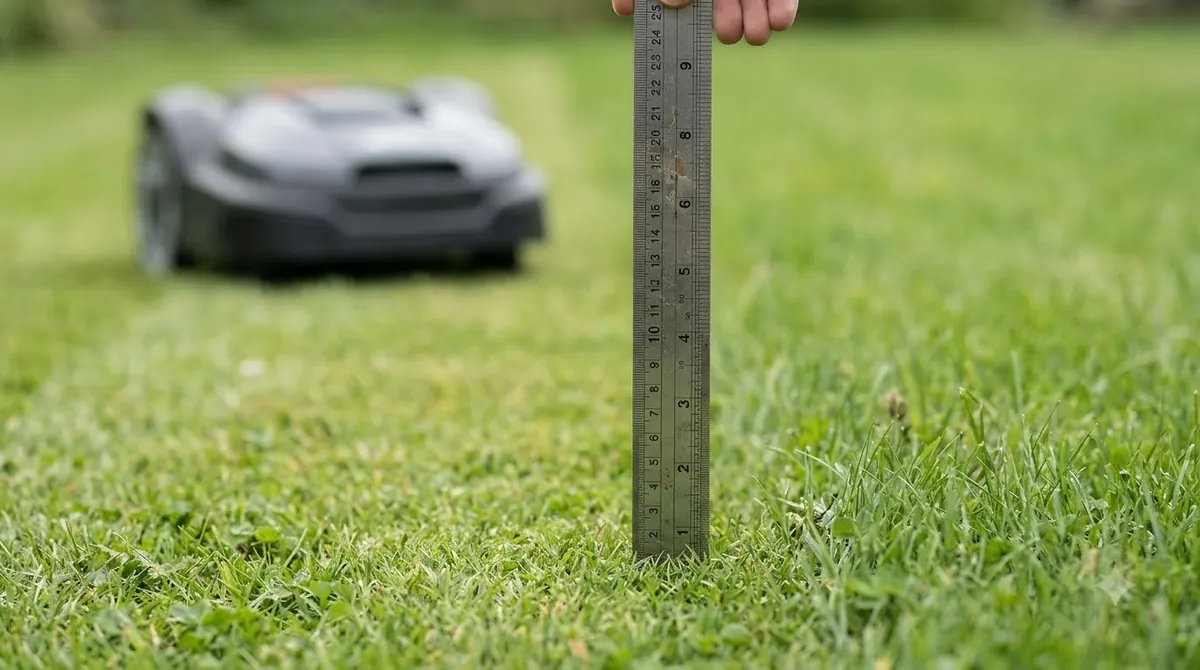
Boundary-wire mowers offer the most predictable behavior around flat stone walkways. Because the mower follows a low-voltage copper loop buried or pegged into the turf, you decide whether the stones sit inside the mowing zone or outside it. When flagstones are truly flush with the soil, you can run the perimeter wire around the outer lawn and let the robot drive straight across the walkway as if it were turf. If you want the mower to avoid a raised stone patio while still trimming the grass border cleanly, Husqvarna Automower installation guidance and standard wire-setback conventions place the wire roughly 4 inches from flush paving so the wheels roll slightly onto the stone and cut every blade along the edge.
RTK-GPS and vision-based wire-free mowers require digital map tuning to handle the same layout. Pure satellite-guided models follow centimeter-level virtual boundaries, meaning they will cross flagstone paths smoothly as long as tree canopy does not block satellite lock. However, models that pair RTK or LiDAR with front-facing RGB cameras rely on visual turf recognition to avoid patios, mulch beds, and toys. As documented in the Worx Landroid Vision support guide, camera-only mowers refuse to cross stepping-stone paths unless you place paired RFID tags on opposite sides to create an authorized crossing bridge, and the mower will not spin its blades while traversing that bridge.
| Navigation type | How it treats flagstone | Setup needed for walkways | Best fit for flagstone yards |
|---|---|---|---|
| Buried boundary wire | Ignores stone surface; obeys only the wire signal | Include flush stones inside the loop, or set wire 4 inches from flush borders | Yards with heavy tree shade and flush flagstones |
| RTK-GPS without vision | Follows virtual coordinates across grass and stone alike | Draw a single zone over flush paths or link split lawns with a virtual channel | Open yards with wide flagstone walkways |
| AI vision + RTK / LiDAR | Flags pale stone as a non-grass obstacle by default | Enable VisionFence-off or pass-through zones over the walkway | Complex yards needing object avoidance plus mapped stone crossings |
| Camera-only (no wire, no RTK) | Stops at stone edges because it only drives on green turf | Install RFID crossing tags on both sides of the path | Simple flat lawns with a single narrow stepping-stone path |
Preparing a flagstone walkway for automated mowing
Minor stone leveling and joint adjustments eliminate almost every mechanical snag before your robot takes its first lap.
Before installing a mower, walk the entire length of your flagstone path with a straightedge or flat board. Any slab edge protruding above the surrounding soil line acts as a wheel stop for compact front casters. Lift high stones, scrape out a thin layer of base sand or soil, and tamp them back down so the top face sits flush with the earth. Conversely, if a stone has sunk into a low pocket, fill the dip with screened topsoil and overseed so the mower does not drop a wheel and scalp the adjacent grass.
Next, evaluate the spacing between individual flagstones. Wide stepping stones spaced 12 to 18 inches apart allow a robot mower’s wheels and cutting deck to straddle the gap and trim the grass between slabs normally. Narrow joints measuring 2 to 4 inches wide behave differently: the mower wheels bridge the gap easily, but blades set to a standard lawn height may miss sunken grass blades sitting below the stone surface, leaving ragged tufts that still require a string trimmer every couple of weeks.
- Level proud stone edges. Reseat any flagstone sitting higher than the surrounding soil so caster wheels transition smoothly from turf onto rock.
- Set a conservative deck height. Start at a cutting height of at least 2 to 2.5 inches (50 to 65 mm) so spinning blades clear minor stone texture and seasonal soil shifts.
- Route guide wires through wide lanes. If using a wired mower across a narrow garden corridor, keep at least 12 inches of clearance between the guide wire and any boundary wire loop so the robot tracks straight without oscillating.
- Map pass-through zones in the app. On vision-assisted models, mark the flagstone walkway as a vision-disabled or pass-through corridor so the camera does not mistake sunlit stone for a barrier.
- Run a dry test pass. Send the mower across the walkway at every angle—perpendicular and diagonal—to verify that small front wheels do not wedge into angled stone joints.
Heads up
Never disable obstacle-avoidance cameras across an entire yard just to make a robot cross one flagstone path. Restrict vision-off zones strictly to the footprint of the walkway so the mower still detects pets, garden hoses, and patio furniture elsewhere on the lawn.
Hardware features that matter most on stone-and-turf lawns
Wheel geometry, deck suspension, and edge-cutting offsets separate mowers that glide over flagstone from models that get stranded.
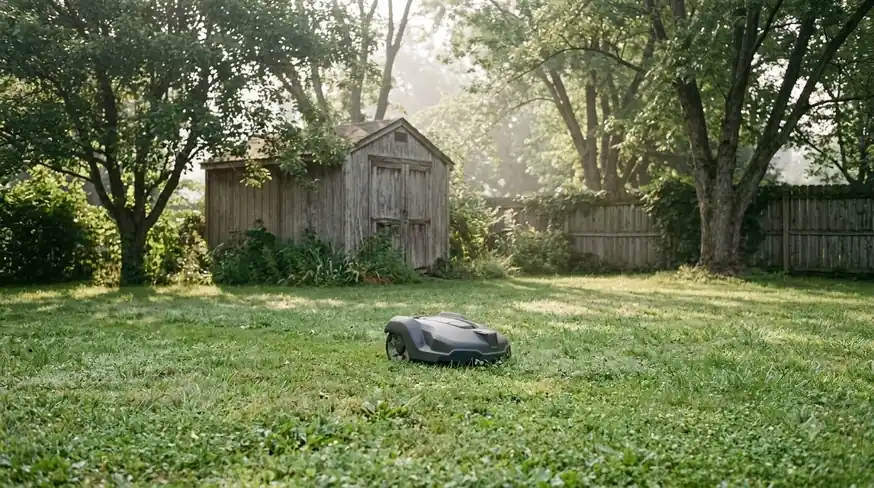
Look closely at wheel layout when comparing models for a flagstone yard. Traditional three-wheel designs place one or two small swivel casters at the front. While nimble on smooth turf, small casters can drop into diagonal gaps between irregular flagstones and turn sideways, locking the mower in place. Four-wheel and all-wheel-drive models—such as the Mammotion LUBA 2 AWD or Segway Navimow i2 AWD series—use larger-diameter front tires and articulated suspension that roll cleanly across uneven stone joints and step transitions up to 1.5 to 3 inches without snagging.
Cutting-disc placement also determines how much hand trimming remains along your stone borders. Mowers with centered blade discs leave an uncut strip of grass along every stone edge if the robot stops short of the rock. Machines offering offset blades or ride-on border modes—such as Husqvarna’s EdgeCut design or Segway’s EdgeSense border trimming—extend the cutting arc closer to the outer wheel track, slicing turf right against flush stone margins.
Finally, check how easily the deck height adjusts. In northern climates where spring frost heaves flagstones slightly upward, being able to raise the cutting deck by half an inch in a smartphone app saves you from dragging out tools or replacing chipped blades after the first April mow.
Frequently asked questions
Can a robot lawn mower safely drive over flagstone pavers?
Yes, provided the flagstones sit flush with the surrounding soil and the mower’s cutting height is set above the highest stone lip. Smooth, level stone will not harm the wheels or chassis, though driving over hard rock slightly accelerates tire tread wear over several seasons.
Will flagstone walkways damage robot mower blades?
Flat flagstones positioned below the blade plane will not touch the blades at all. Damage only happens when a stone edge sticks up above the cutting height, causing the pivoting razor blades to strike rock, dull prematurely, or chip.
Why does my wire-free robot mower stop at the edge of my stone path?
Camera-equipped robot mowers use AI vision to distinguish green grass from hardscapes so they do not wander onto driveways or patios. To make the mower cross a flagstone walkway, enable a vision-off or pass-through zone over the stones in the companion app, or install manufacturer RFID crossing tags if your model uses them.
Can a robot mower cut the grass growing between flagstones?
It can trim grass in wide gaps of 12 inches or more where the mower drives directly over the turf strips. In tight 2-to-4-inch stone joints, grass often grows slightly below the top surface of the stone, so you will still need a string trimmer occasionally to clean out the crevices.
Sources
- Install Automower with a physical boundary wire (Husqvarna): boundary wire setback distances, island routing, and passage guidelines around paved surfaces.
- Mower will not cross a stepping-stone path (Worx): vision-mower behavior at stone walkways and RFID crossing tag setup.
- Navimow i-series User Manual (Segway Navimow): centrifugal pivoting blade mechanics, camera turf recognition, and VisionFence-off zone configuration.
- LUBA 2 AWD Product Specifications (Mammotion): adaptive suspension obstacle-crossing clearance and cutting height specifications.
 Up next8 min readBy YardChoosing and Setting Up a Robot Mower for a Yard With Decorative River Rock BordersUpdated Nov 19, 2026
 9 min readBy YardChoosing and Setting Up a Robot Mower for a Yard With an Outdoor AC Condenser UnitUpdated Nov 19, 2026
 9 min readBy YardChoosing and Setting Up a Robot Mower for a Yard With a Wooden Boardwalk PathUpdated Nov 19, 2026
 8 min readBy YardChoosing and Setting Up a Robot Mower for a Yard With a Pool Deck Coping LipUpdated Nov 19, 2026
 9 min readBy YardChoosing and Setting Up a Robot Mower for a Yard With a Split-Rail Wooden FenceUpdated Nov 19, 2026
 9 min readBy YardChoosing and Setting Up a Robot Mower for a Yard With an Above-Ground Pool LadderUpdated Nov 19, 2026