
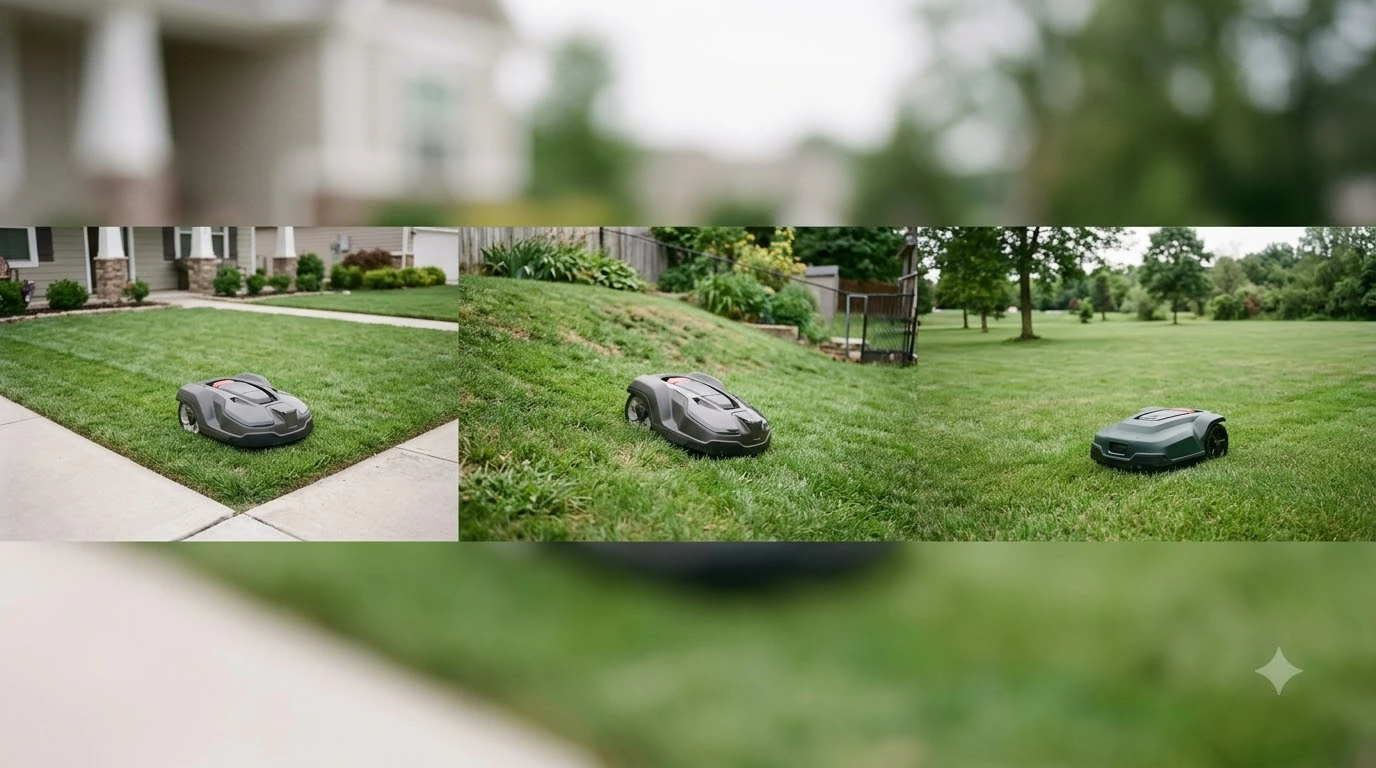

A robot mower for a lawn with sweetgum spiky seed balls can maintain your turf reliably, provided you clear dense pod carpets before running the unit and choose a model with sturdy traction and adjustable deck clearance. Standard boundary-wire and wireless robotic mowers rely on lightweight, pivoting razor blades rather than high-suction rotary decks, meaning they will either push woody pods aside, dull their blades on impact, or stall if thick clusters wedge beneath the chassis. By pairing seasonal pod cleanup with smart zone scheduling and higher cutting heights, you can keep a sweetgum-shaded yard trimmed without constant manual intervention.
The short answer
- Why pods cause trouble: Mature sweetgum fruits are hard, woody spheres measuring 1 to 1.5 inches across that dull thin razor blades and can jam spinning cutting discs or low-slung caster wheels.
- No suction pickup: Unlike gas walk-behind mowers with bagging attachments, standard robotic mowers do not generate vacuum lift to collect seed pods off the turf.
- Best hardware traits: Look for models with wide, high-torque drive wheels, multi-sensor navigation (vision or LiDAR alongside RTK) to handle tree canopy shade, and a maximum cutting height of at least 3 inches.
- Sweeper attachments help: Select models like the Mammotion YUKA series offer optional rear sweeper kits rated to collect acorns and small debris, though dense sweetgum layers still require pre-clearing.
- Routine is key: A quick pass with a rolling nut harvester or leaf blower during peak autumn and winter pod drop prevents blade breakage and mid-lawn stall errors.
How sweetgum seed balls affect robotic mower hardware
Hard woody seed pods interact very differently with a lightweight autonomous mower than they do with a heavy gas-powered rotary deck.
American sweetgum trees (Liquidambar styraciflua) produce distinctive, mace-like spherical fruits measuring 1 to 1.5 inches in diameter, composed of hardened, beaked capsules that persist into winter and drop sporadically across the turf, according to the University of Florida IFAS Extension. Because these spiky spheres are woody and rigid rather than soft like grass blades, they present mechanical challenges for autonomous cutting systems.
Most residential robot mowers use three to six small, razor-thin pivoting blades mounted to a spinning disc. When those blades strike a 1.5-inch woody sphere at high RPM, the blades either pivot inward to deflect the blow—leaving the pod intact—or chip and dull rapidly. In our reading of manufacturer troubleshooting documentation, woody yard debris is one of the primary culprits behind premature blade wear and motor overload alerts.
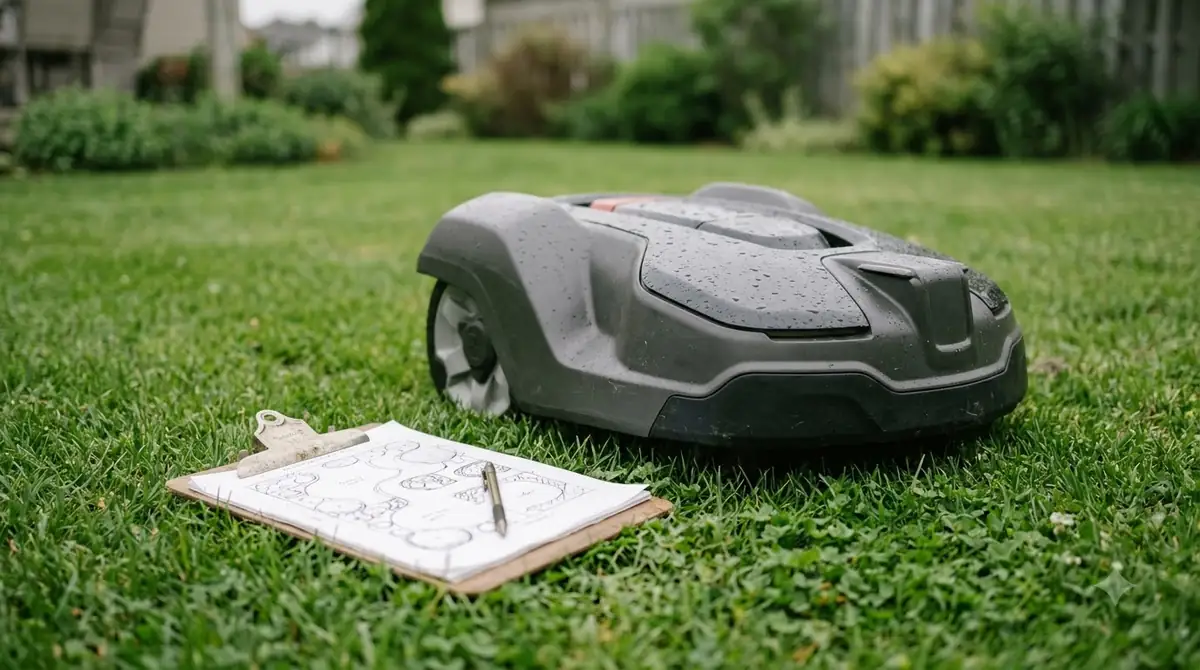
Ground clearance is the second major constraint. Many compact robotic mowers sit low to the ground with small front caster wheels designed for manicured turf. When dozens of spiky balls accumulate in low spots or along root flares, a lightweight mower can high-center, lose drive-wheel traction, or trigger its lift and tilt safety sensors.
Heads up
Never rely on a standard robot mower to mulch or shred fallen sweetgum balls. According to Husqvarna Automower support guidelines, solid tree fruits, pine cones, and branches should be raked or collected regularly to maximize blade lifespan and prevent deck jams.
Key mower features for yards with sweetgum trees
Selecting a robot mower for a lawn with sweetgum spiky seed balls comes down to prioritizing drivetrain traction, canopy-friendly navigation, and debris tolerance.
Heavy tree cover almost always accompanies sweetgum seed litter, which immediately narrows down your navigation options. Pure satellite-guided (RTK-only) mowers frequently lose signal lock beneath dense deciduous canopies. Models that fuse RTK positioning with onboard AI vision cameras or 3D LiDAR—or traditional perimeter-wire units—maintain far more reliable boundary tracking under mature shade trees.
Wheel geometry and drive power matter just as much as sensors. Rear-wheel-drive mowers with narrow tires often spin out when a front caster catches on a cluster of spiky pods. All-wheel-drive (AWD) models or two-wheel-drive units fitted with wide, deep-lugged off-road tires push through scattered debris and climb over exposed surface roots without digging ruts into damp turf.
| Mower Feature | Why It Matters for Sweetgum Yards | What to Look For |
|---|---|---|
| Navigation System | Mature sweetgum trees reach 60 to 75 feet tall with dense crowns that block GPS signals. | RTK + Vision/LiDAR sensor fusion, or buried perimeter wire. |
| Cutting Deck & Blades | Woody 1-to-1.5-inch pods chip thin blades and jam fixed discs. | Pivoting razor blades with easy tool-free replacement and adjustable height up to 3+ inches. |
| Drivetrain & Wheels | Scattered pods act like ball bearings under smooth tires or trap small casters. | All-wheel drive (AWD) or high-traction treaded rear tires with large front wheels. |
| Debris Handling | Standard decks lack vacuum suction to lift heavy seed pods from grass. | Optional powered sweeper attachments or programmable seasonal no-go zones. |
A small subset of robotic mowers—most notably the Mammotion YUKA series—offers an optional attachable sweeper kit designed to collect leaves, small twigs, and acorns into a 22-liter bin and dump them at designated spots. While user manuals confirm these brush sweepers handle acorns and light twig litter, dense carpets of interlocking spiky sweetgum balls can still overwhelm compact brush rollers if left uncollected for weeks.
Preparing your lawn before and during pod drop
A simple seasonal maintenance routine keeps your autonomous mower running smoothly from spring green-up through late-autumn dormancy.
Sweetgum trees drop their heaviest wave of seed balls between late autumn and early spring, though stray pods fall year-round after windstorms. Adjusting how you prep the yard during peak drop protects both the robot and your turfgrass.
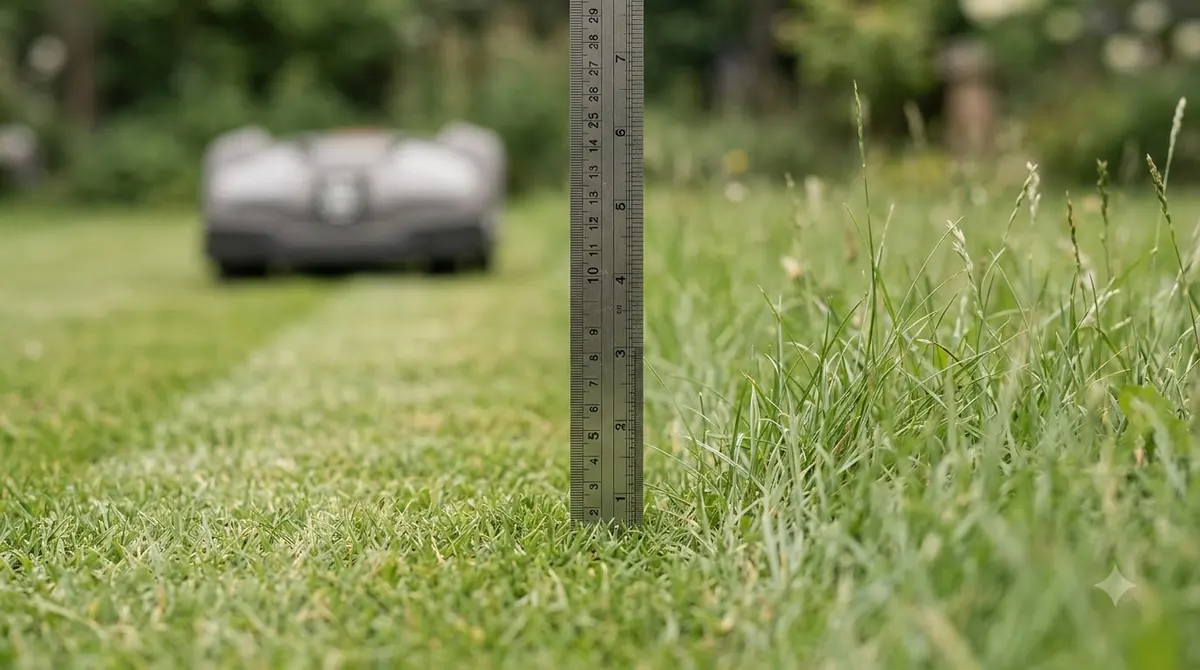
- Clear heavy pod concentrations first. Before launching the mower at the start of the season or after a windstorm, run a rolling wire-basket nut harvester (such as a Bag-A-Nut) or a backpack leaf blower across the drop zone. Rolling wire harvesters scoop up 1-to-1.5-inch spheres rapidly without damaging grass crowns.
- Raise the cutting height to maximum. Set your mower deck to its highest setting—ideally 3 to 4 inches—during active pod drop. Higher deck clearance allows the chassis to glide over isolated stray pods rather than batting them with the spinning blade disc.
- Map seasonal no-go zones around trunk flares. Sweetgum trees develop prominent surface roots as they mature, which trap fallen seed balls in tight pockets. Draw virtual no-go boundaries around root flares and dense drip-line clusters in your mower’s app so the robot avoids high-risk stalling areas.
- Inspect blades and wheel wells weekly. Flip the mower over (after engaging the safety stop and removing the isolator key) once a week during fall and spring to check for wedged pods, chipped razor blades, or debris wrapped around wheel axles.
Managing surface roots and shaded turf under sweetgums
Beyond the spiky fruit itself, mature sweetgum trees create uneven ground and thin grass that require thoughtful mower setup.
University extension horticulture records note that Liquidambar styraciflua requires substantial space for root development and frequently lifts nearby soil or hardscaping as it ages. When a robot mower repeatedly crosses exposed woody roots, its blades can strike bark and its drive wheels can tear up damp, shaded turf.
Top-dressing low ruts between surface roots with a sandy loam mix creates a gentler transition for the mower’s wheels. Where roots protrude sharply above soil level, carving out a mulched tree ring and excluding that circle from the mowing map prevents mechanical wear and keeps your grass looking uniform.
Frequently asked questions
Will sweetgum spiky seed balls break a robot mower’s blades?
Most robot mowers use small, pivoting razor blades that fold back upon striking hard objects, which prevents catastrophic shaft damage. However, repeated impacts with woody 1-to-1.5-inch sweetgum pods will dull, nick, or chip those thin blades quickly, requiring more frequent blade swaps.
Can a robot mower pick up sweetgum balls automatically?
Standard robot mowers cannot pick up sweetgum balls because they lack the vacuum suction of a traditional bagging lawn mower. Select models with motorized sweeper attachments (such as the Mammotion YUKA series) can sweep up acorns and small yard debris, though heavy concentrations of spiky sweetgum pods still require manual pre-clearing.
What is the fastest way to clear sweetgum balls before running a robot mower?
A push or tow-behind rolling wire-basket nut harvester is widely considered the fastest tool for clearing sweetgum pods from turf without tearing up grass. For lighter scatterings on dry grass, a high-CFM backpack leaf blower can herd the pods onto a tarp or hard surface for easy disposal.
Do sweetgum trees block GPS signals on wire-free robot mowers?
Yes, mature sweetgum trees grow 60 to 75 feet tall with dense canopies that can weaken satellite RTK signals. For yards with heavy tree cover, choose a wire-free mower that pairs RTK with AI vision cameras or 3D LiDAR, or opt for a perimeter-wire model that does not rely on satellite reception.
Sources
- ENH-517/st358: Liquidambar styraciflua: Sweetgum (University of Florida IFAS Extension): Verified sweetgum mature tree height, root habits, and spiky fruit diameter (1 to 1.5 inches).
- FAQ for Automower robotic lawn mowers (Husqvarna): Verified manufacturer guidance on raking pine cones, branches, and fallen tree fruit to protect blade life.
- Sweeper Kit for YUKA 2000 User Manual (Mammotion): Verified sweeper attachment capabilities for collecting leaves, small twigs, and acorns.
- Robot Lawn Mower Common Faults & Solutions (LawnMaster / Cleva): Verified troubleshooting causes for debris jams, lift/tilt sensor triggers, and blade disc overload errors.
 Up next8 min readBy YardChoosing and Running a Robot Mower for a Lawn with Heavy Morning Coastal FogUpdated Nov 19, 2026
 8 min readBy YardChoosing and Running a Robot Mower for a Lawn with Black Walnut Trees and HullsUpdated Nov 19, 2026
 9 min readBy YardChoosing and running a robot mower for a lawn with crabgrass and dallisgrassUpdated Nov 19, 2026
 8 min readBy YardCan a Robot Mower Handle a Lawn With Bahia Seed Stalks in Summer?Updated Nov 19, 2026
 9 min readBy YardWhen to First Mow New Grass Seed (Height, Not Calendar)Updated Nov 11, 2026
 8 min readBy YardChoosing and Setting Up a Robot Mower for a Yard With a Pool Deck Coping LipUpdated Nov 19, 2026