
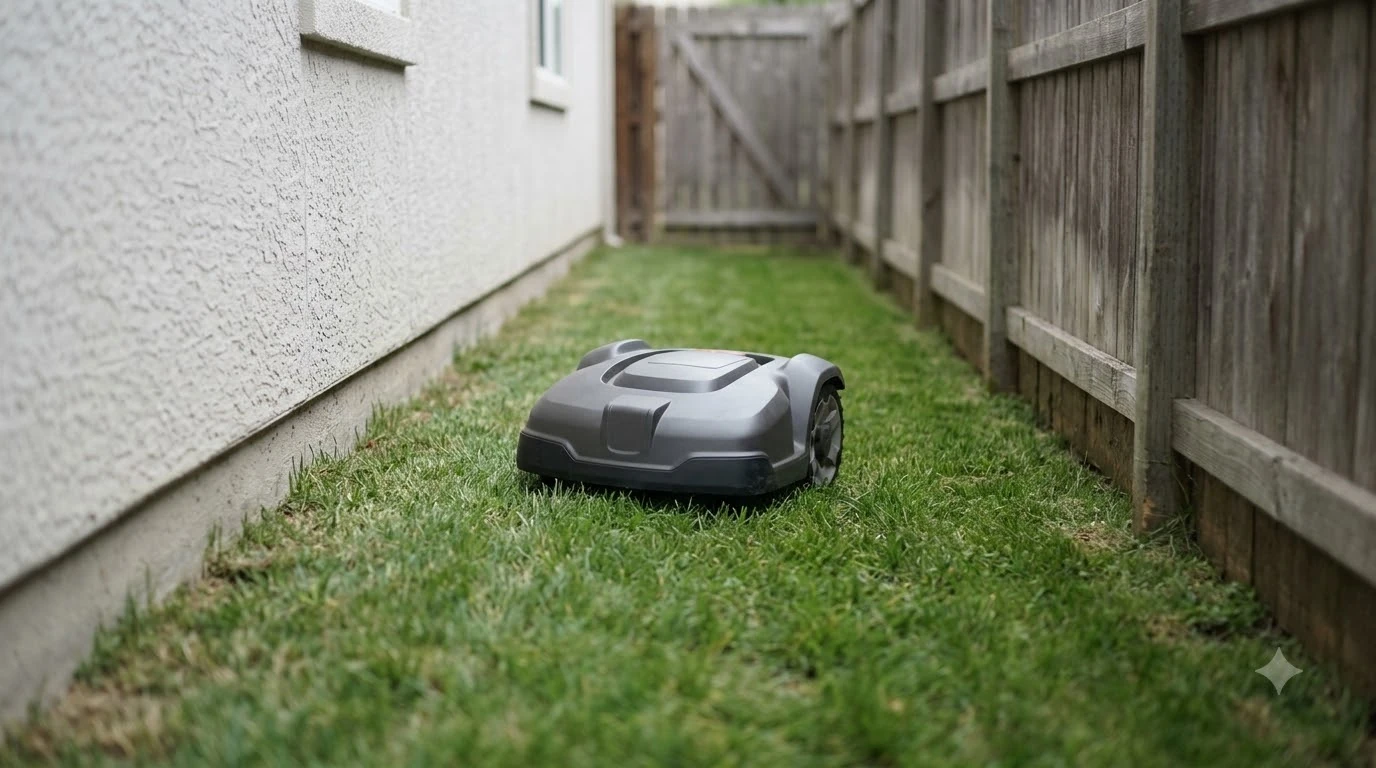

A robot mower for a lawn with crabgrass and dallisgrass can keep the yard neat through daily trimming, though it will not eradicate either weed and needs specific deck, traction, and sensor hardware to avoid stalling on thick clumps. Frequent passes clip upright seedheads before they drop thousands of fresh seeds, giving your desirable turfgrass a denser canopy to crowd out new sprouts. However, because crabgrass spreads low along the ground and dallisgrass regrows from stubborn underground rhizomes, mechanical mowing must pair with targeted weed management rather than replace it.
The short answer
- Mowing suppresses seed, not roots: Daily trimming stops upright seed stalks, but it will not kill annual crabgrass crowns or perennial dallisgrass rhizomes.
- High-cut decks help turf compete: Raising your cutting height shades the soil and slows crabgrass germination, so prioritize models capable of cutting near 3.5 to 4 inches on cool-season lawns.
- Razor blades dull faster on coarse stalks: Dallisgrass grows thick, fibrous clumps that chip standard pivoting razor blades, requiring frequent blade swaps and higher-torque cutting motors.
- Radar and vision sensors need tuning: Tall, clumping dallisgrass tufts can trigger ultrasonic or radar obstacle avoidance, leaving unmowed islands unless sensitivity is adjusted.
- All-wheel drive prevents clump hang-ups: Dense dallisgrass crowns create bumpy micro-terrain that can beach lightweight two-wheel-drive bots.
How crabgrass and dallisgrass challenge autonomous mowers
Crabgrass and dallisgrass create two distinct mechanical headaches for lightweight autonomous cutters: flat, sprawling runners that slip beneath high decks and dense, woody clumps that bog down small spinning discs.
According to the University of California Agriculture and Natural Resources, crabgrass (Digitaria species) is a warm-season annual that spreads outward in a prostrate, star-like mat close to the soil surface. When unmowed, large crabgrass leaf sheaths can reach up to 2 feet tall, while smooth crabgrass reaches roughly 6 inches. Because its stems hug the ground before sending up finger-like seed spikes, a robot mower’s front bumper and deck skirt often glide right over the horizontal stems without lifting them into the cutting plane.
Dallisgrass (Paspalum dilatatum) presents the opposite physical obstacle. As a coarse-textured perennial, it forms wide, circular clumps fed by shallow, striped underground rhizomes. Those thick central crowns sit higher and tougher than surrounding bermudagrass, zoysiagrass, or fescue. Even worse, UC extension specialists note that dallisgrass flower heads frequently droop or grow nearly parallel to the ground, allowing them to dodge standard mower blades entirely.
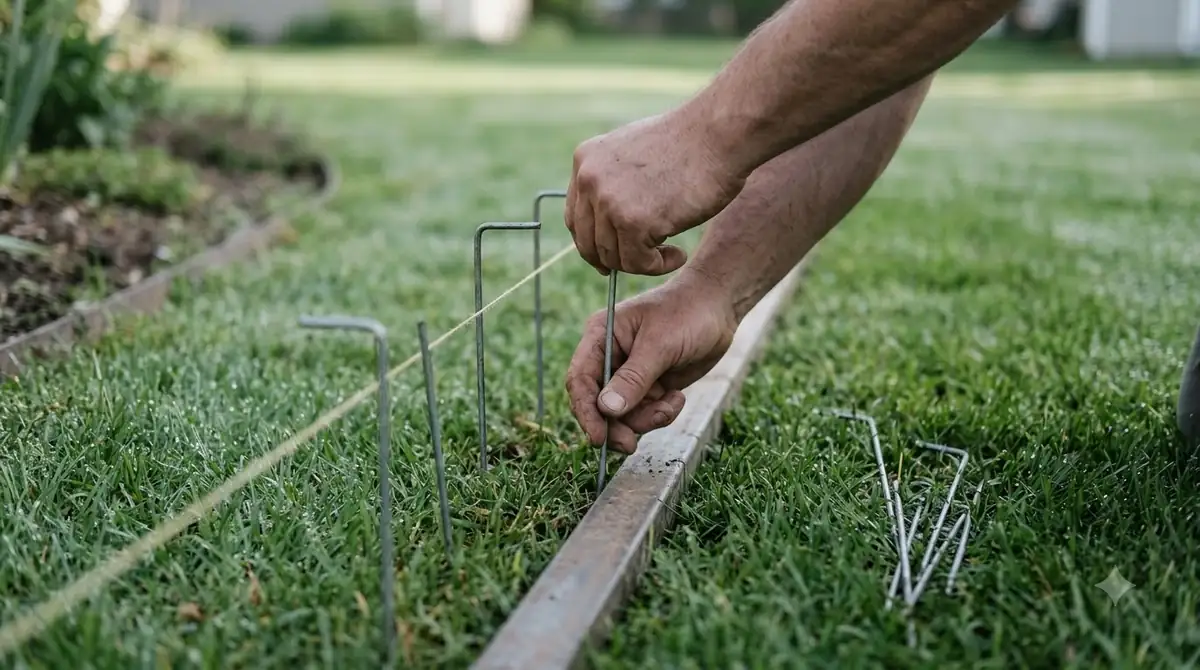
Most residential robot mowers rely on lightweight plastic discs fitted with tiny pivoting razor blades under 1.5 inches long rather than heavy high-lift rotary steel bars. That design produces clean, low-stress cuts on healthy turfgrass, as documented in research compiled by the University of Florida IFAS Extension, but it lacks upward suction. Without vacuum lift, flat crabgrass stems stay pinned down, and thick dallisgrass stalks deflect thin blades instead of shearing cleanly.
Hardware features that matter for weed-heavy yards
Choosing a robot mower for a lawn with crabgrass and dallisgrass comes down to cutting height range, motor torque, drive traction, and how the navigation system interprets tall weed tufts.
Start with cutting height. Raising your mower deck helps desirable turfgrass shade the soil and outcompete light-hungry crabgrass seedlings. Many standard European-spec robot mowers top out around 2.4 inches, which works for bermudagrass or zoysiagrass but scalps cool-season tall fescue or Kentucky bluegrass that thrive at 2.5 to 4 inches. Look for high-cut variants—such as models offering adjustable decks up to 3.5 or 4 inches—if you maintain cool-season turf.
Traction and sensor logic matter just as much once dallisgrass establishes mature clumps. A mature dallisgrass crown acts like a miniature speed bump; lightweight two-wheel-drive bots with small front caster wheels can snag on the raised edge and trigger a lifted-wheel error. Meanwhile, modern obstacle-avoidance sensors can mistake rapid-growing weed stalks for solid yard hazards. Husqvarna’s support documentation for radar-equipped Automower models warns that ultrasonic and radar sensors may treat tall grass or tall weeds as obstacles and steer around them, leaving unsightly uncut patches unless you temporarily dial back object avoidance sensitivity.
| Mower specification | Standard entry-level robot | Weed-capable robot setup | Why it matters for crabgrass and dallisgrass |
|---|---|---|---|
| Max cutting height | 2.0 to 2.4 inches | 3.5 to 4.0 inches (high-cut models) | Taller turf shades soil to suppress new crabgrass germination. |
| Drive system | 2WD rear wheels with front casters | All-wheel drive (AWD) or tracked chassis | Prevents the chassis from high-centering on raised dallisgrass crowns. |
| Cutting system | Single low-wattage disc | Dual cutting discs or higher-torque motors | Maintains blade tip speed when slicing thick, fibrous dallisgrass stalks. |
| Navigation pattern | Random bounce | Systematic parallel lines (RTK, LiDAR, or vision) | Reduces repeated wheel traffic that flattens stems and compacts damp soil. |
| Obstacle sensors | Fixed-sensitivity ultrasonic/radar | Adjustable AI vision or toggleable radar avoidance | Stops the mower from treating tall dallisgrass seed stalks as solid obstacles. |
What daily robotic mowing actually does to both weeds
Running an autonomous mower every day or two alters weed growth dynamics, helping overall turf density while unintentionally favoring low-growing creeping habits.
According to University of Florida IFAS Extension research on autonomous turf maintenance, frequent robotic mowing improves turfgrass density and can reduce overall weed coverage compared with infrequent rotary mowing. By clipping grass tips every 24 to 48 hours, the mower prevents tall seedheads from maturing and scattering thousands of new seeds across your yard.

The catch is botanical selection pressure. The same IFAS research notes that low-growing, creeping weeds can actually expand under constant low mowing because their horizontal stems stay below the blade path while upright competitors get trimmed. Crabgrass adapts readily to low mowing by flattening its tillers outward, and dallisgrass thrives under frequent, close cutting because its energy reserves sit safely underground in thick rhizomes. In short, a robot mower keeps the lawn looking tidy from the street, but without cultural or chemical intervention, those green patches will steadily widen.
Step-by-step setup to prep a weed-infested lawn
Dropping a brand-new robot mower directly into knee-high crabgrass or overgrown dallisgrass clumps will jam the cutting disc, drain the battery, and risk motor strain.
Heads up
Never send a robotic mower into tall, wet weed patches on day one. Wet crabgrass sap and thick dallisgrass fibers wrap tightly around the blade disc hub and motor shaft, forcing manual disassembly and premature blade failure.
- Knock down tall weeds with a conventional mower first. Following Husqvarna’s overgrown lawn guidelines, use a standard rotary mower or string trimmer on dry grass to bring the entire yard down within your robot’s operating range—typically under 3.5 to 4 inches—removing no more than one-third of the leaf height per pass.
- Bag the initial clippings to remove mature seedheads. If crabgrass or dallisgrass has already produced finger-like seed spikes, collect and dispose of the first trim rather than mulching it back into the turf.
- Start at the robot’s maximum deck height. Set the cutting height to its highest notch for the first week or two, then step it down gradually only if your turfgrass species calls for a shorter cut.
- Adjust obstacle avoidance sensitivity. If your mower uses radar, ultrasonic, or camera-based object detection and keeps swerving around tall dallisgrass tufts, lower the sensitivity or temporarily disable non-contact avoidance in the companion app during peak summer growth.
- Inspect and flip or replace blades every two to three weeks. Coarse dallisgrass leaves and sandy soil splash dull thin pivoting razor blades much faster than soft turfgrass; check the disc underside weekly for packed green pulp.
Pairing your robot with smart weed control
Combining autonomous mowing with university-recommended cultural habits and properly timed treatments addresses both the annual seed cycle of crabgrass and the perennial root system of dallisgrass.
Because the two weeds have opposite life cycles, treating them requires separate strategies:
- Prevent crabgrass in spring: Rutgers New Jersey Agricultural Experiment Station notes that crabgrass germinates in spring, grows through summer, and dies with the first autumn frost, leaving behind thousands of dormant seeds. Applying a pre-emergent herbicide before spring soil temperatures reach roughly 55 degrees Fahrenheit stops those seeds from establishing, while keeping your robot mower set toward the upper end of your grass type’s height range shades out stragglers.
- Target dallisgrass in late summer or fall: Pre-emergent products do not stop established dallisgrass because it regrows from perennial underground rhizomes. Extension specialists recommend deep, infrequent watering rather than shallow daily irrigation, since dallisgrass thrives in soggy, over-watered soil. For isolated clumps, digging out the entire rhizome crown works cleanly; for widespread infestations, consult your local county extension office regarding selective post-emergent herbicides labeled for your specific turfgrass, which are typically applied in late summer through early fall.
Whenever you apply granular or liquid weed control, pause your robot mower’s schedule for the label-specified drying or watering-in window so the wheels do not track product onto adjacent flowerbeds or sidewalks.
Frequently asked questions
Will a robot mower eventually get rid of crabgrass and dallisgrass on its own?
No. Daily robotic mowing keeps the lawn looking uniform and reduces upright seed production, but it will not kill established dallisgrass rhizomes or stop low-growing crabgrass stems from spreading. You still need pre-emergent barriers for crabgrass and physical digging or targeted post-emergent treatments for dallisgrass.
Why does my robot mower steer around tall dallisgrass clumps?
Mowers equipped with radar, ultrasonic, or vision-based obstacle avoidance can interpret thick, fast-growing weed stalks as solid objects. Check your mower’s app settings to lower obstacle sensitivity or temporarily turn off non-contact avoidance while the clumps are active.
What cutting height should I use if my yard has crabgrass?
Set your robot mower toward the upper end of the recommended range for your desirable grass species—for instance, 3.5 to 4 inches for tall fescue, or around 2 to 2.5 inches for zoysiagrass. Taller, denser turf shades the soil surface and makes it harder for sunlight-dependent crabgrass seedlings to germinate.
Do dallisgrass clumps damage robot mower blades?
They accelerate wear rather than causing catastrophic damage. Dallisgrass has wide, fibrous leaves and tough central stems that dull thin pivoting razor blades faster than normal turf. Plan on checking and rotating or replacing your blades more frequently during peak summer growth.
Sources
- Autonomous or Robotic Mower Use on Florida Lawns (University of Florida IFAS Extension): used for research on how frequent robotic mowing affects turf density, overall weed coverage, and low-growing creeping weeds.
- Managing Weedy Grasses (University of California Agriculture and Natural Resources): used for crabgrass and dallisgrass growth habits, seedhead orientation, irrigation adjustments, and mowing height guidance.
- Crabgrass and Goosegrass Identification and Control in Cool-Season Turfgrass (Rutgers New Jersey Agricultural Experiment Station): used for crabgrass annual lifecycle, seed production, and identification traits.
- Object avoidance with radar or ultrasonic sensors in Automower robotic lawn mowers (Husqvarna Support): used for guidance on how radar and ultrasonic sensors react to tall grass and tall weeds.
 Up next8 min readBy YardChoosing and Running a Robot Mower for a Lawn with Black Walnut Trees and HullsUpdated Nov 19, 2026
 8 min readBy YardChoosing and Running a Robot Mower for a Lawn with Heavy Morning Coastal FogUpdated Nov 19, 2026
 8 min readBy YardChoosing and Running a Robot Mower for a Lawn with Sweetgum Spiky Seed BallsUpdated Nov 19, 2026
 9 min readBy YardChoosing and Setting Up a Robot Mower for a Lawn with Steep Roadside Drainage SwalesUpdated Nov 19, 2026
 9 min readBy YardChoosing and Setting Up a Robot Mower for a Yard with Crushed Granite PathwaysUpdated Nov 19, 2026
 9 min readBy YardChoosing and Setting Up a Robot Mower for a Yard With an Outdoor Kitchen IslandUpdated Nov 19, 2026