
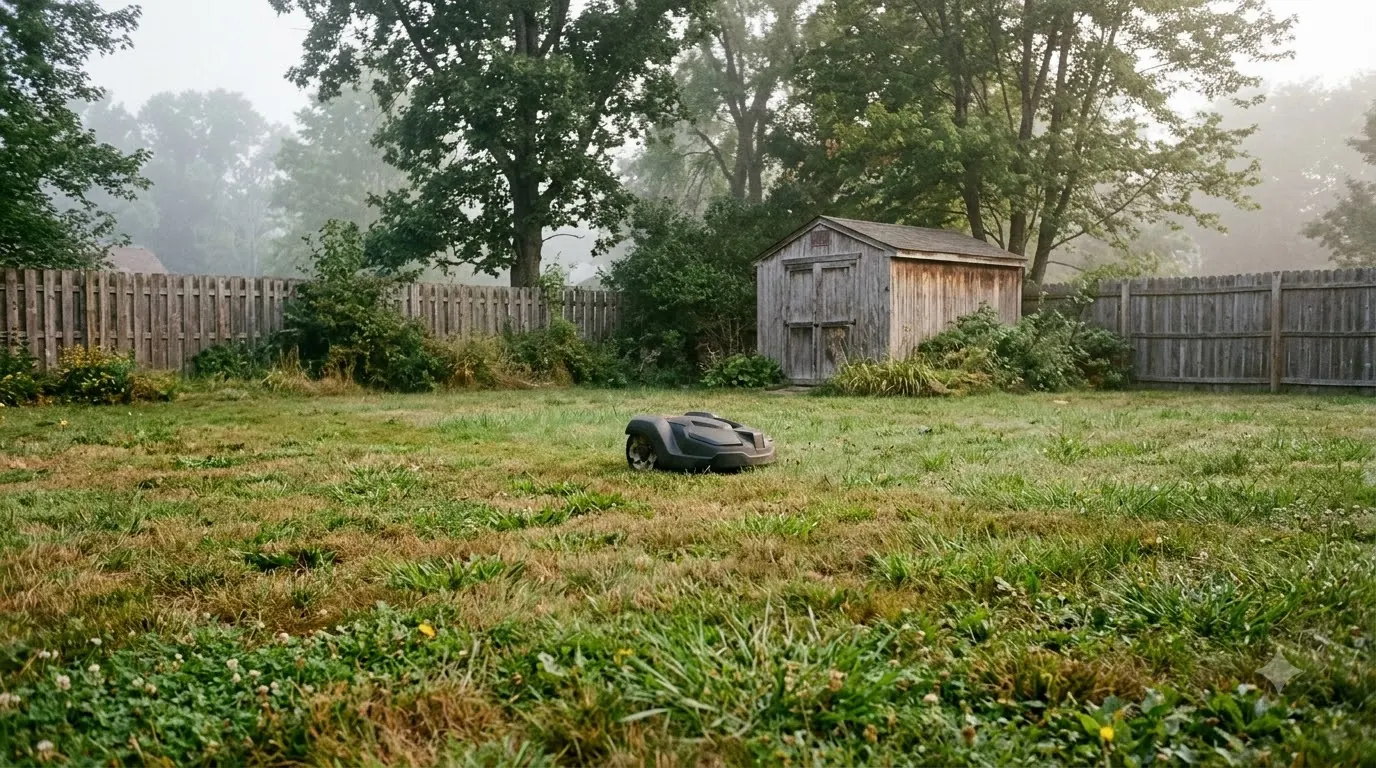

A robot mower for a yard with crushed granite pathways works reliably when the stone is tightly compacted, flush with the turf, and mapped as a dedicated transit corridor rather than an active cutting zone. Loose, deep gravel causes drive wheels to spin and dig ruts, while stray granite chips kicked onto the grass will rapidly dull or chip pivoting razor blades. By separating mowing zones from hardscape and hardening the crossing point, you can let an autonomous mower maintain split lawns without daily intervention.
The short answer
- Compaction is critical: Properly watered and tamped decomposed granite behaves like soft concrete, whereas loose 3/8-inch gravel traps small two-wheel-drive mowers.
- Keep blades disengaged over stone: Configure wire-free transit pathways or narrow boundary-wire corridors so the cutting disc spins down while crossing granite.
- Flush transitions prevent high-centering: The grass-to-pathway border must sit nearly level so the mower deck does not scrape or drop a wheel into a trench.
- Expect faster blade wear: Even well-compacted granite sheds fine grit onto adjacent turf, requiring more frequent blade inspections and replacements.
- All-wheel drive helps on loose edges: Models with four-wheel drive or wider, deep-tread rear tires resist slipping when climbing from stone back onto thick grass.
How crushed granite behaves under a robot mower
Unlike solid concrete pavers, crushed granite varies dramatically in stability depending on particle size, binder content, and how well it was compacted during installation.
Decomposed granite (DG) that has been screened to fines, moistened, and compacted with a plate compactor forms a firm crust that supports most residential robot mowers without wheel sinkage. However, uncompacted crushed granite—especially clean 1/4-inch to 3/8-inch angular stone without fines—shifts under torque. According to Anker’s robot lawn mower path crossing guide, deep gravel and loose stone are difficult surfaces because the mower can dig in while executing turns.
Granite pathways introduce three mechanical hazards to autonomous mowers:
- Wheel spin and rutting: Standard two-wheel-drive mowers rely on rear traction and small front caster wheels. When a front caster buries itself in loose stone, the rear wheels spin in place, digging a hole and triggering a “trapped” error.
- Blade chipping and abrasion: Most robot mowers use thin, free-swinging razor blades mounted to a spinning disc. While these blades pivot away upon hitting solid obstacles, migrating granite chips sitting in the grass edge act like sandpaper, dulling edges and creating micro-chips.
- Undercarriage and sensor dust: Dry decomposed granite kicks up fine mineral dust during warm months, which coats optical cameras, ultrasonic sensors, and wheel hub seals.
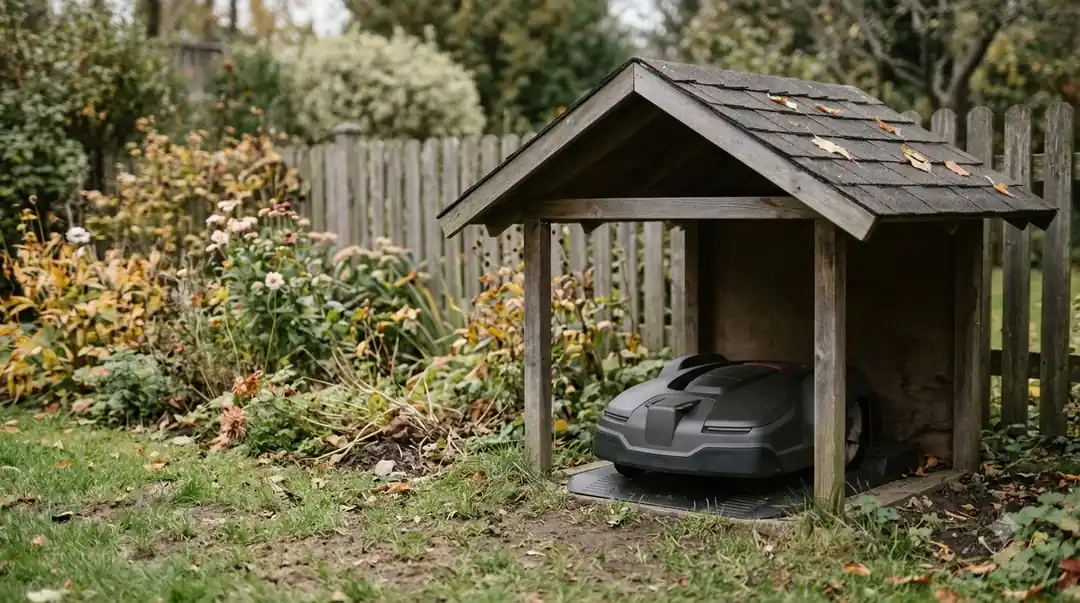
Comparing pathway setups for split lawns
Choosing between keeping a robot mower completely off the granite or programming a controlled crossing depends on whether your pathway borders the lawn edge or bisects two separate turf zones.
| Pathway setup | Best mower type | Risk of wheel slip | Blade wear impact | Maintenance effort |
|---|---|---|---|---|
| Perimeter exclusion (no crossing) | Any wire-free or boundary-wire mower | None (stays on turf) | Low (edge scatter only) | Low; requires string trimming along border |
| Compacted DG transit corridor | RTK-GPS or Vision wire-free mowers | Low to moderate when dry | Low (blades stop in transit) | Moderate; periodic re-tamping and sweeping |
| Flush paver bridge across loose granite | Any 2WD or AWD robot mower | Very low | Very low | Low; occasional brushing of stray stones |
| Open mowing across flush stepping stones | Vision/RTK mowers with zone mapping | Low if stones sit level | Moderate to high | High; requires frequent blade checks |
If your crushed granite pathway simply wraps around the outside of a single continuous lawn, do not ask the mower to drive on it at all. Set your perimeter wire or virtual boundary a few inches inside the turf edge so the wheels never touch stone. You will need to trim that narrow grass strip manually, which avoids nearly all rock-related wear.
When a pathway divides a front yard from a backyard or splits two turf islands, the mower must cross the stone to reach both zones and return to its charging dock. In that scenario, modern wire-free mowers using RTK-GPS or visual navigation have a major advantage because their companion apps let you draw a dedicated transit path that disables the cutting motor during the crossing.
Preparing a crushed granite crossing so your mower will not get stuck
A reliable crossing requires a straight, level track where neither the front casters nor the underbelly cutting deck can catch on uneven stone.
Heads up
Never route a robot mower across crushed granite on a steep slope or at a sharp 90-degree turn. Braking and pivoting on loose aggregate shifts the stone sideways, rapidly carving trenches that will strand the machine.
- Choose a straight, narrow crossing point. Pick the shortest perpendicular line across the pathway with clear sightlines and no gates or steps. According to Husqvarna’s passage installation guidelines, narrow passages work best when the mower travels straight through rather than attempting to turn inside the corridor.
- Level the grass-to-granite transition. Compact the granite so the finished surface sits flush with the soil level of the adjacent lawn—never more than half an inch below the turf roots. If the pathway has settled over time, add fresh decomposed granite with binder, mist it with water, and tamp it solid.
- Install a flush paver strip if the stone is loose. If you use uncompacted crushed granite or pea-sized aggregate that cannot be tamped firm, set two parallel rows of flat concrete pavers or flagstone slabs flush with the path surface to act as wheel tracks.
- Set minimum corridor clearance. Give the mower enough lateral room for minor steering corrections. Anker’s installation guide recommends roughly 80 to 100 centimeters (about 31 to 39 inches) of clear width as a practical baseline for path crossings, though specific models vary.
- Map the transit path and test both directions. On wire-free mowers, connect Zone A and Zone B with a virtual pathway and verify that the cutting blades shut off while in transit. Run a supervised outbound and return test to confirm the mower climbs smoothly back onto the grass without scraping its deck.
Features to prioritize when buying a mower for gravel yards
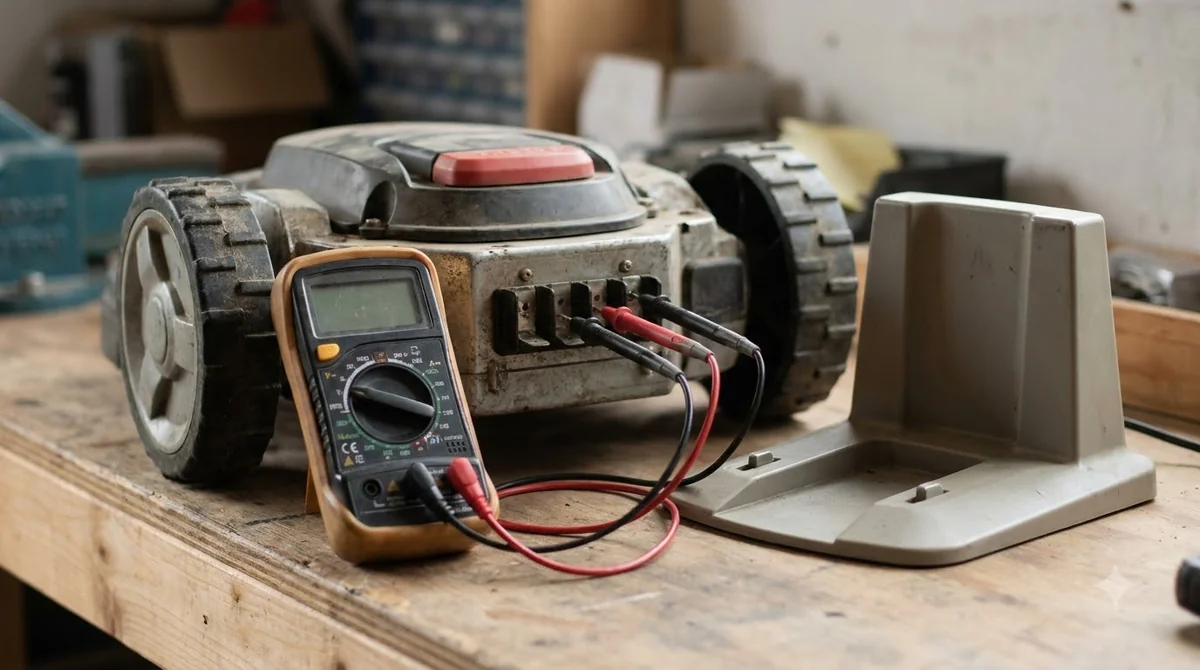
Selecting a robot mower for a yard with crushed granite pathways comes down to navigation control, traction hardware, and blade protection rather than raw cutting speed.
- Virtual transit paths (RTK-GPS or Vision): Boundary-wire mowers generally keep their blades spinning whenever they follow a guide wire through a passage, which increases the risk of striking stray pebbles. Wire-free models that support multi-zone transit channels turn off the cutting disc automatically between zones.
- All-wheel drive or aggressive rear treads: Four-wheel-drive models distribute torque evenly across all four corners, preventing the front end from plowing into soft granite. If choosing a two-wheel-drive unit, look for deep-lugged off-road rear wheels and larger front swivel casters.
- High maximum cutting height: Models capable of cutting at 2.5 to 4 inches (roughly 65 to 100 mm, as seen on high-cut variants in the Mammotion user manual) keep the spinning blade disc higher off the ground, giving stray granite chips less chance of making contact.
- Front obstacle avoidance cameras or ultrasonic sensors: Vision and ultrasonic sensors help the mower recognize raised stone edging or decorative boulders before bumping into them, saving the bumper shell from scratches and preventing the chassis from wedging onto landscape borders.
- Easy-access replaceable razor blades: Avoid single solid-steel rotary blades on yards with stone pathways. Pivoting three-blade or six-blade razor discs are inexpensive to swap and absorb minor pebble strikes without bending a motor shaft.
Routine maintenance for granite and turf yards
Running an autonomous mower next to crushed granite requires a simple weekly inspection habit to keep stray stones from damaging the cutting system.
Walk the pathway borders once a week with a stiff push broom or leaf blower to sweep kicked-up granite fines back onto the path and out of the grass edge. Heavy rainstorms and foot traffic naturally push loose aggregate onto the lawn border, where the mower’s perimeter pass will encounter it first.
Flip the mower over every two to three weeks—after turning off the main power switch and removing any safety key—to inspect the razor blades for nicks and clear mineral dust from around the cutting disc. Wipe optical camera lenses and ultrasonic sensors with a dry microfiber cloth so fine granite dust does not degrade obstacle detection.
Frequently asked questions
Can a robot lawn mower cross a crushed granite driveway or wide pathway?
Yes, as long as the crushed granite is tightly compacted, level with the grass on both sides, and mapped as a straight transit corridor. For wide driveways shared with cars, schedule mowing crossings during hours when vehicles are not moving, and ensure the mower’s app disables the cutting blades while crossing.
Will crushed granite ruin robot mower blades?
Driving over compacted granite with the blades shut off will not harm them, but stray granite chips scattered into the grass edge will dull and nick thin razor blades faster than normal. Sweeping borders weekly and setting a higher cutting height significantly reduces blade wear.
Is a boundary-wire or wire-free robot mower better for yards with granite paths?
Wire-free mowers using RTK-GPS or camera navigation are generally better because you can draw virtual transit pathways that turn off the blades when crossing stone. Boundary-wire mowers require laying wire across or under the path and typically keep their blades spinning during passage travel.
What if my crushed granite pathway is too loose for the mower to cross?
You do not need to redo the entire pathway. Installing two narrow rows of flush concrete pavers or flat flagstones across the granite at one designated crossing point gives the mower’s wheels a solid bridge while preserving the look of the rest of the path.
Sources
- Can Robot Lawn Mower Cross Path? A Practical Setup Guide (Anker): Used for surface stability guidance on gravel and loose stone, flush paver bridge recommendations, and baseline 80–100 cm path clearance measurements.
- How to create a passage in an Automower boundary wire installation (Husqvarna): Used for narrow passage handling behavior, guide wire corridor spacing, and straight-line transit requirements.
- Mammotion Robot Lawn Mower User Manual (Mammotion): Used for safety shutoff procedures, RTK/vision navigation behavior, and cutting height specifications across standard and high-cut models.
 Up next9 min readBy YardChoosing and Setting Up a Robot Mower for a Yard With an Outdoor Kitchen IslandUpdated Nov 19, 2026
 10 min readBy YardChoosing and Setting Up a Robot Mower for a Yard with Exposed Septic Cleanout PipesUpdated Nov 19, 2026
 9 min readBy YardChoosing and Setting Up a Robot Mower for a Yard With an Above-Ground Pool LadderUpdated Nov 19, 2026
 9 min readBy YardChoosing and Setting Up a Robot Mower for a Yard With a Split-Rail Wooden FenceUpdated Nov 19, 2026
 8 min readBy YardChoosing and Setting Up a Robot Mower for a Yard With a Pool Deck Coping LipUpdated Nov 19, 2026
 9 min readBy YardChoosing and Setting Up a Robot Mower for a Yard With Flagstone Walkways Set in GrassUpdated Nov 19, 2026