
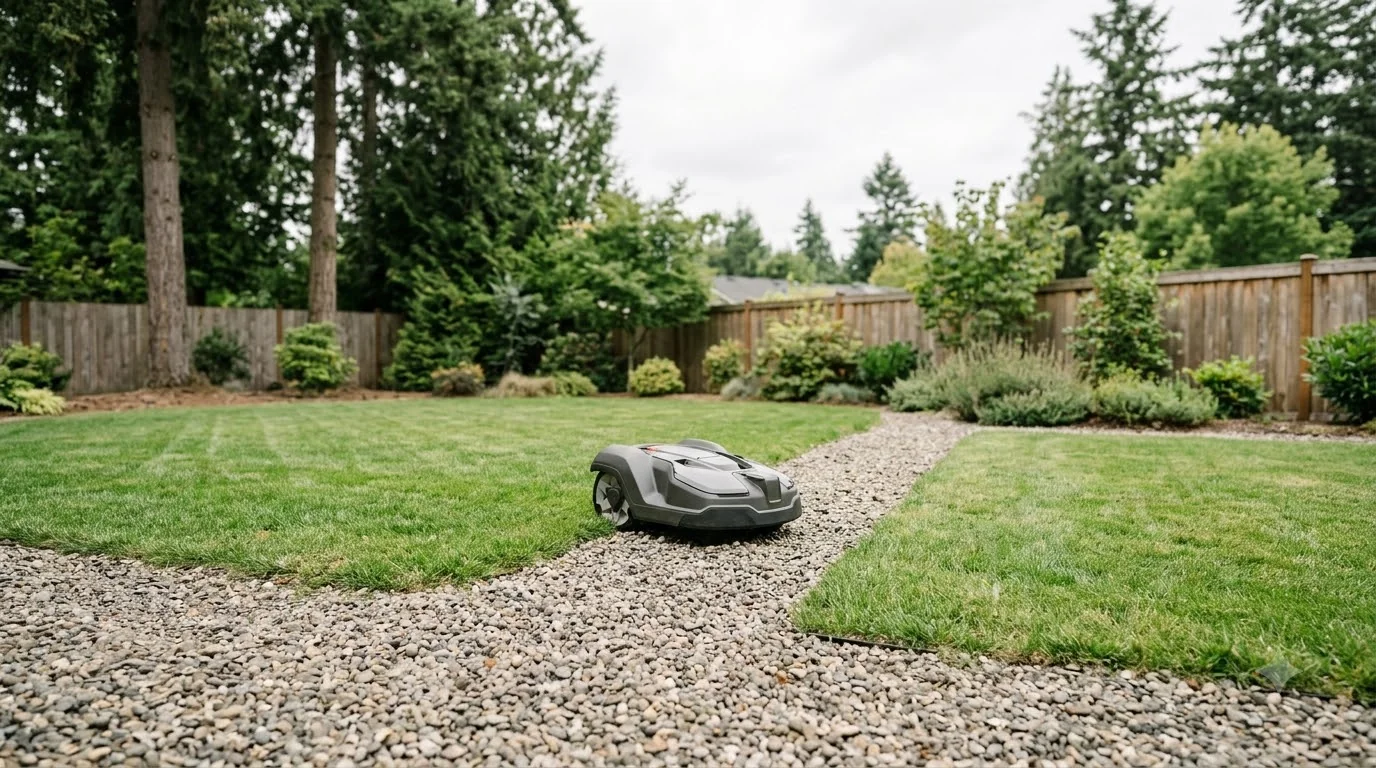

Robot mower and moles or gophers: a robot mower does not drive either animal out of your lawn, and no research we found shows that it does. Mowing and the noise or vibration of a machine have not been shown to move moles or pocket gophers. The useful steps are to identify which animal is digging, prepare the lawn so the mower can run cleanly, and use a control that has research behind it. This guide is current as of 2026-11-09.
The short answer
- Deterrent: no research we found shows a robot mower keeps moles or gophers away.
- Identify first: moles leave round, volcano-shaped mounds with no hole, while gophers leave crescent-shaped mounds with a plugged hole off to one side.
- Mounds matter for mowing: both animals leave mounds and ridges that interfere with mowing.
- Best-supported control: trapping, which UC IPM calls safe and dependable for both animals.
How to tell moles from pocket gophers
Moles and pocket gophers look similar from above, but their mounds and diets differ. Identifying the animal first decides which control makes sense, because traps built for one animal usually do not catch the other.
| Feature | Mole | Pocket gopher |
|---|---|---|
| Mound shape | Circular and volcano-shaped | Crescent- or horseshoe-shaped from above |
| Hole | No entrance or exit hole in the mound | Usually a plugged hole off to one side |
| Diet | Earthworms and insects | Roots and fleshy parts of plants |
| Tunnels | About 2 inches across, 8 to 12 inches below the surface | A main underground tunnel with lateral tunnels; the tunnels can divert and carry off irrigation water |
Fresh activity matters more than the animal’s name. Iowa State Extension describes the soil around ridges and mounds as soft and spongy when tunneling is recent, and UC IPM tells gopher trappers to look for fresh mounds before setting anything. Moles also eat heavily: Iowa State notes that a mole must consume nearly 100% of its body weight each day.
The mole and gopher details come from UC IPM’s mole guidance and its pocket gopher guidance. Mole mounds are more circular than gopher mounds, so the shape alone is a useful first check.
What moles and gophers do to a lawn
Both animals damage turf, but in different ways. Moles mainly harm a lawn by tunneling, while gophers chew into irrigation lines and leave mounds that get in the way of equipment.
Moles push soil up as surface ridges. UC IPM says the greatest damage from moles comes from their burrowing, which dislodges plants and dries out their roots. Iowa State Extension notes that these ridges are most common in shaded parts of a lawn, and that a single mole can tunnel up to 18 feet per hour in suitable soil.
Pocket gophers cause a different kind of damage. Their mounds are unsightly and interfere with mowing, and UC IPM notes that gophers gnaw flexible plastic water lines and irrigation systems. Their tunnels can also divert and carry off irrigation water, which leads to erosion.
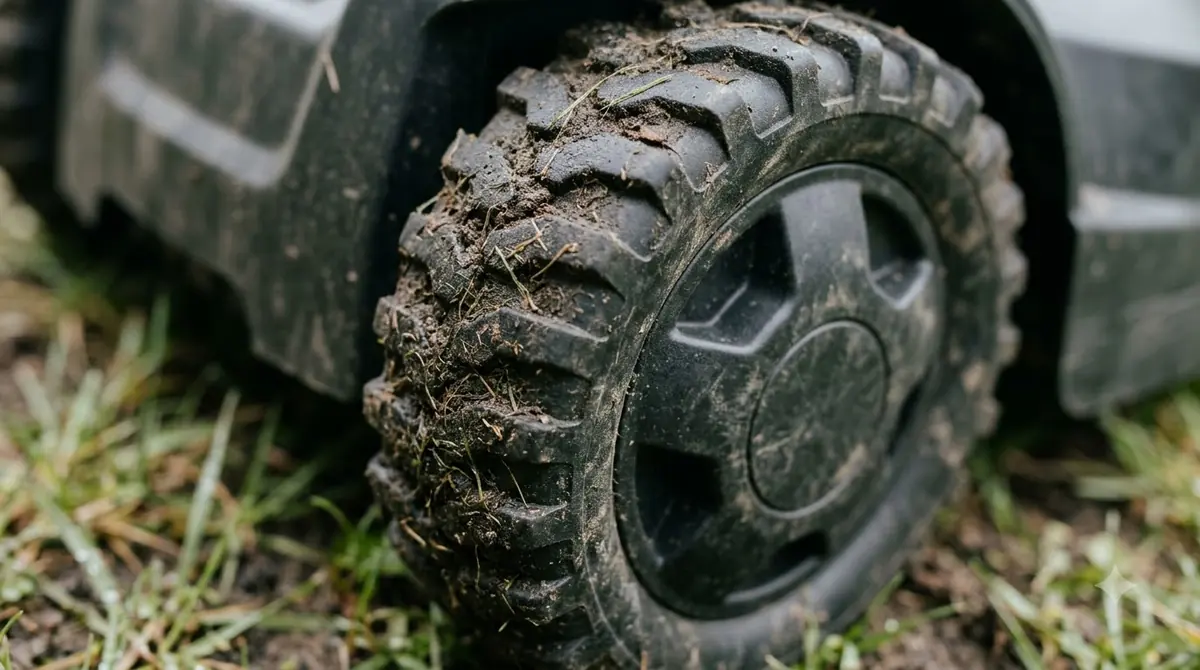
Robot mower and moles or gophers: does mowing keep them away?
No, not on the evidence we could find. We found no study that tested a robot mower against either animal, and the claims that appear in search results come from vendor blogs and product pages, so treat them as marketing.
The research on noise and vibration points the same way. UC IPM’s mole guidance says research does not support electrical devices that vibrate soil or make sound. For gophers, UC IPM reports that vibrating stakes, ultrasonic devices and wind-powered pinwheels have not been effective in research trials, and that gophers do not frighten easily, probably because of repeated exposure to noise and vibration.
Our reading is that a mower running on a schedule is a regular source of noise and vibration. Since gophers already habituate to that kind of disturbance, there is little reason to expect a robot mower to work as a deterrent. Treat the mower as a way to keep the lawn tidy, not as pest control.
Preparing the lawn before a robot mower runs
The practical question for a robot mower and moles or gophers is how to keep the mower running cleanly over a lawn that has mounds and ridges. Mounds interfere with mowing equipment, so clearing the worst of them is worth the time. Our guide on a robot mower on an uneven lawn covers the bumps that remain. The steps below are our reading of that guidance rather than a quote from any extension page.
- Walk the lawn once a week. Mark fresh mounds and ridges with a flag, because fresh mounds show where the animal is active.
- Level the high spots when the soil is dry. Soft, damp soil smears instead of crumbling, so wait for it to dry before raking mounds and ridges flat. Wheels can also leave marks on soft ground, which our guide to wheel ruts and brown patches explains.
- Do not lower the cutting height to chase a ridge. Cutting low to flatten an uneven patch can scalp the grass and leave brown stems, which is one of the risks of cutting grass too short, so keep the height you already use.
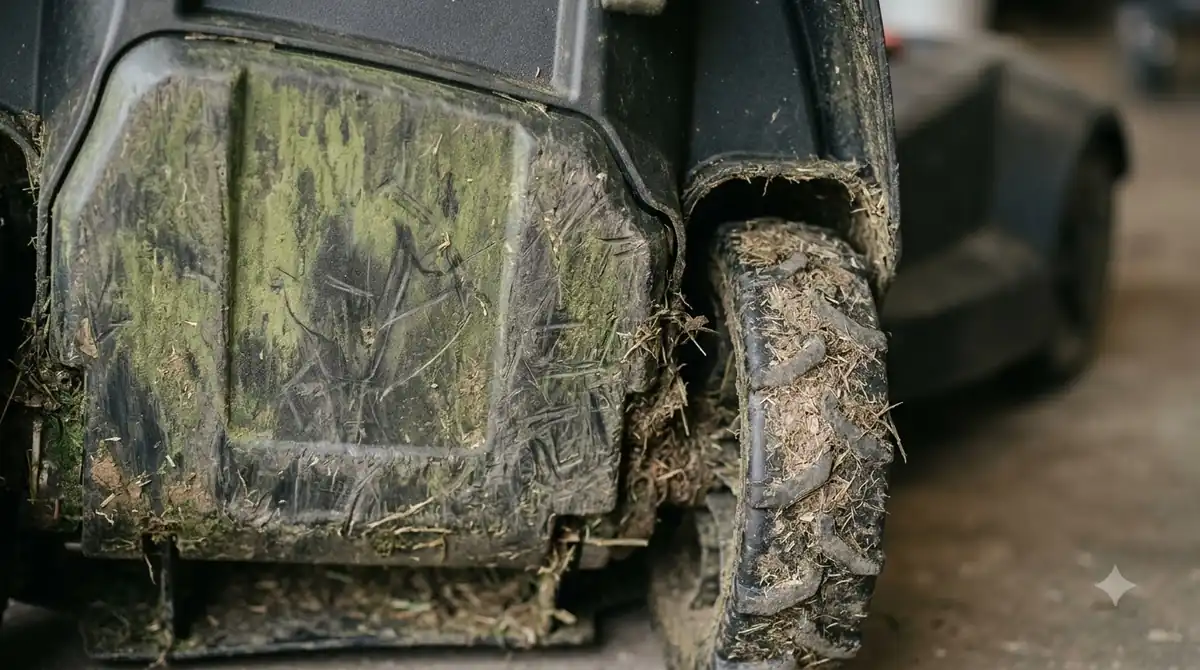
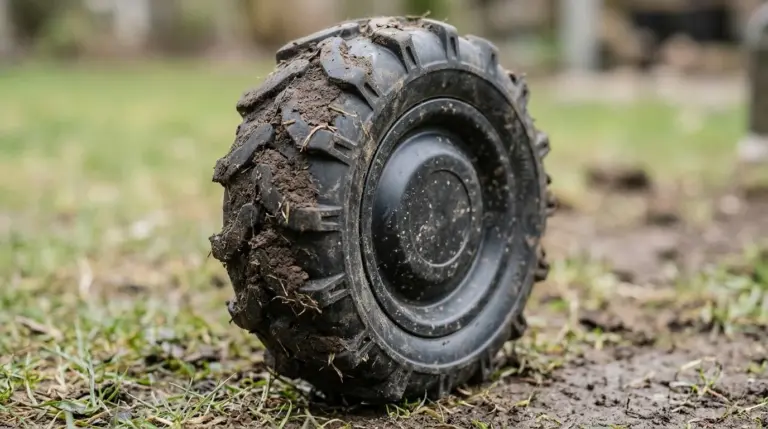
- Check the wheels after each cycle. Soil packed into the tread can change how the mower grips, so clear it off with a brush, as in how to clean a robot mower. If the mower keeps stopping at the same mound, see why a robot mower gets stuck in the same spot.
Control methods with research behind them
Trapping is the best-supported option for both animals, and it works best when traps go in active tunnels rather than at random. The other options vary in how much evidence supports them.
| Control | Moles | Pocket gophers |
|---|---|---|
| Trapping | The most universally applicable and dependable method. Set traps at least 18 inches from a mound, in tunnels moles use often. | A safe and effective method. Place traps in active burrows shown by fresh mounds, and reset them in a new spot if nothing is caught in 1 to 2 days. |
| Castor oil repellent | Some efficacy shown for eastern moles, but no published research for western moles. | No repellent has proven effective. |
| Vibration or sound devices | Research does not support their effectiveness. | Vibrating stakes and ultrasonic devices have not been effective in research trials. |
| Grub control | May make the lawn less attractive to moles, but research has not confirmed this. | Not addressed in the UC IPM gopher guidance. |
Mole traps belong in the tunnels, not on the mounds. Iowa State notes that traps are not effective on mounds, and UC IPM advises placing mole traps at least 18 inches from a mound, in tunnels that moles use most often.
For gophers, toxic baits are another option. UC IPM says the key is placement, so bait goes in the main underground tunnel rather than the side tunnels. If new mounds appear more than 2 days after baiting, the bait needs to be reapplied or the animal trapped instead. Toxic baits are dangerous to pets, children and wildlife, so read the label carefully and follow local rules before using them.
Mistakes to avoid with moles and gophers
Most wasted effort with a robot mower and moles or gophers comes from a few habits. Each one is covered by the extension guidance above.
- Treating every mound as the same animal. Check the shape and plug first, because mole and gopher controls are different.
- Relying on a vibration device or the mower. UC IPM reports that research does not support these approaches.
- Expecting a repellent to protect against gophers. No repellent has proven effective for them.
- Waiting for damage to stop on its own. Gophers can damage irrigation lines, and both animals keep tunneling if nothing changes.
The short version for a robot mower and moles or gophers: identify the animal, prepare the lawn so the mower can run cleanly, and use a control that has research behind it.
Frequently asked questions
Does mowing kill moles or gophers?
For a robot mower and moles or gophers, none of the sources we read says mowing kills either animal. The documented problem is that mounds and ridges interfere with mowing, so a mower does not solve the underlying infestation.
Do castor oil repellents work on moles?
UC IPM says research shows some efficacy for eastern moles, but none of the approaches it reviewed has stopped mole damage or driven moles from an area. There is no published research on western moles.
Will a robot mower scare pocket gophers away?
No evidence supports this. UC IPM reports that gophers do not frighten easily because of repeated exposure to noise and vibration, and that frightening devices have not been effective in research trials.
Is trapping or baiting better for gophers?
UC IPM calls trapping a safe and effective method. Baiting can work when the bait is placed in the main tunnel, but it needs careful placement, the label read in full, and a check for new mounds after 2 days.
Sources
- Moles (UC IPM, UC Statewide Integrated Pest Management Program): mole diet, mound shape, repellent and device research, and trapping.
- Pocket Gophers (UC IPM): gopher diet, mound shape and plug, irrigation damage, frightening devices, trapping, and baiting.
- Moles: Damage Management (Iowa State University Extension): mole mounds, surface ridges, tunnel speed, and trapping.
 Up next7 min readBy YardWill a Robot Mower Get Stuck on a Lawn with Mole Hills?Updated Nov 11, 2026
 8 min readBy YardRobot Mower for Front and Back Yard: What WorksUpdated Nov 11, 2026
 8 min readBy YardRobot Mower on Uneven Lawn: What Works and What FailsUpdated Nov 11, 2026
 8 min readBy YardOne Third Rule for Mowing Grass: How It Works and Why It MattersUpdated Nov 11, 2026
 7 min readBy YardCan a Robot Mower Work in a Long Narrow Yard?Updated Nov 11, 2026
 9 min readBy YardHow Do I Know If a Robot Mower Will Work in My Yard?Updated Nov 11, 2026