
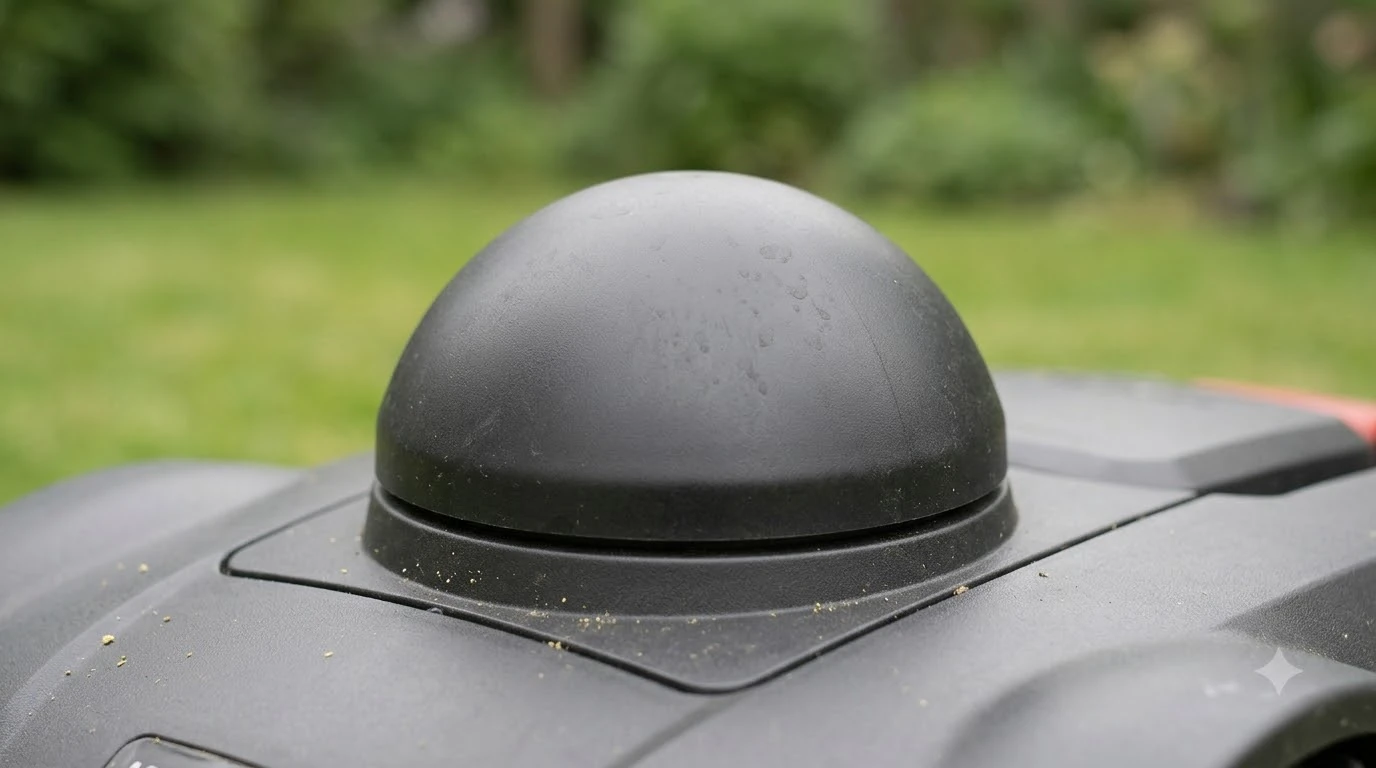

What does RTK stand for on a robot mower? It stands for real-time kinematic. It is a correction method that uses a fixed reference point to tighten the mower’s satellite position, which vendor pages describe as centimeter-level under good conditions. Trees and walls can weaken it, so the yard layout matters as much as the name.
The short answer
- Full name: real-time kinematic. Sunseeker Elite’s glossary expands the term as Real-Time Kinematic Global Navigation Satellite System.
- What it does: it corrects satellite positioning errors using data from a reference point with a known position.
- Accuracy: vendor pages describe centimeter-level or inch-level results under suitable conditions, compared with meter-level for consumer GPS.
- Weak point: trees, roofs, walls and metal structures can block or reflect the signals.
What does RTK stand for on a robot mower?
RTK stands for real-time kinematic, a correction method for satellite positioning. Sunseeker Elite’s glossary expands the term as “Real-Time Kinematic Global Navigation Satellite System,” so the name covers both the correction and the satellite signals it works on.
The authors of a peer-reviewed study in the journal Sensors describe real-time kinematic positioning as “a satellite navigation technique.” The name does not describe a separate sensor on the mower. It describes a correction applied to the satellite signals the mower’s receiver already picks up.
How the base station sends corrections to the mower
The base station is a reference point with a known position, and it sends correction data to the mower in real time. Sunseeker Elite says that “a base station or correction network compares satellite measurements with a known reference position,” and the corrections then go to the moving receiver, called the rover.
The Sensors study says the reference data is used to “reduce or eliminate significant correlation errors,” and that continuous availability of base station observations is one of the essential requirements of RTK positioning. The peer-reviewed RTK outage study is the source for those lines.
Our reading is that a mower depends on the reference data staying available. If the correction stream stops, the mower loses an input the study calls essential, and the pages read do not say how far its position drifts in that case.
How much more accurate RTK is than standard GPS
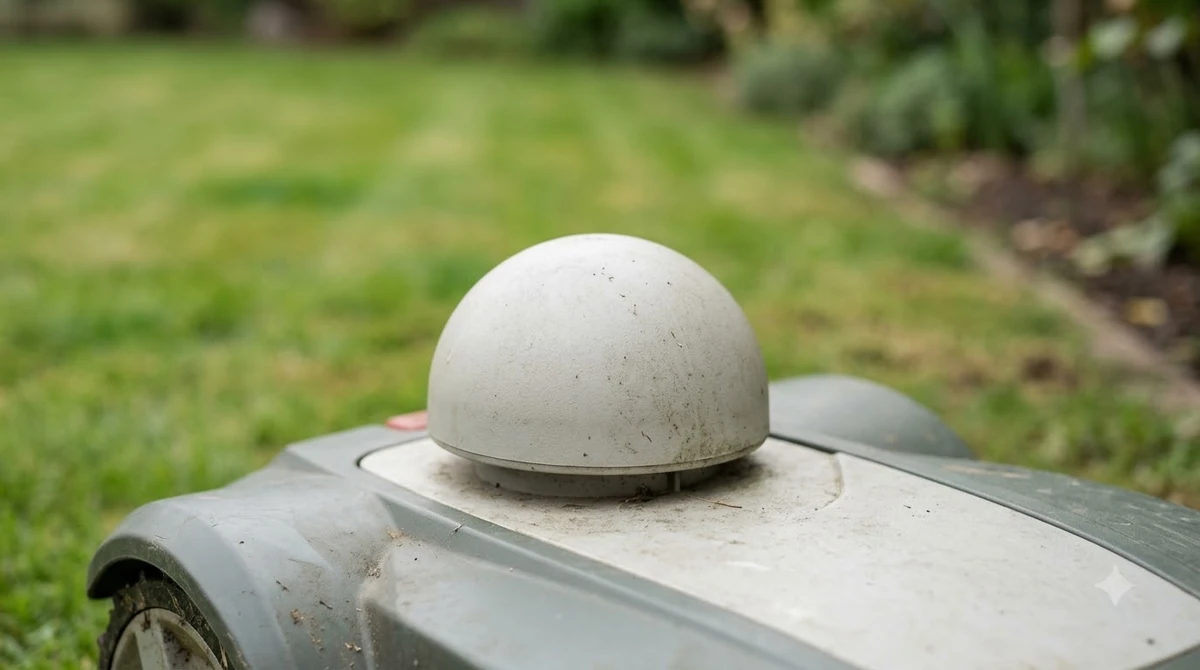
When people ask what does RTK stand for on a robot mower, the follow-up is usually how accurate it is. Vendor pages describe RTK as centimeter-level or inch-level under suitable conditions, while consumer GPS is described as meter-level. On paper that is roughly a 100-fold gap, but the figures come from different pages and use different wording.
| Positioning | Accuracy wording in the sources read | Source |
|---|---|---|
| Consumer GPS | “meter-level” in the glossary body, “foot-level” in its FAQ | Sunseeker Tech glossary |
| RTK under suitable conditions | “inch-level” | Sunseeker Tech glossary |
| RTK on a mower setup | “centimeter-level” when the complete signal chain remains stable | Sunseeker Elite glossary |
| RTK rover receiver | “centimeter or sub-millimeter level” | Sensors study (2019) |
The figures also drift between pages. A Mammotion blog gives RTK as 1 to 3 centimeters and GPS as 1 to 3 meters, while an RTK data blog gives 1 to 2 cm close to the base in open sky and calls that a “best-case figure in open sky with stable corrections.” Our reading is that none of these pages gives a test method for a mower in a real yard, so treat them as best-case numbers under open sky. Sunseeker Tech’s RTK glossary is the source for the consumer GPS and RTK wording in the table.
Why trees and walls weaken RTK
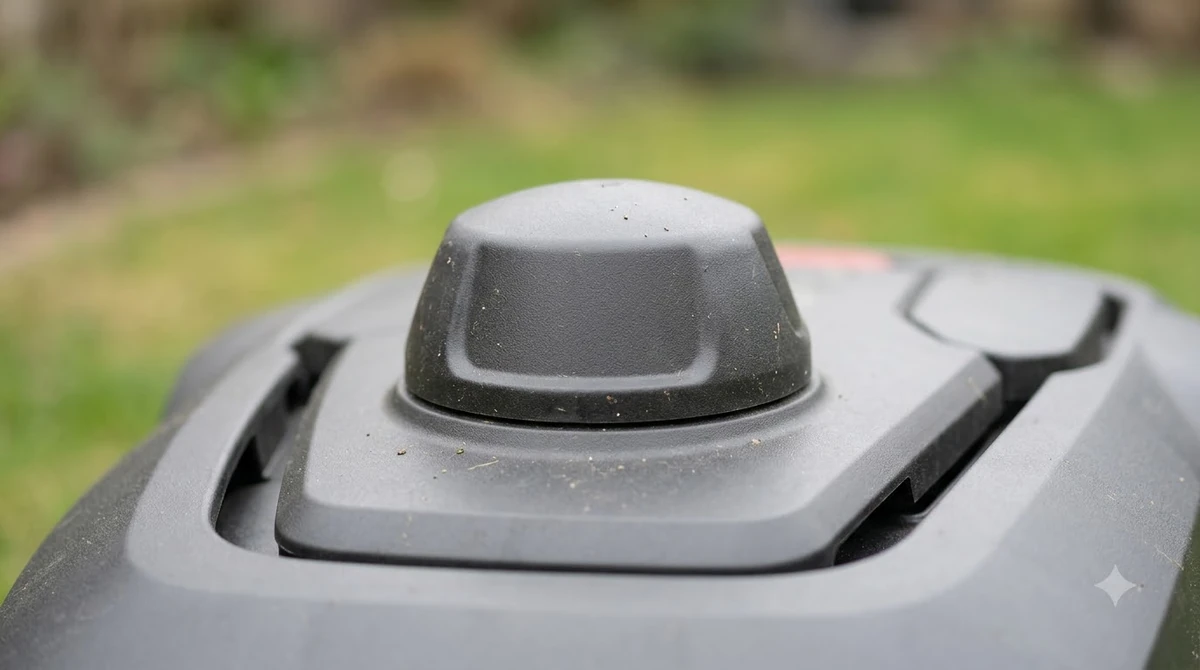
Trees, roofs, walls and metal structures can block or reflect satellite signals, which weakens the correction a mower relies on. Sunseeker Tech’s glossary says performance still depends on clear satellite visibility and an open view of the sky.
Sunseeker Tech’s global blog advises against placing the base “under dense tree canopies, deep under eaves, or directly against tall walls,” and recommends at least a 160-degree vertical sky view for the base station (our guide on where to mount an RTK base station covers placement). The RTK data blog adds that RTK needs clear sky above roughly 15 degrees from the horizon.
The same glossary groups “buildings, dense tree cover, slopes, metal structures, and reflected signals” as things that can block or distort reception. Reflections are on that list alongside blockage, so a wall can hurt a fix even when no tree stands nearby. Our guide to RTK robot mowers near tall buildings looks at that case in a yard.
Heads up
None of the pages read gives a figure for how much a tree line or a wall reduces accuracy. A centimeter-level spec does not show how a mower will perform in a yard with mature trees along one boundary.
Network RTK: corrections without a base station in your yard
Network RTK gets corrections from a service rather than a local base station. Navimow says that with Network RTK support there is “no need to install any local antenna,” and that access is included at no extra cost. Navimow’s RTK technology article is the source for these lines.
A coverage checker on the same page can show the service as unavailable, so confirm coverage for your address before you buy. Our reading is that network RTK changes where the corrections come from, not the need for a clear view of the sky. That is also why the answer to what does RTK stand for on a robot mower does not tell you whether you need a base station.
RTK is one of several navigation approaches mowers use, and RTK compared with lidar and vision shows how the trade-offs differ.
So what does RTK stand for on a robot mower in practice? Real-time kinematic: a correction applied to satellite signals, best-case centimeter-level, and weaker under trees and beside walls.
Frequently asked questions
Is RTK the same thing as GPS?
No. RTK is a correction applied to satellite positioning, so a mower using it still relies on GNSS signals. Sunseeker Elite describes the reference as a base station or correction network that sends corrections to the rover in real time.
Does an RTK robot mower always need a base station?
Not always. Sunseeker Elite says a base station or correction network can supply the reference, and Navimow says Network RTK needs no local antenna. Coverage varies by area, so check the vendor’s coverage information before buying.
Does RTK work under trees?
Sources say dense tree cover can block or distort reception, and performance depends on an open view of the sky. The pages read give no accuracy figure for a tree canopy, so check your own yard layout rather than assuming the centimeter figure applies.
How accurate is RTK on a robot mower?
Vendor pages describe centimeter-level or inch-level results under suitable conditions. A peer-reviewed study gives centimeter or sub-millimeter precision for a rover receiver. None of these sources describes a test method for a mowing setup, so treat the figures as best cases.
Sources
- Sunseeker Elite RTK GNSS glossary (vendor): the term’s expansion, the base station or correction network role, centimeter-level accuracy, and the list of obstructions.
- Sunseeker Tech GPS RTK GNSS glossary (vendor): consumer GPS and RTK accuracy wording, and the sky-view condition.
- A New Asynchronous RTK Method to Mitigate Base Station Observation Outages (Sensors, 2019, peer-reviewed): the RTK definition, the base station’s error-reduction role, and the continuity requirement.
- Navimow RTK technology article (vendor): Network RTK needs no local antenna, and its access terms.
- Sunseeker Tech RTK blog (vendor): base placement advice and the 160-degree sky view.
- Mammotion UK wire-free RTK guide (vendor): RTK and GPS accuracy ranges, and obstruction notes.
- RTKdata wire-free RTK accuracy guide (third-party blog): the “best-case” condition, the 15-degree sky angle, and multipath off walls and glass.
 Up next7 min readLearnHow to Set Up an RTK Robot Mower: Base Station StepsUpdated Nov 11, 2026
 9 min readLearnAnthbot M5 RTK Station Setup Problems: Causes and FixesUpdated Nov 11, 2026
 7 min readLearnDoes a Robot Mower Work With a Dog in the Yard?Updated Nov 11, 2026
 7 min readLearnHow Much Does a Robot Mower Weigh?Updated Nov 11, 2026
 8 min readLearnHow Often Does a Robot Mower Need to Charge?Updated Nov 11, 2026
 8 min readLearnHow Fast Does a Robot Mower Cut? Speed Figures ExplainedUpdated Nov 11, 2026