
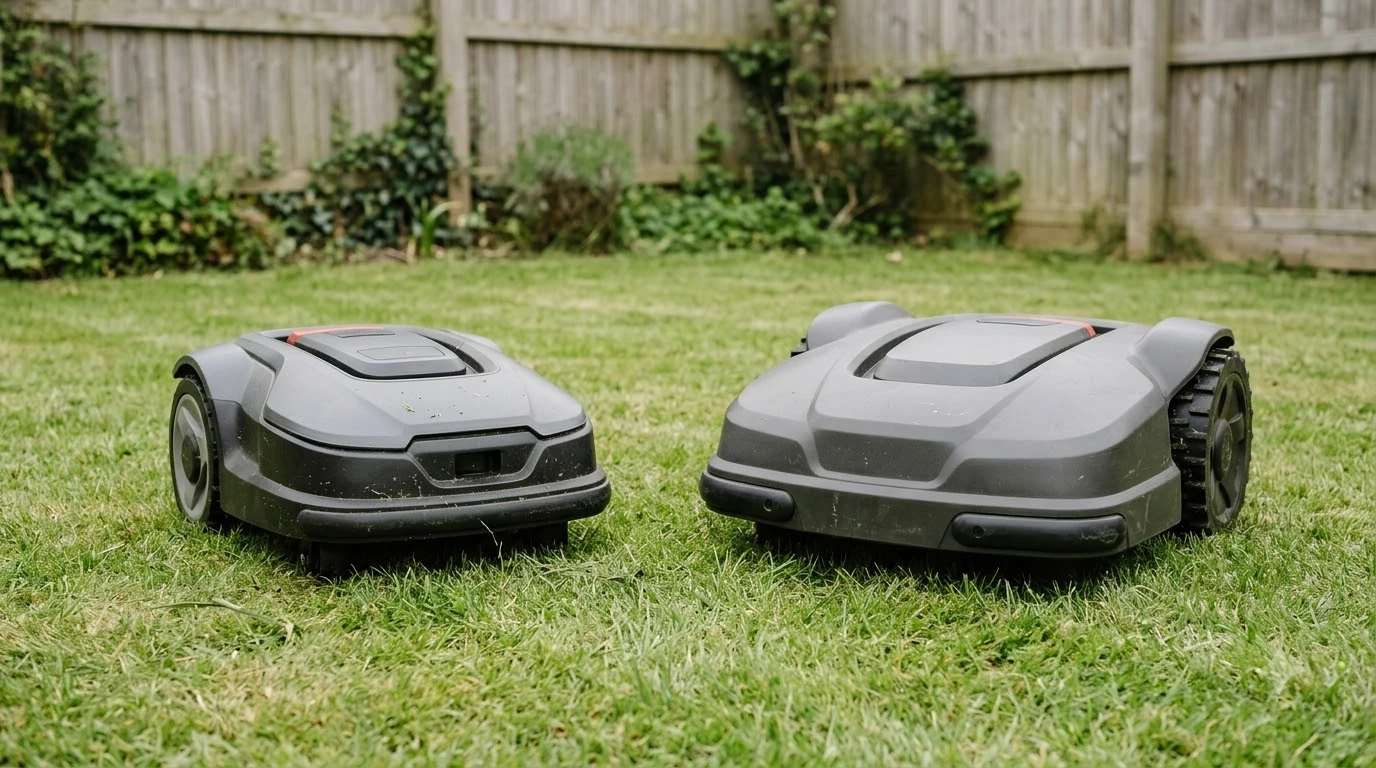

For one large robot mower vs two small ones, the trade-off is simple: a more even cut on one side, a faster finish on the other. Neither approach is universally better. The choice depends on the total mowable area, how many charge cycles a single unit would need, and how much you care about the uniformity of the cut where the two mowers’ work overlaps.
The short answer
- Even cut: one mower keeps one cutting height and one pattern. Two mowers have to match height settings exactly, or the stripes can show.
- Speed: two mowers can cover a large area in parallel. One mower may need several charge cycles on a big lawn.
- Setup: two mowers mean two docks, two boundaries, and two sets of blades and maintenance.
- Coordination: some systems let mowers share a map, while others require separate zones so they do not mow the same ground.
Why one large mower gives a cleaner finish
A single mower keeps one cutting height, one speed, and one pattern across the whole lawn. That consistency matters most on turf that shows every stripe, such as a lawn that is cut short or viewed up close. With two mowers, small differences in blade wear, wheel slip, or height calibration can leave a visible line where their paths meet. Two mowers double many costs, so yearly upkeep costs are worth estimating before you decide. Size is the core variable here, and choosing mower size for the same lawn explains how much headroom each option gives. Wider decks finish faster, and what cutting width means helps explain the cleaner finish from one big mower.
Deck width is the other factor. A wider deck covers more ground on each pass, so a large mower needs fewer passes to finish the same area. Robomow’s guide to large areas makes this point directly: a 56 cm model covers twice the area of a 28 cm model in the same time. That advantage is real, though it is a claim from a manufacturer, and the actual gain depends on the model and the lawn shape.
Why two mowers can finish faster
The main argument for two mowers is throughput. A robot mower runs for a limited time before it returns to the dock, and a large lawn can take many hours of total mowing. Dreame’s guide notes that most robot mowers run for 2 to 3 hours on a single charge, and that a 4,000 square meter yard can need 6 to 8 hours of total mowing time. A single unit on that lawn makes several trips to the dock. Two units can work in parallel, so the lawn is finished in roughly half the elapsed time if each unit has its own zone.
That benefit is most visible on lawns that are spread out, separated by paths, or divided into sections by beds and fences. Two mowers can each take a zone, and each returns to its own dock when the battery runs low. Dreame’s guide also treats anything above about 6,000 square meters as a case for a multi-zone schedule or a second mower.
What it takes to run two mowers well
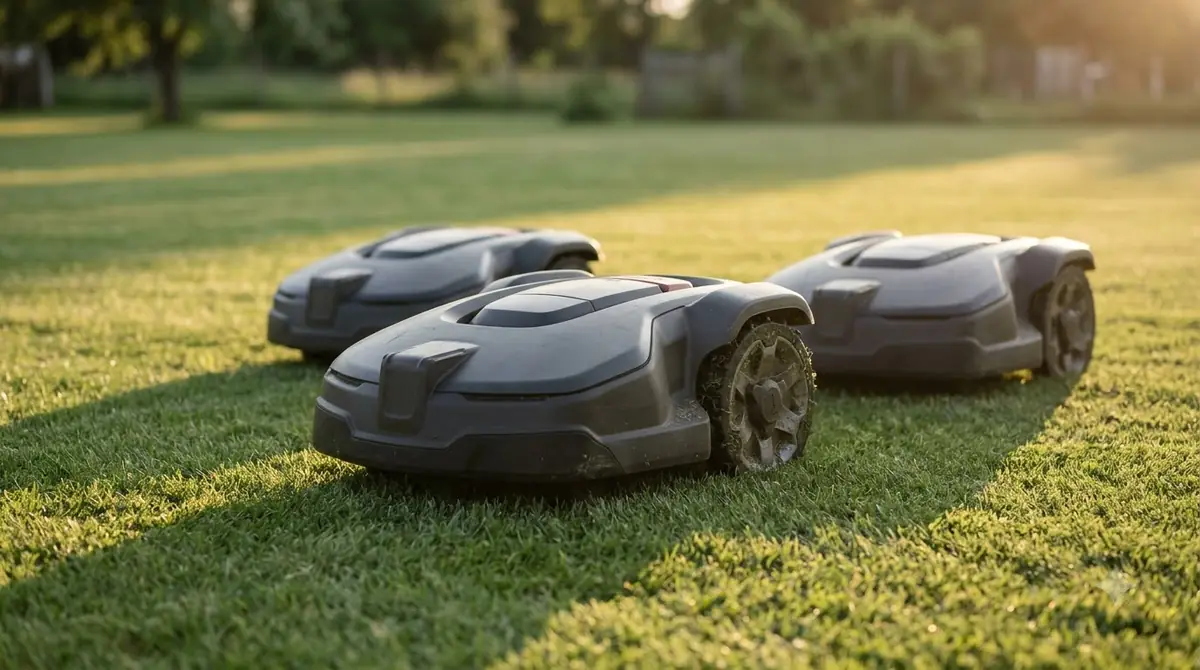
Two mowers add work that a single unit does not need. Each one needs its own charging station and its own perimeter or virtual boundary. If the boundary wires sit close together, they can interfere with each other, so some manufacturers tell you to set a different induction frequency on each mower. Robomow’s guide to large areas describes this setup and advises keeping the two boundaries clearly separated.
Scheduling is the other task. If the mowers run at the same time in the same area, they can waste time or leave uneven patches. Some newer systems share a map so the mowers know which ground the other has already cut, but that feature depends on the brand and the model. Check whether the two units can coordinate, or whether you need to split the lawn into fixed zones and set separate schedules.
Maintenance and cost
Two mowers double the blades, the batteries, the docks, and the boundary checks. The purchase price of two mid-range units can exceed one large unit, and so can the total of blade and battery replacements. A single large mower has one set of parts, one dock, and one boundary to check, which is simpler to maintain and store. Prices change often and vary by region, so compare the current quotes rather than relying on any single figure. Two mowers need two sets of blades, so blade replacement costs each year is a useful figure to compare. Buying two smaller units can cost the same as one premium unit, and how cheap and expensive mowers differ explains why. Whichever setup you pick, Husqvarna Automower against Eufy shows how two brands differ on cost and features.
Two mowers also give you a backup. If one unit has a fault, the other can still cut most of the lawn while you repair it. A single large mower stops completely until it is fixed, which is a real risk on a lawn that must be cut every few days.
One large robot mower vs two small ones: which setup suits
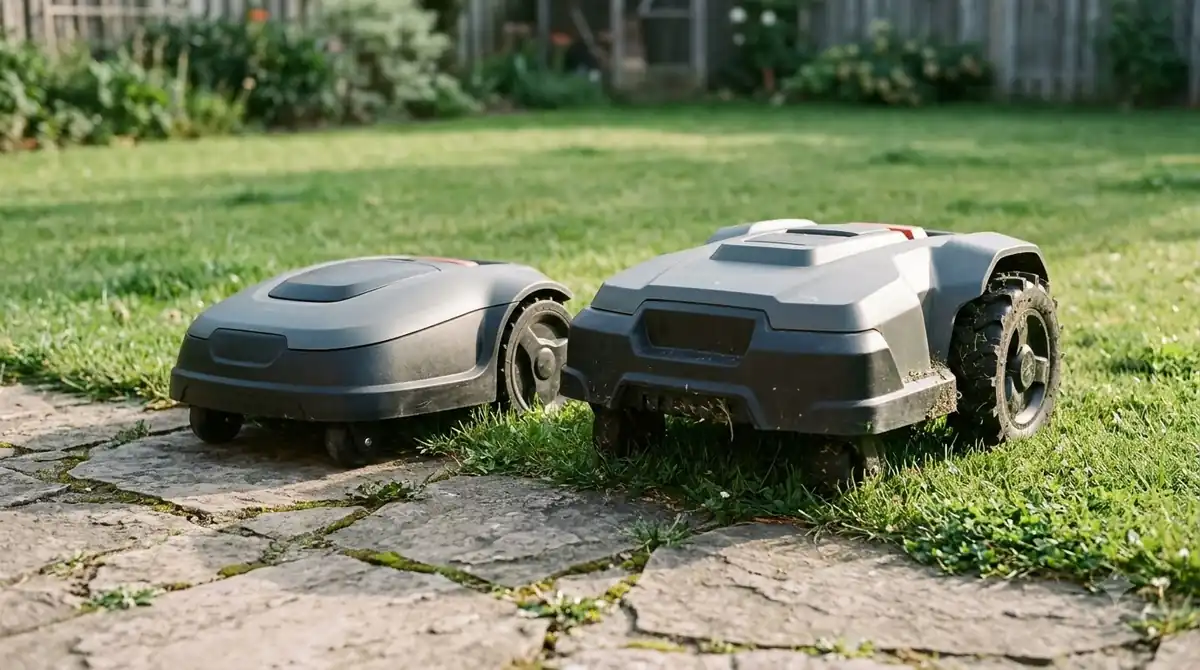
One large robot mower suits a single, open lawn that fits within the rated coverage with headroom, where an even finish matters most and the owner wants simple maintenance. Two smaller mowers suit a lawn that is too large for one unit to finish in a day, a property split into separate sections, or an owner who wants a backup and does not mind the extra setup. The measured mowable area and the layout of the yard usually decide the answer more than the brand.
Frequently asked questions
Will two robot mowers leave visible stripes where they meet?
They can, if their cutting heights or wheel traction differ. Matching the height settings and keeping the two zones clearly separated reduces the risk. A single mower avoids the issue entirely.
Can two mowers share the same lawn at the same time?
Only if the system is designed for it. Some brands let mowers share a map so they avoid each other’s ground. Others need separate zones and schedules, and running two units in one open area without coordination can waste time.
Is one big mower cheaper than two small ones?
Often yes, because you buy one dock, one boundary, and one set of parts. But the price gap varies by model and region, so compare current quotes for the same total coverage.
How do I know if one mower can handle my lawn?
Measure the mowable area, add headroom, and compare it with the model’s daily coverage. If the lawn needs several charge cycles per day to finish, a second unit or a multi-zone plan may be worth considering.
Sources
- Robomow, Mowing robots for large areas (manufacturer): deck width comparison, two-mower wire setup and induction frequency, and the advice to leave buffer.
- Belrobotics, Why choose a professional robot mower instead of several little robots? (manufacturer): cut-height consistency across units and zone settings. The page offers no test data.
- Dreame, Best Robot Mowers for Large Lawns (2026 Buyer’s Guide) (manufacturer): run time per charge, total mowing hours on a 1-acre yard, and the multi-zone threshold.
 Up next7 min readReviews & CompareSmall vs Large Robot Mower for the Same LawnUpdated Nov 18, 2026
 8 min readReviews & CompareStihl iMOW vs Husqvarna Automower: How the Two Lines CompareUpdated Nov 14, 2026
 7 min readReviews & CompareIs RTK Worth It for a Small Yard? Sky View DecidesUpdated Nov 17, 2026
 7 min readReviews & CompareLymow One Plus vs Navimow X430: Specs ComparedUpdated Nov 18, 2026
 7 min readReviews & CompareIs the Lymow One Worth It? Coverage, Slope and Blade CostsUpdated Nov 16, 2026
 8 min readReviews & CompareLymow One Plus Review: 5 Essential Specs, Honest TakeUpdated Nov 16, 2026