
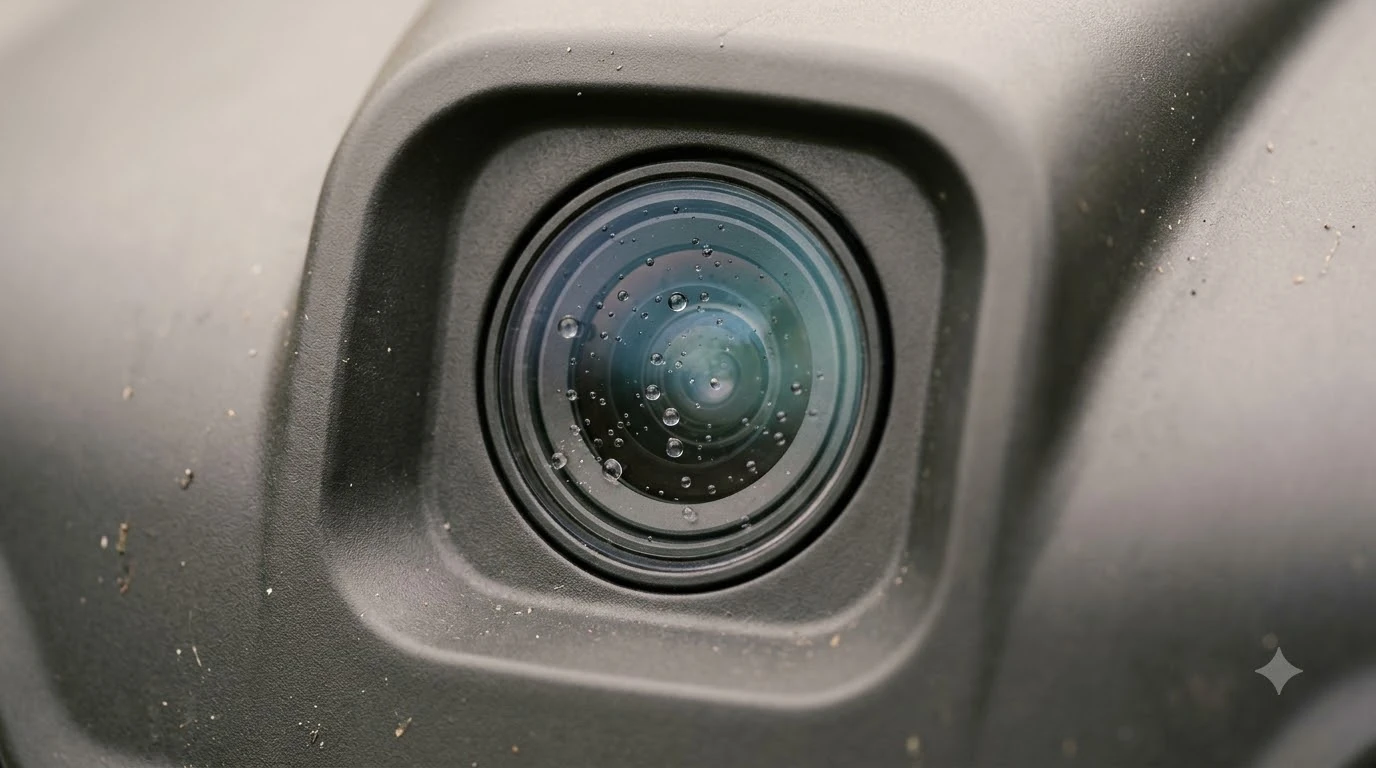

Is the Lymow One worth it? It can be, for an open lawn of about half an acre that you want to keep wire-free, but the price and the blade costs need checking. The published specs look strong on navigation and coverage: it uses RTK GPS with VSLAM camera mapping and needs no perimeter wire. The two open questions are the slope rating, where sources disagree, and the cost of proprietary blades that do not come in the box.
The short answer
- Worth it if: your yard is mostly open to the sky and about 0.57 acres or less, and you want to skip a boundary wire.
- Think twice if: the lawn sits under heavy trees or beside tall walls, where satellite positioning weakens.
- Check first: the slope rating, which one page lists as 45 percent grade and another as 45 degrees.
- Running cost: blades are proprietary at about USD 20 to 30 each, and none ship in the box.
What the Lymow One is built to do
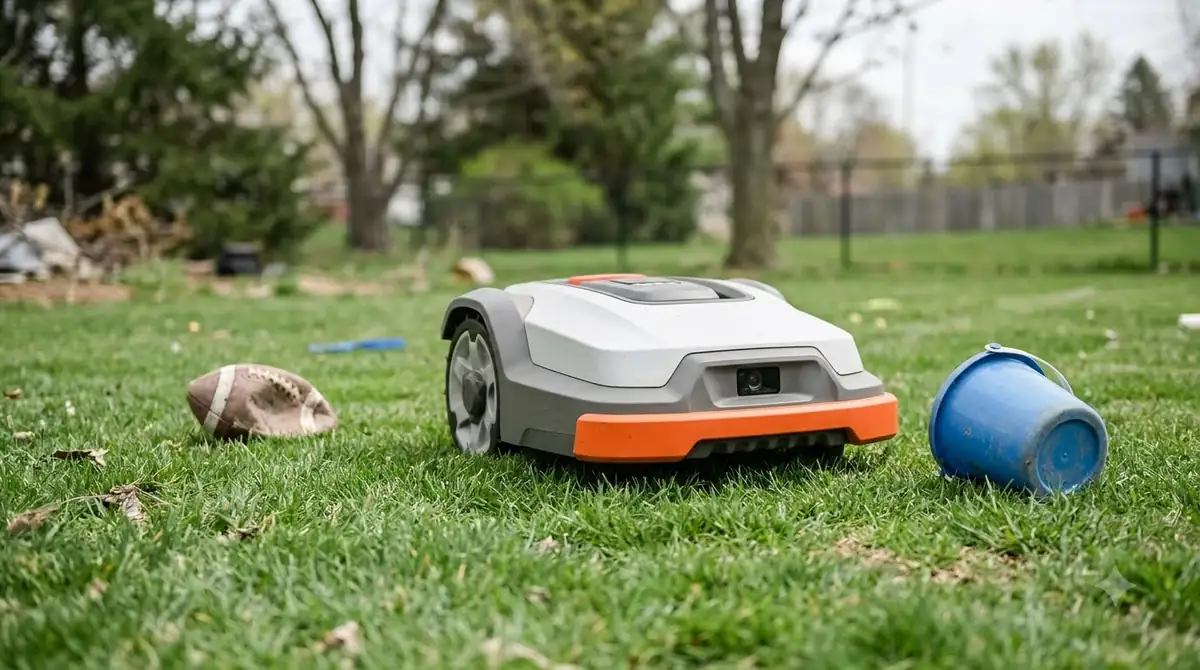
The Lymow One is a wire-free robot mower with a 16-inch deck, a tracked drive system, and a battery that can be swapped without tools. Two review pages report a cutting height range of 1.2 to 4 inches and about 25,000 square feet per charge, which is roughly 0.57 acres. The mower weighs 77.6 lb, which is heavy enough to matter if you have to lift it over a step or onto a trailer. The figures behind this verdict are listed in full in the Lymow One spec review for readers who want the numbers.
The frame is aluminum alloy, the drive uses tank treads with omnidirectional front wheels, and the spec table lists an IPX6 rating for rain and sprinkler spray. A rain sensor, lift detection and a physical emergency stop button are also listed. Those details come from the manufacturer-sourced spec tables that reviewers reproduced, so treat them as published claims until you see the manual.

Navigation without a boundary wire
The Lymow One combines RTK GPS with VSLAM, a camera-based mapping method. One review describes AI vision with semantic recognition, five ultrasonic sensors and a contact bumper for obstacles. The writer describes RTK as giving centimeter-level accuracy in open areas, and VSLAM as taking over near trees, fences and buildings. Navigation without a wire is a shared selling point, and Lymow One against Mammotion Luba 3 AWD compares both approaches.
The weak point is the same one that affects every satellite-based mower. RTK accuracy depends on a clear view of the sky, and a manufacturer in the same category notes that RTK degrades under dense trees and near tall structures. Our reading is that a yard with heavy canopy or tall walls is the first thing to check before you compare this mower with a wire-based model. Lighting also affects the camera, so shadows and a dirty lens can reduce what the mower sees.
Heads up
Vendor RTK claims of 1 to 2 cm accuracy come with no stated test conditions. Use them as a ceiling, not as what you will see under your own trees.
Coverage and the slope question
Coverage is the number most buyers compare first. Two review pages report about 25,000 square feet per charge, and one of them gives up to 3 hours of runtime. A separate spec table lists a maximum area of 6.73 acres, which the page does not explain, so it should not be read as a per-charge or per-day figure. A third figure of 1.73 acres per day with auto-recharging appears in one review without a named source, so treat it as unverified. Coverage and slope questions are easier to judge after reading problems reported by Lymow One owners.
The slope rating is the main conflict. One review quotes a maximum incline of 45 percent grade, and another says up to 45 degrees, which is about 100 percent grade. Those are different units. A 45 percent grade is only about 24 degrees, so both pages cannot be right. Until the manufacturer manual confirms the figure, do not treat either number as settled for a steep yard. Our explainer on robot mower slope ratings shows how to convert between the two.
Cutting height matters for lawn health as well. Clemson Cooperative Extension advises removing no more than one-third of the grass height at any single mowing. A robot mower that cuts often in small amounts follows that rule easily, but you still need to set the height to suit your grass type within the 1.2 to 4 inch range.
Is the Lymow One worth it for the money, including blades?
The price in the sources is from 2024, so it may be out of date. Before you buy, look up the current listing and compare it with a year of lawn service. Then add the ongoing cost of the blades, which are proprietary at about USD 20 to 30 each and are not included in the box. Blades wear out, so the running cost is real even if the purchase price looks attractive.
Noise is another number to check. One spec table lists 68 dB. We did not find an independent measurement, and the test method is not stated. A decibel figure only helps when compared with other models measured the same way.

Who the Lymow One suits
The Lymow One suits a homeowner with an open lawn of up to roughly half an acre who wants a wire-free install, is comfortable checking the manual for the slope figure, and budgets for proprietary blades. It is a sensible option for a yard without steep banks and without dense tree cover. For a plain list of what works and what does not, see the Lymow One advantages and drawbacks. If the price is a stretch, alternatives worth comparing with the Lymow One show what else fits the same yard. Shoppers who rule out the Lymow One often look at brand-level matchups such as Worx Landroid versus Segway Navimow next.
It is a weaker fit for a heavily wooded lot, a steep hillside, or a buyer who needs one clear, verified slope and coverage figure before spending. In those cases, look for a model with an independent test or a single agreed rating before you commit.
Related reads: The ownership cost includes consumables, so see Lymow replacement blade options for what the spare parts involve.
Frequently asked questions
Is the Lymow One worth it compared with a wire-based mower?
It can be, if your yard is open and you want to avoid burying a boundary wire. A wire-based mower may suit a shaded lot better, because it does not depend on satellite signal.
What is the Lymow One slope rating?
The sources disagree. One page lists 45 percent grade and another lists 45 degrees. Confirm the figure in the manual before you rely on it.
How much does it cost to keep the Lymow One running?
Blades are proprietary at about USD 20 to 30 each and none ship in the box, so plan for replacements. The sources did not give a reliable electricity figure.
How much area can the Lymow One cover?
Two review pages report about 25,000 square feet per charge, roughly 0.57 acres. A 6.73 acre figure in one spec table is not explained and should not be read as a per-charge number.
Sources
- Freshly Charged, 2024 Lymow One review (independent review): frame, IPX6 rating, tank treads, spec table and the 45 percent grade listing.
- Geeky Gadgets, Lymow One boundary-free robot mower (publication): RTK plus VSLAM navigation and the 45 degree slope claim.
- Yarbo, RTK robot mower reliability (manufacturer blog): RTK degrades under dense trees and near tall structures.
 Up next7 min readReviews & CompareRobot Mower Blade Replacement Cost Per Year: Brand FiguresUpdated Nov 17, 2026
 6 min readReviews & CompareSingle Blade Disc vs Multi Blade Robot Mower: Cut, Upkeep and CostUpdated Nov 14, 2026
 8 min readReviews & CompareLymow One Plus Review: 5 Essential Specs, Honest TakeUpdated Nov 16, 2026
 8 min readReviews & CompareLymow One Pros and Cons: What the Sourced Specs ShowUpdated Nov 15, 2026
 7 min readReviews & CompareLymow One Plus vs Navimow X430: Specs ComparedUpdated Nov 18, 2026
 9 min readReviews & CompareLymow One Alternatives: Specs to Compare Before You BuyUpdated Nov 14, 2026