
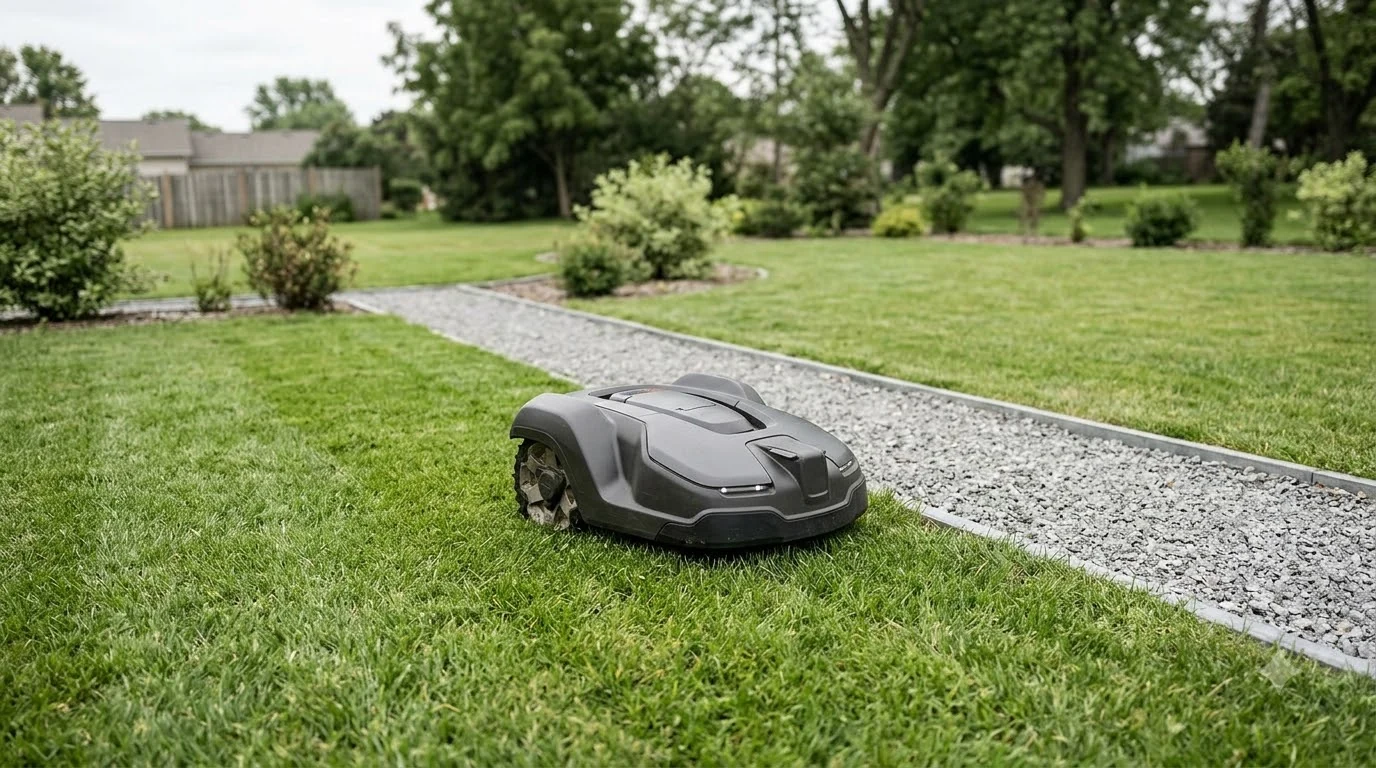

The best robot mower for front and back yard multiple zones is the one whose zone system matches how your two lawns connect. If a wide passage links them, a mower with a secondary zone is usually enough. If they are split by a gap with no route, you will need a second charging station, a manual move or a model with a different navigation method. Start with the layout, then compare the zone features.
The short answer
- Connected by a passage: use a main and secondary zone with a passage at least about 1 meter wide.
- Separated by a gap: expect to carry the mower or add a second charging station.
- Zone count: two zones is the easy case; check the model’s limit for three or more.
- Time split: set the share of mowing time for each yard so the smaller one is not neglected.
- Navigation: wire, RFID tags and GPS each handle zones differently, so match the system to your yard.
Best robot mower for front and back yard multiple zones: check the connection first
Most front and back yard setups fall into one of three layouts. The first is a connected pair, where a grass or drivable path joins the two lawns. The second is an adjacent pair, where the lawns sit side by side and share one boundary wire. The third is a separated pair, where there is no route for the mower between them. The layout decides which setting you need, so measure the gap before you open any app. The core question of connecting areas is covered in mowing several separate lawns with one robot, including how the mower travels between zones.
| Layout | What joins the lawns | Setting that decides it |
|---|---|---|
| Connected by a passage | A grass or drivable path, at least about 1 m wide | Secondary zone with a remote start point |
| Adjacent with shared wire | One boundary wire loops around both areas | Secondary area, moved by hand |
| Separated, no route | Nothing the mower can drive or cross | Second charging station or manual move |
Our reading is that a gap with no safe route will always cost you some convenience, whichever model you pick. Robomow notes that a mower can be placed by hand in a separate zone, but a separated zone is not mowed on a schedule the same way a connected one is.
Passage width and wire rules
The passage is the bottleneck, so it sets the rules. Robomow advises a passage about one meter wide, so the signals on each side do not cross. Worx lists a bottleneck corridor of about 15 cm on its Landroid Classic, with the wire under the walkway no deeper than 5 cm. On Husqvarna Automower models, corridor width is a setting from 1 to 9, with a factory value of 6 for a boundary wire and 9 for a guide wire, and it can be adjusted if the mower often gets stuck in a narrow passage. Gates add a physical limit to a connection, as a gate between two lawn zones describes.
Worx Landroid Vision uses RFID tags rather than a passage wire. It needs two tags per mower, one in each zone, and the zones should be wider than 2 meters, with a path between them shorter than 6 meters. These numbers are manufacturer limits for the listed models, so confirm them in the manual for your model before you lay anything out.
Zone limits and charging stations
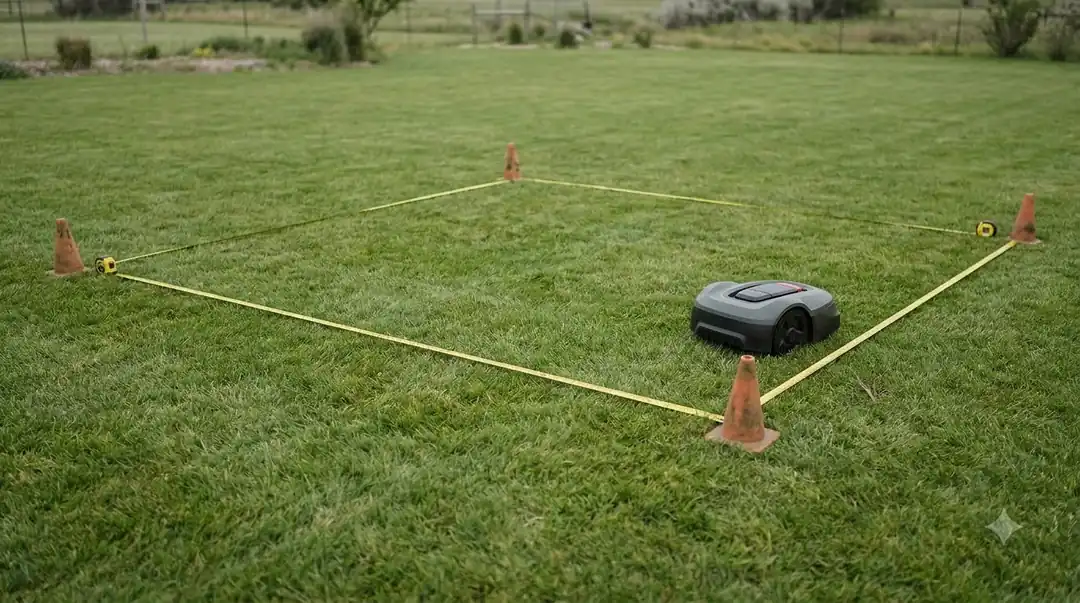
Zone count is limited by the model. The Worx Landroid Classic supports two to four zones, and the mower works them in numeric order. Husqvarna lists up to 10 installations for some models and up to 3 for others, and its Aspire R4 does not support profiles. Robomow does not state a maximum zone count, but says three or more areas call for a closer look at the model before you buy. Front and rear lawns often meet at narrow side yards, which lawns on both sides of the house covers in detail.
A second charging station is the usual fix for a separated pair. It can work, but some setups need the mower to learn the signal again each time it returns. Worx itself says a multi-zone setup on one wire may not be ideal for fully separated zones, and suggests a second charging station as an option.
Splitting the mowing time between two yards
Once the zones exist, you decide how much time each one gets. Robomow’s example gives an 800 square meter main lawn and a 200 square meter secondary lawn a split of 80/20. Worx Landroid Classic allocates by percentage of weekly cycles, so a 70/30 split across 10 cycles gives 7 cycles to one zone and 3 to the other. Match the split to the lawn sizes, and check the result after a few weeks, since a smaller back yard often needs less time than you expect. Some layouts make multiple zones impractical, which yards a robot mower struggles with lists.
Wire, RFID or GPS: choose the zone system
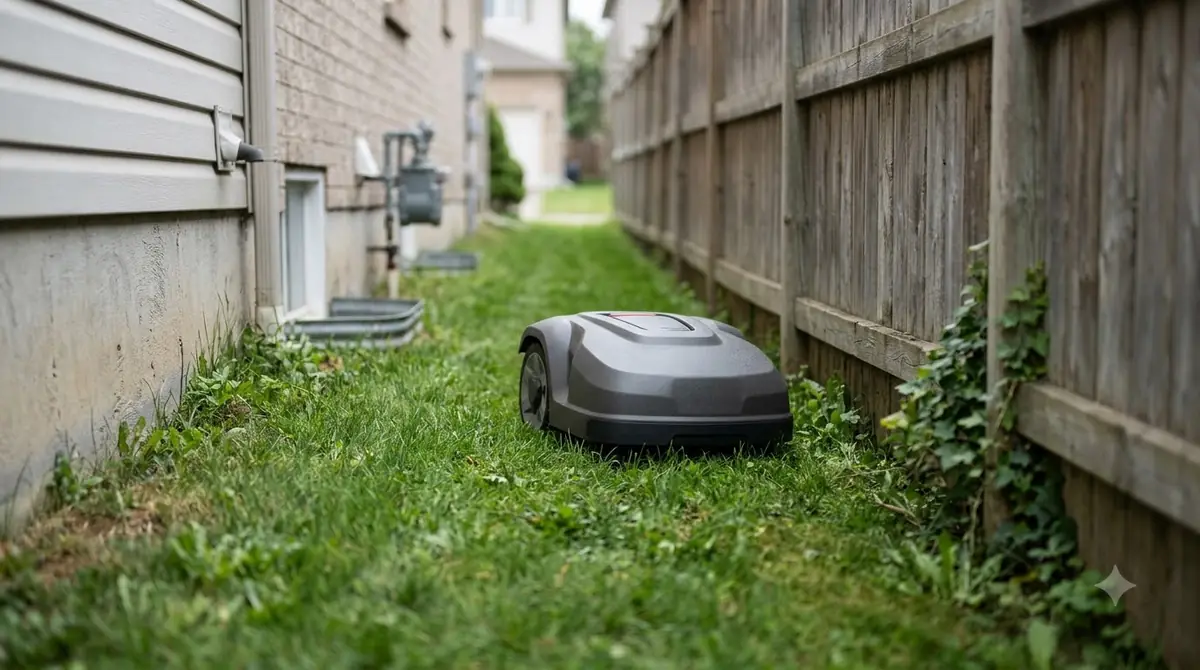
Wire-based zones are the most common, and they work well when the passage is clear and the wire route is short. RFID tags suit a yard where you want the mower to recognise each zone on its own, but they need a clear area around each tag. GPS models do not need start points along the wire, which makes zone changes simpler, though Robomow notes that GPS models cost significantly more. Husqvarna’s Area Switch is another option for turning a zone on or off with a portable device, which suits a yard where you only want one side mowed some weeks. Layouts with many bays and bends are addressed in the complex yard mower shortlist, which compares zone systems. Map setup depends on the zone system, and mapping steps for a complex yard goes through them one by one.
What to check before you buy
- Passage width: measure the narrowest point between the lawns and compare it with the model’s minimum.
- Zone limit: confirm the number of zones your model supports.
- Charging station: decide whether one dock is enough, or whether you need a second one.
- Wire length: Husqvarna recommends a maximum of 800 m of boundary wire for most models and 300 m for the Aspire R4.
- Time split: plan the share of mowing time for each yard before you set the schedule.
Related reads: A quick suitability check comes first, as checking whether your yard suits a mower describes. A side path of three feet is a common connection, and three-foot side passage mower picks covers its limits.
Frequently asked questions
Can one robot mower handle a front and back yard?
Yes, if the two lawns are connected by a passage wide enough for the mower, or if they share one boundary wire. A separated pair with no route between the lawns needs a second charging station or a manual move.
How wide does the passage between the yards need to be?
Robomow advises about one meter, so the signals on each side do not cross. Worx lists a bottleneck corridor of about 15 cm for its Landroid Classic. Check the figure in your model’s manual, since limits differ between brands.
Do I need a second charging station for separate yards?
Often, yes. A second station lets each zone have its own dock, though some setups need the mower to learn the signal again each time it returns. Worx suggests this option for fully separated zones.
How do I split mowing time between the front and back yards?
Most apps let you set a percentage for each zone. Robomow’s example gives 80/20 for an 800 square meter main lawn and a 200 square meter secondary lawn. Set the split by lawn size, then adjust after a few weeks.
Sources
- How to create a secondary area in Automower boundary wire installations (Husqvarna support): secondary area setup, wire length limits, installations per mower.
- Can the robotic lawnmower mow multiple areas or zones (Robomow): zone types, one-meter passage, remote start points, 80/20 example.
- Landroid Classic multi-zone setup (Worx wiki): two to four zones, bottleneck corridor, wire depth, second charging station option.
 Up next8 min readBy YardRobot Mower for Front and Back Yard: What WorksUpdated Nov 11, 2026
 8 min readBy YardCan a Robot Mower Work in a Yard With No Wifi in the Back?Updated Nov 10, 2026
 7 min readBy YardCan a Robot Mower Work in a Yard With Multiple Small Patches?Updated Nov 10, 2026
 7 min readBy YardRobot Mower for a Sloped Front Yard and Flat BackyardUpdated Nov 14, 2026
 9 min readBy YardRobot Mower for a Sloped Front Yard: Limits, Edges and SetupUpdated Nov 11, 2026
 7 min readBy YardCan a Robot Mower Work in a Unfenced Front Yard?Updated Nov 10, 2026