
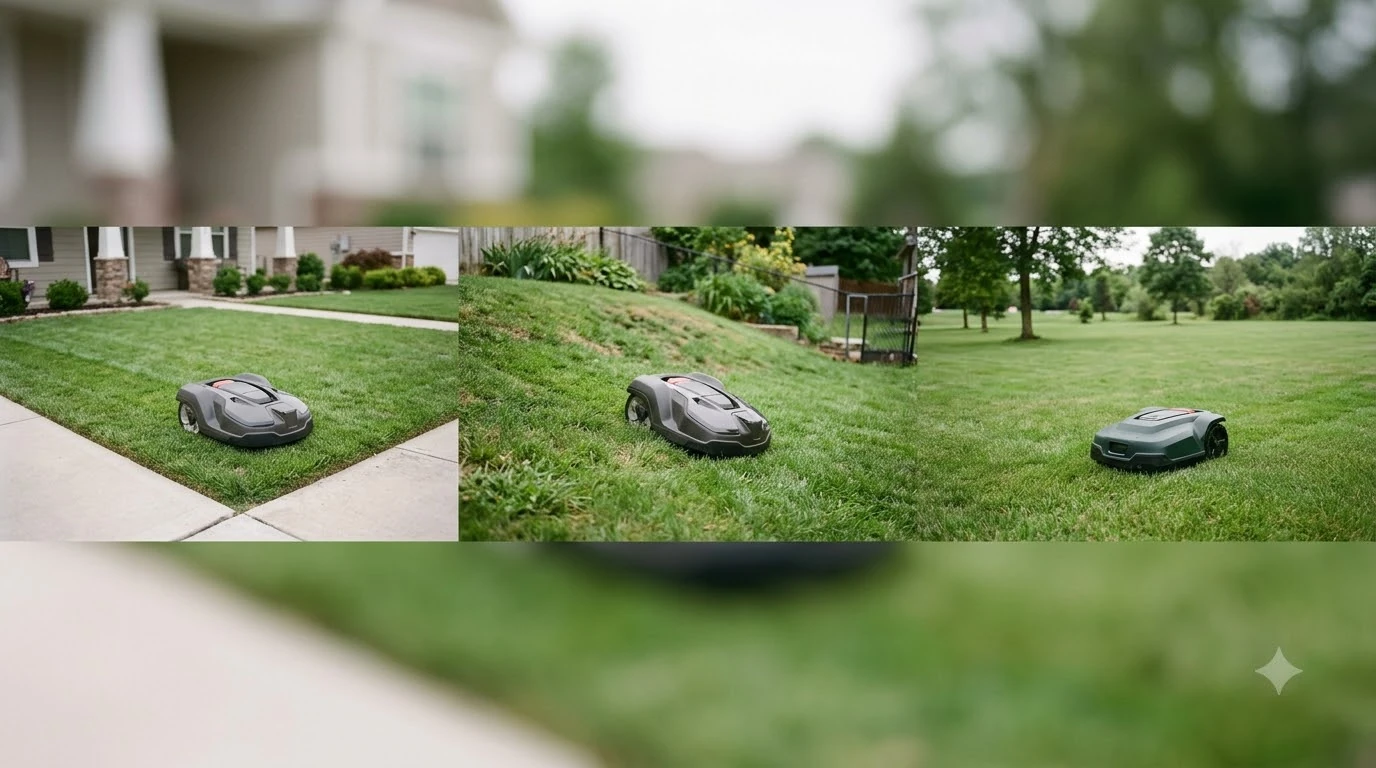

The best robot mower for a 1 acre rural property is usually one rated for 1.3 acres or more, with a wire or positioning system that suits long fence lines, uneven ground and a dock far from the house. One acre is about 43,560 square feet, or roughly 4,047 square meters. Rated coverage assumes a flat, open lawn, and rural land is rarely that simple, so the rated size should give you real margin.
The short answer
- Rated size: choose a mower rated above 1 acre, since Husqvarna’s 420 iQ at 1 acre has a plus or minus 20% tolerance.
- Hills: rural ground is often uneven, so check the slope rating, and AWD models if the land is steep.
- Dock placement: a dock at the far end of a large lawn adds travel time, so plan its position.
- Positioning: a wire or a satellite system must cover long open runs as well as tree lines.
- Measure from the ground: an aerial map can understate the real mowing area on a hill.
What one acre means for a rural robot mower
One acre is 43,560 square feet. Clemson’s extension guide gives the formulas for rectangles, triangles, circles and ovals, and it recommends an offset method for irregular shapes: mark lines at equal spacing, measure each one, and average the widths. Its examples report only square feet, so convert to acres yourself by dividing by 43,560. A rural lot often has a long, irregular shape, which makes the offset method the most practical choice. For anything larger than a typical suburban lot, the large-property mower shortlist by coverage compares rated sizes across brands. Whether the investment pays off is covered in cost and effort of mowing an acre, comparing robots with riding mowers.
Husqvarna lists its Automower 420 iQ at up to 1 acre, with the note that listed lawn sizes carry a tolerance of plus or minus 20%. A mower sold for one acre may therefore cover less than that on a rough or sloped lawn. For a rural lot of one acre, that tolerance is a good reason to choose the next size up.
Best robot mower for a 1 acre rural property: choosing a rated size
Dreame’s coverage guide advises that ratings usually assume a flat open lawn, and that hilly or obstacle-heavy yards can have more ground to cover. It suggests choosing one tier up for manageable mowing times. Its tiers run from 0.25 acres to 1.20 acres, with the top tier of 5,000 square meters listed at 1.20 acres. Our reading is that a one acre rural property should be matched to a mower rated at about 1.2 acres or more, which gives room for hills, fence corners and the lawn’s irregular edges. Lots half this size have different needs, which the half-acre suburban mower shortlist addresses.
Husqvarna’s US lineup shows how the sizes step up. The 420 iQ and 535 AWD EPOS are listed at 1 acre, the 435 iQ AWD at 1.3 acres, the 560 EPOS at 1.5 acres and the 440 iQ at 2 acres. These are the listed figures on the manufacturer’s page, so check the current spec before you buy.
Hills, slopes and uneven rural ground
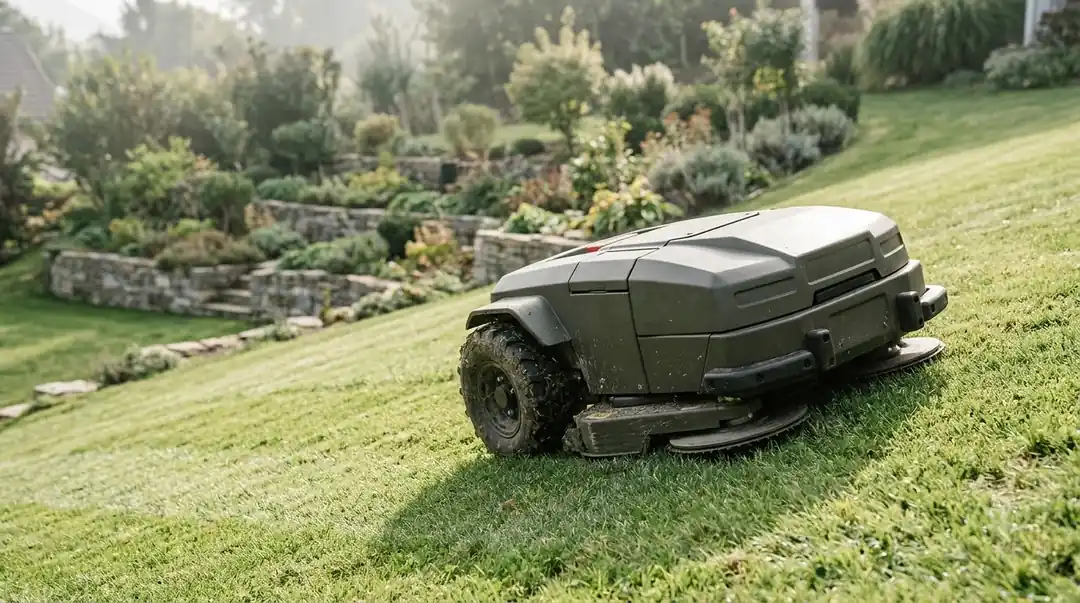
Rural land is more likely to have slopes than a typical suburban lot. Husqvarna’s support guide gives standard models a slope range of 25% to 50%, which is about 14 to 26 degrees, and its AWD models up to 70%, or about 35 degrees. Its guidance also says that areas steeper than the limit must be excluded using boundary wire islands or stay-out zones, and that the guide wire should run diagonally across a slope. Comparing an acre with a smaller lot helps set expectations, as half-acre lot measurements shows.
Dreame warns that a top-down map shows the flat footprint of a hill, not the real surface a mower has to cross. To measure a slope properly, walk it with a tape or a measuring wheel. A map can make a hillside look smaller than it is, and the mower will spend more time on it than the map suggests.
Positioning on large open rural lawns
Large open lawns are easier for satellite-based systems, since there are few trees to block the sky. However, rural properties often have tree lines along the boundary, which can cause signal drops at the edges. A mixed setup is common: a wire for the boundary and the tree lines, and satellite or vision for the open middle. Navimow’s X4 models use network RTK, which avoids the need for a local base station, though its i-series models are rated for smaller lawns. Check the coverage claim against your real area, not only the headline rating. Runtime planning is easier with real figures, which time to cover an acre robotically provides.
Google Earth area estimates are useful for a first look, but Google’s own documentation says they may not be fully accurate and do not account for elevation changes. Treat an aerial measurement as a starting point and check the long edges and any hills on foot.
Dock placement and travel time
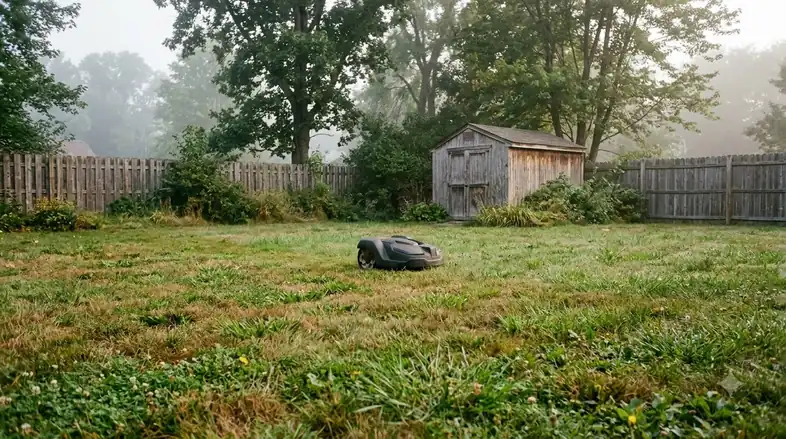
On a large rural lawn, the dock’s location changes how long the mower spends travelling. A dock at the far end of the property means the mower crosses the lawn twice on every cycle, which uses runtime that could go to cutting. Place the dock near the middle of the mowing area where you can, and keep the route to it clear of beds, gravel and steep ground. Also check that the dock has power close by, since a long cable run adds cost and can be awkward to route. Choosing a rated size starts with measurement, as mower size for your lawn area explains.
Our reading is that a dock near the middle of the lawn is worth more than a dock at the house, even if it means running a longer power cable. Shorter travel leaves more runtime for mowing and reduces wear on the drive system.
What to check before you buy
- Rated size: choose a model rated above your one acre, with room for hills and irregular edges.
- Slope: measure the steepest area on foot and compare it with the model’s work-area rating.
- Tree lines: check how the mower positions itself under trees along the boundary.
- Dock: plan the dock’s position and the power cable before you buy.
- Runtime: confirm the mower’s battery life covers the full lawn on a single cycle.
Related reads: Rural properties often include animal areas, which one-acre property with a horse paddock covers. Steep sections cut into usable coverage, and mower choice for hilly acreage explains how.
Frequently asked questions
What size robot mower do I need for 1 acre?
A mower rated for 1 acre is the minimum, and Dreame suggests choosing one size up for hilly or obstacle-heavy yards. For a rural lot with slopes or long edges, a mower rated at 1.2 acres or more gives better margin. Check the listed rating against your measured area.
Can a robot mower handle a hillside on a rural property?
Some can. Husqvarna rates standard models for 25% to 50% and its AWD models for up to 70%. Areas steeper than the rating need to be excluded with wire islands or stay-out zones, and the guide wire should run diagonally across the slope.
How do I measure a rural lawn for a robot mower?
Walk the lawn with a tape or measuring wheel, split it into rectangles and triangles, and use the offset method for irregular shapes, as Clemson’s extension guide describes. Use an aerial map to check the total, but do not rely on it for hills.
Where should the dock go on a one acre lawn?
Near the middle of the mowing area if possible, so the mower does not cross the lawn twice on every cycle. Keep the route to the dock clear of beds, gravel and steep ground, and check the power cable length before you install.
Sources
- Husqvarna robotic lawn mowers (Husqvarna US): listed lawn sizes by model, the plus or minus 20% tolerance, the 435 iQ AWD slope rating.
- Measuring the area of a home lawn (Clemson HGIC): area formulas, offset method for irregular lawns.
- How to measure my lawn (Dreame, manufacturer guide): coverage tiers, choosing one size up, measuring hills on foot.
 Up next6 min readBy YardBest Robot Mower for a 1 Acre Property with a Horse PaddockUpdated Nov 17, 2026
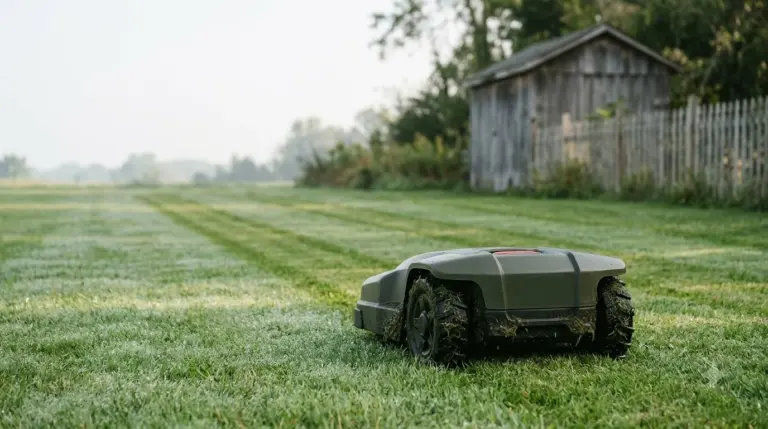 7 min readBy YardBest Robot Lawn Mowers for Large Yards (1+ Acres)Updated Nov 16, 2026
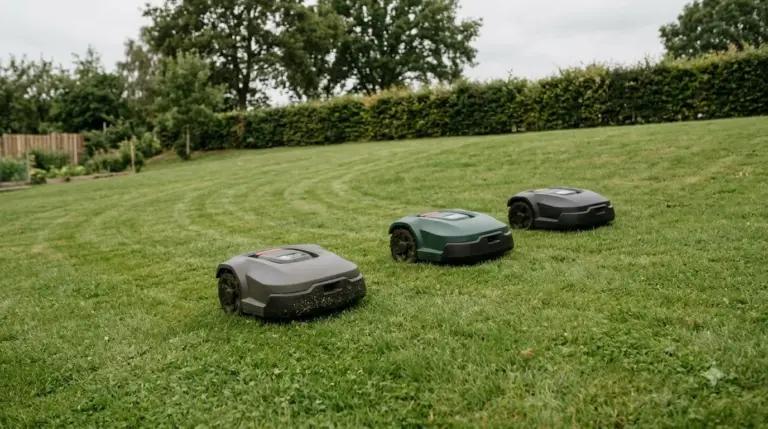 8 min readBy YardIs a Robot Mower Worth It for 1 Acre?Updated Nov 12, 2026
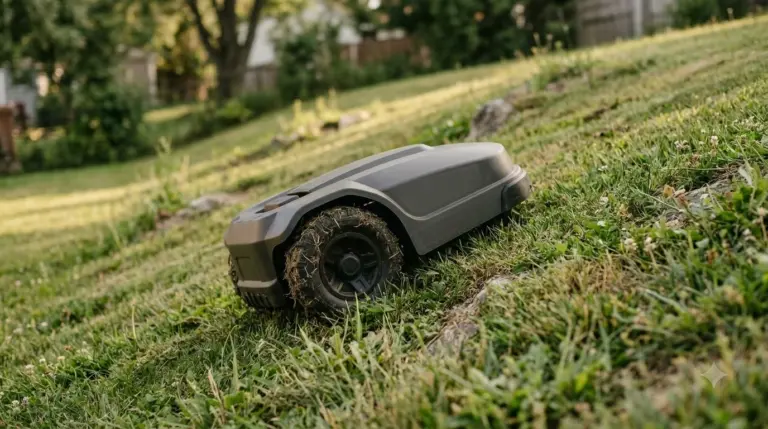 8 min readBy YardBest Robot Mower for Hilly 1 Acre Lawn: What to Check FirstUpdated Nov 11, 2026
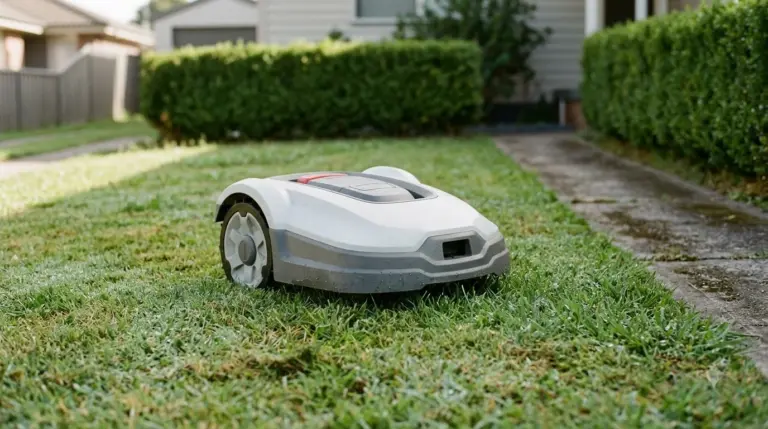 7 min readBy YardHow Close Can a Robot Mower Get to a Property Line?Updated Nov 12, 2026
 6 min readBy YardBest Robot Mower for Fine Fescue: 1.5 Inch Low Cut GuideUpdated Nov 17, 2026