
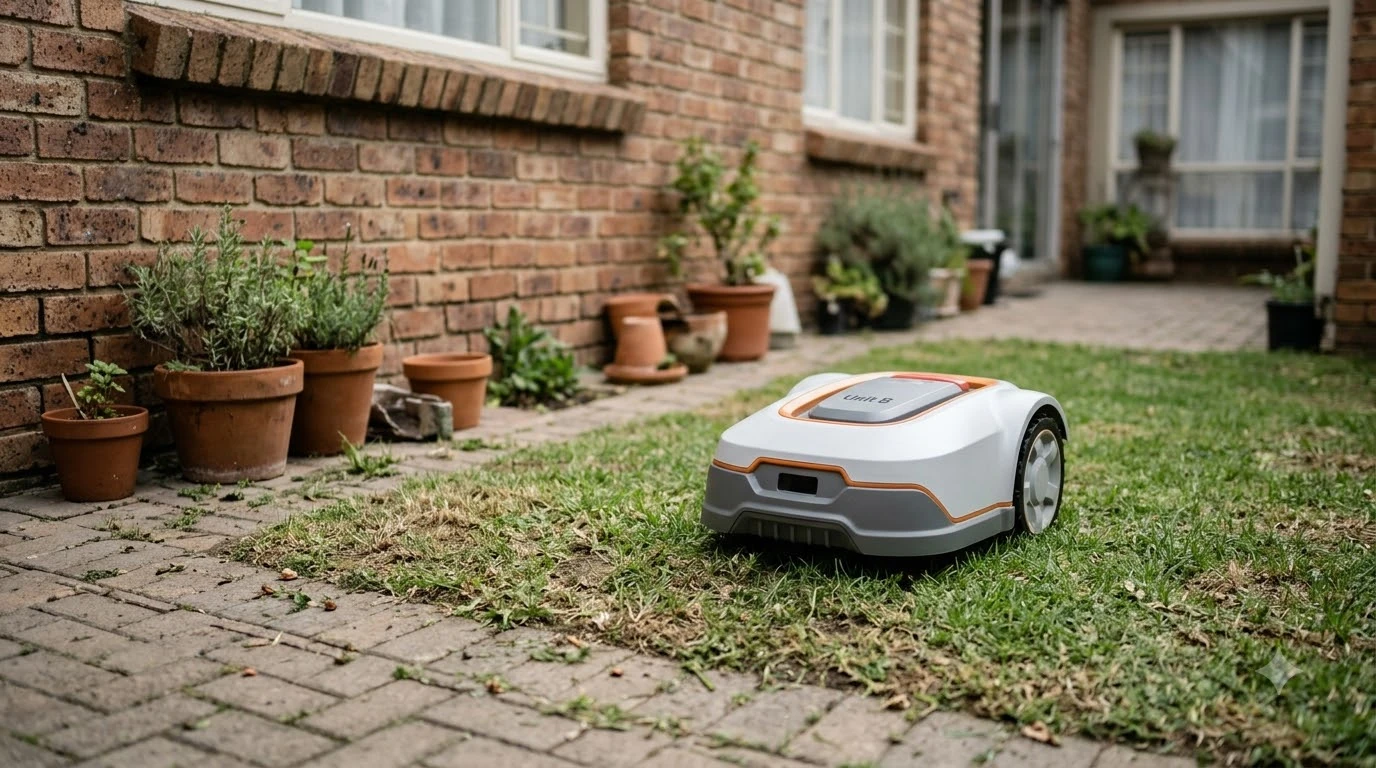

The best robot mower for a 1 acre property with a horse paddock covers the mowed yard around the paddock, not the grazed pasture itself. Extension guidance treats horse pastures as grazed land with its own heights and rest cycles, so a robot mower fits the lawn, the fence line, and the areas horses do not graze. Start with that split before comparing models.
The short answer
- Pasture heights differ from lawn heights: extension sources give minimum grazing heights of 2 to 3 inches for short grasses and 3 inches or more for taller ones.
- Use the robot for the mowed yard: the lawn, the path to the barn, and the edges that horses do not graze.
- Keep horses and the mower apart: run the mower only when the horses are out of that area.
- Check the cut range: the mower should reach the height your mowed areas need, not the lowest setting it offers.
Best robot mower for a 1 acre property with a horse paddock: which areas it suits
A paddock is a grazed area, and a robot mower is built for a mowed lawn. The two do not fit the same job. Extension sources on horse pastures describe mowing as a tool for keeping grazed grass uniform, not as the main way to cut the ground. The notes below are our reading from those sources and from how a robot mower works, not a ranking of models. Animals shape how a mower can be used, and animal pests on a mowed lawn covers burrowers and other wildlife.
Start from the pasture height rules
Penn State Extension recommends that horse owners “maintain a forage height of 2 to 3 inches” for short, fine-bladed grasses such as perennial ryegrass and bluegrass, and 3 to 5 inches for taller grasses such as orchard grass and timothy. The same page says grasses store their energy reserves in the bottom few inches of the plant, so cutting too low weakens regrowth. Burrows are common in grassy areas, as ground squirrel holes in pasture explains with notes on wheel safety.
The minimum grazing heights in the horse extension guide are similar in spirit. Bluegrass is listed at 2 inches, while bromegrass, orchardgrass, and tall fescue are listed at 3 inches, and bermudagrass at about 2 inches. Those are grazing minimums rather than mowing targets, so use them to judge when the pasture needs a rest, not to set a robot mower blade.
Where a robot mower fits on a horse property
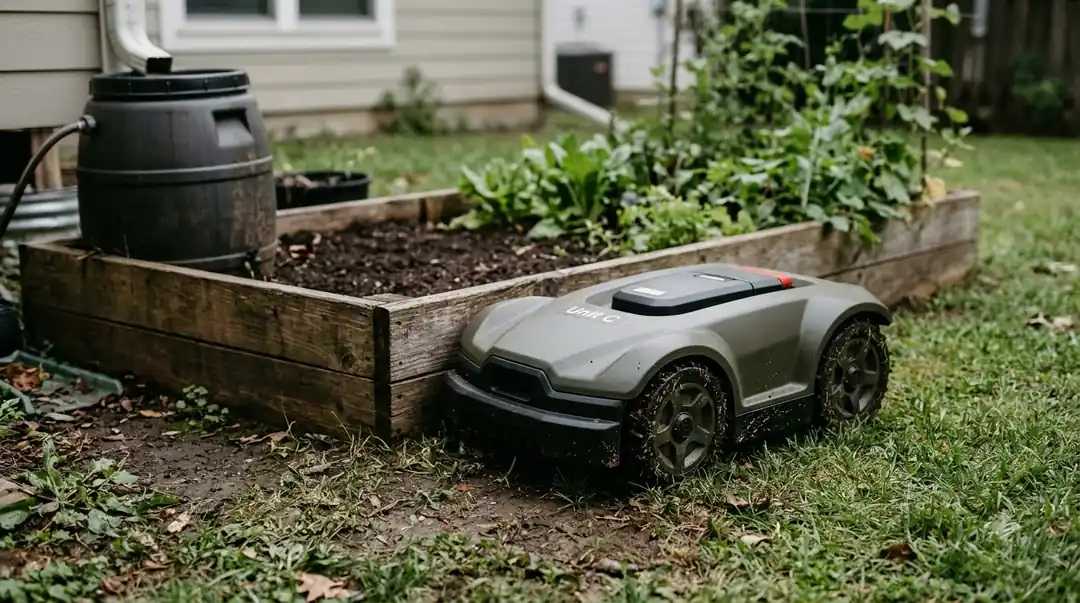
On a one-acre property the house lawn is usually the largest mowed area. A robot mower handles that well, because the lawn is flat, open, and easy to map. The areas around the barn, the gate path, and the strip along the fence can also be mowed on a schedule, since horses do not spend much time there. Large lots raise rated-size questions that mowers for bigger properties addresses with coverage comparisons.
- House lawn: the natural home for a robot mower, with a steady schedule and a clear boundary.
- Path to the barn: keep it mowed short enough that it stays clean, and check that the mower does not cross gates.
- Fence line: mow it only when horses are kept off that edge, since a robot can pass close to the fence where horses may be standing.
- Grazed paddock: manage it with the pasture rules above, not with a robot mower.
Our reading is that the robot should stay on the lawn and out of the paddock. Horses can react to a moving machine, and a grazed pasture needs a rest cycle that a timer will not follow.
Keep horses and the mower apart
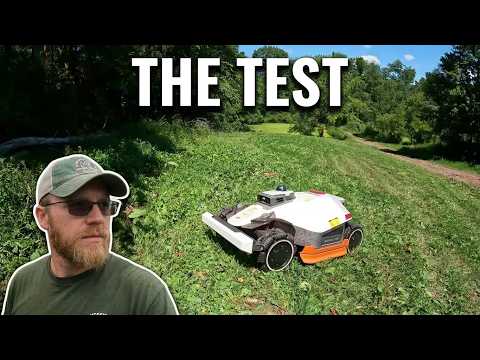
Horses are easily startled by a moving machine. A robot mower is quiet, which can make it harder for a horse to notice, so the safe rule is to keep horses out of the mowing area when the robot runs. Use a physical fence or gate to separate the lawn from the paddock, and set the mower’s boundary to match. Other animals need similar separation from the mower, which yards with backyard chickens explains. Fences keep animals out of the lawn, and fenced lawn mower choices covers how to use them as boundaries.
The extension horse guide says horses are notorious for spot grazing a pasture. That means some areas get overgrazed while others go to seed. Mowing can help even that out, but a robot mower that cuts the whole pasture on a timer will not follow the grazing pattern.
Check the cut range, not the lowest setting
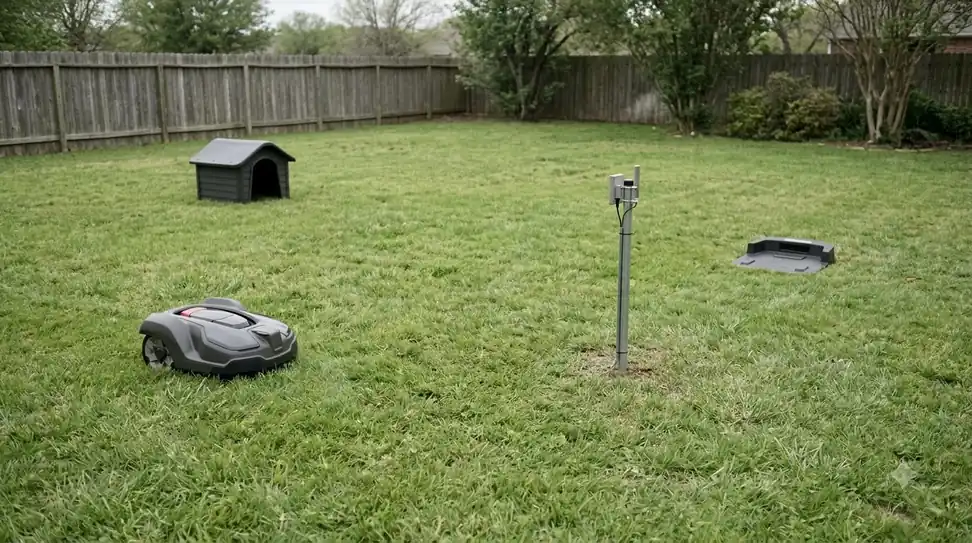
A lawn near a paddock usually needs a height closer to the top of the pasture range than the bottom. Penn State’s tall-grass range of 3 to 5 inches is a useful check, so confirm the mower reaches the height your grass needs. A mower that cuts too low on a mixed lawn can scalp the grass and let weeds take over. The non-paddock lawn is covered in one-acre rural lot mower choices, including slope and dock placement.
- Grass type: identify the lawn species, then use the matching range.
- Mowing height: keep the lawn at the top of the range near the paddock, where grass gets more stress from hoofs and weather.
- Blade and deck: check how the height is adjusted and whether it can be set high enough without the app.
Related reads: Another animal area is covered in mowing around a dog run, including how to schedule the mower.
Frequently asked questions
Can a robot mower cut a horse paddock?
Not as the main method. Extension guidance treats grazed pasture as its own system with grazing heights and rest cycles. A robot mower fits the lawn and the mowed edges around the paddock.
What height should a horse pasture be kept at?
Penn State gives 2 to 3 inches for short grasses such as bluegrass and perennial ryegrass, and 3 to 5 inches for taller grasses such as orchard grass and timothy. The horse extension guide lists minimum grazing heights of 2 to 3 inches for common pasture grasses.
Is a robot mower safe to use near horses?
Keep horses out of the mowing area while the robot runs. The mower is quiet, so a horse may not notice it coming. Use a physical fence or gate to separate the lawn from the paddock.
How much of a one-acre property should a robot mower cover?
That depends on how much is mowed lawn rather than grazed paddock. Count the house lawn and the mowed edges, then check the mower’s rated area against that figure, not the whole acre.
Sources
- Basic Pasture Management for the Equine Owner (Penn State Extension): forage heights for short and tall grasses and energy reserves in the bottom inches.
- Pastures for Horses (eXtension Horse Science): minimum grazing heights and spot grazing.
 Up next7 min readBy YardBest Robot Mower for a 1 Acre Rural PropertyUpdated Nov 13, 2026
 7 min readBy YardBest Robot Lawn Mowers for Large Yards (1+ Acres)Updated Nov 16, 2026
 8 min readBy YardIs a Robot Mower Worth It for 1 Acre?Updated Nov 12, 2026
 8 min readBy YardBest Robot Mower for Hilly 1 Acre Lawn: What to Check FirstUpdated Nov 11, 2026
 7 min readBy YardHow Close Can a Robot Mower Get to a Property Line?Updated Nov 12, 2026
 6 min readBy YardBest Robot Mower for Fine Fescue: 1.5 Inch Low Cut GuideUpdated Nov 17, 2026