
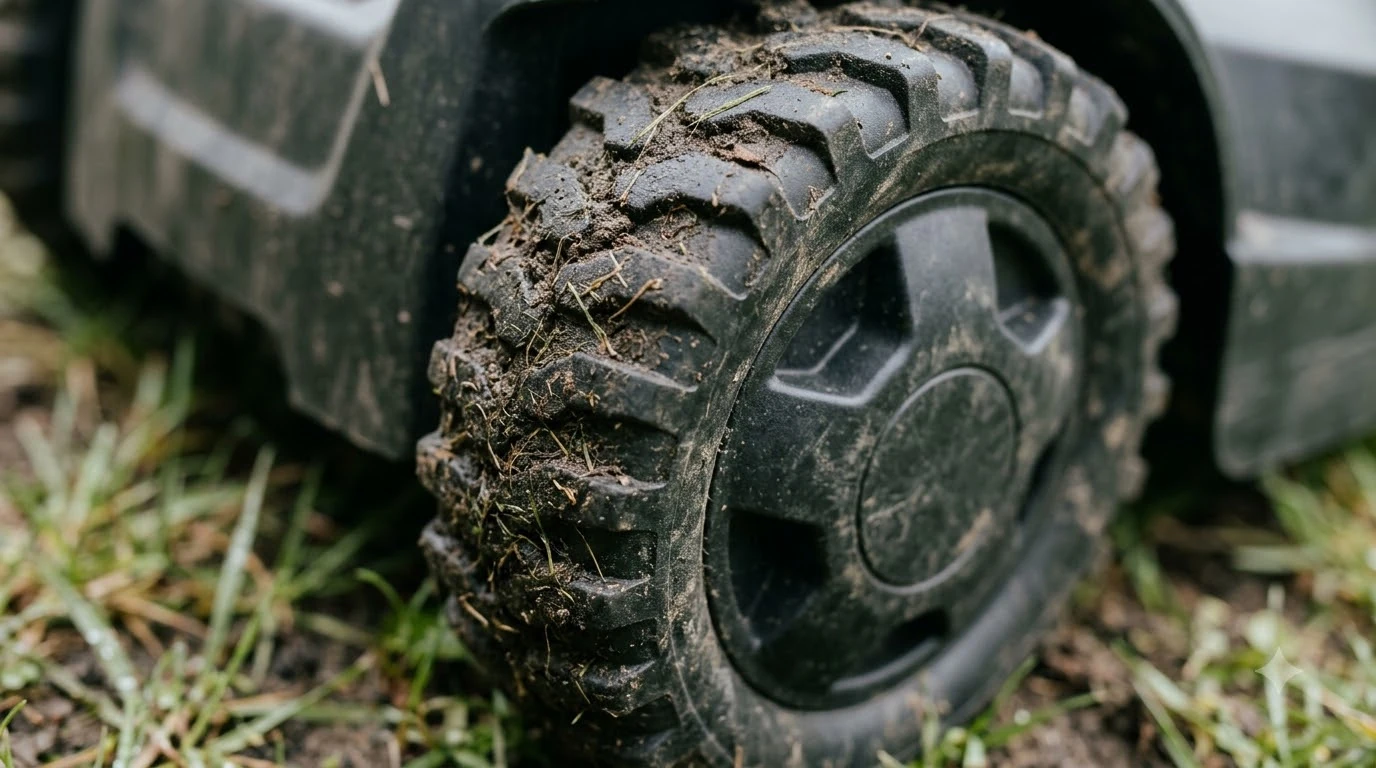

Can a robot mower handle a yard with ground squirrel holes? Often yes, once the ground is fixed. Ground squirrel burrows open about 4 inches wide, run 5 to 30 feet, and sit 2 to 3 feet deep, which makes lawns hard to mow and can leave a wheel on unstable soil. Check for active burrows and repair the ground before you set up the mower.
The short answer
- Can it run? Yes, if the holes are inactive and the ground around them is firm and level enough for the mower.
- Main risk: a wheel dropping into a hole or a collapsed tunnel, which shifts weight and can stop the mower.
- First step: control the squirrels, since UC IPM says simply filling burrows with soil does not prevent reinvasion.
- Before setup: repair dips and loose soil so the mower runs on even ground.
What ground squirrel holes look like in a lawn
Ground squirrel burrows are easy to mistake for other lawn damage, so it helps to know the signs. According to UC IPM’s ground squirrel guidance, a burrow entrance is about 4 inches in diameter, though older openings can be quite a bit larger. Most burrow systems sit within 2 to 3 feet of the surface, and some reach 6 feet or more.
Look for recent diggings near the openings. Burrows and mounds are visible in turf and grassy areas, so a lawn that looks uneven in one spot may have a whole system beneath it. Burrow systems can be single tunnels or branched networks that house one squirrel or many.
The length matters as much as the opening. UC IPM says the length of a burrow system usually ranges between 5 and 30 feet. A short hole you can see is often only the visible end of a longer tunnel under the grass.
Can a robot mower handle a yard with ground squirrel holes without stalling?
Holes and mounds make a lawn harder to mow for any machine. UC IPM states that burrows and mounds make lawns hard to mow and create hazards for machinery and pedestrians, and they add trip hazards. Those are general warnings, not robot-mower tests, so treat them as the baseline for any mower. UC IPM also says gopher mounds interfere with mowing equipment, a case our note on robot mowers, moles and gophers covers in more detail.
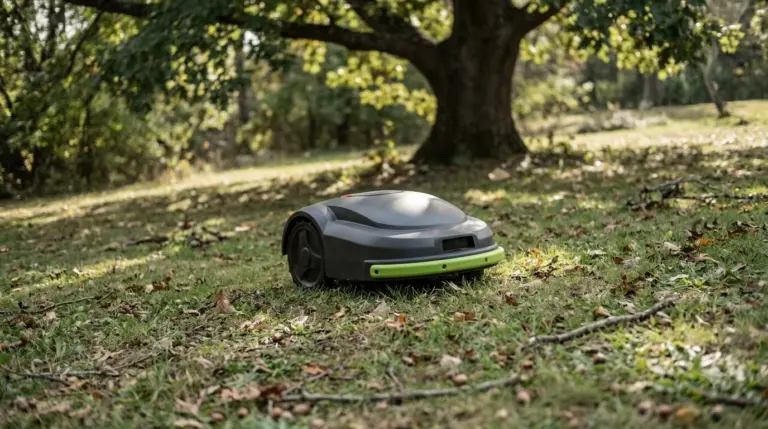
A robot mower depends on its wheels and sensors to keep the blade on the grass. Robomow’s guidance on uneven ground says the more uneven the terrain, the more useful large wheels are, and that sensitive lift and tilt sensors should switch the blade off when ground contact is lost. A wheel that drops into a hole or a collapsed tunnel can shift the mower’s weight and cause it to stop.
Burrowing animals are one named cause of this kind of unevenness, since their tunnels collapse and leave dips in the soil. For a wider view of what a mower does when it meets dips, see our guide on whether a robot mower gets stuck on a lawn with holes and dips, and our note on mole hills.
Heads up
We found no source that tested a robot mower on ground squirrel holes specifically. The points above come from general robot-mower and burrow guidance, so check your own model’s manual for its ground and tilt limits.
Check for active burrows before you set up the mower
Active burrows and inactive ones call for different steps. UC IPM notes that inactive burrows may be filled with leaves or old straw, or have cobwebs across the entrance. Fresh soil around an opening is the clearer sign of a squirrel in use.
During hot periods, a burrow may look open while the squirrel plugs it with soil near the nest, so a clean-looking hole does not always mean it is empty. Our reading is that marking each opening as you find it makes it easier to tell whether new ones appear after control work, which UC IPM recommends watching for.
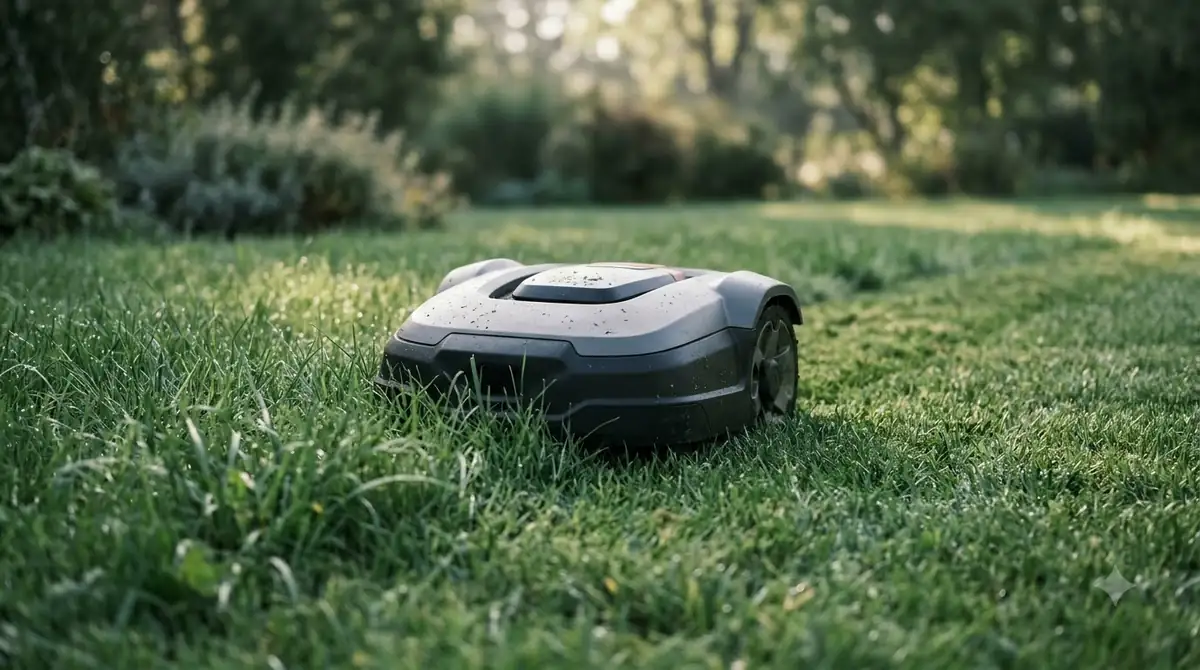
Control the squirrels before you rely on the lawn
Can a robot mower handle a yard with ground squirrel holes that keep reopening? Not for long, so controlling the animals comes before any ground repair. UC IPM recommends removing brush piles and debris, since they give squirrels cover close to the lawn. It also lists box or tunnel traps placed near active burrows, baited with foods such as walnuts or oats, and notes that small populations are easier to manage than large ones.
Filling a burrow with soil is not a fix on its own. UC IPM says deep ripping of old burrows to at least 20 inches can slow reinvasion, but simply filling them with soil does not prevent reinvasion. Fumigation is listed as an option for spring, when soil is moist, and UC IPM warns against it in dry soil and in summer. Check local rules before using any control method.
Repair the ground before setup
Can a robot mower handle a yard with ground squirrel holes after repair? Our reading is yes, once the squirrels are under control and the ground is even. A robot mower should run on a surface where a wheel never drops more than its tread can handle, so fill and level the worst dips first and let the soil settle before you start the mower. Our guide on topsoil for filling lawn holes covers the filling step.
Wheel size and sensors matter most on uneven ground. Robomow’s guidance says large wheels help a mower move over small holes and depressions, but a yard with deep burrow systems is still a case for repair first. Fix the largest openings, then run the mower over the area to see where it still stalls.
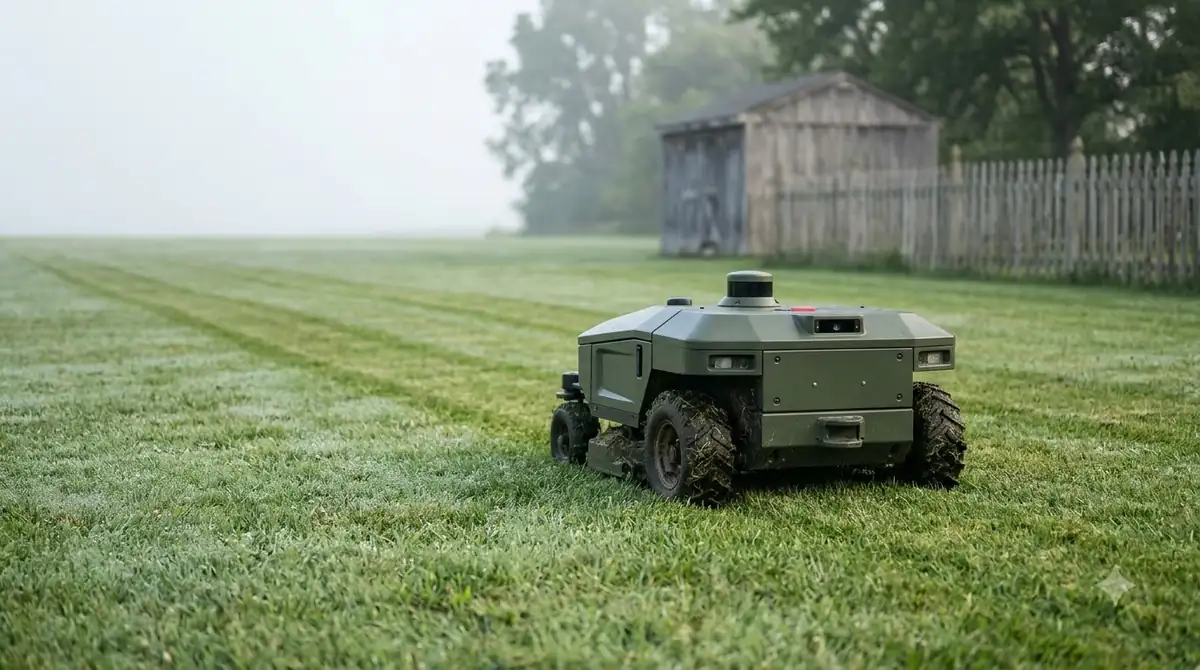
Keep the boundary and dock clear of burrow areas
Can a robot mower handle a yard with ground squirrel holes near its dock? It can, but only on firm ground. The boundary wire and charging dock should sit on the firmest, flattest ground in the yard. Our reading is that an area with active burrows, loose soil or collapsing tunnels is a poor place for the dock, because a dock on unstable soil can shift over time. Keep the dock away from those spots, and check the boundary wire after the ground settles.
Slope limits also matter here. Robomow’s guidance says the maximum slope is often only 20 to 25 percent for smaller robots and 45 percent or more for larger ones. Those figures are general, so use the rating for your model and not the figure from a blog.
Frequently asked questions
Will a robot mower get stuck in a ground squirrel hole?
It can, if a wheel drops into an open hole or collapsed tunnel and loses grip. Repairing the largest openings before setup lowers that risk, and a mower with large wheels handles small depressions better.
Should I fill ground squirrel holes with soil?
Filling is not enough on its own. UC IPM says simply filling burrows with soil does not prevent reinvasion, so control the animals first and then level the ground.
How deep do ground squirrel burrows go?
Most burrow systems sit within 2 to 3 feet of the surface, and some reach 6 feet or more. Individual systems can run 5 to 30 feet in length, so a visible hole is often only one end of a tunnel.
Can a robot mower handle a yard with ground squirrel holes right after I repair them?
Often yes, if you follow an order: check for active burrows, control the squirrels, repair the largest dips, and then check the boundary and dock placement. Our reading is that this order keeps the mower on firm ground from the start.
Sources
- Ground Squirrel (UC IPM): burrow size, depth, signs, mowing hazard and control options.
- Pocket Gophers (UC IPM): mounds on lawns interfere with mowing equipment.
- Can a robotic lawnmower mow well on uneven, difficult surfaces? (Robomow): wheel size, lift and tilt sensors, slope limits.
 Up next9 min readBy YardChoosing and Setting Up a Robot Mower for a Yard With an Above-Ground Pool LadderUpdated Nov 19, 2026
 8 min readBy YardRobot Mower for a Lawn With Holes and Dips: What to Check FirstUpdated Nov 11, 2026
 7 min readBy YardRobot Mower for a Lawn With Ground Cover Plants: Zones and EdgesUpdated Nov 14, 2026
 9 min readBy YardWill a Robot Mower Get Stuck on a Lawn With Holes and Dips?Updated Nov 11, 2026
 8 min readBy YardHow Does a Robot Mower Handle a Lawn with Lamp Posts?Updated Nov 12, 2026
 9 min readBy YardHow Does a Robot Mower Handle Tree Stumps in the Lawn?Updated Nov 12, 2026