
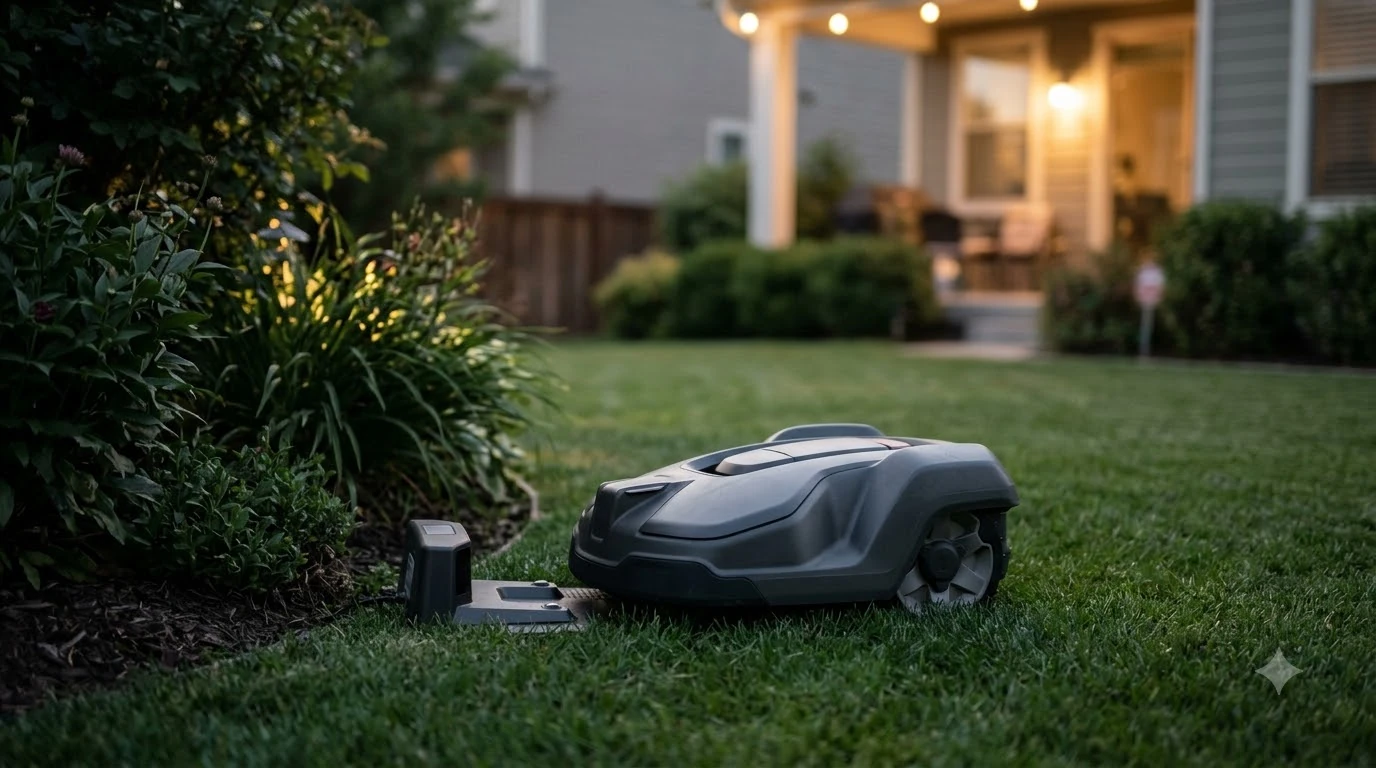

A robot mower for lawn with holes and dips is an ordinary robot mower with the right wheels, a deck that follows the ground, and holes filled before the first run. Yarbo, a robot mower vendor, advises filling holes deeper than 2 inches, and shallow dips are usually manageable. As of November 2026, the features below are the ones manufacturers describe for uneven ground, and this guide shows which ones to check on the spec sheet.
The short answer
- Fill first: holes deeper than about 2 inches, per one vendor’s guidance, before a robot mower for lawn with holes and dips runs.
- Wheels: large wheels and deep tread help the mower roll over small depressions and keep grip in loose soil.
- Deck and sensors: a suspended deck and lift and tilt sensing reduce scalping and missed patches.
- Repeat trap spots: use a no-go zone or enclosure instead of hoping the mower learns the spot.
How deep is too deep for a robot mower?
Holes and dips are not all the same. A shallow dip is usually a minor problem, while a deep hole can tilt the mower, break traction, or leave the blade cutting above the grass. Yarbo, a robot mower vendor, tells owners to fill holes deeper than 2 inches so the blades can reach the grass, and it notes that deep dips and bumps can leave grass uncut. That is a manufacturer’s threshold, not an independent measurement.
Eufy, another vendor, takes a different approach. Its Australian guidance treats a surface variation of about 3 cm as a best-practice limit rather than a hard specification. Anker’s guide on uneven lawns is more general. It says small bumps are usually fine, but deeper holes and ruts can make the mower tilt, lose grip, or get stuck, and it gives no depth figure. The practical reading is simple: use 2 inches as a rough line for filling, then fill anything that makes the ground feel soft or sunken underfoot.
Wheels and grip: what helps over holes
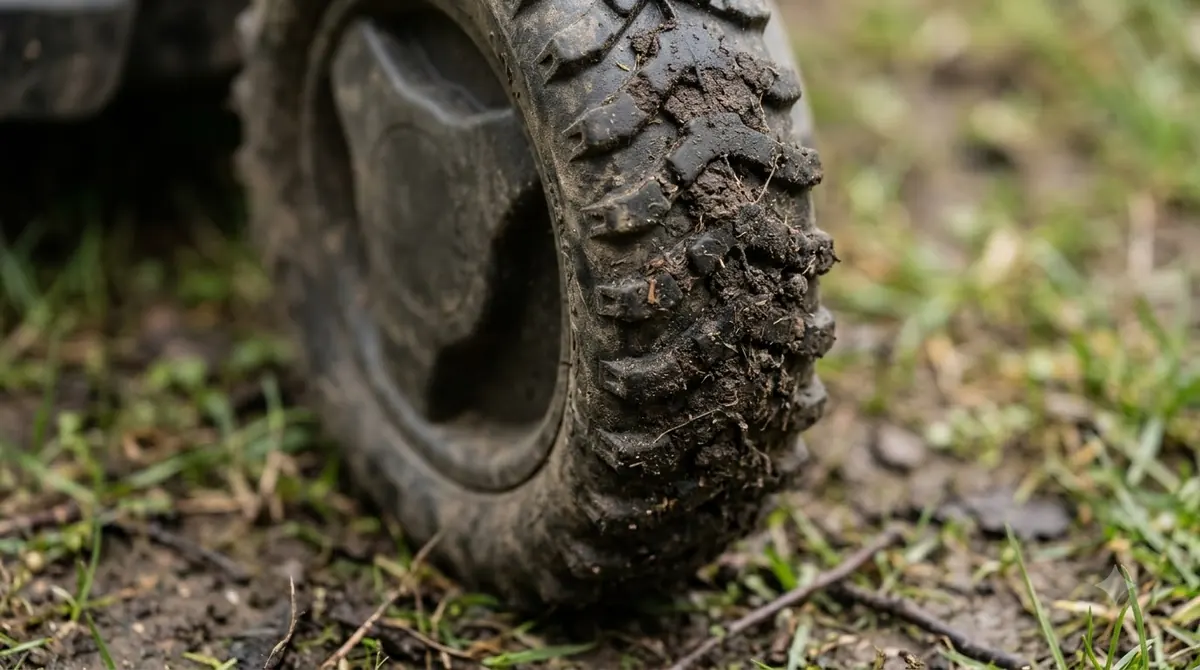
On a robot mower for lawn with holes and dips, the wheel is the first part that meets a hole. Robomow says large wheels can maneuver over small holes and depressions, though it does not give a size. The same logic applies to tread. Eufy describes deep tread and rear-wheel grip that works on dry grass, loose soil and damp ground, so a shallow tread on a soft lawn is a weak point.
Some vendors also describe all-wheel drive and independent wheel control as ways to keep contact on uneven ground. Yarbo lists AWD and independent wheel control among its features, but these are vendor claims and no independent test data was found for them here. Wet grass is a separate limit. Robomow warns that a mower can slip on wet ground, and Anker notes that waterlogged lawns cause slipping and muddy wheel marks.
Deck and sensors that keep the blade on the grass
For a robot mower for lawn with holes and dips, the deck matters as much as the wheels. When one wheel drops into a hole and the other stays on level grass, the deck decides whether the cut stays even. Robomow describes a pendulum-suspended deck that adapts to the ground, and lift and tilt sensors that cut the blade when the mower loses ground contact. Eufy describes a similar safety behaviour, with an error alert when the drive wheels lose solid contact.
The reason this matters is scalping. Anker explains that uneven ground can cause scalping, where the blade cuts too low over raised spots and leaves brown patches. If you already see it, read why a robot mower cuts unevenly. A mower that stops and alerts when it loses contact is easier to manage than one that keeps cutting at the wrong height.
Robot mower for lawn with holes and dips: what to check before you buy
Spec sheets for robot mowers vary, and the same word can mean different things across brands. Use this table to compare the features that decide how a mower handles holes and dips, and read each one on the manufacturer’s own page.
| Feature | What it helps with | What to check on the spec sheet |
|---|---|---|
| Wheel size and tread | Rolling over small holes and grip in soft soil | Wheel diameter and tread depth, not just “all-terrain” wording |
| Drive type | Traction on dips and damp areas | Rear-wheel drive or AWD, and whether the vendor states independent wheel control |
| Deck type | Following the ground and reducing scalping | Floating or suspended deck, and cutting height range |
| Lift and tilt sensing | Stopping or cutting safely when a wheel drops | Whether the blade stops when contact is lost |
| Cutting height range | Starting high, then lowering gradually | Minimum and maximum height in millimetres or inches |
Our reading is that for a robot mower for lawn with holes and dips, wheel size and sensing matter more than the slope rating for a lawn that is mostly flat with holes. A model rated for steep slopes does not automatically handle a deep hole, and a flat-ground model can still scalp badly if its deck cannot follow the ground.
Prepare the lawn before setup
Most of the work is on the lawn, not in the mower. Anker recommends walking the lawn first to find deep dips, sunken patches, muddy low spots and ruts from pets or footpaths. Deep holes should be filled with topsoil or a soil-and-sand mix before the first mowing run, and our page on the best topsoil for filling lawn holes before a robot mower covers the material side. A lawn roller for a bumpy lawn can help level the surface afterward.
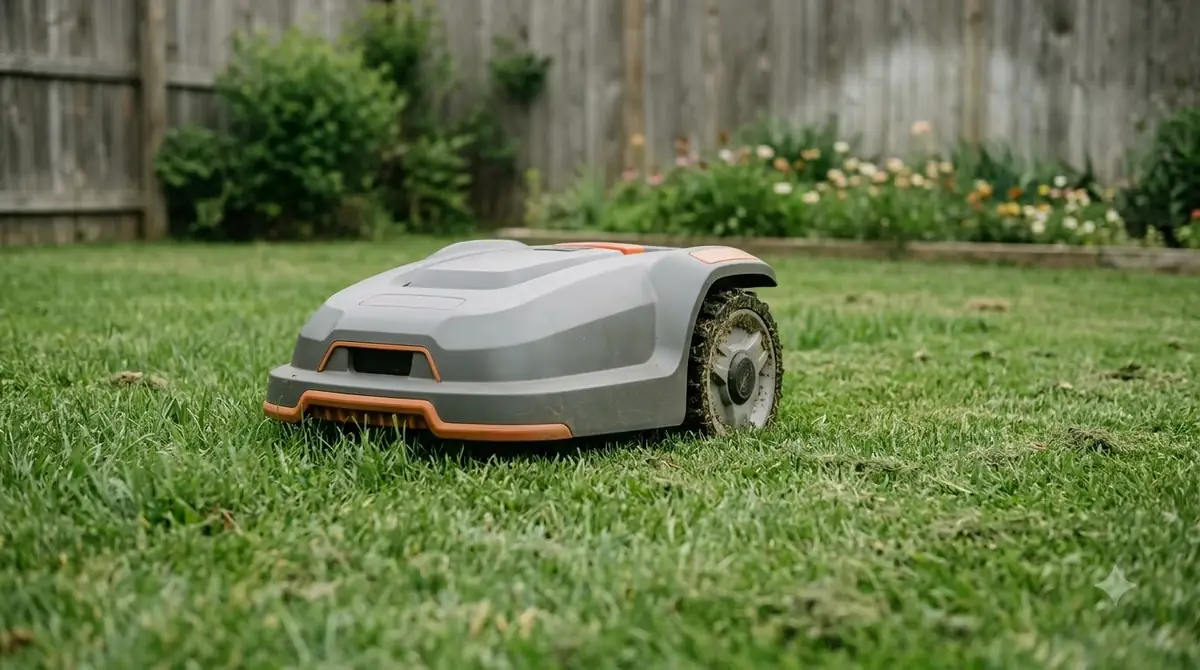
Filling should be gradual. The Ask Extension guidance on low spots recommends thin layers every week or two, and warns never to cover the grass completely, because covering the crowns can smother them. An example from Ask Extension suggests a 50/50 mix of dry topsoil and sand for a low area about 6 by 6 feet. Once seed is involved, Clemson’s lawn renovation guidance describes a quarter-inch soil layer that covers seed, which is a useful reference when reseeding a filled area.
Ecovacs, a robot mower maker, adds two practical steps. It recommends trimming the lawn to below 10 cm before mowing, and mowing only when the lawn is dry, since wet lawns can trap the robot. Start with a higher cutting height on a bumpy lawn, then lower it once the surface is even.
Setup and no-go zones for repeat trap spots
A robot mower for lawn with holes and dips can still catch on some spots even after filling. Husqvarna’s support guidance for repeat trap spots is to create a stay-out zone or island around the spot, and to enlarge the isolated area if collisions continue. Our guide to how to set up no-go zones on a robot mower covers the app side. Eufy’s guidance on ruts is similar: let the area dry, repair the surface, and if the mower keeps dropping into the same place, level it or set a No-Go Zone.
Ecovacs suggests physical enclosures higher than 15 cm around problem areas where a boundary in the app is not enough, and a garden fence for a robot mower no-go zone is one way to build one. The point is not to ask a bigger mower to handle a bad spot. A deep hole that stays deep is still a deep hole, and the cheapest fix is often a few hours of soil work.
Frequently asked questions
Can a robot mower handle a small hole?
Usually yes for shallow holes and dips. Yarbo suggests filling holes deeper than 2 inches, so fill anything that deep before the first run.
Do I need a special robot mower for lawn with holes and dips?
No special category exists. Look for large wheels or deep tread, a deck that follows the ground, and lift and tilt sensing, then check that the model suits your lawn size.
Should I fill holes before buying a robot mower?
Fill them before the first mowing run, because a deep hole can trap a robot mower for lawn with holes and dips on day one. Filling in thin layers over a few weeks is gentler on the grass than one heavy load.
Will a robot mower always get stuck in a hole?
No. For a robot mower for lawn with holes and dips, most trapping happens at repeat spots and deep ruts. If one spot keeps catching the mower, set a no-go zone or enclosure around it while you repair the ground.
Sources
- Yarbo, “Do robot mowers work on uneven lawns” (vendor): 2-inch fill threshold and wheel and suspension claims.
- Anker, “Do robot mowers work on uneven lawns” (brand): problem conditions, filling with topsoil or soil-and-sand, and scalping.
- Robomow, “Can a robotic lawnmower mow well on uneven, difficult surfaces?” (brand): large wheels, suspended deck, lift and tilt sensors, wet-weather slip.
- Eufy, “Robot lawn mower slope limits” (brand): surface variation of about 3 cm and drive-wheel contact alert.
- Ask Extension, lawn low spot topdressing (FAQ 881570) (extension network): thin layers and not covering the grass.
- Ask Extension, low area soil mix (FAQ 870648) (extension network): 50/50 topsoil and sand example.
- Clemson HGIC, lawn renovation (university extension): quarter-inch soil layer covering seed.
- Ecovacs support FAQ (id 44) (brand): trim below 10 cm, fill small holes, mow when dry.
- Ecovacs support FAQ (id 841) (brand): enclosures higher than 15 cm around problem areas.
- Husqvarna support, trapped mower error (brand): stay-out zone or island around repeat trap spots.
 Up next9 min readBy YardWill a Robot Mower Get Stuck on a Lawn With Holes and Dips?Updated Nov 11, 2026
 8 min readBy YardBest Robot Mower for Hilly 1 Acre Lawn: What to Check FirstUpdated Nov 11, 2026
 8 min readBy YardRobot Mower for Sandy Soil Lawn: What to Check FirstUpdated Nov 11, 2026
 8 min readBy YardRobot Mower for Compacted Soil Lawn: 4 Checks FirstUpdated Nov 11, 2026
 9 min readBy YardBest Robot Mower for a Small Backyard in the City: What to Check FirstUpdated Nov 12, 2026
 7 min readBy YardBest Robot Mower for Bahia Grass: Check the Cutting Range FirstUpdated Nov 12, 2026