
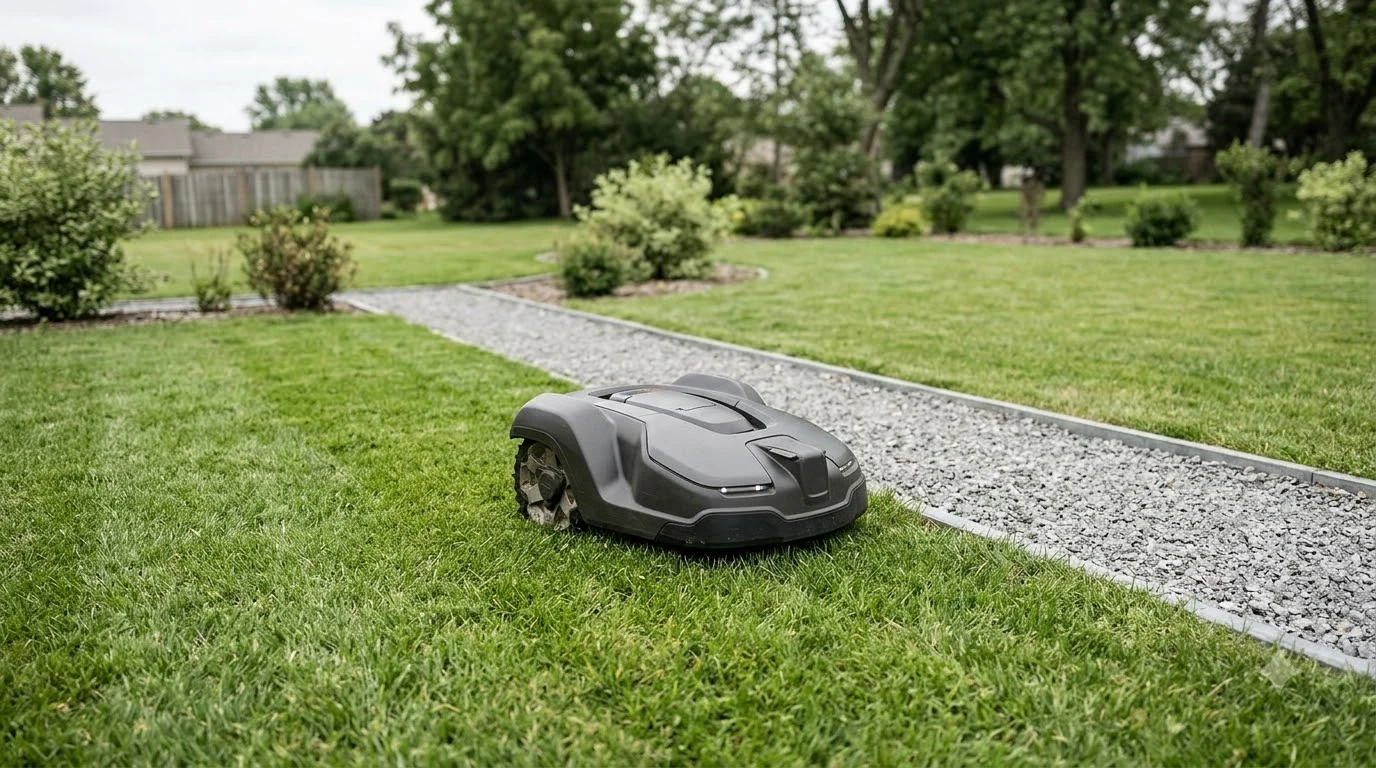

A robot mower for a lawn with bahia seed stalks in summer works well only if the unit reaches a 3-to-4-inch cutting height and runs frequently enough to clip emerging stems before they harden. Most standard robotic mowers max out around 2.4 to 2.7 inches, which scalps bahiagrass and bends stiff Y-shaped stalks instead of slicing them. Choosing a high-cut model and keeping fresh razor blades on the disc lets autonomous mowing keep summer seed heads under control without weekly push-mowing.
The short answer
- Cutting height is the first filter: According to University of Florida IFAS Extension, established bahiagrass requires a 3-to-4-inch mowing height during active growth, so skip low-cut models that cap out below 3 inches.
- Frequent runs beat tall stalks: Daily or every-other-day schedules slice tender flower stems as they emerge rather than forcing lightweight pivoting blades through mature, woody stalks.
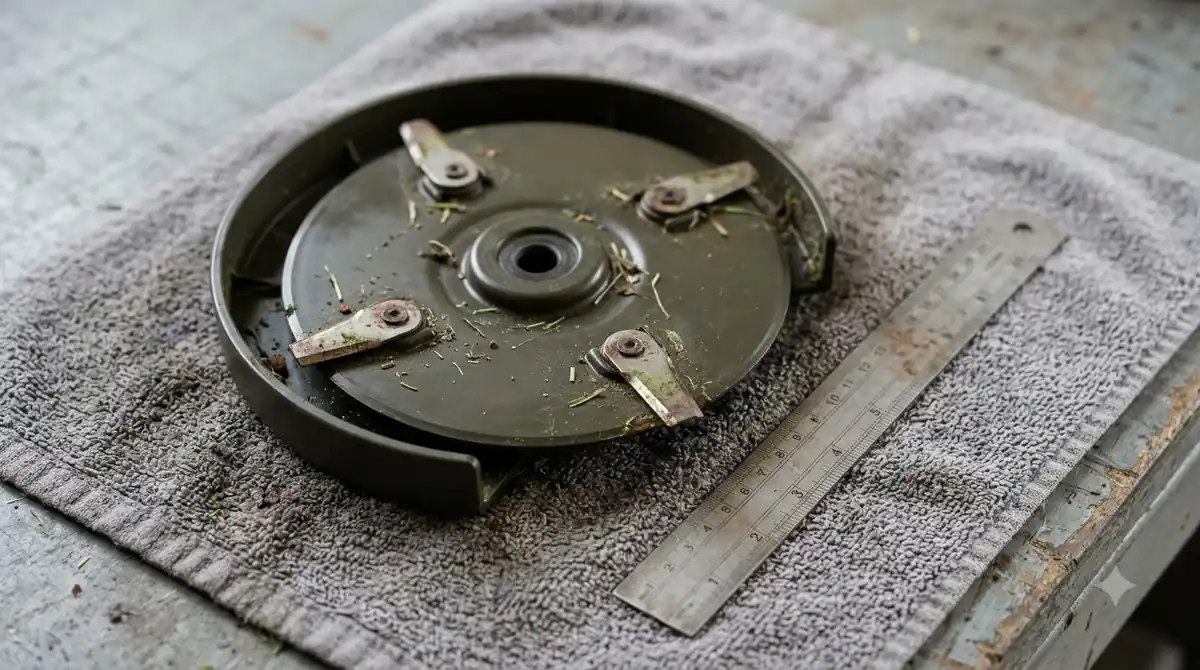
- Blade sharpness dulls faster on bahia: Fibrous bahiagrass leaves and stems wear down thin robotic razor blades rapidly, requiring more frequent blade swaps during peak summer growth.
- High-cut models exist: Units such as the Husqvarna Automower 440 iQ (up to 4 inches) and Mammotion LUBA 2 AWD HX line (2.2 to 4 inches) cover the full recommended range.
- Expect occasional cleanup passes: If heavy summer rain delays mowing for a week, tall stalks may lie flat under the mower chassis and need a single rotary trim.
Why summer bahia seed stalks challenge standard robot mowers
Bahiagrass produces tough, fibrous leaves alongside fast-growing V-shaped seed heads during long summer days that overwhelm underpowered or low-slung robotic decks.
Unlike fine-bladed cool-season turf or low-growing bermudagrass, bahiagrass invests energy into tall reproductive stalks from late spring through early fall. In warm southern yards, those stalks can shoot several inches above the leaf canopy in just a few days after an afternoon thunderstorm. Traditional rotary mowers rely on heavy steel blades spinning at high tip speeds to shear through tough stems on impact. By contrast, almost all residential robot mowers use small, lightweight pivoting razor blades mounted on a spinning disc.
When a lightweight disc encounters a mature, fibrous bahia stalk, two things happen. First, a low-hanging chassis pushes tall stems forward and flattens them before the blades reach the stem base, allowing the stalk to spring back upright once the mower passes. Second, repeated impacts against woody stems chip and dull thin razor edges much faster than soft leaf tips. Even when a mower cuts through, dull blades shred the tough fibers and leave frayed, pale tips across the lawn.
How cutting height and turf rules shape your mower choice
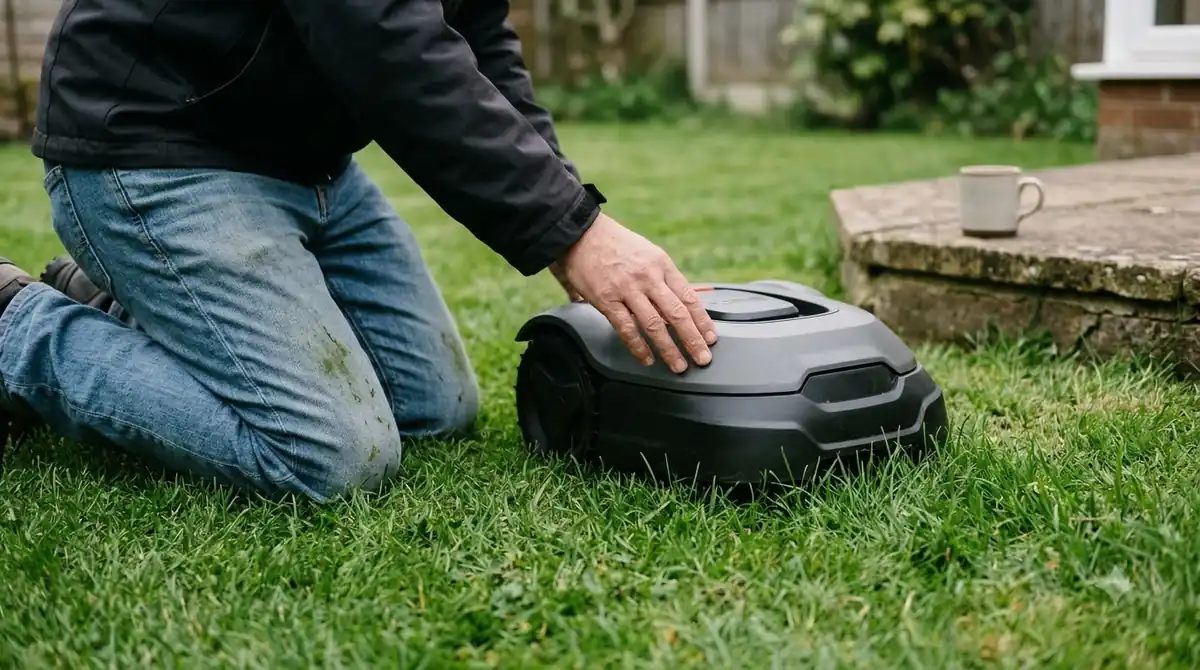
University turfgrass guidelines set a strict 3-to-4-inch target for bahiagrass, immediately disqualifying standard-height robot mowers that top out below 3 inches.
According to UF/IFAS Extension mowing guidance, maintaining bahiagrass between 3.0 and 4.0 inches encourages deep root development and helps the turf withstand summer heat and drought stress. Dropping a robot mower deck down to 2 inches just to chop off seed heads removes too much green leaf tissue, weakens the root system, and opens bare soil to summer weeds. You should never remove more than one-third of the leaf blade height in a single pass.
Buyers shopping for a high-cut robot mower need to check model variants carefully because several brands sell standard and high-cut versions under nearly identical names. For example, Husqvarna specifies a 1-to-4-inch electric height range on the Automower 440 iQ, whereas Mammotion separates its LUBA 2 AWD X lineup into standard X models (1 to 2.7 inches) and HX high-cut models (2.2 to 4 inches). Checking the exact sub-model prevents buying a unit that physically cannot reach 3.5 inches.
| Yard or mower factor | Standard low-cut robot mower | High-cut robot mower (3–4 in.) | Impact on summer bahiagrass |
|---|---|---|---|
| Maximum cutting height | Typically 2.4–2.7 inches | Up to 4.0 inches (e.g., Automower 440 iQ, LUBA 2 AWD HX) | Reaches UF/IFAS 3–4 in. target without scalping roots |
| Chute and deck clearance | Low front bumper pushes tall stems down | Higher chassis clearance lets stems enter the disc | Reduces flattened stalks that pop back up after mowing |
| Blade wear rate | Standard multi-week replacement cycle | Accelerated wear on fibrous bahia stems | Requires fresh blades every 2–4 weeks in peak summer |
| Mowing cadence | 1–2 times per week | Daily or every 48 hours | Clips tender shoots before stalks lignify and harden |
Hardware features that matter most for tough bahia stalks
Look for electric height adjustment, dual-direction cutting discs, higher motor wattage, and strong wheel traction when comparing high-cut models for southern bahia lawns.
High-cut capability alone does not guarantee clean results if the cutting system stalls or struggles on uneven sandy soil. Dual-direction cutting discs—which reverse spin direction between mowing cycles—use both edges of each pivoting razor blade, doubling usable cutting life before you need to break out a screwdriver. Higher-wattage disc motors and multi-blade discs also maintain rotational speed better when slicing through dense summer patches.
Traction and chassis design play an equally practical role. Bahiagrass often grows on sandy, sloped, or uneven lots where two-wheel-drive mowers lose grip during afternoon summer showers. All-wheel-drive models or units with large-tread rear wheels and floating decks ride over root bumps without scalping high spots or snagging on thick thatch transitions. Wire-free navigation using RTK satellite positioning, LiDAR, or dual-camera vision also avoids buried boundary wires that can be exposed by shifting sandy soil or turf maintenance.
Setting up a summer schedule and maintenance routine
Running your robot mower every 24 to 48 hours at 3.5 to 4 inches stops seed stalks early while protecting the grass from summer heat stress.
- Pre-cut with a rotary mower before deployment. If your bahiagrass already has tall, mature seed stalks standing above 5 inches, mow the lawn down to 3.5 or 4 inches with a sharp rotary mower first so the robot starts on an even canopy.
- Set the deck height between 3.5 and 4.0 inches. Use the upper half of the UF/IFAS recommended range during peak summer heat to shade the soil and keep leaf blades healthy.
- Schedule frequent daytime passes on dry turf. Program the robot to cover each zone every one to two days after morning dew dries, catching tender flower shoots while they are still soft enough for razor blades to slice cleanly.
- Inspect and swap blades on a shorter summer interval. Check blade edges every two to three weeks during June, July, and August; replace nicked or rounded blades promptly so stems are sliced rather than shredded.
- Clear debris from the skid plate and height bellows. Wet clippings and fibrous stems can pack around the cutting disc or height-adjustment mechanism, so brush off the underside regularly following the manufacturer’s shutdown instructions.
Heads up
Avoid running your robot mower through heavy summer downpours or saturated turf. Wet bahia clippings clump tightly underneath the cutting disc, bogging down small blade motors and packing around height-adjustment mechanisms.
Frequently asked questions
Can a robot lawn mower cut tall, mature bahia seed stalks?
Not reliably once the stalks have grown tall and woody. Lightweight pivoting razor blades tend to bend mature stems over rather than slice them cleanly, so you should knock down existing tall stalks with a sharp rotary mower first and let the robot maintain daily growth afterward.
What cutting height should I set my robot mower to for bahiagrass?
Set the cutting height between 3.0 and 4.0 inches, with 3.5 to 4.0 inches working best during hot summer months. According to UF/IFAS Extension guidelines, keeping bahiagrass in this range promotes deeper roots and avoids scalping the turf just to chase seed heads.
How often do robot mower blades need replacing on a bahia lawn?
Expect to replace or flip blades roughly every two to four weeks during peak summer growth. Bahiagrass leaves and seed stems are noticeably tougher and more fibrous than northern turfgrasses, which dulls thin razor blades faster than standard schedules suggest.
Do I still need a regular push mower if I get a robot mower for bahiagrass?
Keeping a standard rotary mower or string trimmer on hand is still smart. You will want it for tight fence lines, spring scalping or cleanup, and occasional resets if multi-day summer storms keep the robot docked long enough for seed stalks to shoot above chassis height.
Sources
- ENH6/LH006: Bahiagrass for Florida Lawns (University of Florida IFAS Extension): used for bahiagrass summer seed head behavior, 3–4 inch mowing height recommendation, and blade wear characteristics.
- ENH10/LH028: Mowing Your Florida Lawn (University of Florida IFAS Extension): used for the one-third blade removal rule and species-specific mowing height table.
- Automower 440 iQ Product Specifications (Husqvarna US): used for maximum 4-inch cutting height, 3 pivoting razor blade system, and dual cutting direction details.
- Mammotion LUBA 2 AWD Robotic Mowers: Features & Specs (Mammotion US): used for comparing standard X (1–2.7 in.) vs. high-cut HX (2.2–4 in.) cutting height configurations and 165 W dual-disc motor specifications.
 Up next8 min readBy YardChoosing and Running a Robot Mower for a Lawn with Sweetgum Spiky Seed BallsUpdated Nov 19, 2026
 9 min readBy YardWhen to First Mow New Grass Seed (Height, Not Calendar)Updated Nov 11, 2026
 9 min readBy YardCan a Robot Mower Stay Under a Carport? Summer Yes, Winter NoUpdated Nov 12, 2026
 8 min readBy YardCan a Robot Mower Cut Bahia Grass? What the Sources SayUpdated Nov 11, 2026
 7 min readBy YardBest Robot Mower for Bahia Grass: Check the Cutting Range FirstUpdated Nov 12, 2026
 8 min readBy YardMowing Lawn in Summer Heat and Drought: What to ChangeUpdated Nov 11, 2026