
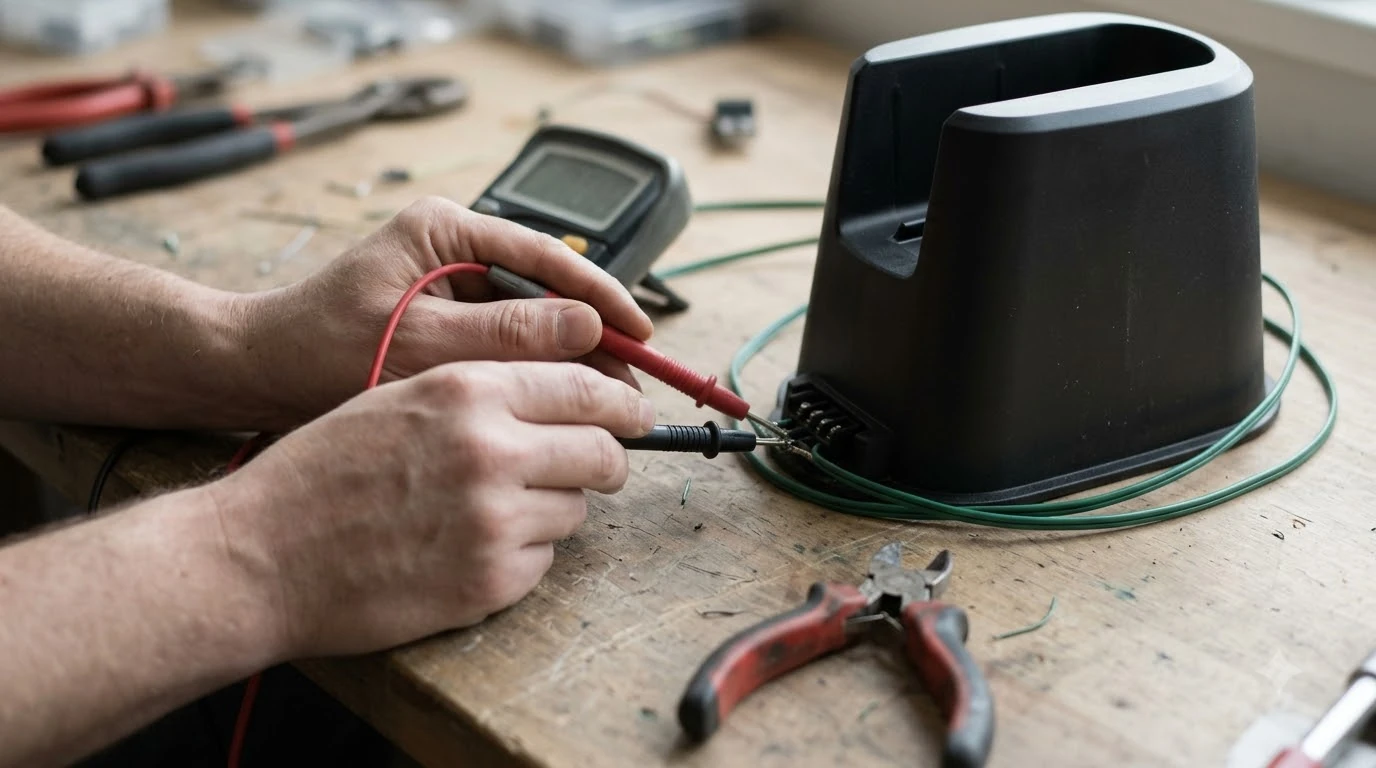

A robot mower and invisible dog fence wires can share the same yard, provided you keep the two cables physically separated, prevent them from crossing, and avoid overlapping radio modulation types. When wired perimeter loops sit too close together, electromagnetic crosstalk can confuse the mower’s navigation sensors or prevent your dog’s receiver collar from triggering properly at the edge of the yard. Proper wire routing, frequency separation, or switching to a boundary-free GPS mower eliminates the conflict.
The short answer
- Yes, with physical spacing: Wired robot mowers and underground pet containment loops can run on the same property if you maintain a buffer zone between the two cables and never cross them.
- Modulation type matters: Most wired robot mowers and traditional pet fences broadcast amplitude-modulated (AM) radio signals, which are prone to crosstalk; frequency-modulated (FM) pet fences resist interference much better.
- Both systems face safety risks: Crosstalk can cause a mower to ignore its boundary, stall with a loop-signal error, or inadvertently couple the dog fence signal onto the mower wire.
- Pre-burial testing is mandatory: Always peg both wires temporarily on top of the grass and test the mower and the dog collar across the entire yard before trenching.
- Wire-free mowers bypass the issue: Modern RTK-GPS and vision-guided robot mowers use virtual satellite boundaries instead of buried perimeter cables, leaving your existing dog fence completely undisturbed.
Why robot mower and invisible dog fence wires interfere
Both wired robotic lawn mowers and in-ground pet containment systems rely on low-frequency electromagnetic fields transmitted through continuous copper loops to mark property limits.
Inside your yard, each base station or wall-mounted transmitter sends a coded radio signal through its respective perimeter cable. Sensors inside the mower nose detect the strength and polarity of the mower loop, while the receiver on your dog’s collar listens for the pet fence transmitter’s carrier wave. When the two cables run parallel within a few feet of each other—or worse, cross directly over one another—the magnetic fields overlap and induce current in the neighboring wire.
According to technical installation guidance from DogFence, the core problem comes down to radio modulation. Many standard electronic dog fences and wired robot mowers operate on low-frequency AM signals. Because AM systems pulse signals on and off along the wire, one loop can easily bleed into the other. By contrast, systems that use digital FM signals—such as DogWatch transmitters operating on selectable 4 kHz or 8 kHz FM frequencies—filter out ambient electrical noise and ignore nearby mower loops far more reliably.
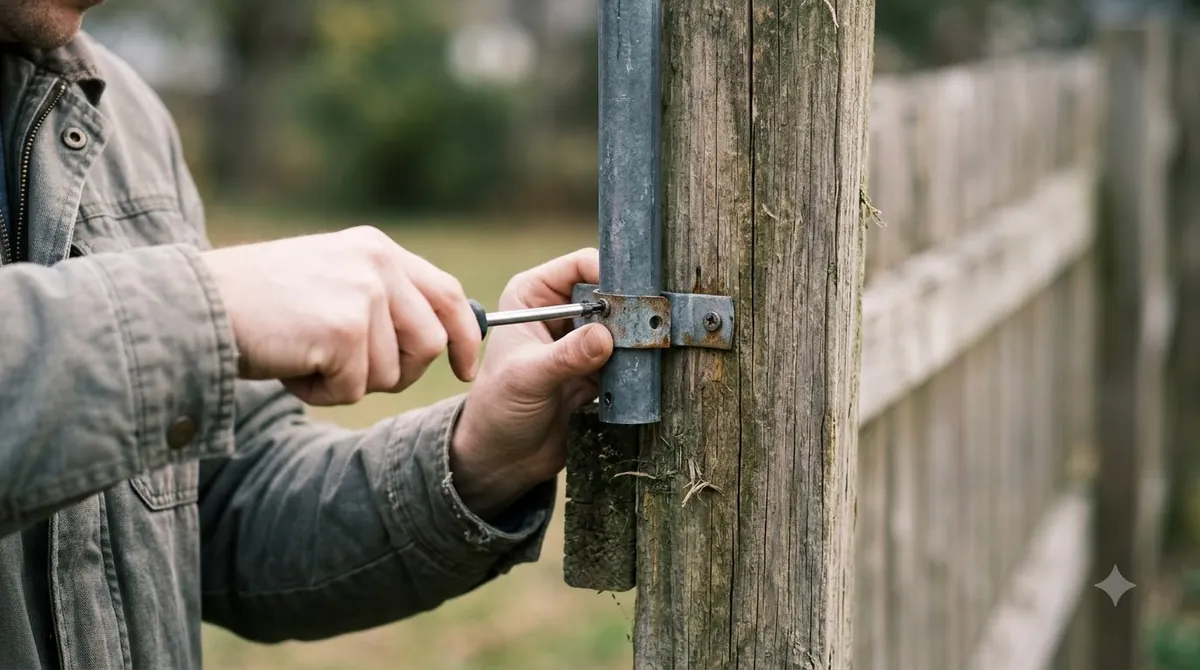
Interference rarely looks the same from yard to yard, and it can affect either device depending on which transmitter outputs a stronger field:
- Mower navigation faults: The robot mower may stop mid-lawn with a “no loop signal” or “outside work area” error, refuse to leave its charging dock, or fail to follow its guide wire home.
- Silent pet fence dead zones: A high-output mower loop can mask the pet fence signal, preventing your dog’s collar from emitting its warning tone or static correction near the boundary.
- Signal coupling onto the mower wire: If the two wires sit close enough for inductive coupling to occur, the pet fence signal can jump onto the mower’s boundary cable, causing your dog’s collar to trigger far inside the safe yard area.
Heads up
Never test an active pet fence boundary while the collar is on your dog. Hold the receiver collar in your hand by the plastic housing—away from the metal contact posts—and walk the perimeter while the robot mower is actively running to verify where the warning tone activates.
Compatibility across wired and wire-free mower designs
The severity of signal conflict depends heavily on how your robot mower navigates and what type of radio frequency your pet containment system uses.
Before buying a new mower or trenching a new pet loop, compare how different combinations behave in a shared yard according to manufacturer installation manuals and specialist fence installers:
| System pairing | Interference risk | Primary cause | Recommended setup approach |
|---|---|---|---|
| AM wired mower + AM pet fence | High | Overlapping AM carrier waves and inductive wire crosstalk | Keep cables separated, avoid crossings, and test loop signal channels |
| AM wired mower + FM pet fence | Low | FM digital receiver ignores AM mower pulse interference | Maintain physical cable spacing and verify collar activation before burying |
| Wired mower + wireless radial pet fence | Low to moderate | Indoor base transmitter broadcasts a circular dome rather than a buried loop | Keep the mower charging dock and loop away from the indoor base unit |
| RTK-GPS / vision mower + any wired pet fence | Minimal | Mower uses satellite and camera positioning with no perimeter wire | Confirm the mower’s charging dock does not sit directly atop the pet wire |
If you already own an in-ground pet fence and have not yet purchased a mower, choosing a boundary-free RTK-GPS or LiDAR-assisted mower is the cleanest technical solution. Because wire-free mowers define cutting zones digitally in an app rather than energizing a copper loop around your lawn, there is no perimeter magnetic field to disrupt your dog’s collar. Even so, you should avoid placing a wireless mower’s charging station directly on top of a buried pet fence line, as the dock’s power supply can create localized electromagnetic noise.
How to route both boundary wires without crosstalk
Careful physical layout prevents most interference problems before you ever adjust transmitter settings or bury a single foot of cable.
According to Husqvarna US installation guidance, owners with an existing invisible pet fence should locate and mark the buried pet wire before laying out a mower loop. Once you know the exact path of the pet cable, follow these steps to route both boundaries safely:
- Map the existing pet wire with flags. Turn the pet fence transmitter on, hold the receiver collar at dog-neck height, and walk toward the perimeter from inside the yard. Place a marker flag where the warning beep starts, repeat from outside the yard, and mark the midpoint between the two flags as the exact wire path.
- Route the pet fence outside the mower loop. Whenever your property layout allows, keep the dog fence wire along the outer property perimeter and place the robot mower’s boundary wire inside the lawn area. Leaving an unmowed border strip between the two loops—typically at least 3 feet (about 1 meter) apart, as recommended by mower manuals like Hookii Neomow and PACDOG—dramatically reduces magnetic coupling.
- Never cross the two boundary cables. Do not lay the robot mower wire over the invisible dog fence wire, even at a 90-degree angle. If your mower needs to reach a separate front or side yard zone, use two separate mower installations or carry the mower across the pet line rather than bridging the wires.
- Keep guide wires away from the pet loop. If your mower uses a central guide wire to return to its charging base, keep that guide wire well clear of the pet fence perimeter so the mower does not lose tracking on its way back to charge.
- Peg and test both systems before burying. Secure the mower wire on top of the turf with plastic stakes first. Run the mower for a full cutting cycle while walking the perimeter with the dog collar in hand to confirm zero false triggers or dead zones.
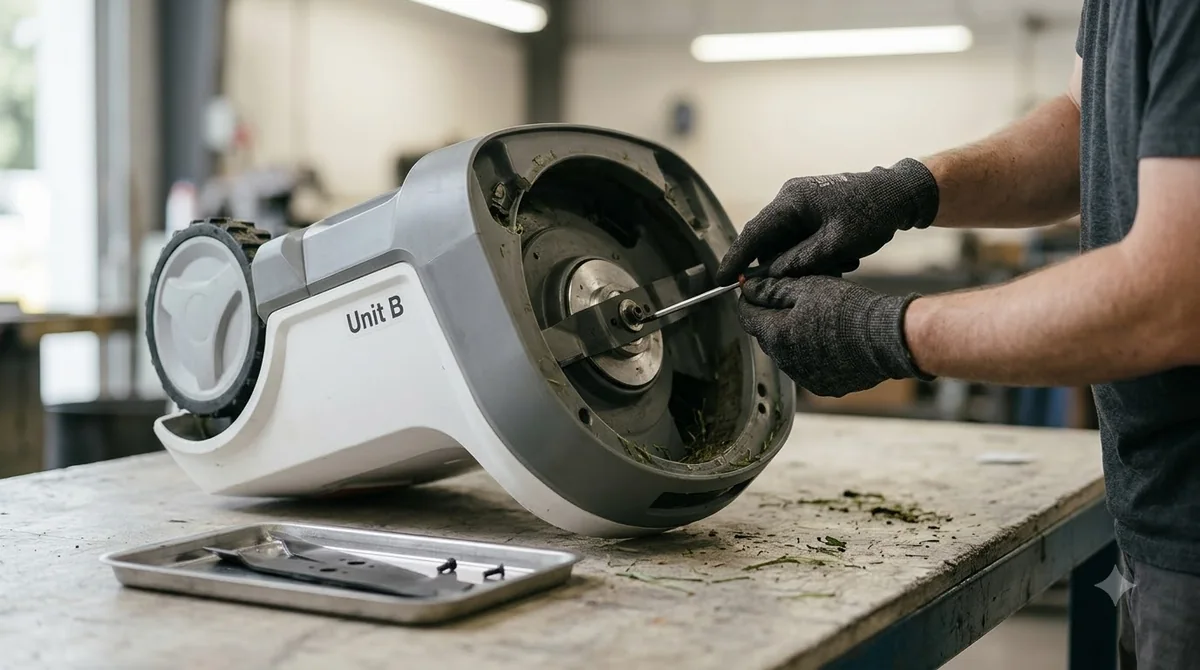
Troubleshooting interference on an existing setup
If you already have both systems installed and notice erratic mower turns or inconsistent collar warnings, systematic isolation will pinpoint the source.
Start by shutting off power to one system completely. Unplug the robot mower’s charging station and walk the yard with the dog collar in hand. If the pet fence suddenly works normally across the entire perimeter, the mower loop is actively interfering with the pet fence signal. Conversely, if you unplug the pet fence transmitter and the robot mower immediately stops throwing loop errors, the pet fence wire is bleeding into the mower’s sensors.
Once you confirm signal crosstalk, work through these adjustments in order:
- Regenerate or shift the mower loop signal: Many wired mowers—including Husqvarna Automower models—allow you to generate a new loop signal or switch frequency channels inside the security or installation menu. Pairing the mower to a fresh digital loop code often resolves mild interference without moving any wire.
- Switch the pet fence frequency: Check your pet fence wall transmitter for a frequency toggle switch. Selectable FM systems let you flip between 4 kHz and 8 kHz, and some multi-channel AM units let you shift carrier frequencies to move away from the mower’s operating band.
- Check twisted wire runs: Where a pet fence wire runs from the house wall out to the yard perimeter, the two parallel strands must be twisted together tightly—typically 10 to 12 twists per foot, per PetSafe installation standards—to cancel out the radio signal. Untwisted lead-in wires radiate active fields that frequently trip up robot mowers near the house.
- Widen the parallel gap: If frequency changes do not clear the fault, pull up the mower’s boundary stakes along the problem stretch and shift the mower wire further inside the lawn, accepting a slightly wider trimmer strip along the edge.
- Schedule alternating run times: As a temporary workaround, program your robot mower to run only while your dog is indoors, and unplug or enable ECO mode on the mower dock (if your mower model disables loop transmission when docked) during outdoor pet hours.
Frequently asked questions
Can a robot lawn mower cut through a buried invisible dog fence wire?
A properly buried pet fence wire sits 1 to 3 inches below the soil, well out of reach of a robot mower’s pivoting razor blades. However, if frost heave, erosion, or shallow trenching exposes a section of the dog fence cable on top of the grass, the mower’s blades can sever it—which is another strong reason to keep the mower’s cutting loop inside the pet fence perimeter.
Will a robot mower trigger my dog’s invisible fence collar?
The mower itself will not usually trigger a collar directly, because collars are tuned to specific pet-containment carrier frequencies. However, if the dog fence wire and mower wire run too close together, the pet fence signal can inductively couple onto the mower wire, causing the collar to beep or shock your dog near the mower’s boundary instead of the true fence line.
Can I run a robot mower boundary wire and dog fence wire in the same trench?
No. Placing both cables in the same trench maximizes electromagnetic crosstalk and almost guarantees signal interference, false collar activations, or mower navigation failures. Always dig separate trenches with at least 3 feet of separation between the two loops.
Do GPS wire-free robot mowers interfere with invisible dog fences?
No. Wire-free robot mowers that rely on RTK-GPS satellites, cameras, or LiDAR do not use an energized perimeter cable, so they do not generate ground-loop interference with buried pet fences. Just keep the mower’s charging dock a few feet away from the buried dog wire to avoid minor power-supply noise.
Sources
- Automower Wired Installation Made Simple (Husqvarna US): Referenced for pre-installation marking and locating of existing invisible pet fence wires.
- Dog Fences and Robotic Lawn Mowers Working Together (DogFence): Referenced for AM vs. FM radio modulation behavior, 4 kHz and 8 kHz frequency switching, and wire-crossing prohibitions.
- How to Use PAC Pet Fences and Robotic Lawn Mower (PACDOG): Referenced for the 1-meter minimum separation guideline between pet containment cables and robot mower boundary loops.
 Up next8 min readLearnSegway Navimow Vision Fence Not Working: Causes and FixesUpdated Nov 11, 2026
 9 min readLearnHow to Keep a Robot Mower From Scaring the DogUpdated Nov 11, 2026
 7 min readLearnDoes a Robot Mower Work With a Dog in the Yard?Updated Nov 11, 2026
 8 min readLearnHow to Prevent Ant Nests Inside a Robot Mower Charging BaseUpdated Nov 19, 2026
 8 min readLearnHow to Prevent Sun Fading on a Robot Mower Plastic BodyUpdated Nov 19, 2026
 9 min readLearnHow to Prevent Rust on Robot Mower Blade ScrewsUpdated Nov 19, 2026