
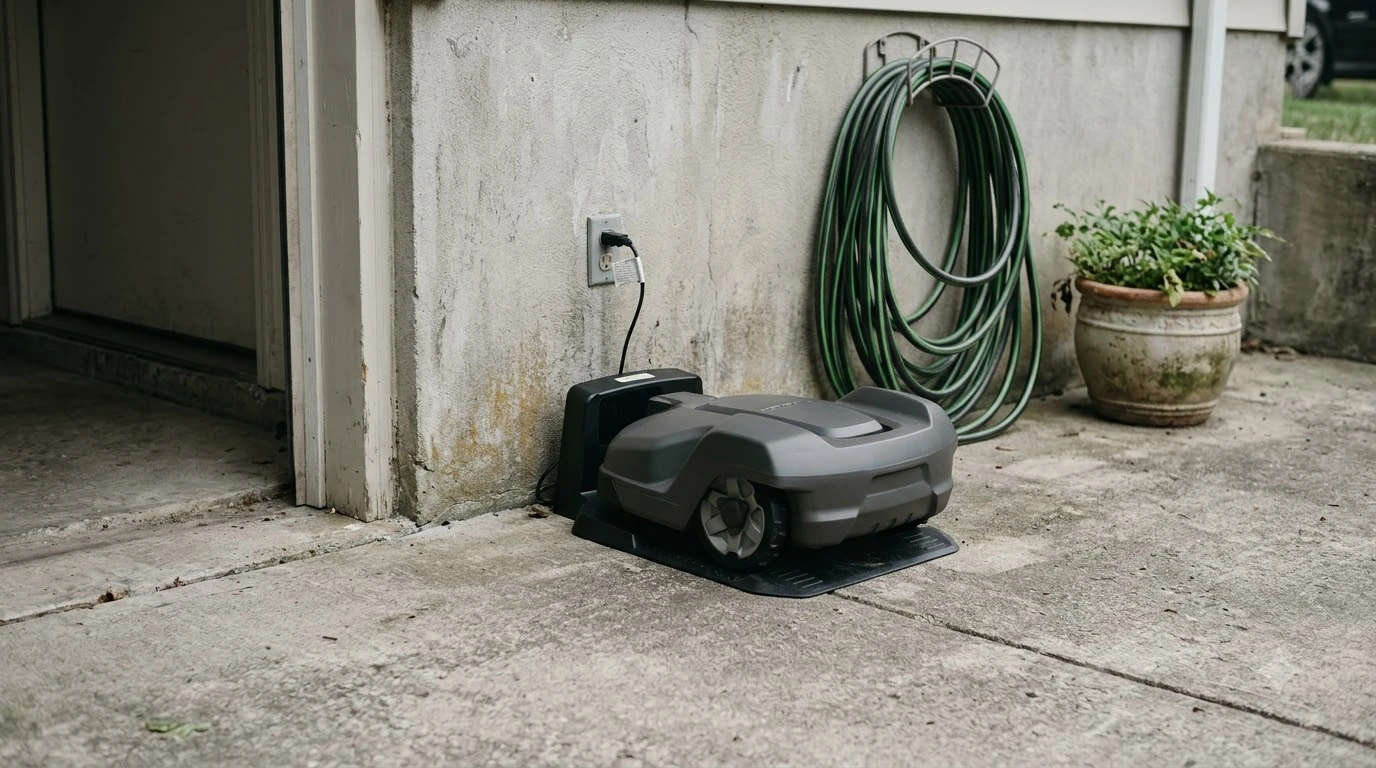

How to prevent ant nests inside a robot mower charging base? Eliminate the warmth, moisture, and shelter ants seek by mounting the baseplate on a hard, well-drained surface, clearing organic debris weekly, sealing cable entry points, and placing tamper-resistant bait stations nearby. Low-voltage electronics generate mild, steady heat and electromagnetic signals that draw foraging colonies away from damp soil and directly onto printed circuit boards. Applying integrated pest management principles keeps insects out of your dock without risking water damage or voiding manufacturer warranties.
The short answer
- Upgrade the foundation: Set the charging station on level concrete pavers, gravel, or compacted stone rather than bare dirt or heavy mulch where colonies tunnel easily.
- Clear grass and moisture: Brush away wet grass clippings, pollen, and leaf litter around the baseplate every week so ants lose food and nesting cover.
- Seal cable openings: Close small gaps around boundary wire ports and power cord grommets using outdoor-rated silicone or electrical putty.
- Use enclosed baits over sprays: Place tamper-resistant ant bait stations a few feet from the dock so workers carry slow-acting toxicant back to the queen, avoiding liquid sprays that corrode circuit boards.
- Store indoors off-season: Disconnect and bring the charging tower and power supply inside during winter dormancy when stationary housings become prime overwintering shelters.
Why ants target robot mower charging stations
Ants invade outdoor electrical housings because low-voltage transformers provide steady warmth, dry shelter from rain, and protection from predators.
According to research from Texas A&M AgriLife Extension, red imported fire ants and several nuisance ant species are strongly drawn to outdoor electrical enclosures. When worker ants crawl across live low-voltage contacts or circuit traces, they receive small electrical shocks and release alarm pheromones that summon even more workers to the exact same spot. Over several weeks, this chain reaction packs dead insects, soil particles, and moisture directly around sensitive relays and printed circuit boards.
Robot mower docks combine several conditions that make them especially attractive in suburban yards. The base tower houses a small circuit board that stays slightly warmer than the surrounding night air, while the flat plastic baseplate traps ground humidity underneath. If the station sits directly on turfgrass or garden mulch, subterranean ants can tunnel straight upward through screw holes, drainage slots, and wire channels without ever crossing open ground.
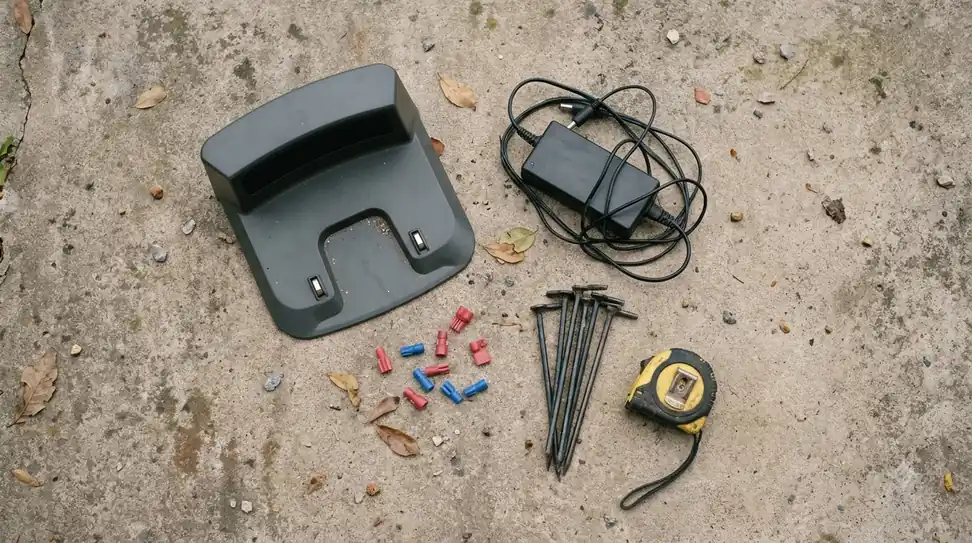
Once inside, ants pack dirt and organic matter around solder joints to regulate nest humidity. That damp soil holds moisture against copper traces, leading to corrosion, false boundary-loop errors, or complete charging failure. Manufacturers typically exclude insect and rodent damage from standard warranties, meaning a single colony can force an expensive circuit board replacement.
Comparing prevention methods for your charging dock
Combining physical barriers with targeted baiting works far better than relying on broad chemical sprays around sensitive outdoor electronics.
As Penn State Extension outlines in its integrated pest management guidance, lasting ant control starts by removing the habitat features that let colonies establish in the first place. Before buying any chemical products, review how common prevention tactics compare in effectiveness, electronics safety, and maintenance effort.
| Prevention method | How it works | Safety for mower electronics | Maintenance frequency |
|---|---|---|---|
| Hardscape pad (pavers or gravel) | Removes direct soil contact and improves water drainage beneath the baseplate | High; keeps moisture and mud away from wiring | Once at installation, plus seasonal leveling |
| Weekly debris brushing | Removes damp grass clippings, pollen, and mulch that shelter foraging workers | High; prevents organic buildup around charging contacts | Every 7 to 10 days during mowing season |
| Grommet and gap sealing | Blocks physical entry routes around boundary wires and power supply connectors | High when using non-corrosive outdoor silicone | Inspect each spring and after wire repairs |
| Tamper-resistant bait stations | Workers carry slow-acting bait back to eliminate the underground queen and brood | High; keeps liquids and dusts completely out of the tower | Replace bait every 4 to 8 weeks when active |
| Diatomaceous earth perimeter | Sharp microscopic silica dehydrates insects that crawl across dry powder lines | Moderate; keep powder away from moving wheels and vents | Reapply after every rain or heavy dew |
| Liquid perimeter insecticides | Creates a short-term chemical barrier on surrounding soil or concrete | Low if sprayed near the dock; moisture can short boards | Every 30 to 60 days; strictly off-unit only |
Physical modifications provide permanent protection, whereas baits and dusts require ongoing seasonal attention. Focusing first on site preparation and sealing reduces how often you need any pest control product near your lawn.
Step-by-step setup to ant-proof your charging base
Preparing a clean, well-drained pad and sealing housing gaps stops most colonies before scouts ever locate the internal electronics.
Manufacturer installation guides, such as Husqvarna’s charging station placement documentation, emphasize placing the station on a flat, level surface with proper water drainage and adequate ventilation. Following a structured installation routine protects both navigation accuracy and internal circuitry.
- Disconnect power before servicing. Unplug the low-voltage power supply from the wall outlet and separate the transformer cable from the charging tower before lifting or opening any housing panels.
- Clear vegetation and mulch back six inches. Remove turfgrass, loose bark mulch, and overhanging plant stems within at least six inches of the baseplate perimeter so ants cannot use foliage as bridges.
- Install a solid, level foundation. Lay concrete patio pavers, permeable grid pavers, or a compacted bed of crushed gravel slightly larger than the baseplate footprint. Confirm the baseplate sits completely flat without bending, which prevents docking misalignment and eliminates gaps underneath.
- Clean existing soil and clippings. Brush away all dried grass, mud, and insect debris from the underside of the plate, the charging strips, and the rear wire channels using a soft dry brush or compressed air.
- Seal non-drainage wire openings. Apply a small bead of neutral-cure outdoor silicone sealant or duct seal putty around the spots where boundary wires, guide wires, and the power cord enter the rear housing. Leave dedicated bottom water-drainage holes unobstructed so condensation can escape.
- Place enclosed ant baits nearby. Set two tamper-resistant outdoor ant bait stations three to five feet away from the charging dock along edges or fence lines where foraging trails appear, drawing workers away from the electronics rather than toward them.
Heads up
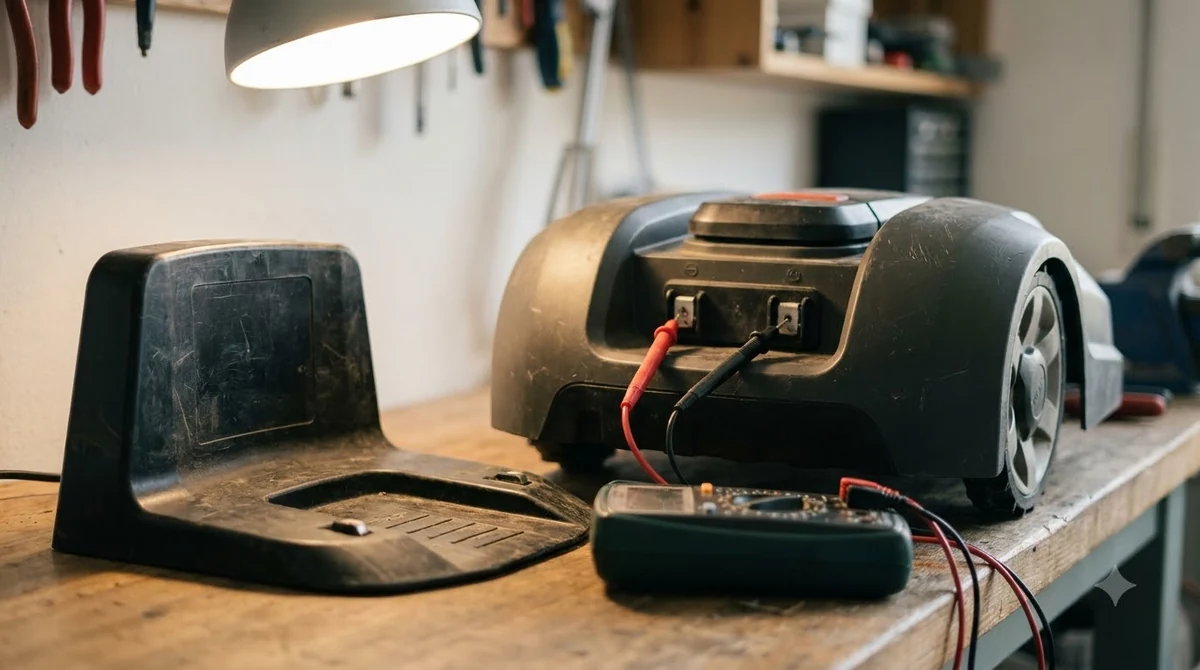
Never spray aerosol insecticides, liquid concentrates, or pressurized water directly into the charging tower or onto the circuit board. Liquid propellants and water can short-circuit live components, strip protective conformal coatings, and void your manufacturer warranty.
Routine maintenance and seasonal habits that keep ants out
Consistent cleaning and proper winter storage prevent ants from using a quiet charging station as a sheltered brood chamber.
During active mowing months, robotic mowers drop fine grass clippings around the dock every time they return to recharge. When morning dew or irrigation wets those clippings, they form a warm, decaying mat right at the baseplate edge. Brushing off the baseplate and wiping the metal charging contacts with a dry cloth every week or two breaks up scent trails and removes organic matter before pests settle in.
If you install a decorative mower garage or roof over the station, make sure the structure remains open on the sides for airflow. Enclosed boxes trap heat from the power supply and create dark, humid microclimates that attract ants, slugs, and earwigs. Keep the external power supply mounted vertically on a wall or post above ground level rather than laying it flat in the grass.
At the end of the mowing season in regions with freezing winters, disconnect the charging station tower and transformer, brush out any lingering dirt, and store them in a dry garage or basement. Leaving an unpowered station outside all winter invites colonies to move inside the housing during cold snaps, leaving behind corroded pins when spring arrives.
Frequently asked questions
Can ant nests permanently ruin a robot mower charging station?
Yes, ant colonies regularly destroy charging station circuit boards by packing damp soil and organic debris onto exposed solder joints. The trapped moisture corrodes copper traces and causes short circuits that prevent the mower from docking or detecting its boundary loop.
Is diatomaceous earth safe to use around a robot mower base?
Food-grade diatomaceous earth is safe for pets and lawns, but apply it sparingly outside the dock footprint rather than inside the housing. Fine silica dust can abrade wheel bearings and clogs cooling vents if tracked into the mower, and it stops working as soon as rain or dew wets it.
Should I put ant bait inside the charging station housing?
No, placing ant bait inside the housing attracts more foraging workers directly onto your electronics before the slow-acting ingredient takes effect. Instead, set enclosed bait stations a few feet away along nearby walls, pavers, or garden borders to intercept ants before they reach the dock.
Why do ants keep coming back even after I brush them off the dock?
Brushing away visible workers leaves behind invisible pheromone trails and fails to eliminate the underground queen producing new ants. To stop repeat invasions, wipe the plastic surfaces with mild soapy water to erase scent trails, seal entry gaps, and use slow-acting bait stations to eliminate the colony.
Sources
- Managing Red Imported Fire Ants in Electrical Equipment and Utility Housings (Texas A&M AgriLife Extension): used for mechanisms explaining why ants infest electrical housings, pheromone recruitment, and safe exclusion practices around wiring.
- Got Ants? Eliminate them with IPM (Penn State Extension): used for integrated pest management principles, vegetation clearance distances, soapy water trail removal, and enclosed baiting guidance.
- Automower charging station and mower house guide (Husqvarna): used for charging station baseplate leveling, ventilation, drainage, and power supply placement requirements.
 Up next8 min readLearnHow to Prevent Grass Buildup Inside Robot Mower Wheel WellsUpdated Nov 19, 2026
 7 min readLearnHow Much Does an RTK Base Station Cost?Updated Nov 14, 2026
 8 min readLearnRobot Mower Not Returning to Base: 3 Causes and FixesUpdated Nov 11, 2026
 8 min readLearnWhat Is an RTK Base Station?Updated Nov 11, 2026
 7 min readLearnHow to Set Up an RTK Robot Mower: Base Station StepsUpdated Nov 11, 2026
 8 min readLearnHow to Prevent Sun Fading on a Robot Mower Plastic BodyUpdated Nov 19, 2026