
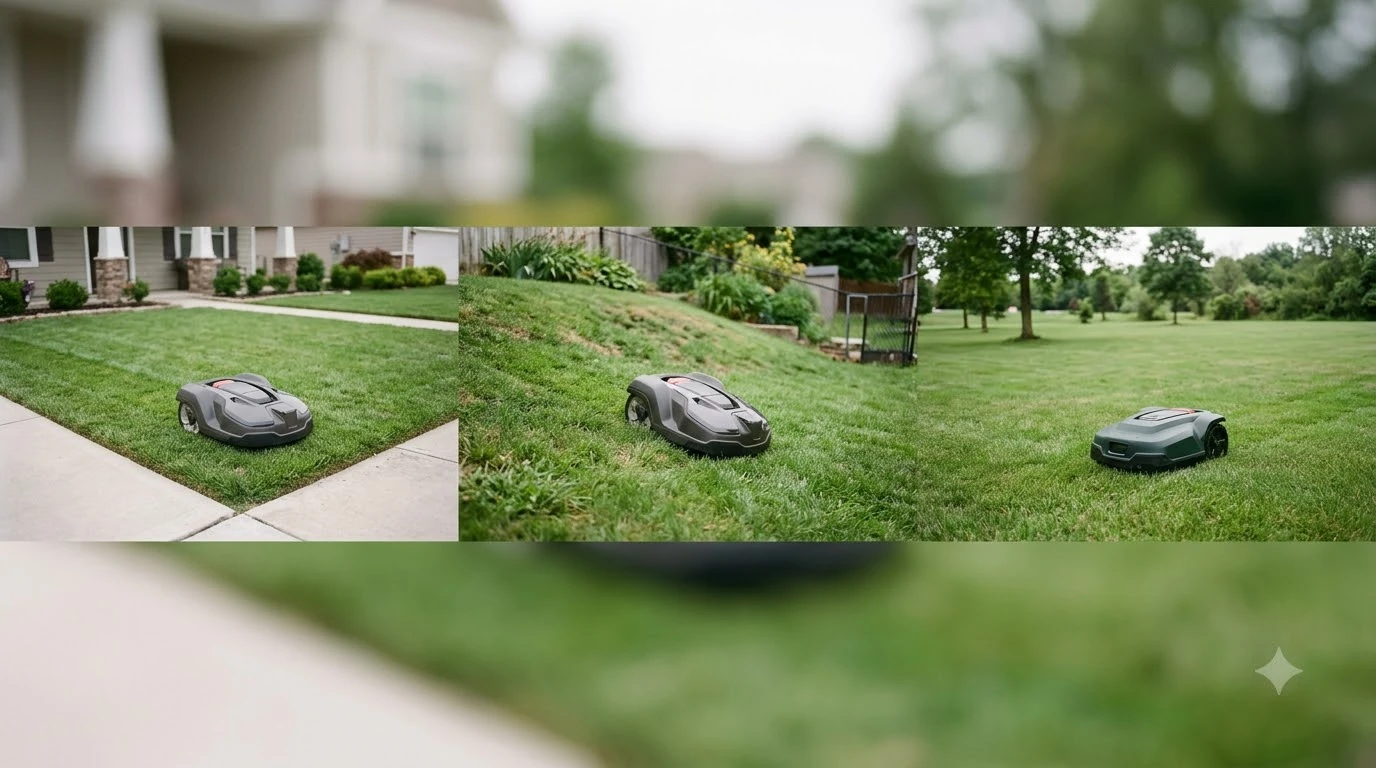

A wire-free RTK or vision-guided robot mower for a lawn with underground invisible pet fencing is the most reliable choice because it eliminates boundary-wire radio interference altogether. Traditional perimeter-wire mowers can operate alongside an underground dog fence, but only if their radio frequencies do not clash and the two buried loops are carefully separated. Understanding how the two signals interact—and how to test your pet’s collar before letting them outside—keeps both your lawn neat and your pet safely contained.
The short answer
- Wire-free mowers avoid signal clashes: Models using RTK satellite navigation, LiDAR, or AI vision map your yard virtually instead of transmitting a radio loop signal that could confuse an underground pet collar.
- AM vs. FM frequencies matter: Many budget invisible fences use AM radio signals that easily suffer interference from standard mower perimeter wires, whereas FM-based containment systems resist stray electrical noise far better.
- Never cross the two wires: If you use a wired robot mower, keep its perimeter cable separated from the pet fence wire and avoid crossing them, as overlapping loops can cause signal coupling.
- Check mower frequency settings: Several wired mowers allow you to change the loop signal frequency in the settings menu to resolve conflicts with an existing pet fence transmitter.
- Test with the collar in hand first: Always walk the yard holding your dog’s receiver collar while the mower is actively running before letting your pet out unsupervised.
Why invisible pet fences and robot mowers clash
Both traditional wired robot mowers and underground pet containment systems rely on low-frequency radio signals sent through buried copper loops, which can overlap and disrupt one another.
In a standard wired mower installation, the charging base sends a continuous loop signal around the yard perimeter so the robot knows where to stop and turn. An underground pet fence transmitter does the exact same thing, broadcasting a radio field along a buried wire that triggers a warning tone and static correction on your pet’s receiver collar. According to DogFence’s compatibility guidance, when two energized loops sit too close together or run on matching radio frequencies, one system can pick up the other’s transmission.
The interference usually shows up in one of two ways. First, the robot mower’s stronger yard-wide loop signal can swamp the weaker, localized signal of an AM pet fence, preventing the dog’s collar from activating at the boundary. Second, the pet fence signal can couple onto the mower’s perimeter wire, causing the dog’s collar to trigger false warnings in the middle of the lawn or confusing the mower into stopping early.
Comparing mower navigation types for yards with underground pet fences
Choosing the right guidance technology determines whether you have to worry about buried wire spacing or can skip radio loop conflicts completely.
Homeowners shopping for a robot mower for a lawn with underground invisible pet fencing generally choose between three navigation architectures. Each interacts differently with an existing buried containment loop.
| Mower Navigation Type | Uses Buried Perimeter Wire | Risk of Pet Fence Interference | Key Yard Requirement |
|---|---|---|---|
| RTK Satellite + Vision | No | Very low (no loop signal) | Clear view of the sky for the reference antenna |
| Camera / LiDAR Vision-Only | No | Very low (no loop signal) | Clearly defined lawn borders and daytime light |
| Traditional Boundary Wire | Yes | Moderate to high (depends on AM/FM frequency and spacing) | Physical separation from the pet fence cable |
Wire-free RTK (Real-Time Kinematic) mowers use a stationary reference antenna and satellite corrections to hold centimeter-level virtual boundaries, while vision-only units use onboard cameras to distinguish grass from hardscaping. Because neither technology sends a radio signal through the ground, your pet’s receiver collar only hears the underground fence transmitter. Note that some hybrid RTK models offer an optional wired support loop for heavy tree cover—if you enable that feature, you will still need to keep that support wire away from your pet fence.
How to lay out a wired mower alongside an existing pet fence
If you already own a boundary-wire mower or prefer its lower upfront cost, careful wire routing and frequency matching can prevent signal crosstalk.
Before driving a single stake into the turf, you need to know the exact path of your pet containment cable. On its Automower wired installation checklist, Husqvarna specifically advises homeowners with an invisible pet fence to locate and mark the approximate wire path prior to setting up the mower.
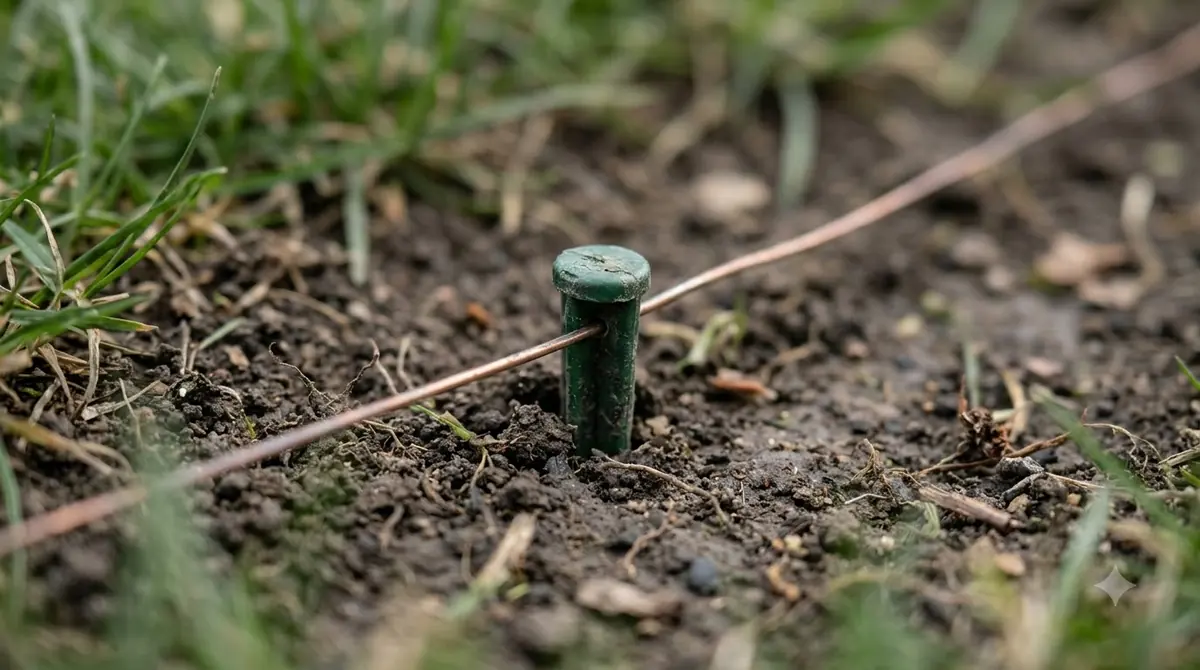
- Locate and flag the pet fence line. Walk the perimeter with your pet’s receiver collar (with the contact probes covered or removed) to hear where the warning beep triggers, then mark the buried line with landscaping flags.
- Keep the two loops separated. Position the pet fence wire outside the mower’s cutting loop where your yard layout allows, maintaining a clear gap between the two cables rather than running them side by side in the same trench.
- Avoid crossing the cables. Design both loops so the mower boundary wire never crosses over the underground pet fence wire, as intersections are prime spots for signal interference.
- Check transmitter modulation and frequency. If your pet fence uses a digital FM signal (such as DogWatch systems operating at 4 kHz or 8 kHz), interference is much less likely than with older AM fences. If you experience clashing on an AM system, check your mower’s security or installation menu to shift its loop signal frequency.
- Stake the mower wire on the surface first. Secure the mower cable above ground with pegs rather than burying it immediately so you can easily adjust the distance if your tests reveal any signal dead spots.
Heads up
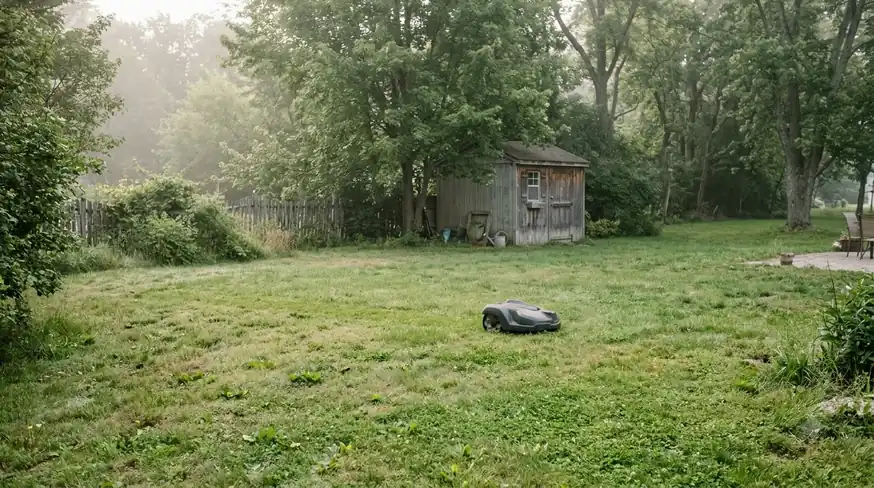
Never switch off your underground pet fence transmitter to get a robot mower to run properly while your dog or cat has access to the yard. Additionally, never attempt to wire both systems to the same buried perimeter cable using a manual switch—the two transmitters use incompatible loop designs and guide wires that can damage the electronics or leave your pet uncontained.
Testing the setup and managing pets during mowing hours
Verifying collar response with the mower actively cutting—and separating yard schedules—protects both your pet and the machine.
Once the mower’s boundary is active and the robot is running a test cycle, walk the entire perimeter and the center of the yard while holding your pet’s collar at dog height. Confirm that the collar delivers its warning tone at the exact flagged pet boundary and stays completely silent near the mower’s charging dock and perimeter wire. If the collar fails to beep at the fence line or chirps unexpectedly in the middle of the grass, increase the spacing between the two wires or change the operating frequency before burying any cable.
Even with zero radio interference, physical safety matters. Robot mowers use razor-like pivoting blades underneath the deck, and curious dogs may bark at, paw, or try to herd a moving robot. Many pet owners schedule their robot mower to run overnight or during work hours while dogs are indoors, or use physical yard dividers and smart mower gates when splitting front and back yards. Keep an eye out for fresh digging near buried wires, too—dogs investigating freshly disturbed soil can chew through shallow mower cables or leave wheel-trapping holes in the turf.
Frequently asked questions
Can a robot lawn mower and an invisible dog fence use the same buried wire?
No. Robot mowers and underground pet fences require separate, independent wire loops. Connecting both transmitters to a single wire or trying to alternate them with a switch can cause signal failures and leave your pet containment system inactive.
Will a wire-free RTK robot mower interfere with my underground pet fence?
No, wire-free RTK and vision-guided robot mowers do not transmit a radio boundary signal through the ground, so they will not interfere with an underground pet fence wire or your dog’s receiver collar.
Why does my dog’s fence collar stop working when my robot mower is turned on?
A wired robot mower broadcasts a continuous loop signal across the yard that can overpower or mask an AM-frequency pet fence signal. Switching the mower’s loop frequency in its settings menu, separating the two wires, or upgrading to an FM pet fence or wire-free mower typically resolves the issue.
Should I bury the mower wire before testing it with my pet’s fence?
No. Both mower manufacturers and pet fence installers recommend staking the mower wire on the grass surface first so you can test the pet collar along the entire boundary and easily reposition the wire if any interference occurs.
Sources
- Automower Wired Installation Made Simple (Husqvarna US): used for pre-installation checklist guidance on marking existing invisible pet fence wires and surface-staking perimeter cables.
- Dog Fences and Robotic Lawn Mowers Working Together (DogFence): used for AM versus FM containment signal behavior, wire separation principles, and pre-burial testing.
- Worx Landroid WR140/WR150 Owner’s Manual (Worx): used for surface-staking procedures and wire separation rules against neighboring boundary signals.
 Up next9 min readBy YardChoosing and Setting Up a Robot Mower for a Yard With Flagstone Walkways Set in GrassUpdated Nov 19, 2026
 8 min readBy YardChoosing and Setting Up a Robot Mower for a Yard With Decorative River Rock BordersUpdated Nov 19, 2026
 8 min readBy YardChoosing and Setting Up a Robot Mower for a Lawn with Creeping Thyme Between PaversUpdated Nov 19, 2026
 9 min readBy YardChoosing and Setting Up a Robot Mower for a Yard With an Outdoor AC Condenser UnitUpdated Nov 19, 2026
 9 min readBy YardChoosing and Setting Up a Robot Mower for a Yard With a Wooden Boardwalk PathUpdated Nov 19, 2026
 8 min readBy YardChoosing and Setting Up a Robot Mower for a Lawn with Steep Culvert Ditch BanksUpdated Nov 19, 2026