
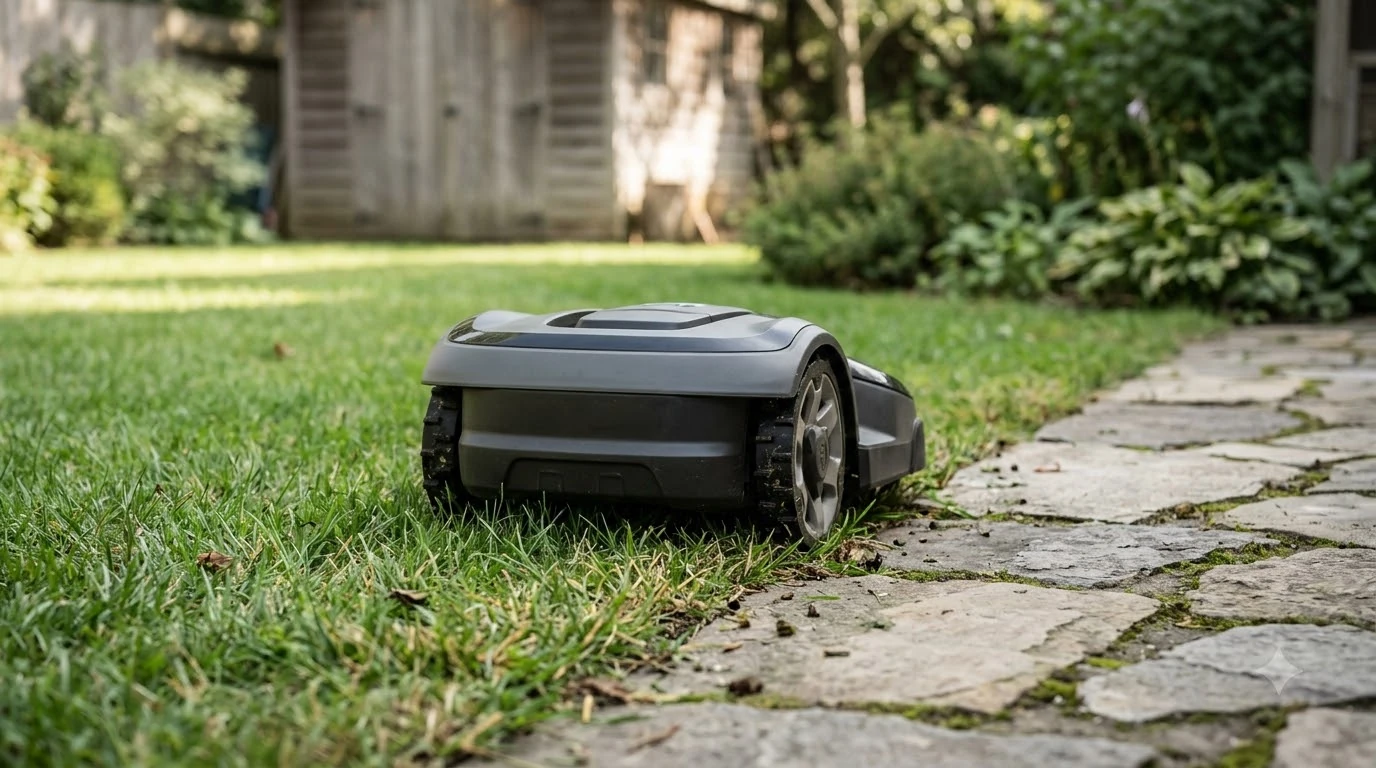

A MOVA vs Mammotion robot mower choice comes down to navigation method and lawn size, and the listed specs do not line up cleanly. Both brands list an 80% maximum slope on their top all-wheel-drive models, but they position the mower in different ways. As of 2026-11-10, the figures below come from brand pages and third-party listings, and several of them disagree.
The short answer
- Navigation: MOVA’s LiDAX Ultra models use 360° 3D LiDAR with AI vision and are described as wire-free with no RTK setup. Mammotion’s LUBA 3 AWD 3000 combines LiDAR, NetRTK and dual-camera AI vision.
- Slope: The LiDAX Ultra 3000 AWD and the LUBA 3 AWD 3000 both list 80% (38.6°) as their maximum slope.
- Coverage: The LiDAX Ultra 3000 AWD is listed at 0.75 acre per map. The LUBA 3 AWD 3000 has conflicting figures, from 0.37 acre to 1.25 acres.
- Cutting deck: Both list a cutting width of about 40 cm. Cutting height ranges differ between sources.
Why the two spec sheets are hard to compare
The MOVA vs Mammotion robot mower comparison is hard because the two brands publish specs in different formats, and third-party listings add a third set of numbers. Mammotion’s US best-robot-mower article gives the LUBA 3 AWD 3000 a 0.75 acre figure in its comparison table, but a menu on the same page lists 0.37 to 1.25 acres for the series. A third-party spec page gives 0.37 acre for the base configuration. The pages do not say which configuration each figure describes, so a direct comparison of coverage needs the current figures from each brand’s product page. Our guide to robot mower coverage ratings explains why those numbers vary.
MOVA’s own product page for the LiDAX Ultra 3000 AWD did not load during our check, so the 3000 figures below come from a third-party listing updated in November 2026. MOVA’s 2000 model has its own spec page, which lists 0.5 acre and a 45% slope.
MOVA vs Mammotion robot mower coverage and cutting deck
The LiDAX Ultra 3000 AWD is listed at 0.75 acre (3,035 m²) for a single map, with a 40.1 cm (15.8 in) cutting width. Mammotion’s LUBA 3 AWD 3000 shows a 400 mm (15.7 in) cutting width on one spec page and 39.9 cm on another. Both widths are close enough that the deck alone will not separate a MOVA vs Mammotion robot mower choice. The table below sets out the figures we could read side by side.
| Spec | MOVA LiDAX Ultra 3000 AWD | Mammotion LUBA 3 AWD 3000 |
|---|---|---|
| Max slope | 80% | 80% (38.6°) |
| Coverage | 0.75 acre (3,035 m²) per map | 0.75 acre in one table; 0.37 acre in a base spec; 0.37 to 1.25 acres in a site menu |
| Cutting width | 40.1 cm (15.8 in) | 39.9 to 40 cm |
| Cutting height | 30 to 99 mm | 56 to 102 mm in one listing; 25 to 69 mm in another |
| Navigation | 360° 3D LiDAR with AI dual vision | LiDAR, NetRTK and dual-camera AI vision |
| Obstacle height | 61 mm (2.4 in) | 51 mm (2 in) |
| Battery | 7.5 Ah | 15 Ah in one listing; 12 Ah in another |
| Mow time per charge | 170 minutes | 175 to 180 minutes |
| Weight | 52 lb (23.6 kg) | 41 lb (18.6 kg) |
| IP rating | IPX6 | Not confirmed |
The MOVA column comes from a third-party listing, so treat it as a secondary source until MOVA’s own page can be read. The LUBA column draws on Mammotion’s own pages and two third-party listings, and the disagreements in that column are listed in the section on conflicting figures below.
Navigation and installation effort
MOVA says its LiDAX Ultra models need no boundary wire and no RTK setup, the approach we compare in wire-free vs boundary wire robot mowers. Its blog describes the mowers as plug and play, mapped with on-board sensors, and says wireless RTK models often need a high-point antenna or signal boosters. These are MOVA’s own marketing claims, and the page cites no independent tests. The same blog says the 2000 model climbs obstacles up to 1.6 in and handles corridors as narrow as 23.6 in.
The LUBA 3 AWD is designed to work without a perimeter wire or an RTK base station, according to a third-party spec page, and it uses NetRTK, a network correction service rather than a local base (our guide to what NTRIP means for robot mowers explains how that works). For a MOVA vs Mammotion robot mower decision, the practical difference is where the correction signal comes from. A local base station is a piece of hardware you own, while a network service depends on a provider’s terms. MOVA’s marketing says its own models carry no recurring fees, and we did not confirm what Mammotion charges for NetRTK, so check those terms before you buy.
Slope, obstacles and terrain
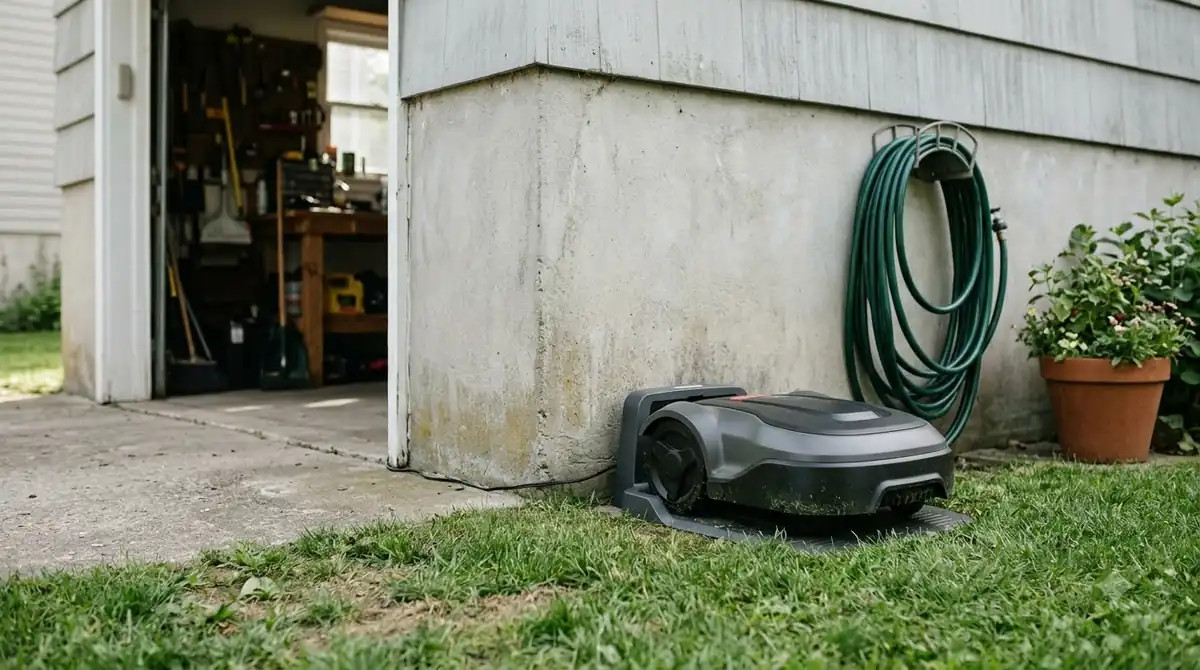
Both top models list an 80% maximum slope, which equals 38.6° according to the Mammotion article. The LUBA mini 2 AWD 1500 also lists 80% in Mammotion’s EU blog, while MOVA’s LiDAX Ultra 2000 is listed at 45%. A buyer with a steep back garden should therefore read our robot mower slope rating guide and compare the specific models in a MOVA vs Mammotion robot mower shortlist, not the brands. Our reading is that a maximum slope figure tells you the steepest grade the mower is rated to climb, not how it will handle wet or uneven grass.
The obstacle figures also differ. The third-party listing gives the LiDAX Ultra 3000 AWD a 61 mm (2.4 in) obstacle height and the LUBA 3 AWD 3000 a 51 mm (2 in) height. For a lawn with roots, edging or small steps, the obstacle figure matters more than the slope rating, so check the model’s manual for the exact limit.
Where the listings disagree
Three figures change the comparison most: the LUBA 3 AWD 3000 coverage, its cutting height and its battery capacity. One listing gives the LUBA 3 a 15 Ah battery and another gives 12 Ah. Mow time per charge is 175 minutes on one page and 180 minutes on another. Mammotion’s EU table also lists mowing time per charge in square metres, which looks like a labelling error, because the same page gives charging time in minutes.
Heads up
Spec sheets change with model year and region, so a MOVA vs Mammotion robot mower comparison can go stale quickly. Check the current figures on each brand’s official product page before you buy, and confirm the model name matches the one you are comparing.
Which MOVA vs Mammotion robot mower suits your lawn
Based on the listed specs, a MOVA vs Mammotion robot mower choice depends on different priorities. Our reading is that the choice depends on how you weigh installation effort and ongoing service against the navigation method.
- MOVA LiDAX Ultra 3000 AWD: a fit for buyers who want LiDAR-only mapping and do not want a network correction service in the setup. Its listed 0.75 acre coverage and 80% slope match the LUBA 3 on paper.
- Mammotion LUBA 3 AWD 3000: a fit for buyers who accept NetRTK in exchange for a tri-sensor setup, and who can confirm the network service terms in their region.
- Either model in a MOVA vs Mammotion robot mower comparison: measure the steepest part of the lawn and the largest obstacle you expect, then compare those figures with the current official specs.
Frequently asked questions
Which is better, MOVA or Mammotion?
The listed specs show no clear winner. Both top models list 80% slope and a cutting width near 40 cm, and they differ on navigation, battery and the coverage figures. In a MOVA vs Mammotion robot mower decision, the better fit depends on whether you prefer LiDAR-only mapping or a tri-sensor setup that includes NetRTK.
Does the MOVA LiDAX Ultra need an RTK base station?
MOVA says its LiDAX Ultra models work without a boundary wire or RTK setup. That claim comes from MOVA’s own marketing, and we did not find independent tests of it. Check the operator’s manual for the model you plan to buy.
Does the LUBA 3 need a boundary wire?
A third-party spec page states the LUBA 3 AWD is designed to work without a perimeter wire or an RTK base station. It uses NetRTK, a network correction service, so check the terms of that service for your region before you buy.
Which slope rating matters most?
Both top models list 80% (38.6°) as their maximum slope. Measure the steepest section of your lawn and compare it with the rating for the exact model. Then read the manufacturer’s guidance on wet grass, since a maximum rating does not describe traction on every surface.
Sources
- Mammotion US best robot lawn mower article (manufacturer): LUBA 3 AWD 3000 slope, navigation and coverage table.
- Mammotion EU best LiDAR robot mowers (manufacturer, dated August 2026): LUBA 3 AWD 3000 and LUBA mini 2 AWD figures, and the MOVA LiDAX Ultra 1000 table.
- MOVA vs. traditional robotic lawn mowers (manufacturer marketing, no independent tests): LiDAR navigation claims and obstacle figures for the 2000 model.
- Freshly Charged, MOVA LiDAX Ultra 2000 base specs (third party): 0.5 acre, 45% slope, 30 to 99 mm cutting height.
- Freshly Charged, Mammotion LUBA 3 AWD base specs (third party): 400 mm cutting width, NetRTK and no perimeter wire.
- Smart Home Compared, MOVA LiDAX Ultra 3000 AWD (third party, updated November 2026): the 3000 figures in the table.
- Smart Home Compared, Mammotion LUBA 3 AWD 3000 (third party): cutting height, battery and obstacle figures for the conflict notes.
 Up next7 min readReviews & CompareMammotion LUBA 3 AWD vs MOVA LiDAX Ultra 2000: What the Published Specs ShowUpdated Nov 11, 2026
 8 min readReviews & CompareMammotion vs Segway Navimow Robot Mower: 5 Specs ComparedUpdated Nov 11, 2026
 7 min readReviews & CompareMammotion YUKA vs Segway Navimow i110N: Specs ComparedUpdated Nov 11, 2026
 8 min readReviews & CompareMammotion Luba 3 AWD vs Dreame A2: Published Specs ComparedUpdated Nov 11, 2026
 8 min readReviews & CompareMammotion LUBA 3 AWD vs Sunseeker X7: Published Specs ComparedUpdated Nov 11, 2026
 7 min readReviews & CompareMammotion LUBA 3 AWD vs Mammotion YUKA: Specs ComparedUpdated Nov 11, 2026