
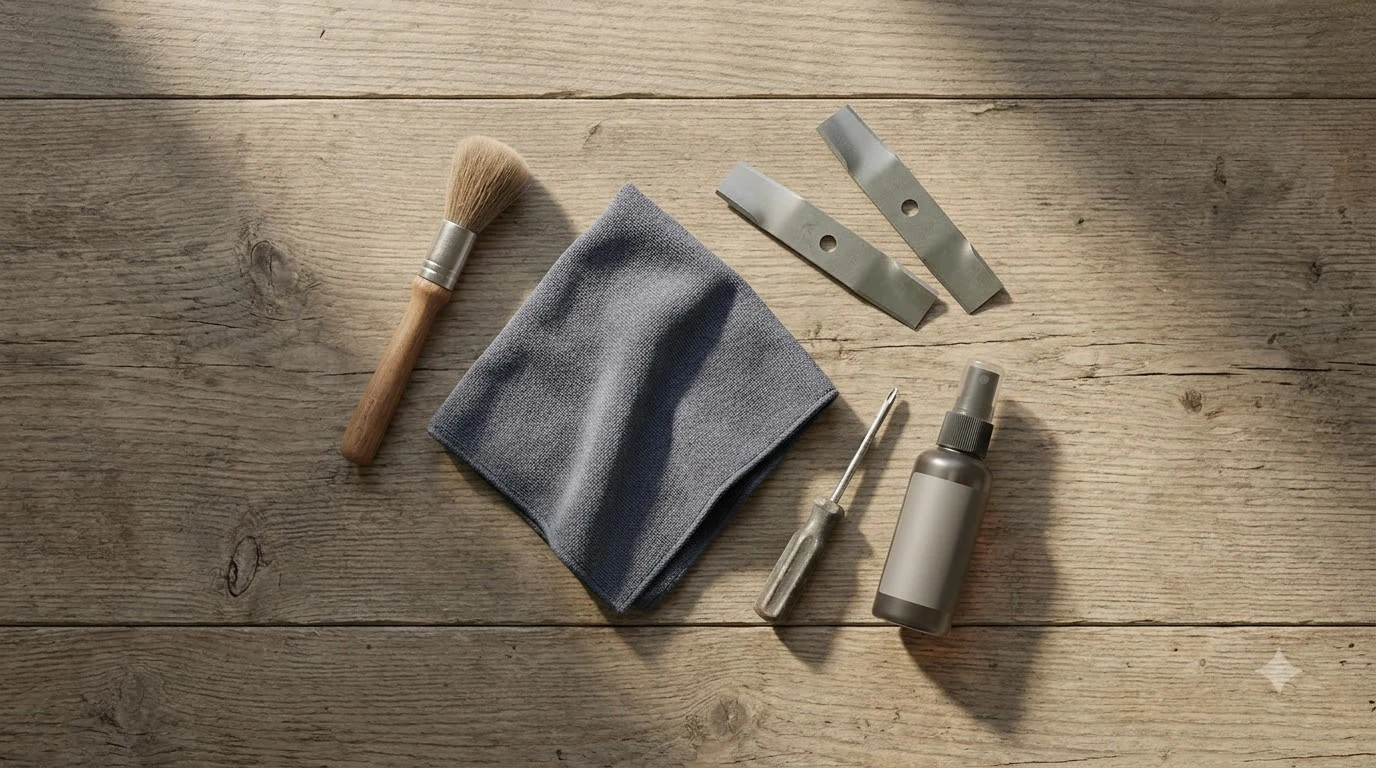

Best silicone spray for robot mower use is not a single brand’s pick. None of the manufacturer guides we read on 2026-11-10 names silicone spray for routine care, and several warn against spraying sensors and charging contacts. Your owner’s manual decides which products are safe for your model.
Start with the manual, then decide whether the best silicone spray for robot mower care is needed at all. In the guides we read, a soft brush, a dry microfiber cloth and a damp cloth cover most routine tasks.
The short answer
- Silicone spray: not named for routine care in any of the six manufacturer guides we read.
- Sensors and contacts: keep sprays off cameras, sensors, charging contacts and buttons, according to Anker.
- Brand sprays: Liqui-Moly sells its own care sprays for the housing, underside and charging contacts, but its guide leaves wheels and sensors out.
- Before you spray: read the manual, switch the mower off and disconnect the power.
Best silicone spray for robot mower: what manufacturer guides say
None of the guides tells owners to use silicone spray on a robot mower, and none calls it unsafe either. Ecovacs advises against “cleaning sprays or detergents” when wiping the exterior and sensors. Robomow names no cleaning agents, sprays or detergents at all, and Mammotion names no cleaning product or lubricant. Husqvarna gives no lubricating or spraying instructions for the blades or the disc.
Our reading is that a missing instruction is a reason to check the manual before you spray, not proof that a silicone product is safe. We did not find a manufacturer statement that silicone spray damages a robot mower, so this article does not claim one.
Which parts should stay dry, with no spray?
Sensors, cameras, charging contacts and buttons should be cleaned with a dry or lightly damp cloth, not sprayed. Anker’s wording is “a soft dry or slightly damp cloth only,” and it tells owners to avoid spraying cameras, sensors, charging contacts, buttons and charging ports. Ecovacs says to wipe the navigation sensors with “a dry, clean cloth” and to wipe the contact plates “using a dry, soft cloth.” Mammotion recommends a dry microfiber cloth for the charging contacts. For dust on lenses and vents, our pick of a compressed air duster for robot mower sensors is a spray-free alternative.
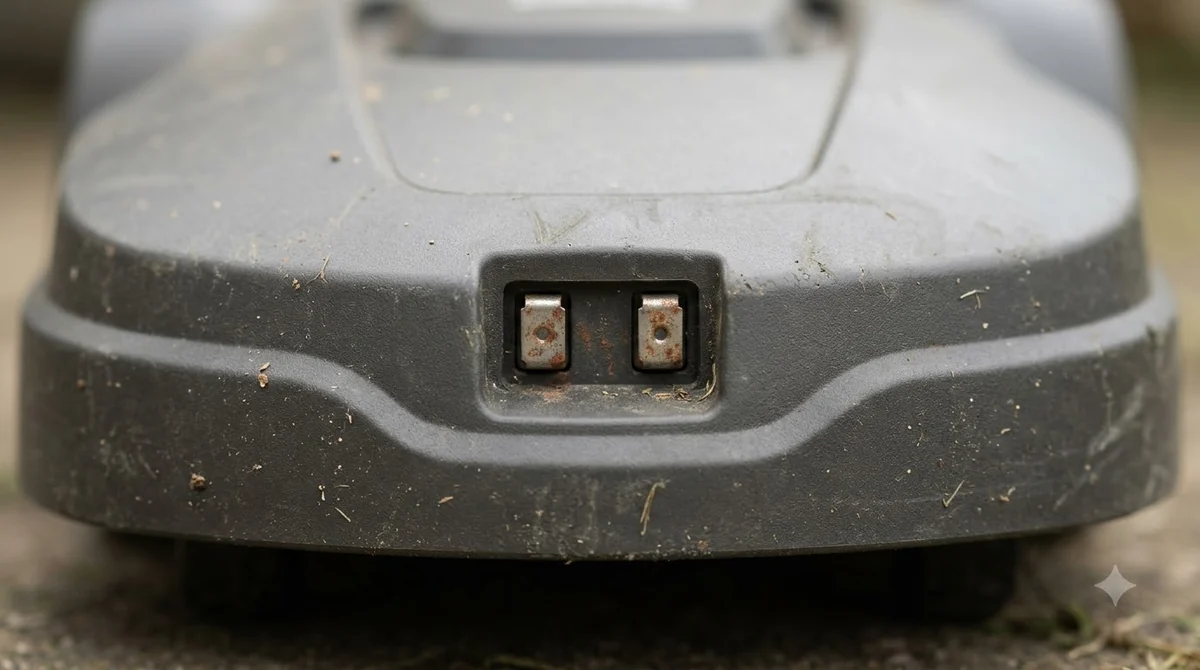
The dock needs the same care. Ecovacs asks owners to keep the docking area “level and unobstructed,” so a film of spray near the contacts is one more thing to manage. Our reading is that a dry cloth is the safer default for every electronic part on the mower, so any search for the best silicone spray for robot mower should begin with the dry-cloth routine and your manual.
Where one brand’s care spray fits
Liqui-Moly, a lubricant maker, sells a Robotic Lawnmower Cleaning and Care Spray and an Electronic Spray, and its guide assigns each one to a specific area of the mower. On the housing, the guide says to wash off coarse dirt with water, dry the surface, and then use the care spray for a “scratch- and streak-free” finish.
For the underside, the guide says to spray the clippings and wipe them with a microfiber cloth, but only after the power circuit is disconnected. For the charging contacts, it says to wipe with a damp cloth, not under running water, then apply Electronic Spray and dab the adjacent plastic with a clean cloth. The base under the blades gets LM 40 Multi-Purpose Spray to stop squeaking.
The same guide gives no spray instruction for the cutting blades, and it does not mention wheels, sensors or silicone products. It also says the manufacturer’s instructions govern, so a product that suits one brand is not a general answer for another. Read the Liqui-Moly robotic lawnmower care guide as the brand’s own view of its products.
How should you clean the wheels and drive parts?
Brush mud and grass off the drive wheels and turn them by hand, which is the routine Mammotion gives for wheel care. Its instruction is to “brush away mud, grass, and other debris from the drive wheels while rotating them by hand.” Robomow asks owners to remove leaves and grass lodged “between the housing and the wheels” to keep traction. Ecovacs says to brush debris from the treads and axles, then rotate each wheel to check for “stiffness or resistance.” Anker adds that the wheels should turn freely.
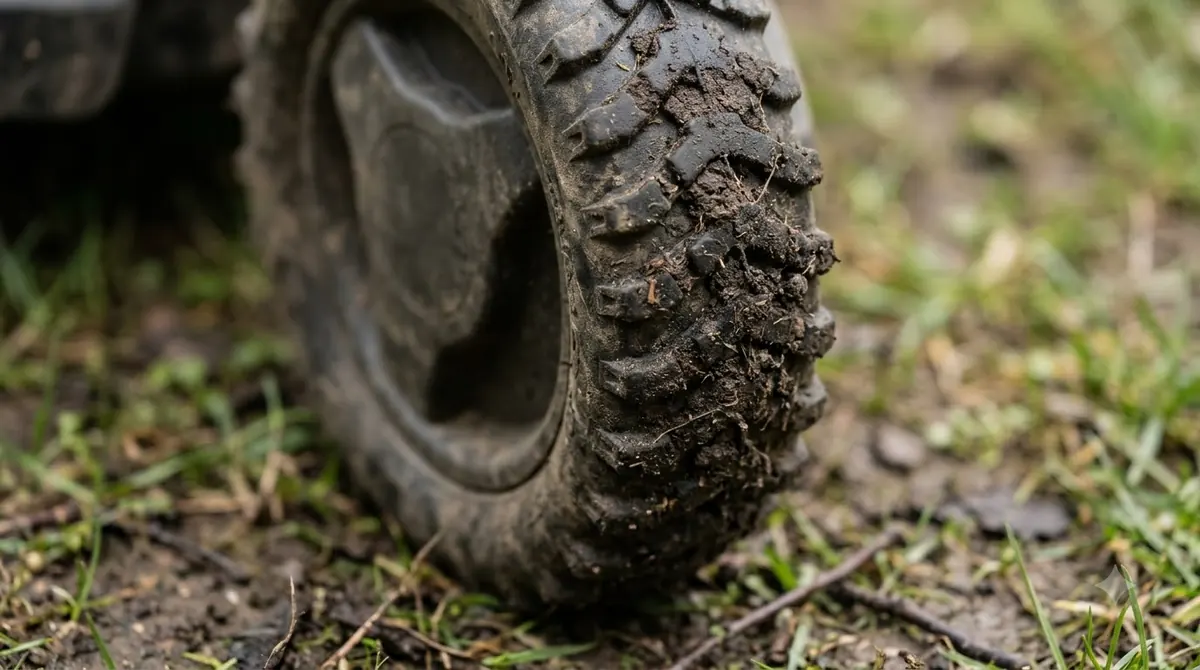
Our reading is that a wheel that feels stiff usually has packed debris, so clear it mechanically and check again before you think about any product. None of the guides asks for spray on the wheels, so for wheels the best silicone spray for robot mower answer is usually none. If a tread stays worn after cleaning, our guide to robot mower wheel replacement explains when to swap it.
What water and pressure limits apply to any spray?
Anker and Mammotion both rule out pressure washers, and Ecovacs warns that high-pressure water can force moisture into sealed components. Anker says “never use a pressure washer” because the force can damage seals, electronics, bearings and moving parts. The brands differ on a gentle rinse, so check your manual before you use water at all. Our robot mower IP rating guide explains what the ratings mean.
| Brand guide | Water rule |
|---|---|
| Anker | A gentle hose rinse may be acceptable for IPX5 or IPX6 mowers, but only if the manufacturer allows it |
| Mammotion | Avoid high-pressure hoses; a gentle rinse may suit a high IP rating; let the mower dry completely before charging |
| Ecovacs | A gentle rinse is mentioned for premium waterproof models; the FAQ says gentle rinse only unless specified otherwise |
| Robomow | Water on top of the mower is fine, but contact with the underside should be avoided |
Mammotion also says never to clean the mower while it is powered on, which matters before any spray reaches the deck.
How do you prepare before any spray or cleaning?
Switch the mower off and disconnect its power before you spray the underside or touch the blades, and let it dry before it returns to the dock. Do this before you choose the best silicone spray for robot mower care. Husqvarna says to set the mower to OFF before any work, and Liqui-Moly says to disconnect the power circuit before spraying the underside.
- Check the manual. Look for any mention of spray, lubricant or silicone, and follow it over the general advice in this article.
- Switch off and disconnect. Turn the mower off and disconnect the power circuit before you work on the underside.
- Brush first. Remove clippings and mud with a soft brush or plastic scraper, since Mammotion warns against metal tools on the deck.
- Dry cloth on sensors and contacts. Wipe sensors, cameras and charging contacts dry, and spray only where the manual lists a product.
- Let it dry. Allow the mower to dry completely before you return it to the charging station.
What do blade and screw guides say?
Main disc blades last 3 to 6 weeks under normal conditions, according to Husqvarna, and it says the screws should be replaced every time the blades are changed. Husqvarna gives 9 to 12 weeks for EdgeCut disc blades, which run only during edge cutting. The other brands give different ranges, so the table shows each one. None of the blade guides we read treats a spray as a replacement for a new blade or new screws. Read the Husqvarna blade replacement guide for its full steps, or see our guide on how to change robot mower blades.
| Brand | Blade guidance |
|---|---|
| Husqvarna | Main disc blades 3 to 6 weeks; EdgeCut 9 to 12 weeks; new screws at each change |
| Ecovacs | Replace every 4 to 6 weeks if needed, with a monthly inspection |
| Mammotion | Replace every 1 to 2 months during the mowing season, all blades at the same time |
| Robomow | About once a year, depending on the manufacturer |
Heads up
Husqvarna warns that reused screws may let blades come loose during operation, so fit new screws with new blades. Those ranges differ widely, so the blade condition and the alert from your mower should guide the swap.
Frequently asked questions
Can I use the best silicone spray for robot mower care on my model?
No guide we read names the best silicone spray for robot mower care, or any silicone spray for routine use, so check your model’s manual first. Keep any spray away from cameras, sensors, charging contacts and buttons, which Anker says to avoid spraying.
Is a cleaning spray the same as a care spray?
Not in the guides we read. Ecovacs says to avoid cleaning sprays and detergents on the exterior and sensors, while Liqui-Moly sells a cleaning and care spray for the housing and underside of robotic mowers.
Should I spray the blades?
Husqvarna’s guide gives no spray or lubricant instructions for the blades or disc. Liqui-Moly uses LM 40 Multi-Purpose Spray on the base under the blades to stop squeaking, which is a different product from silicone spray.
How often should I clean the mower?
Mammotion suggests cleaning every one to two weeks in the growing season, and Robomow says every 7 to 17 days to prevent mulch buildup. Our reading is to use the shorter interval if you mow often, since wet clippings collect faster.
Sources
- Liqui-Moly robotic lawnmower care guide (manufacturer): housing, underside and contact spray steps, blade-base spray, power-off rule.
- Anker robotic lawn mower maintenance guide (manufacturer): dry-cloth rule for sensors and contacts, pressure washer warning, IPX rinse rule.
- Ecovacs robot lawn mower maintenance guide (manufacturer): spray and detergent warning, high-pressure water, blade intervals.
- Mammotion robot lawn mower maintenance guide (manufacturer): wheel brushing, metal tools, cleaning frequency, blade intervals.
- Robomow robotic lawnmower maintenance guide (manufacturer): cleaning interval, wheel debris, underside water rule.
- Husqvarna blade replacement guide (manufacturer): blade intervals, screw replacement, power-off step.
 Up next8 min readGearDIY Robot Mower Garage Ideas That Meet Manufacturer RulesUpdated Nov 11, 2026
 7 min readGearRobot Mower Wire Connectors Waterproof: What the Manufacturer VerifiesUpdated Nov 11, 2026
 7 min readGearRobot Mower Blade Sharpening or Replace: What the Makers SayUpdated Nov 11, 2026
 8 min readGearBest Battery Maintainer for Robot Mower in Winter: What the Guides SayUpdated Nov 11, 2026
 8 min readGearRobot Mower Cover for Charging Station: What the Manuals SayUpdated Nov 11, 2026
 8 min readGearBest GFCI Outlet Cover for Robot Mower: What to Check Before You BuyUpdated Nov 11, 2026