
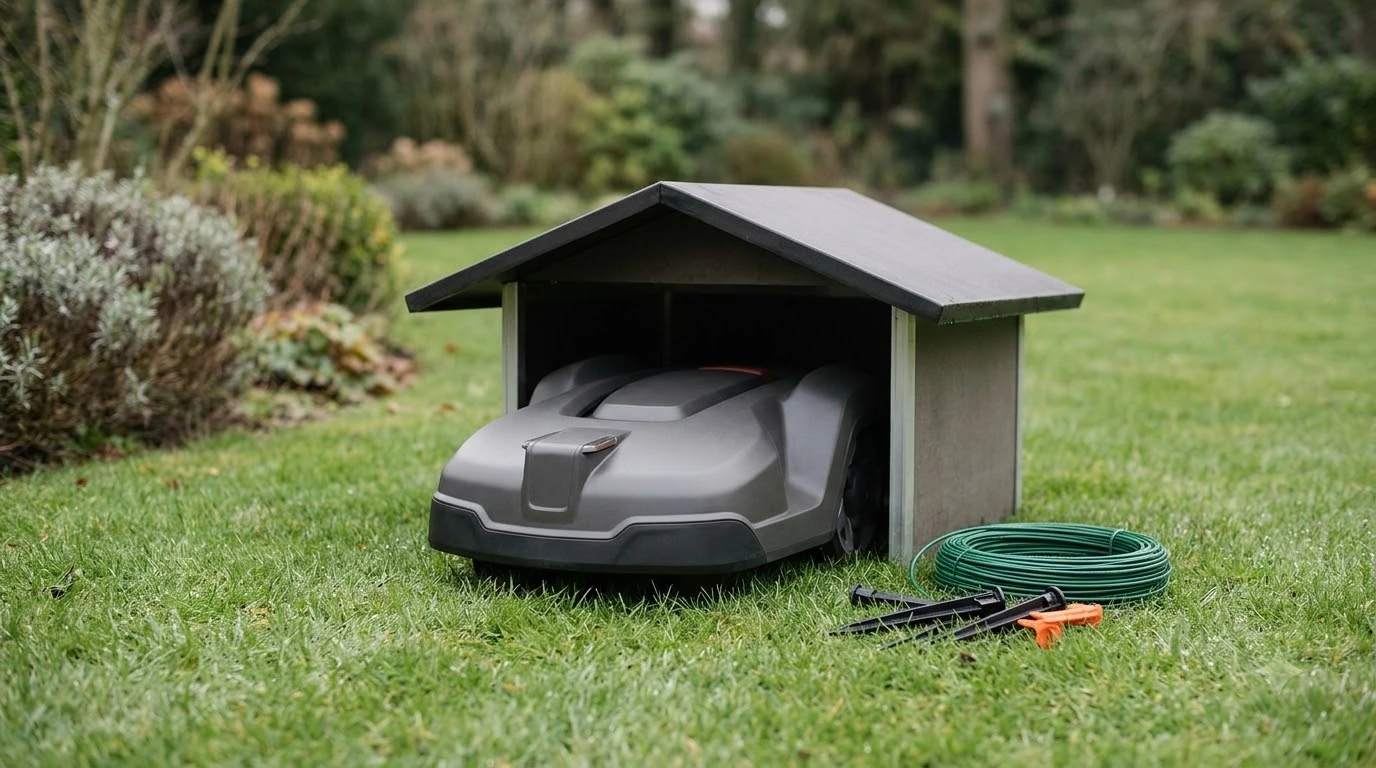

The best leaf blower for robot mower lawn cleanup is usually a battery-powered model that clears dry leaves before the mower runs. Robomow says battery-powered leaf blowers or a classic rake are suitable for this job, and that leaves matter most for robots that navigate by grass sensors instead of a boundary wire. This guide explains when leaves need clearing, which tool fits your yard, and how to keep the mower and dock working through leaf season.
The short answer
- Why clear leaves: a wire-free robot scans the ground with grass sensors, so Robomow advises removing leaves before mowing.
- Which tool: when choosing the best leaf blower for robot mower lawn cleanup, match the tool to lawn size: a blower for large areas, a rake for small yards, and a blower vac to collect what it moves.
- Wet leaves: avoid running the robot through a lot of wet leaves, because they make the wheels slip and spin.
- After leaf season: clear the charging station and the mower underside, and never use a high-pressure washer.
Why leaves need clearing before a robot mower runs
Leaves matter most for robots that have no boundary wire. Robomow explains that these machines use grass sensors to scan the ground and mow whatever looks like grass, so our reading is that a layer of autumn leaves can hide the grass those sensors rely on.
Scattered leaves are rarely a problem. Robomow says a few leaves generally do not harm the robot or the cut, but a closed layer of leaves does. Leaves left on the lawn for too long can also lead to mold and rot, and fungal diseases spread more easily underneath them, according to the same guidance. Robomow’s leaf guidance is the source for these points. For a wider look, see how a robot mower copes with fall leaves and with acorns and pine cones.
Best leaf blower for robot mower lawn cleanup: which tool fits
A leaf blower moves leaves fastest on a large lawn, while a rake is enough for a small one. Kärcher notes that sweeping by hand takes strength and time, and that a leaf blower’s strong airflow sweeps leaves almost by itself. Blowers come in electric, cordless and gasoline models, and some add a collection bag.
| Tool | Where it works best | Watch for |
|---|---|---|
| Rake | Small yards and spots near beds | Slow and tiring on large areas |
| Leaf blower (electric, cordless or gasoline) | Larger lawns with dry leaves | Wet leaves stay put and need the scraper edge to loosen them |
| Blower vac | Gathering leaves into a collection sack | Wet leaves can block or damage it |
Our reading is that a cordless or electric blower fits a robot routine well, because you can run it in short sessions just before the mower’s scheduled run. Gasoline models suit large properties where power access is limited. For the best leaf blower for robot mower lawn cleanup on your property, choose by lawn size and power access rather than by a single model name.
Clearing leaves without harming the lawn
Clear leaves regularly rather than letting them pile up, because a thick layer shades the grass. Kärcher warns that leaves left on the lawn create yellow spots where the grass gets no sunlight.
- Scattered leaves: usually fine for both the lawn and the mower, according to Robomow.
- Closed layers: clear them before the next mowing run.
- Beds and borders: leaves protect hedgehogs and insects and act as frost protection, per Kärcher.
- Thick piles in beds: keep them thin enough that air can reach the soil.
Robots can shred leaves, but Robomow says they were not designed as leaf shredders. Shredded leaves are harder to rake up later and may encourage moss. Oak and walnut leaves also release tannic acid, which can affect soil quality. Blades wear faster when they chew through heavy leaf cover, so clearing first protects the blades too.
Wet leaves and slippery wheels
Wet leaves are the hardest case for both the mower and the cleanup. Robomow says damp leaves become slippery and can stick to the wheels, which lets the wheels spin so the robot gets stuck, especially on slopes.
Robomow advises avoiding robot operation when there is a lot of wet leaves in the garden. For the cleanup itself, Kärcher notes that the leaf blower’s scraper edge loosens wet leaves or compacted dirt, and that vacuuming up wet leaves can block or damage a blower vac. Our reading is to wait for leaves to dry when you can, then clear them with a blower or rake.
Cleaning the mower and dock after leaf season
After leaf season, clean the charging station and the underside of the mower so debris does not block docking or the charging contacts. Husqvarna’s support guidance lists grass, leaves, twigs and other objects that may impede docking as the main things to remove.
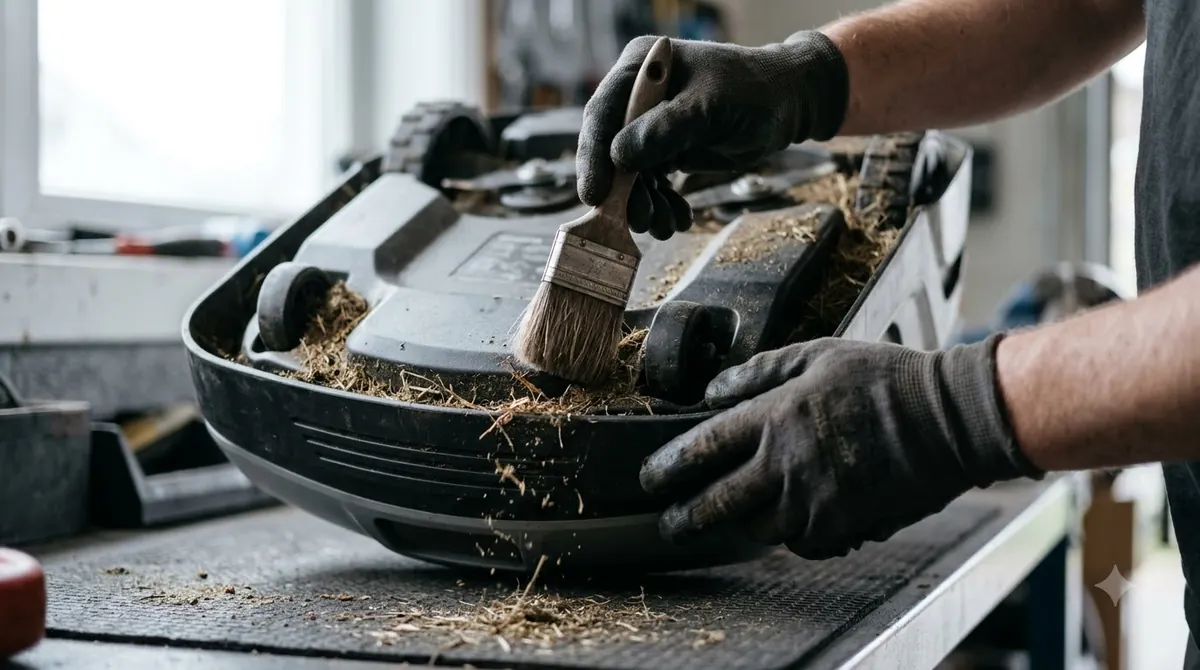
- Power down first. Turn the mower off, put on gloves, and disconnect the charging station’s power supply before cleaning it.
- Clear the dock. Remove grass, leaves and twigs that may stop the mower from docking.
- Brush the mower underside. Remove clumps by hand, avoiding the skid plate and blades, then brush clippings off the skid plate, wheels and body.
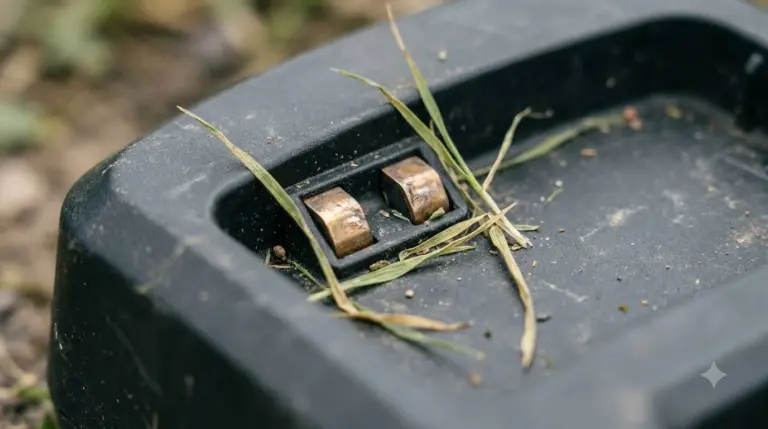
- Wipe and inspect the contacts. Wipe surfaces with a damp cloth, add mild soap if needed, and clean charging plates with fine-grade emery cloth when they look worn or dirty.
Heads up
Husqvarna says never to use a high-pressure washer or solvents on the mower or the charging station. It says some models, including NERA and EPOS, can be cleaned with running water.
Husqvarna also recommends a thorough professional cleaning at a dealer after each season, in addition to regular cleaning. That is a good moment to check the blades and contacts together. Our guide to cleaning a robot mower covers the routine in more detail, a robot mower cleaning brush makes the underside step faster, and the winterizing guide covers end-of-season storage.
What to check before you buy a leaf blower
Finding the best leaf blower for robot mower lawn cleanup starts with your lawn size, how much leaf cover you get, and whether you often face wet leaves. Robomow notes that leaf blowers are efficient on larger areas, so a small yard may not need one.
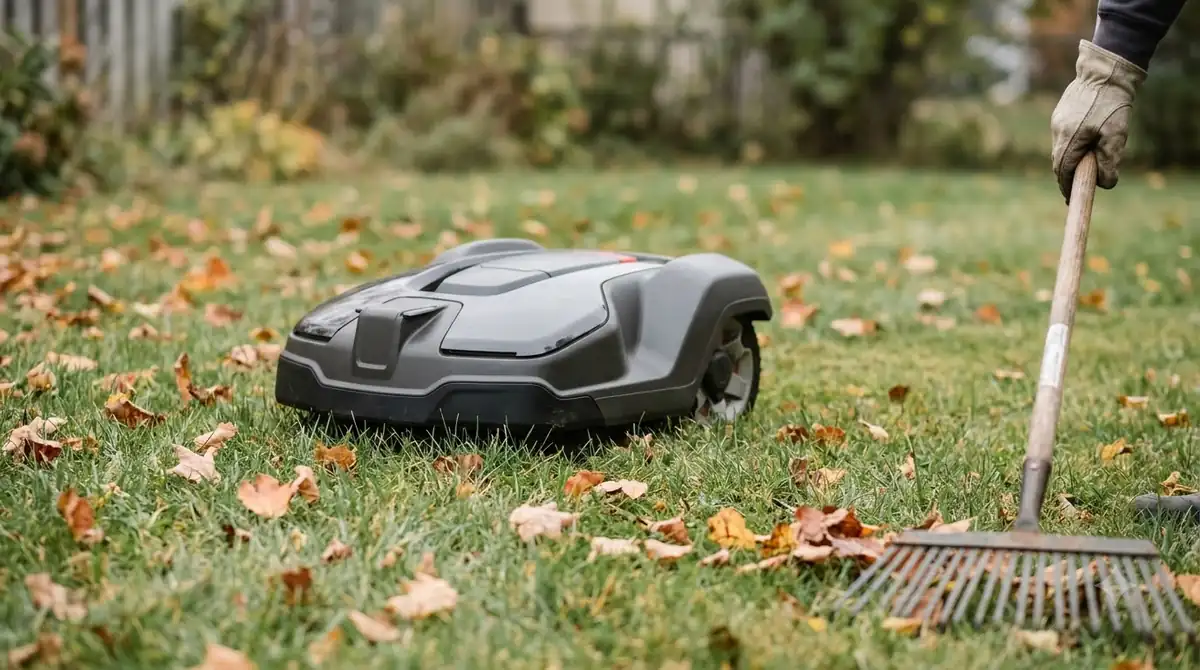
- Lawn size: large lawns benefit most from a blower, while small yards may do fine with a rake.
- Power type: electric, cordless and gasoline models all exist, so match the choice to outlet access and where you store the tool.
- Collection: a blower vac or model with a collection bag keeps leaves from scattering back over the lawn.
- Wet-weather use: check for a scraper edge, since it helps loosen damp leaves.
- Mower wheels: wet leaves stick to wheels and make them spin, so check your mower’s wheel design as well as the blower.
Our recommendation is to check your mower’s wheel design and dock clearance first, then choose the blower that matches your lawn size and leaf load, since that combination decides how well the best leaf blower for robot mower lawn cleanup works in practice. Before you buy, confirm the current specifications on the manufacturer’s page, since models and features change.
Frequently asked questions
Do leaves damage a robot mower?
Robomow says scattered leaves generally do not harm the mower or affect the cut. A closed layer is a bigger problem, and large amounts of leaves increase the motor load and blade wear.
Should I use a leaf blower or a rake before mowing?
Robomow says battery-powered leaf blowers or a classic rake are both suitable. A leaf blower is more efficient on larger areas, while a rake works well for small yards and spots near beds.
Can a robot mower shred leaves instead of raking them?
The blades can shred dry leaves, but Robomow says robotic mowers were not designed as leaf shredders. Shredded leaves are harder to rake up later and may promote moss, so clearing them first is the better approach.
Can I hose down a robot mower after cleaning leaves off it?
Husqvarna says never to use a high-pressure washer or solvents. It states that some models, including NERA and EPOS, can be cleaned with running water. Check your model’s manual before rinsing.
Sources
- What does a robotic lawnmower do with leaves (Robomow): leaf layers, wet leaves, blower and rake advice, shredding and blade wear.
- Clearing leaves: five tips for every season (Kärcher): tool comparison, blower vac, scraper edge, leaves and lawn health.
- How to clean your Husqvarna Automower and Husqvarna CEORA robotic lawn mower (Husqvarna): dock and body cleaning, pressure washer warning, seasonal service.
 Up next7 min readGearBest Outdoor Surge Protector for Robot Mower: What to Check Before You BuyUpdated Nov 11, 2026
 8 min readGearRobot Mower Camera Lens Cleaning Kit: Do You Need One?Updated Nov 11, 2026
 8 min readGearBest Metal Robot Mower Shelter: What to Check Before You BuyUpdated Nov 11, 2026
 9 min readGearBest RTK Antenna for Robot Mower: How to Choose the Right SetupUpdated Nov 11, 2026
 9 min readGearBest Robot Mower Wire Pegs: 1 Metre Spacing and CountUpdated Nov 11, 2026
 8 min readGearBest Pet Fence to Keep Dogs Away From Robot MowerUpdated Nov 11, 2026