
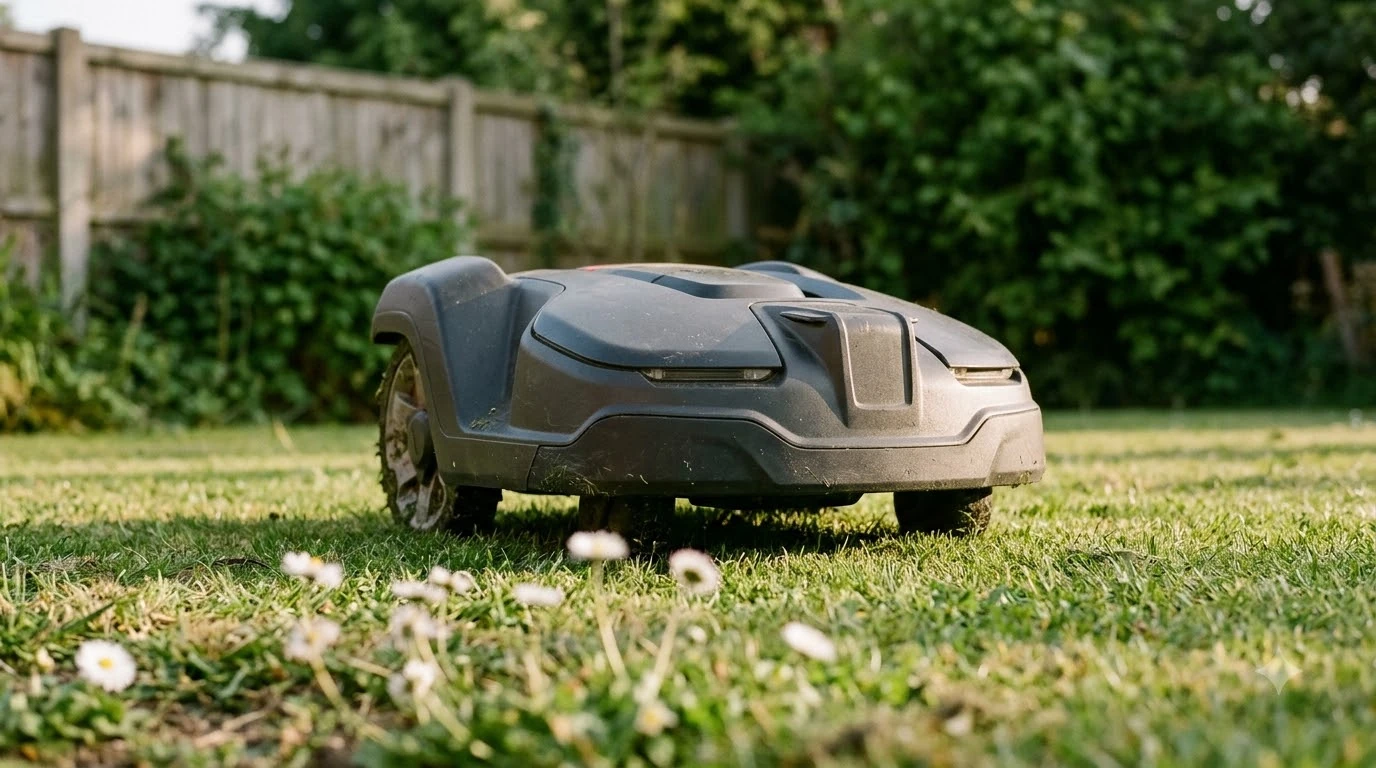

Can a robot mower handle acorns and pine cones? Usually yes, but the blade type and the wheel area decide how much trouble they cause. Robomow says star blades cope better with nuts and fallen fruit than blade discs do, while pine cones are a problem for both designs because they can wedge in the deck and lift the drive wheels. Clearing cones and nuts before each run is the safer habit, and the manufacturer pages we read point the same way.
The short answer
- Acorns: the manufacturer pages do not name acorns, but they treat nuts as hard debris that star blades handle better than blade discs.
- Pine cones: they can wedge in the mower, lift the drive wheels and dull blades of either type.
- Seeds in the wheel area: Navimow says acorns and tree seeds stuck between the wheels and fender can overload the mower and wear the blades.
- Best habit: collect cones and nuts before each mowing session, then check the wheel area.
Can a robot mower handle acorns and pine cones without blade damage?
The blade type matters most for nut-like debris. Robomow says star blades handle nuts and fallen fruit better than blade discs. Its blog says blade discs are significantly more sensitive to nuts, and that their cutting performance drops very quickly once they are hit. Star blades, by its account, only dull slightly under the same conditions.
When people ask whether a robot mower can handle acorns and pine cones, the blade is usually the first thing that matters. The same page says star blades chop fallen fruit, while blade discs put nicks in it. Robomow also says star blades are significantly more robust, and that for star blades only larger objects pose a real problem.
Robomow does not mention acorns by name. Our reading is that acorns belong to the same hard, round nut group, so the blade-type difference is likely to apply to them as well. Check the manual for your model before you rely on that, because the pages we read do not test acorns directly.
Pine cones are the harder problem
Pine cones are difficult for both blade types. Robomow’s blog says cones are problematic for blade discs and star blades alike, and that they can get wedged in the mower and cause the drive wheels to be lifted up. Blade discs are also the ones that will quickly become dull when cones are involved. Once blades wear down, our guide to robot mower blade replacement explains what to expect.
A wheel lifted off the grass is more than a nuisance, because the mower can lose its grip on the lawn. For a yard with heavy cone drop, the answer to can a robot mower handle acorns and pine cones depends on how often you clear the lawn, not only on the blades. Our reading is that the risk comes less from the cone itself than from where it lodges, between the deck and the ground or against a wheel. A cone that wedges there is worth clearing even when the blades can cope with it.
Acorns and seeds between the wheels and fender
Navimow’s support article on the Terranox, titled “Can acorns damage Navimow Terranox blades or impact performance?”, names acorns and other tree seeds as a risk when they get stuck between the wheels and the fender. It says such debris can overload the mower and wear down the blades.
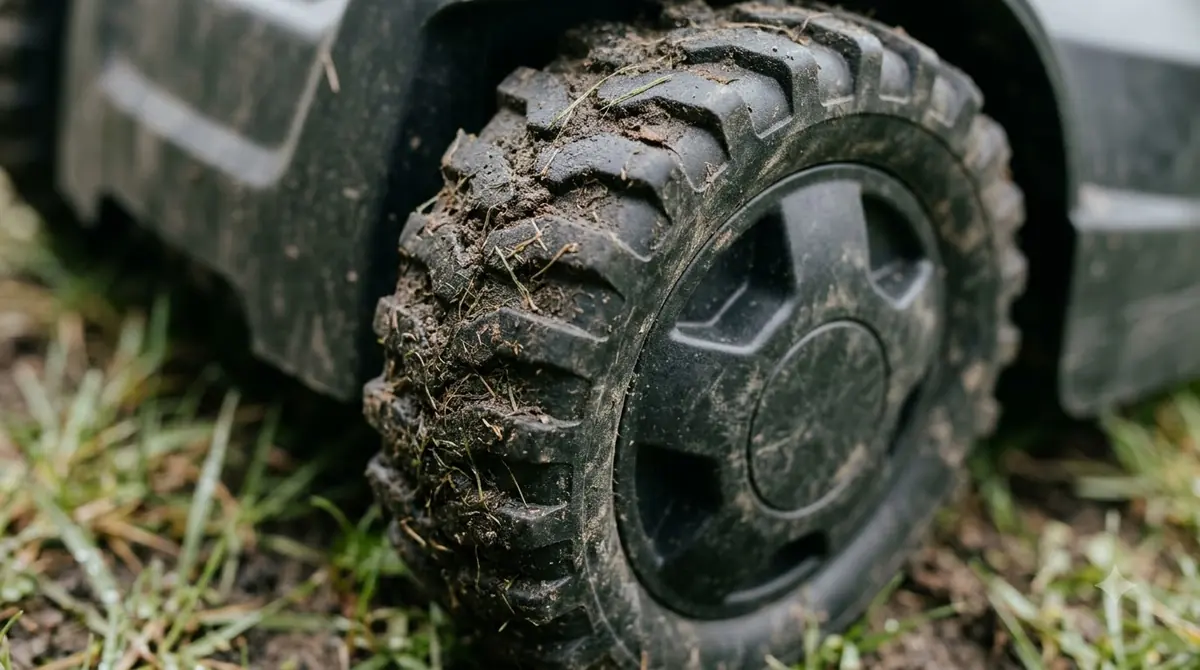
A later Navimow article on the i1 gives the same warning in almost the same words. Both pages suggest that the damage can come from the gaps around the wheels, not only from the cutting blades, so the wheel area should be part of every check. So can a robot mower handle acorns and pine cones that lodge in these gaps? Not without regular cleaning, in our reading.
Prepare the lawn before the mower runs
The manufacturer pages put the cleaning job on the owner. Navimow advises removing stones, sticks, wires, nuts and other foreign objects before mowing, and inspecting the mowing area on a regular basis. Robomow likewise says the first thing to do is to collect foreign objects regularly, so the practical answer to can a robot mower handle acorns and pine cones is yes when the lawn is cleared first.
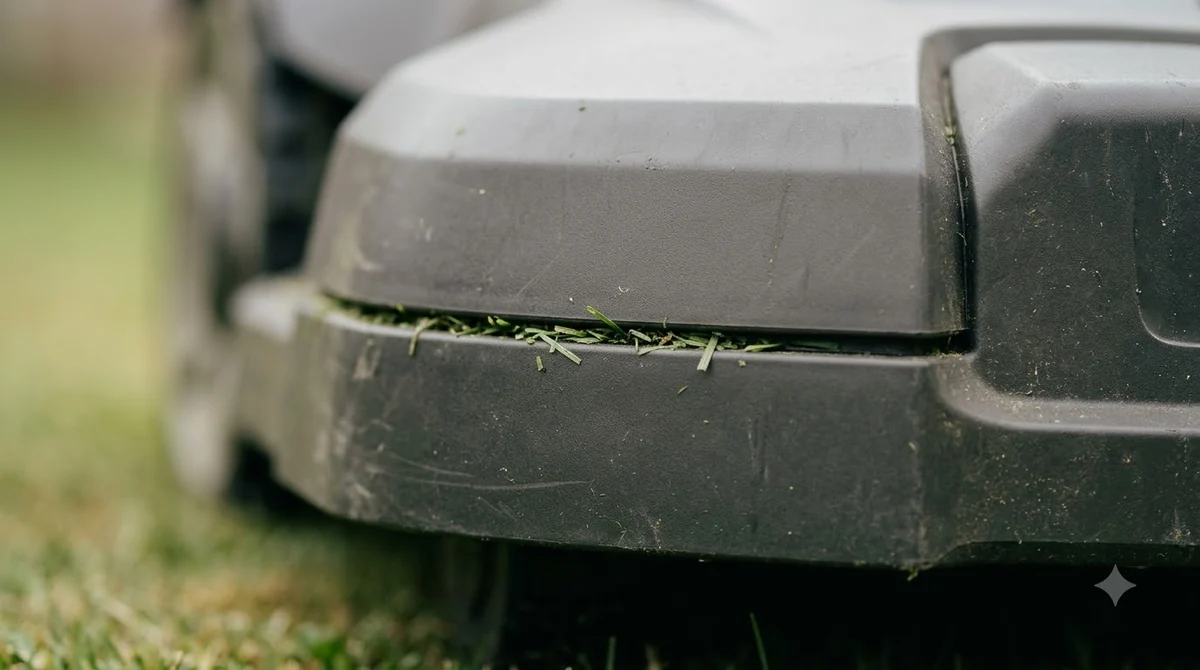
- Walk the lawn first. Look under trees and along the edges, where cones and nuts tend to collect after a windy day. Autumn also adds leaves, which we cover in how a robot mower copes with fall leaves.
- Gather cones and nuts. A rake or a leaf blower moves them into piles. Our reading is that a blower is the quickest option for a large scatter of small acorns, and our guide to a leaf blower for robot mower lawn cleanup covers the choices.
- Remove larger objects. Sticks, stones and wires should go before the mower starts, since they are the objects that can cause real damage.
- Check the wheel and fender area. Pull out any seeds or nuts that have lodged there. Our guide on how to clean a robot mower covers the wider routine.
Robomow says a fruit collector can at least eliminate the fallen fruit problem, which makes it a useful tool in a yard with a fruiting tree. A collector does not solve the cone problem, so the rake or blower step still matters.
Heads up
Robomow’s user guide says to let the blades stop rotating completely before lifting or tilting the mower or approaching the blades. Turn the mower off and wait for the blades to stop before you clear anything from underneath it.
Blade types compared for nuts, fruit and cones
On the pages we read, star blades come out ahead on nuts and fallen fruit, and both designs struggle with cones. For a yard with both acorns and cones, the table below sums up what Robomow says about each blade type.
| Debris | Blade discs | Star blades |
|---|---|---|
| Nuts (acorn-type) | Significantly more sensitive; cutting performance drops very quickly | Dull only slightly |
| Fallen fruit | Put nicks in the fruit | Chop the fruit |
| Pine cones | Dull quickly; can wedge and lift the wheels | Problematic too; can wedge and lift the wheels |
| Larger objects | Not separately addressed on the page | Only larger objects pose a problem |
Robomow’s blog is the source for every row. It is a manufacturer statement, so treat it as the company’s view of its own products rather than an independent test.
What to check before you buy
If your yard has oak, pine or other fruiting trees, blade type should be the first thing you check. The sources we read support star blades for debris-heavy lawns, while blade discs need more frequent attention after nuts and cones. Our reading is that a buyer should ask the same questions of any model, whatever the brand. Before you decide whether a robot mower can handle acorns and pine cones in your lawn, count how many trees drop debris over the mowing area and how often you can clear it. Tree cover also affects navigation, as covered in how a robot mower handles trees.
- Blade type: star blades for nut and fruit debris, according to Robomow.
- Wheel and fender gaps: look for a design that makes them easy to clean, since Navimow flags seeds there.
- Deck access: a deck you can open or clean quickly makes cone removal easier.
- Manual rules: confirm the cleaning and blade-stop steps in the manual for your model.
Frequently asked questions
Can a robot mower handle acorns and pine cones safely?
Usually, if you clear the lawn first. Robomow says some small fruit and debris can simply be run over by the mower. Acorns are not named on the pages we read, so we cannot confirm how a specific model treats them.
Can a robot mower handle pine cones without getting stuck?
Not always. Robomow says pine cones can get wedged in the mower and lift the drive wheels, and that they are problematic for both blade discs and star blades. Removing them before mowing avoids most of that risk.
Can a robot mower handle acorns and pine cones better with star blades?
For nuts and fruit, according to Robomow, yes. It says blade discs are significantly more sensitive to nuts, with cutting performance dropping quickly, while star blades only dull slightly. Cones are a problem for both designs.
Should I lift the mower to clear debris from underneath?
No, not while the blades are moving. Robomow’s user guide says to let the blades stop rotating completely before lifting or tilting the mower or approaching the blades. Turn it off, wait for the blades to stop, and then clear the debris.
Sources
- How does the robotic lawnmower deal with fallen fruit and the like? (Robomow): blade-type behavior with nuts, fruit and cones, and the fruit collector.
- Can acorns damage Navimow Terranox blades or impact performance? (Navimow support): seeds between wheels and fender, and the list of foreign objects to remove.
- Can acorns damage Navimow i1 blades or impact performance? (Navimow support): the same acorn warning and inspection advice.
- Robomow RT user guide, 2021A (Robomow): blades must stop before lifting or tilting the mower.
 Up next8 min readLearnHow to Set Up No-Go Zones on a Robot MowerUpdated Nov 11, 2026
 8 min readLearnHow to Reset a Robot Mower: Restart First, Then Factory ResetUpdated Nov 11, 2026
 9 min readLearnDo Robot Mowers Collect Data?Updated Nov 11, 2026
 7 min readLearnDoes a Robot Mower Work With a Dog in the Yard?Updated Nov 11, 2026
 8 min readLearnHow to Get Stripes with a Robot MowerUpdated Nov 11, 2026
 8 min readLearnWhat Temperature Can a Robot Mower Work In?Updated Nov 11, 2026