
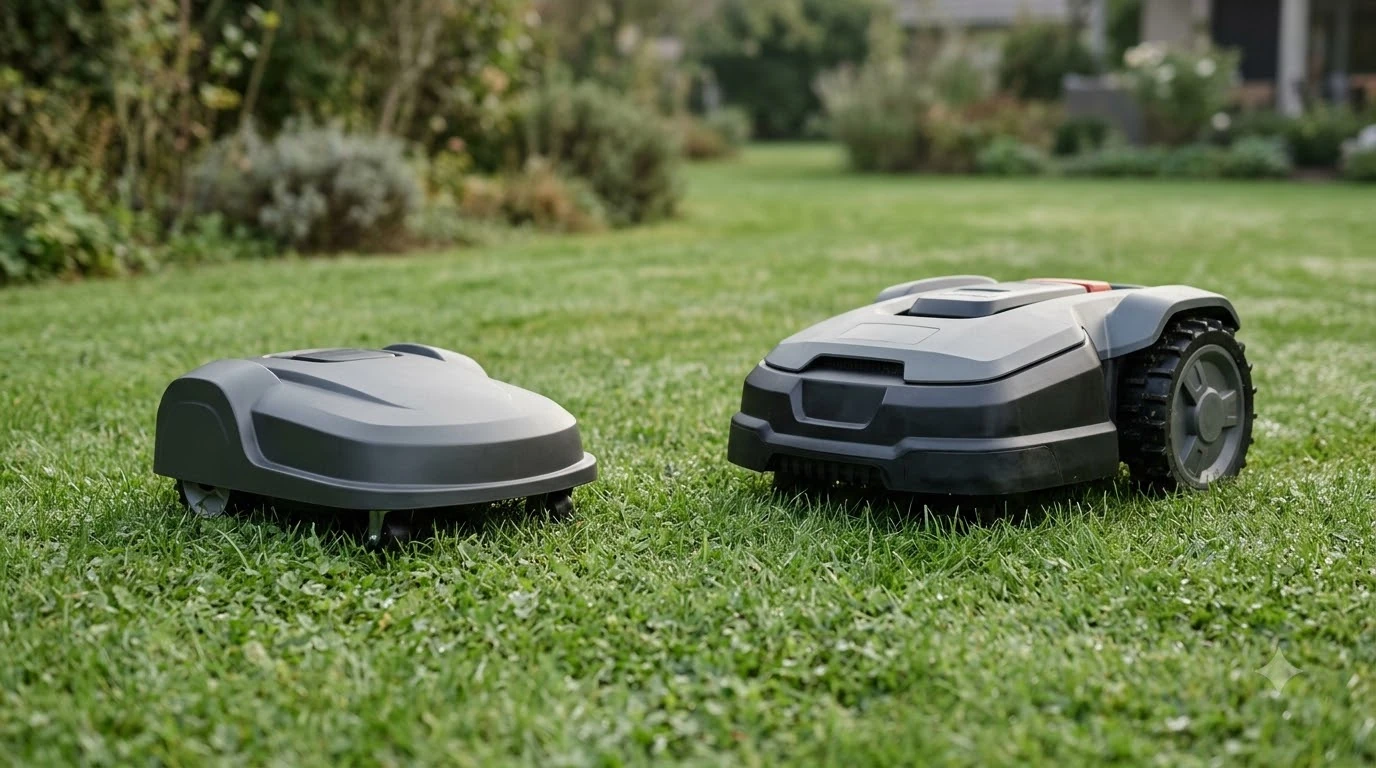

Can you overseed with a robot mower? Yes, but wait until the new seedlings are about 3 inches tall. Extension guidance from Iowa State University and the University of Wisconsin ties the first mow to that height. After that, the robot can run on a high, light setting while the lawn fills in, and the timing differs if you are overseeding an existing lawn.
The short answer
- Start height: mow new grass once it reaches about 3 inches tall.
- First cut: 2 to 2.5 inches for a new seeding, according to Iowa State.
- Existing lawn: start at 1.5 inches and step up over about three weeks, according to Purdue.
- Wait time: manufacturer guidance from Eufy says at least two to three weeks.
- Robot settings: highest blade height, short runs, and no bare or wet seedbeds.
Why seedling height matters more than the calendar
The grass itself, not the calendar, decides when a robot can run. Wisconsin’s overseeding guidance says to begin mowing once seedlings reach 3 inches tall, which it puts at about 3 to 6 weeks after seeding. The window is wide because growth speed varies by grass type. That is the core of the answer to can you overseed with a robot mower: the seedlings set the timing, not the machine.
Eufy, a robot mower maker, gives a shorter early window. It advises waiting at least two to three weeks and checking that the blades are at least 3 to 4 inches tall before the first mow. Its tug test is simple: pull gently on new growth, and if the seedlings come up easily, wait another week. Treat the numbers as a range, not a switch that flips on one date.
The first mow: height and how much to cut
On a new seeding, Iowa State University Extension advises mowing at 2 to 2.5 inches once the grass is 3 inches tall, since that height promotes spreading and thickening. Use a sharp blade, as Iowa State advises. For the same question without a robot, see when to first mow new grass seed.
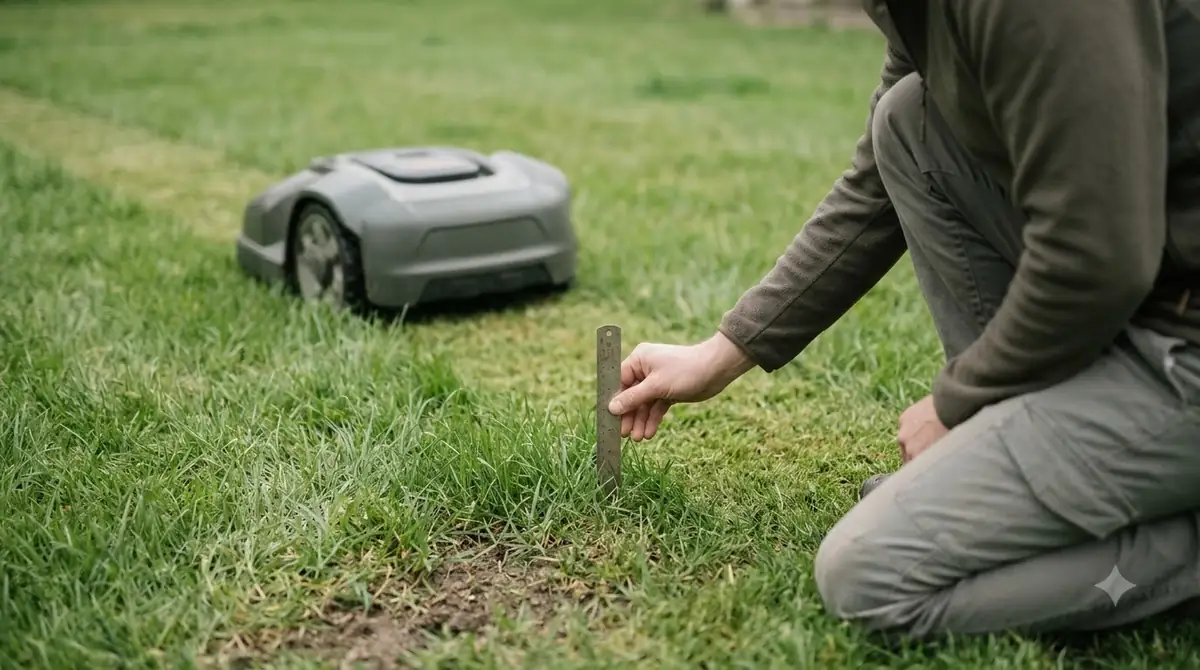
If the grass has reached 4 inches or taller, Iowa State says to set the blade as high as possible and mow promptly, then lower the height gradually over later mowings. The rule of thumb from Eufy is to remove only the top third of the blade in any one pass. That means a 4-inch blade should come down to about 2.7 inches, not straight to 2 inches. Our explainer on the one-third mowing rule covers why.
Heads up
Dropping a long, young lawn to a low setting in one pass removes too much leaf. Our reading is that stepping down over two or three mowings is safer for new seedlings.
Overseeding an existing lawn: the step-down schedule
Overseeding an established lawn is a different job from seeding a bare lawn, so the answer to can you overseed with a robot mower changes with the lawn type. Purdue Extension’s advice for overseeding an existing lawn starts at a lower height, 1.5 inches, and lifts the mower in steps over a few weeks. The lower first cut is meant for turf where the old grass is already competing with the new seedlings.
- Hold at 1.5 inches. Keep the height there until the new seedlings have been cut at least two times.
- Step up in 1/2 inch increments. Raise the height by 1/2 inch at a time over about three weeks, as Purdue’s guidance describes in its overseeding publication.
- Settle at normal height. Stop stepping up once the lawn reaches a normal mowing height of 2.5 to 3.5 inches.
Purdue also advises mowing frequently during this period, so the new seedlings are not crowded out by the established turf. Read the 1.5-inch figure as a rule for overseeding an existing lawn, not a rule for a new lawn from scratch.
North Carolina State Extension covers overseeded warm-season lawns, which is a different case again. Its guide says to begin mowing two to three weeks after emergence, to maintain a height of 1.5 to 3 inches, and not to remove more than one-third of the leaf blade in any one mowing. Use its numbers only if your grass is a warm-season type, because they do not replace the cool-season figures above.
Can you overseed with a robot mower on a schedule?
Yes, if the settings change first. Robot mowers cut on their own timer, so a robot keeps running whether or not the seed has rooted. Our reading is that the settings must do the protecting: raise the blade, keep the seeded zone off limits, and check the lawn before the next scheduled run.
- Raise the blade to its highest setting for the first runs, then lower it gradually.
- Shorten the schedule so the robot does not run over the seeded area every day.
- Block the seeded zone with a boundary or exclusion setting until the seedlings are established, as covered in how to set up no-go zones on a robot mower.
- Check the first few runs and raise the blade again if the seedlings look torn rather than cut.
A fixed timer is the main risk. A daily schedule keeps passing over seedlings that need a few days of rest, while a manual mow lets you judge the lawn each time. Our reading is that a short check before each week of runs is worth more than trusting the default schedule.
Wet soil, dull blades and bare patches
Skip mowing when the lawn is wet, keep the blades sharp, and keep the robot off bare patches until the grass has filled in. Eufy advises against mowing wet grass, because wheels can sink in and pull up fragile seedlings, and wet grass can clump. Iowa State’s advice on a sharp blade applies to robots too. Our note on running a robot mower on wet grass covers the wider issue.
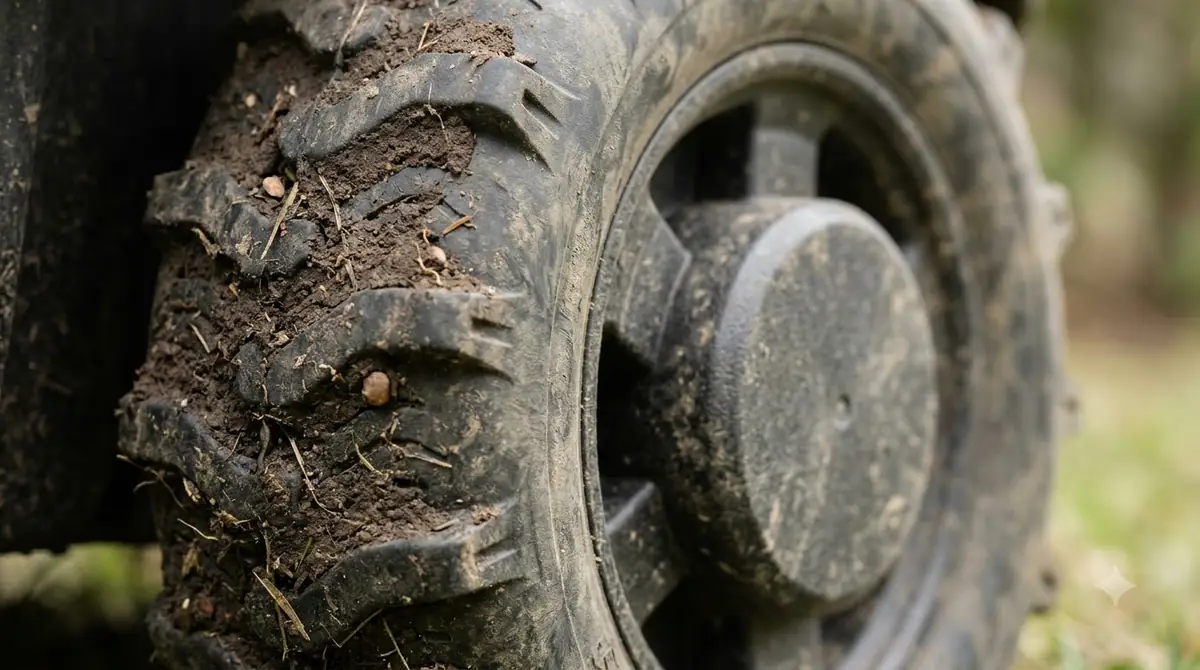
Bare patches are a separate risk. Our reading is that repeated wheel passes on exposed soil can rut the surface and dislodge seed that has not rooted yet, a problem described in robot mower wheel ruts and brown patches. A robot’s random path can concentrate passes in some spots, so check the seeded area after each week of runs. Our reading is that for a robot, the answer to can you overseed with a robot mower also depends on where the seed sits on the lawn map. Keep the seeded zone out of the path until the grass is tall enough for a full pass.
Frequently asked questions
Can you overseed with a robot mower?
Yes, once the seedlings are about 3 inches tall, according to Wisconsin’s extension guidance. Set the blade to its highest setting for the first runs and keep the robot off wet or bare patches until the grass has established.
How long should I wait before running a robot mower on overseeded grass?
Eufy, a robot mower maker, says to wait at least two to three weeks and to check that blades are at least 3 to 4 inches tall. Extension guidance gives a height trigger instead of a fixed date, and that is the more reliable signal.
What height should a robot mower be set to on new seed?
Iowa State advises 2 to 2.5 inches for the first mow on a new seeding, once the grass is 3 inches tall. For overseeding an existing lawn, Purdue starts at 1.5 inches until the seedlings have been cut twice, then steps up.
Is it okay to run a robot mower on overseeded grass when it is wet?
Eufy advises against mowing wet grass, since wheels can sink in and pull up seedlings and clippings can clump. Wait until the lawn is fully dry, especially after watering or rain, before the robot runs over the seeded area.
Sources
- When should I start mowing a newly seeded lawn? (Iowa State University Extension): 3-inch trigger, 2 to 2.5 inch first cut, and the rule for grass at 4 inches or taller.
- Over-seeding lawn in autumn (University of Wisconsin Extension): 3-inch trigger and the 3 to 6 week timing.
- AY-13: Lawn Improvement Programs (Purdue Extension): 1.5 inch first cut for overseeding and the step-up schedule.
- When to mow after overseeding (Eufy, robot mower manufacturer): two to three week wait, blade height check, top-third rule, and the wet-grass advice.
- Renovating an Established Lawn (North Carolina State Extension): warm-season overseeding timing, 1.5 to 3 inch height, and the one-third rule.
 Up next8 min readLearnHow Often Does a Robot Mower Need to Charge?Updated Nov 11, 2026
 8 min readLearnWhat Is UWB Navigation on a Robot Mower?Updated Nov 11, 2026
 7 min readLearnHow Much Does a Robot Mower Weigh?Updated Nov 11, 2026
 8 min readLearnCan You Install a Robot Mower Yourself?Updated Nov 11, 2026
 7 min readLearnDo Robot Mowers Work in Hot Weather? Temperature Limits ExplainedUpdated Nov 11, 2026
 9 min readLearnShould You Fertilize a Lawn Mowed by a Robot Mower?Updated Nov 11, 2026