
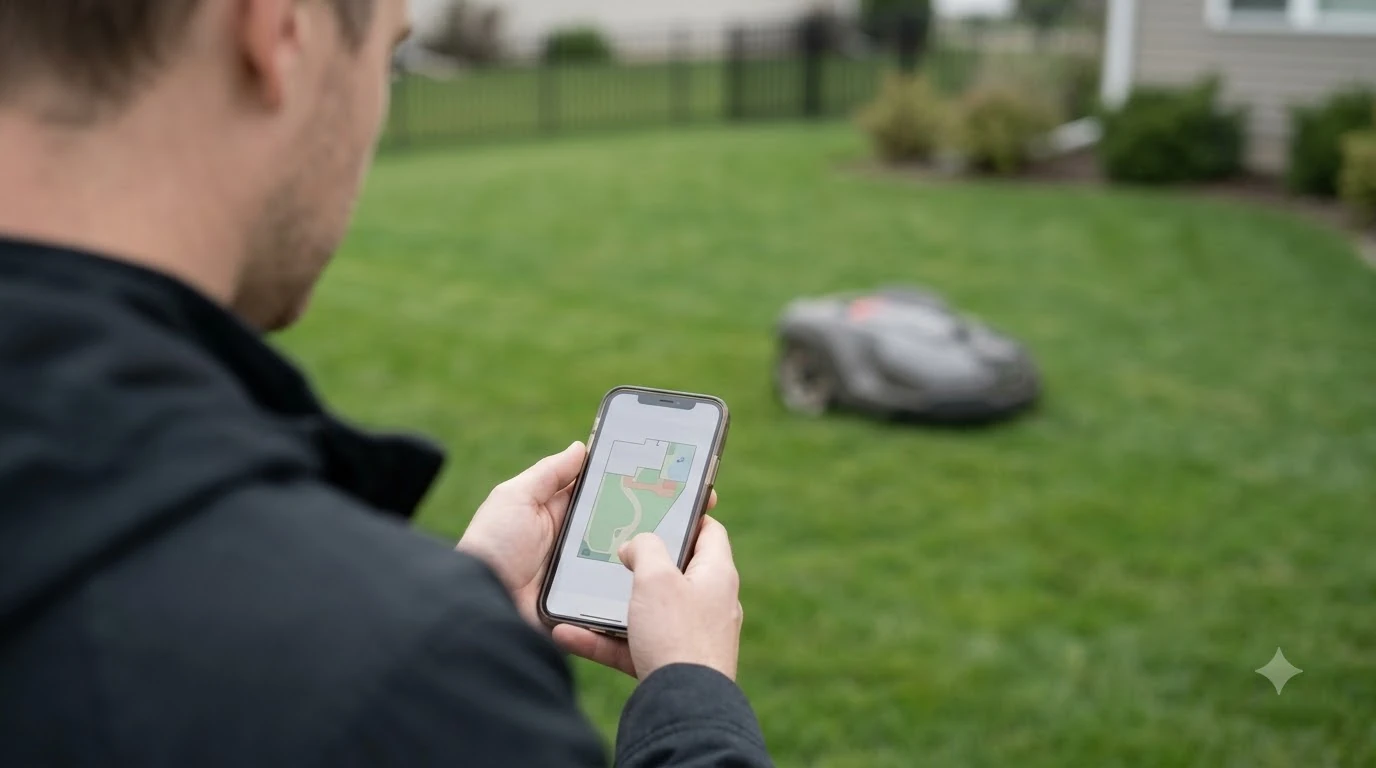

The best robot lawn mower easiest to set up is usually a wire-free model, if your yard has open sky. Vendor sources put wire-free mapping at about 30 to 60 minutes, while boundary-wire installs often take several hours or a full weekend. Tree cover and tall walls are the main reasons a simple setup gets harder.
Setup time depends on your lawn more than on the brand name. Husqvarna says installation time depends on the size and complexity of the lawn, and it does not give a fixed duration. The sections below explain what drives that time and which questions to ask before you buy.
The short answer
- Wire-free models: Eufy and Lymow both put mapping at roughly 30 to 60 minutes on a straightforward lawn.
- Boundary-wire models: Lymow cites 4 to 8 hours of trenching and wire laying, and Eufy’s FAQ says 2 to 3 hours for a small yard.
- Biggest setup risk: dense tree cover, tall walls, or buildings that weaken satellite signals.
- Before you buy: check that the dock fits on flat ground near an outlet, and that the app can map the zones you need.
Why wire-free setup is usually quicker
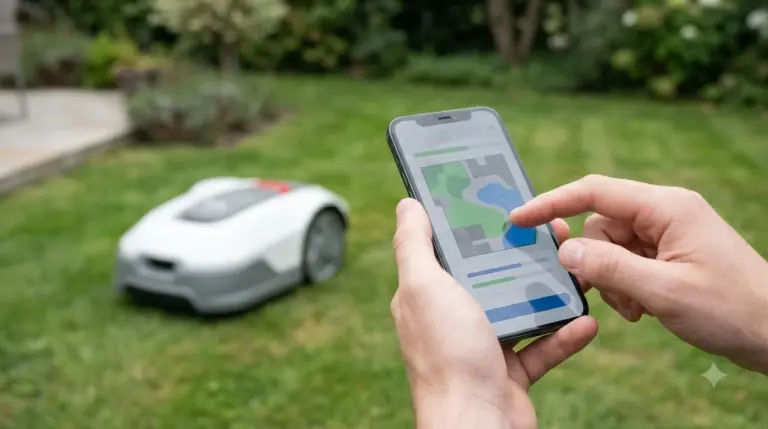
Wire-free models skip the buried loop. Their setup is mostly placing the dock or base station and mapping the lawn in an app. Eufy says wire-free mapping usually takes between 30 and 60 minutes, and Lymow lists 30 to 60 minutes for a straightforward property with its own RTK model.
Husqvarna describes its wire-free system as satellite-based technology that enables the robotic mower to work within virtual boundaries instead of physical wires. The company also says wire-free installation means there is no risk of wire breaks, which is one reason owners with frequent yard changes find it simpler to maintain.
How the two setup types compare
Both systems set the same basic job, which is defining where the mower may cut. The difference is how much physical work you do and how much the yard layout can change later. The table below uses the time ranges and limits that the vendor sources state.
| Factor | Wire-free (satellite) | Boundary wire |
|---|---|---|
| Main setup task | Place the dock or base station, then map the lawn in the app | Lay, peg or bury the loop, then connect it to the dock |
| Time cited by vendors | 30 to 60 minutes for a simple yard (Eufy, Lymow) | 2 to 3 hours for a small yard, up to a weekend (Eufy); 4 to 8 hours (Lymow) |
| Main limit | Tree cover, tall walls, and buildings that block satellite signals | Wire layout, crossings, and buried or staked cable |
| After a yard change | Recalibration may be needed after seasonal layout changes (Eufy) | The boundary must be rewired when the layout changes (Mammotion) |
Our reading is that a yard with open sky and a simple outline is the easiest case for wire-free setup. Mammotion calls wired installation time-consuming and labor-intensive, especially for large or complex yards. It also says rain, cloud cover, and nearby buildings do not affect a wired mower’s performance, which is the trade-off for the extra install work.
Where wire-free setup gets harder
Satellite setups struggle most under dense tree cover, beside tall walls, or in narrow courtyards. Eufy says tree cover and buildings can severely degrade GPS and RTK satellite signals, and its RTK base station needs a clear line of sight. Mammotion warns that tall trees, walls, or dense landscaping can cause navigation errors or missed areas.
Lymow describes a backup for weak signals. Under dense tree cover, its VSLAM system takes over for up to 10 minutes. The same page says extremely dense canopy that blocks the sky may still cause problems, so the backup has a limit.
Heads up
Vendor claims about signal recovery do not agree with each other. If the lawn is heavily shaded, read the manufacturer’s coverage notes first, and plan for a boundary-wire layout as a fallback.
What a boundary-wire install involves
A boundary-wire install is mostly a layout and burying or staking job, so its time grows with the perimeter length and the yard’s complexity. Lymow says traditional wired models demand 4 to 8 hours of digging trenches and burying the perimeter wire. Eufy’s FAQ gives 2 to 3 hours for a small yard, but its body text says a standard backyard typically needs an entire weekend, so the two figures conflict.
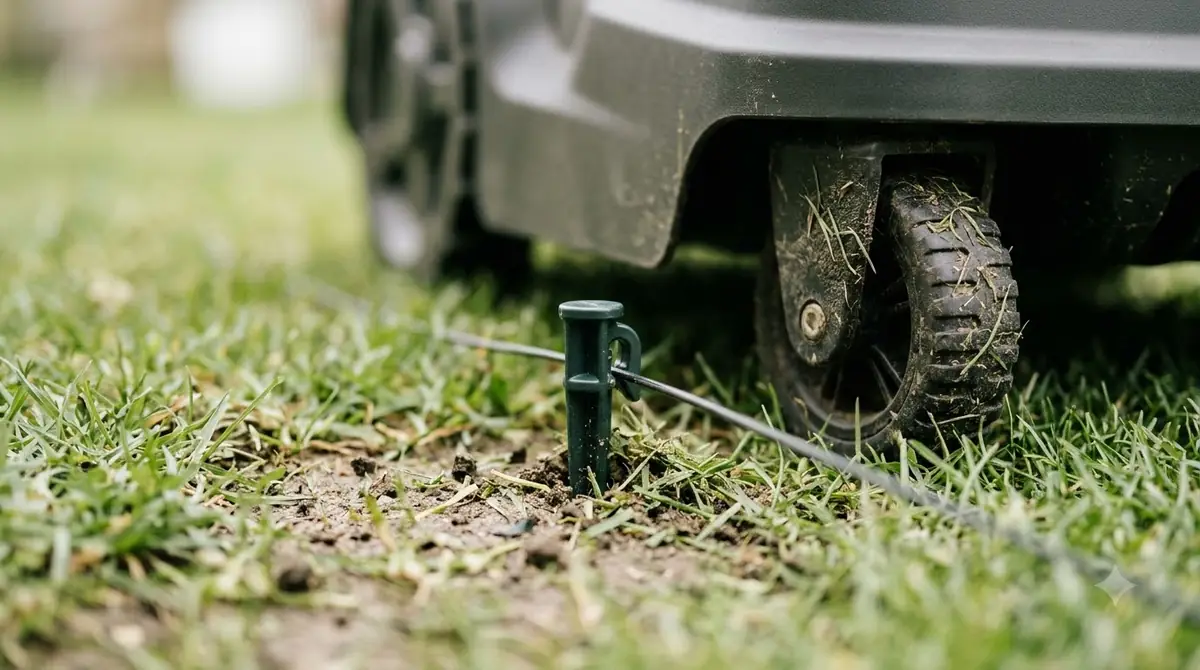
Mammotion says the wire is either buried underground or secured with stakes along the grass surface. Any change to the lawn means rewiring the boundary, and that rework is a common complaint with wired systems. Eufy also advises checking for underground services before driving anchor stakes, using the Dial Before You Dig service.
If you want a professional, Eufy says professional wire installation costs $200 to $500, depending on the total perimeter length and landscaping complexity. That range is as of 2026-11-10 and comes from a single vendor, so ask for a quote in your area.
What makes the best robot lawn mower easiest to set up
The easiest setups share three traits: a dock on flat ground near an outlet, an app that maps the lawn cleanly, and clear no-go zones before the first full run. Lymow advises placing the dock on flat, stable ground near a power outlet. Husqvarna notes that Zone Control on selected models creates separate work areas or stay-out zones, while other models can use wire islands around flower beds.
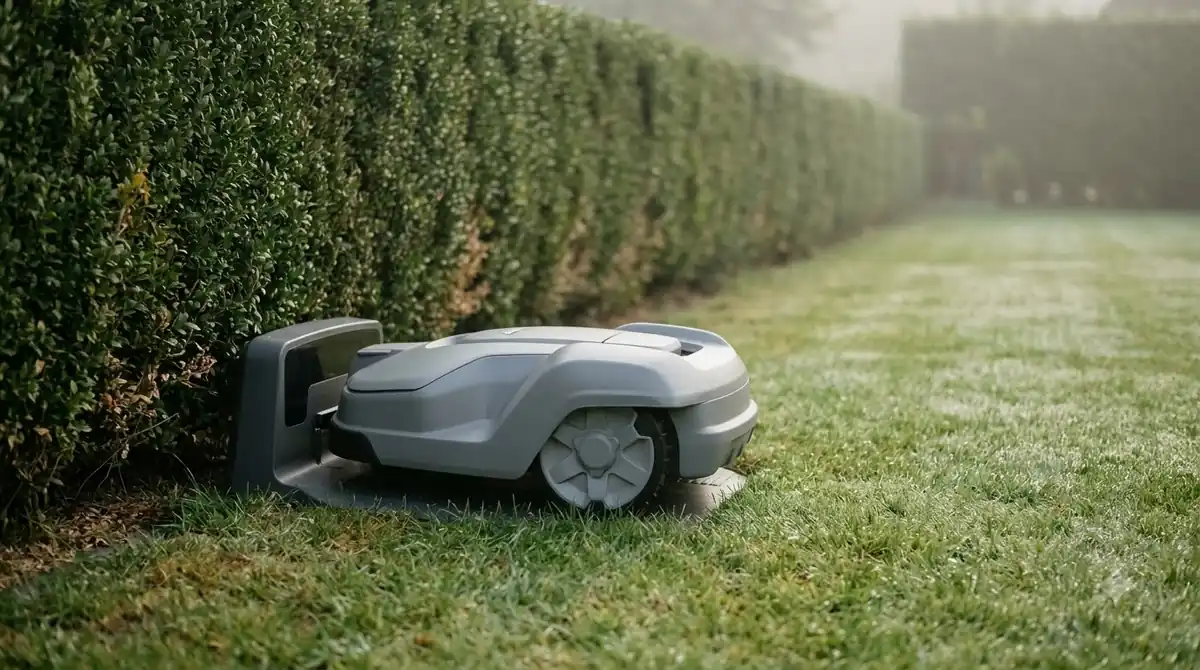
Lymow’s own RTK model lists a typical sequence of five steps. The times below come from that vendor page, so they describe one product, not a standard for all brands.
- Install the RTK reference station. Lymow gives 10 to 15 minutes.
- Position the charging station. Lymow gives 5 to 10 minutes on flat ground near an outlet.
- Connect the mower to the app. Lymow gives 5 to 10 minutes.
- Map the lawn boundaries. Lymow gives 15 to 30 minutes, and up to 45 to 60 minutes for complex yards.
- Define no-go zones and run a test. Lymow gives 5 to 10 minutes.
How to read brand setup claims
Brand setup times are vendor estimates, so treat them as ranges rather than promises. Lymow’s comparison page lists other brands’ setup times as well, but those figures come from a competitor’s page and have not been checked against each manufacturer’s own support material. Use them only as a rough guide.
Our reading is that lawn shape, sky view, and dock placement matter more than the brand name. Two mowers with the same advertised time can take very different lengths of time on a yard with several beds, a long narrow strip, or a large tree.
What to check before you buy
Before you buy the best robot lawn mower easiest to set up for your yard, confirm the mapping method, the dock location, and whether the yard suits satellite signals. These checks matter more than any single setup time.
- Sky view: how much of the lawn has open sky, and where tall trees, walls, or buildings sit.
- Dock placement: a flat spot within reach of an outdoor outlet, as Lymow advises.
- Perimeter length: a longer loop raises wire installation time and any professional install price.
- Zones: whether the app supports the no-go zones or islands that your beds need.
- Yard changes: wire needs rewiring after layout changes, while a satellite map may need recalibration.
- Vendor claims: confirm setup time and coverage in the manufacturer’s manual or support pages.
Our reading is that most homeowners with open sky should start with a wire-free model, because setup is shorter and most of the work happens in the app. If the yard is heavily shaded, a boundary-wire layout may be the more dependable choice, even though installation takes longer. Verify the setup time and coverage on the manufacturer’s site before you commit to either option.
Frequently asked questions
Can you install a robot mower yourself?
Often yes, especially with a wire-free model, where the main job is placing the dock and mapping the lawn in the app. A boundary-wire install means digging or staking a loop, which Lymow describes as 4 to 8 hours of work and Eufy says can take a weekend on larger yards.
How long does wire-free robot mower setup take?
Eufy says mapping usually takes between 30 and 60 minutes, and Lymow lists 30 to 60 minutes for a straightforward property. Lymow estimates up to 90 minutes for complex multi-zone layouts. Husqvarna does not give a fixed duration and says it depends on the lawn’s size and complexity.
Does tree cover stop a wire-free robot mower from working?
Not always, but dense tree cover, tall walls, and buildings can weaken satellite signals. Eufy warns that these obstacles can severely degrade GPS and RTK signals. Lymow says its VSLAM backup takes over for up to 10 minutes under tree cover, and that extremely dense canopy may still cause issues.
Is professional robot mower installation worth the cost?
It can be, mainly for large or complex yards, or if you do not want to dig trenches. Eufy puts professional wire installation at $200 to $500 depending on perimeter length and landscaping complexity, as of 2026-11-10. Get a local quote, because that range comes from one vendor.
Sources
- Husqvarna installation guide (Husqvarna): wire-free virtual boundaries, no wire-break risk, and installation time that depends on lawn size and complexity.
- Eufy wired vs wire-free guide (Eufy): boundary-wire time, 30 to 60 minute wire-free mapping, satellite signal limits, and professional installation cost.
- Lymow RTK vs wire setup guide (Lymow): 4 to 8 hour wired install, RTK step timing, dock placement, and the VSLAM backup under tree cover.
- Mammotion wired vs wireless guide (Mammotion): wired labor and rewiring after layout changes, and signal conditions for GPS-based mowers.
 Up next8 min readBest Robot MowersWhich Robot Lawn Mower Is the Easiest to Use?Updated Nov 11, 2026
 9 min readBest Robot MowersBest Robot Lawn Mower for New Construction Homes: Setup FirstUpdated Nov 10, 2026
 10 min readBest Robot MowersBest Robot Lawn Mower for First-Time Homeowners: What to Check Before You BuyUpdated Nov 10, 2026
 7 min readBest Robot MowersWhen Is the Best Time to Buy a Robot Lawn Mower?Updated Nov 11, 2026
 8 min readBest Robot MowersWire-Free vs Boundary Wire Robot Mowers: Which Setup Fits Your YardUpdated Nov 11, 2026
 8 min readBest Robot MowersHow to Calibrate a LiDAR Robot Mower: What Setup InvolvesUpdated Nov 16, 2026