
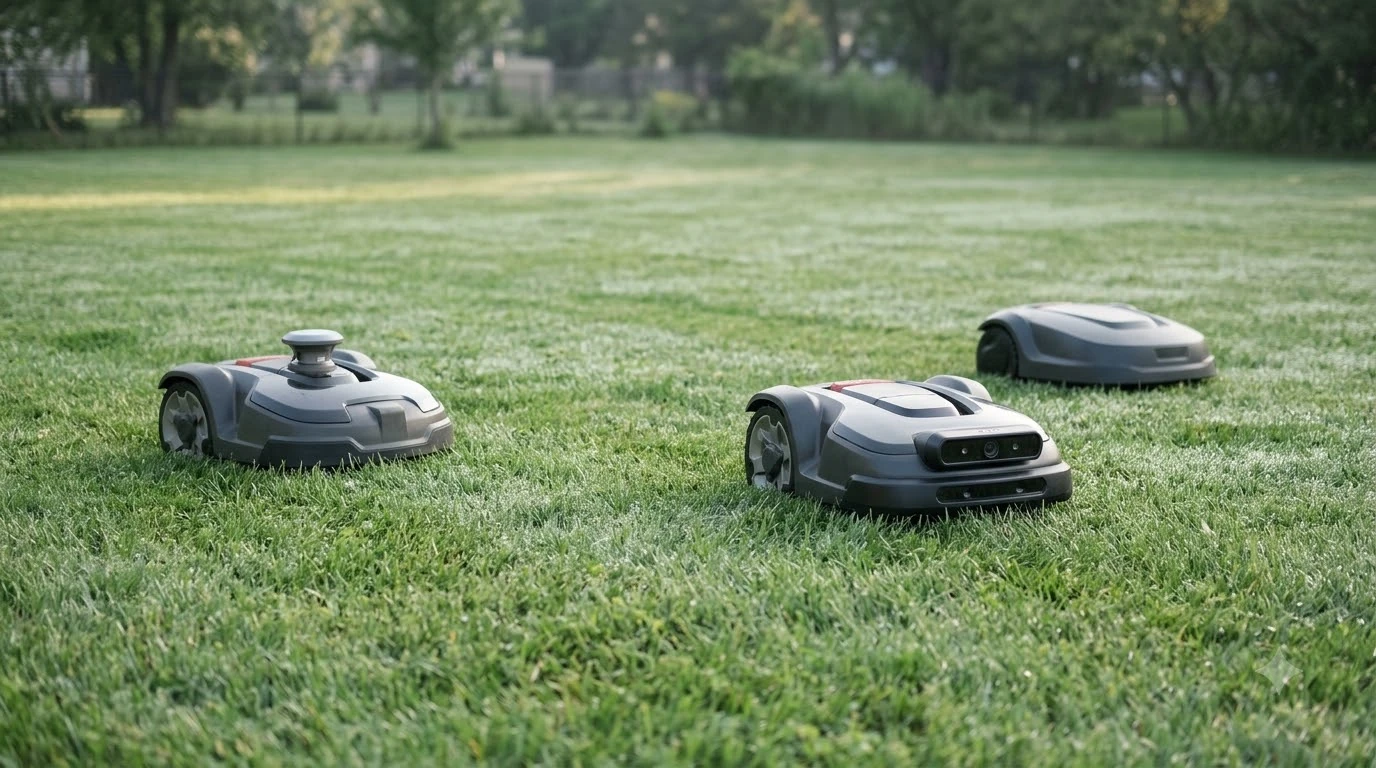

RTK vs LiDAR which should I choose depends mainly on sky view. Choose RTK when most of your lawn has a clear view of the sky, and choose LiDAR when trees, roofs or walls cover much of the yard. Both are used on current robot mowers, and each one fails in a different kind of yard.
The short answer
- Open lawn with a free spot for a base: RTK is the usual fit, with positioning that vendors rate at centimeter level.
- Shade, tall trees or frequent cover: LiDAR is the safer choice, since it does not depend on satellite signals.
- Mixed yard: a hybrid mower that combines RTK with LiDAR or vision is the common compromise, at a higher price.
- Before you buy: check the sky view, the cover over the lawn and the rain pattern in your area.
How RTK and LiDAR find the mower’s position
RTK and LiDAR solve the same problem in different ways: RTK uses satellite signals plus a base station, while LiDAR uses a rotating laser to build a map of the yard. Neither system is a simple GPS receiver, so the question RTK vs LiDAR which should I choose comes down to what each one needs from your yard.
RTK stands for real-time kinematic positioning. A fixed base station sits in the yard and sends correction data to the mower, which removes most of the satellite error. Ecovacs describes RTK as reaching centimeter-level accuracy with a base station and satellite signals, as long as the base sits in an open, unobstructed spot. Ecovacs’ comparison of LiDAR and RTK mowers also notes that dense trees and buildings can interfere with satellite connectivity.
LiDAR works without satellites. A sensor on top of the mower spins through 360 degrees, sends out laser pulses and times the returning light to build a 3D map of the surroundings, as Resident explains in its LiDAR article. Our reading is that this map lets the mower keep track of its position from the features around it, so it does not need a base station or a clear sky.
Where RTK works best
RTK works best on wide, open lawns where the base and the mower both see most of the sky. For a buyer asking RTK vs LiDAR which should I choose, this is the first test to run. Mammotion, a manufacturer, puts RTK accuracy often within 1 to 2 cm, and Sunseeker gives a range of 1 to 3 cm. Both are vendor claims, not independent test results.
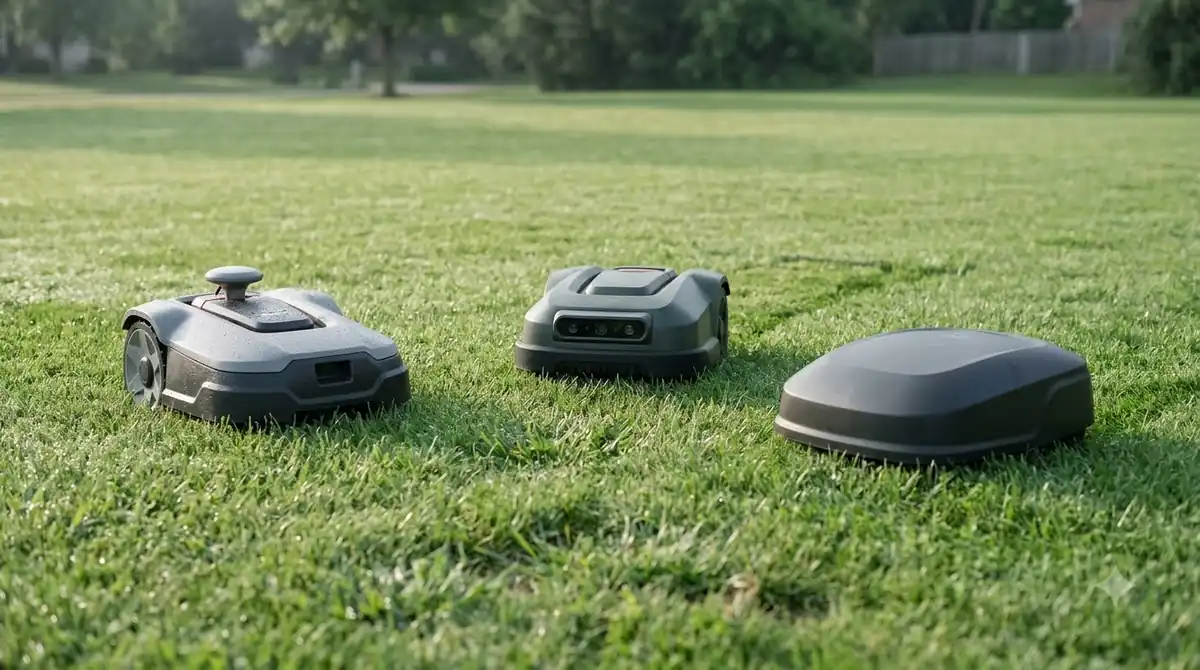
The base station is the part that most often decides performance. Ecovacs says the base must sit in an open, unobstructed area, and one vendor’s reference station guidance is at least 6.56 feet away from buildings and trees. Mowrator, a robot mower vendor, describes how trees block, weaken and reflect satellite signals, which causes multipath errors.
- Setup: the first fix can take 3 to 5 minutes while the mower waits for satellites, according to Sunseeker.
- Base placement: Mowrator calls base placement one of the biggest factors in signal quality.
- Trade-off: when you weigh RTK vs LiDAR which should I choose, RTK gives precise position in the open, but it loses precision briefly under cover, which is why many models add a fallback sensor.
Where LiDAR works best
When the answer to RTK vs LiDAR which should I choose is a shaded yard, LiDAR is usually the stronger option. It works best in yards with trees, shade or tall structures, because its laser map does not depend on a satellite view. Mammotion rates LiDAR as performing reliably in shade and low light, and Resident says LiDAR performs the same under dense canopy as in an open yard. Both are manufacturer or article claims, so check them against your own yard.
LiDAR also changes the boundary setup. Resident describes a guided perimeter pass, where you walk or drive the boundary so the mower records it, and virtual no-go zones that you set in the app without changing the property. Sunseeker notes that an open, featureless yard can take longer to map at first.
- Weather: Ecovacs says fog and heavy rain may scatter and absorb laser beams, which can affect performance.
- Setup effort: Ecovacs rates LiDAR installation as easy, with no base station and no satellite setup.
- Cost: Sunseeker says LiDAR is typically the most expensive navigation option in consumer mowers, which matters if you are asking RTK vs LiDAR which should I choose on a budget.
Side by side: RTK vs LiDAR on the factors that matter
Use this table to test RTK vs LiDAR which should I choose against your own priorities. It uses the vendor statements we read, not independent tests. The cost row is relative only, because vendors disagree on which option is cheaper and we did not use any fixed prices. Sources for these rows are in the Sources section below.
| Factor | RTK | LiDAR |
|---|---|---|
| Needs a base station | Yes, placed in an open spot | No |
| Needs a clear sky | Yes, for the best accuracy | No, works under tree cover (vendor claim) |
| Performance in shade | Poor to moderate (vendor table) | Reliable in shade and low light (vendor claim) |
| Weather | Depends on sky view | Fog and heavy rain may reduce performance |
| Setup effort | Moderate: calibration and base placement | Easy: no satellite setup |
| Obstacle recognition | Limited on its own | Detects shapes, but does not classify objects alone |
| Relative cost | Vendors disagree on which is cheaper | Often cited as the most expensive navigation option |

The hybrid and vision option
If your yard mixes open lawn with heavy shade, a hybrid can settle RTK vs LiDAR which should I choose without giving up either strength. a hybrid mower is often the practical middle ground. Mammotion says most current wireless mowers use dual fusion, which combines AI vision with RTK or with LiDAR. Vision classifies obstacles such as pets, toys and furniture, but it depends on lighting, shadows and weather.
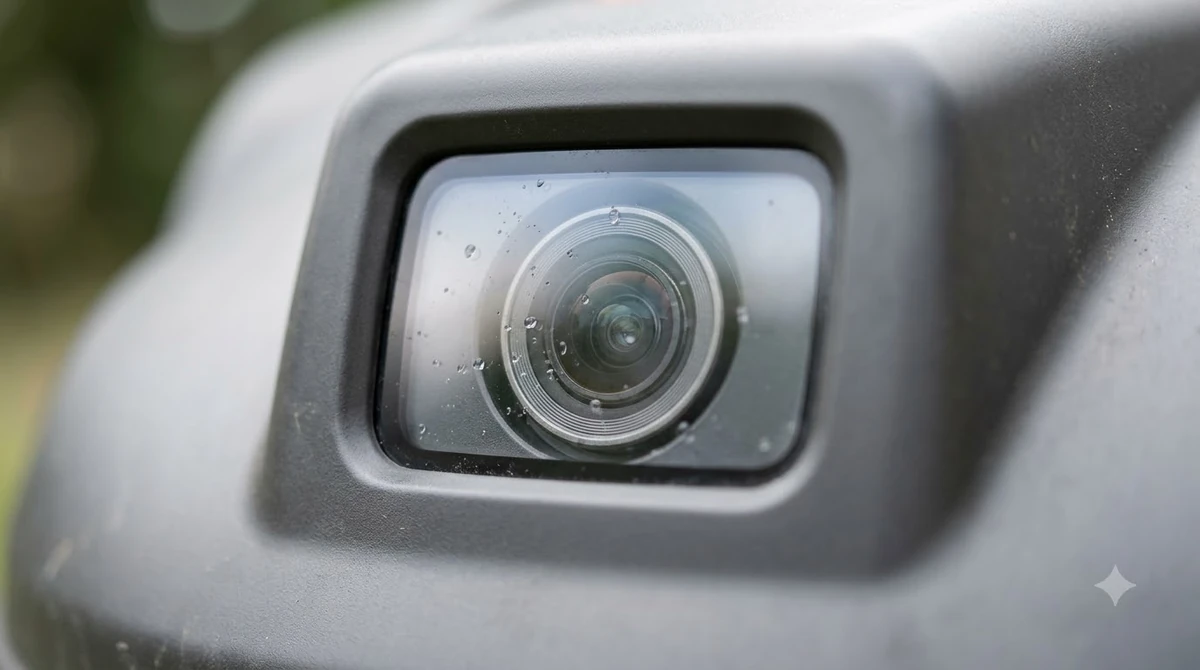
Some RTK models also carry a fallback, which is another reason RTK vs LiDAR which should I choose is not always a strict either-or choice. Yarbo says that when RTK drops, its mower falls back on vision, an inertial sensor and wheel odometry. Ecovacs describes its GOAT O1000 as using LiDAR-enhanced RTK to keep working under heavy shade or roofs. These are vendor descriptions, so ask for independent results before you rely on them under dense cover.
RTK vs LiDAR which should I choose: a checklist for your yard
Choose RTK if most of your lawn gets clear sky and you can place a base in an open spot. Choose LiDAR if trees, roofs or walls cover much of the lawn, or if you do not want to place a base at all. This is the short form of RTK vs LiDAR which should I choose. Use these steps to check your own yard before you decide.
- Check the sky at midday. Walk the lawn and note where trees, roofs and walls block the view of the sky.
- Measure the base spot. Find an open point at least 6.56 feet from buildings and trees, and confirm the base cable can reach the charging station.
- Check your rain pattern. If your area has frequent fog or heavy rain, read the rain rating in the manual before you choose LiDAR.
- Compare the cost in your budget. Ask dealers for current prices, because vendor blogs do not agree on which option costs less.
- Check support for the model. Look for a local dealer, a clear warranty and spare parts before you commit to one navigation type.
Our reading is that the sky check decides most cases, so RTK vs LiDAR which should I choose is best answered outdoors with a notebook, not from a spec sheet. If the answer is unclear, a hybrid model or a LiDAR model is the lower-risk choice for shaded yards, while RTK is the better fit for open lawns with a free spot for the base.
Frequently asked questions
Is RTK more accurate than LiDAR?
Vendors quote RTK at about 1 to 3 cm in open sky. LiDAR vendors quote relative map accuracy instead, so the two figures measure different things. Test both in your own yard before you trust either number, because RTK vs LiDAR which should I choose depends on the test, not the brochure.
Does LiDAR work under trees?
Manufacturers and Resident say LiDAR performs reliably under tree cover. Those are vendor and article claims, not independent test results. Check the model’s specification for shade and rain before you buy, since RTK vs LiDAR which should I choose is decided by your cover, not by a single claim.
Where should an RTK base station go?
Place the base on an open spot with a wide view of the sky, away from buildings and trees. One vendor’s reference guidance is at least 6.56 feet from buildings and trees. Follow the model’s own placement instructions first, and keep the base away from the sky-blocking areas you found in the checklist.
Can a LiDAR mower work in the rain?
Ecovacs says fog and heavy rain may scatter and absorb laser beams, which can affect performance. Weather limits differ by model, so read the rain rating in the manual and check how the mower handles wet grass.
Sources
- Ecovacs LiDAR vs RTK comparison (manufacturer): RTK base placement, tree and building interference, LiDAR behaviour in fog and rain.
- Mammotion, AI vision vs RTK vs LiDAR (manufacturer): RTK accuracy claims, shade performance by sensor, dual fusion.
- Sunseeker, RTK vs LiDAR robot lawn mowers (manufacturer): accuracy range, first fix time, relative cost, open-yard mapping.
- Mowrator, RTK robot mower signal loss near trees (vendor blog): how trees block, weaken and reflect signals.
- Resident, LiDAR in robot lawn mowers (publisher): how the laser sensor builds the map and records the boundary.
- Yarbo, RTK robot mower reliability (manufacturer): fallback sensors when RTK drops.
 Up next9 min readLearnHow to Choose a Robot Mower for SlopesUpdated Nov 10, 2026
 7 min readLearnDreame Robot Mower LiDAR Error: What It Means and How to Fix ItUpdated Nov 11, 2026
 8 min readLearnIs a LiDAR Robot Mower Worth the Extra Cost?Updated Nov 12, 2026
 7 min readLearnHow Does LiDAR Work on a Robot Mower?Updated Nov 14, 2026
 7 min readLearnWhat Height Should a Robot Mower Cut Grass?Updated Nov 10, 2026
 9 min readLearnShould You Fertilize a Lawn Mowed by a Robot Mower?Updated Nov 11, 2026