
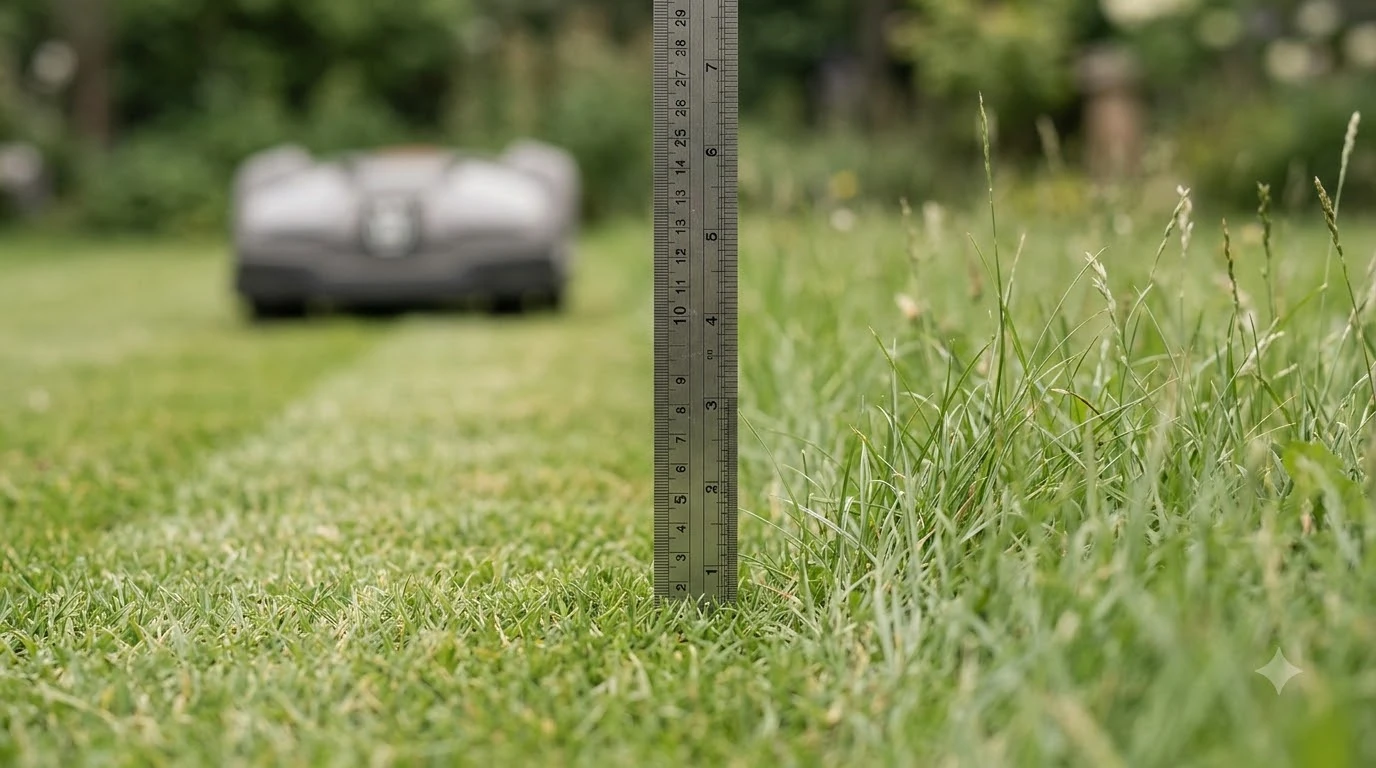

Can a robot mower cut fine fescue? Yes, if its lowest setting reaches the height fine fescue needs in winter. Clemson HGIC lists fine fescue at 1.5 to 2.5 inches in winter and 2.5 to 3 inches in summer. The minimum cutting height is the spec to check first, because a mower that stops above the winter range cannot give fine fescue the cut it needs.
The short answer
- Fine fescue winter height: 1.5 to 2.5 inches, according to Clemson HGIC.
- Fine fescue summer height: 2.5 to 3 inches, according to the same source.
- Shade: cut 0.5 to 1.0 inch higher than turf in full sun, according to Purdue Extension.
- One-third rule: remove no more than one-third of the grass height in a single cut.
- Blade check: UF/IFAS recommends replacing robot mower blades every six to eight weeks in the growing season.
Can a robot mower cut fine fescue at all?
Often yes, but only at the low end of the range. Fine fescue is a cool-season grass, and extension guides set its winter cut lower than most lawn grasses. Clemson HGIC lists 1.5 to 2.5 inches for fine fescue in winter and 2.5 to 3 inches in summer.
Mower design is the second half of the answer. According to UF/IFAS, most autonomous mowers were designed for cool-season grass that is typically cut below 2.5 inches. A mower built for that range can handle the winter cut, while a model with a higher minimum setting cannot reach it.
Our reading: treat the minimum height as the deciding spec. A wide maximum range on the spec sheet does not help if the lowest setting stops above 2.5 inches.
What height should fine fescue be cut at, by season?
Fine fescue is cut lower than tall fescue in winter and close to it in summer (our robot mower for tall fescue guide covers the other grass). Clemson HGIC’s Mowing Lawns factsheet gives both grasses for winter and summer only, so the table below also includes the other extension ranges for comparison.
| Source | Condition | Fine fescue height |
|---|---|---|
| Clemson HGIC | Winter | 1.5 to 2.5 inches |
| Clemson HGIC | Summer | 2.5 to 3 inches |
| University of Tennessee Extension | Cool, humid climate | 1.0 to 2.0 inches |
| University of Tennessee Extension | Hot, dry climate | 1.5 to 3.0 inches |
| UC IPM | Red fescue, mower setting | 1.5 to 2.5 inches |
| UC IPM | Hard fescue, mower setting | 2.5 inches |
The sources do not agree at the bottom of the range. Tennessee gives 1.0 inch for cool, humid conditions, while Clemson’s winter floor is 1.5 inches. Across all of them, the usable span runs from 1.0 to 3.0 inches, so climate and grass type decide where your setting sits.
Our reading: for a typical home lawn in a cool or temperate climate, a setting near 2 inches in winter and 2.5 to 3 inches in summer falls inside the Clemson ranges and covers most of the other figures.
Why the lowest setting matters more for fine fescue
Fine fescue’s winter range starts lower than tall fescue’s. Clemson lists 2 inches as the winter floor for tall fescue, while fine fescue starts at 1.5 inches. A mower whose lowest setting is 2.5 inches or higher can cut the upper part of the fine fescue range, but not the low winter cut the sources describe.
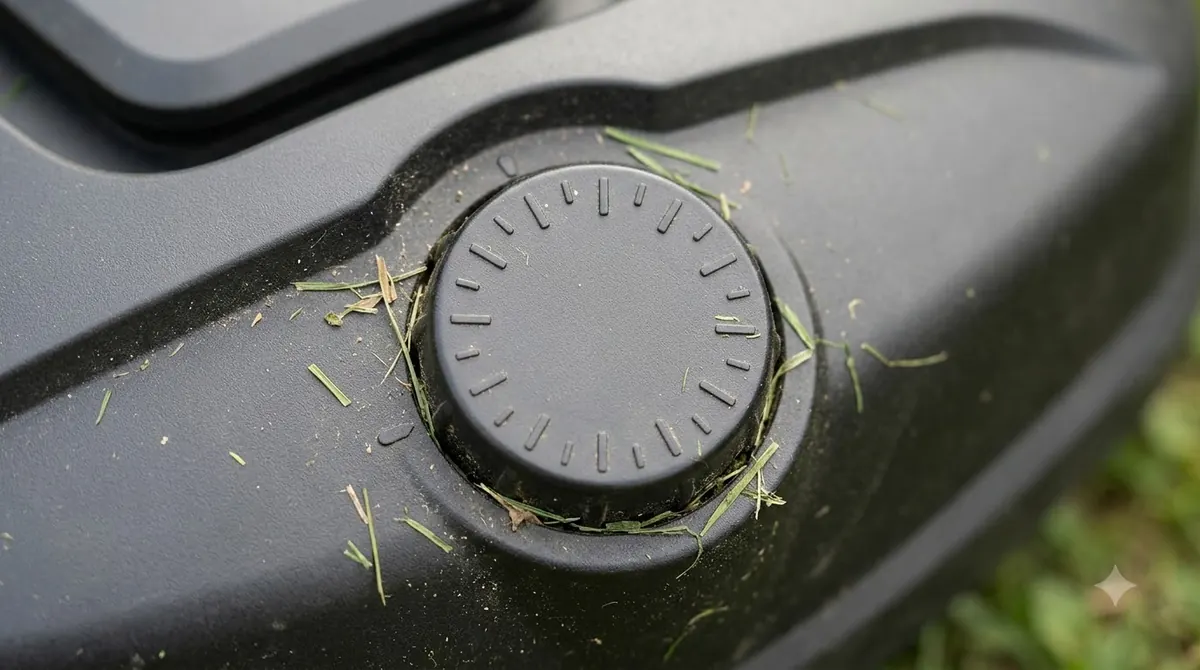
The University of California’s set-mower guide is more specific. According to UC IPM’s cool-season mowing guide, red fescue is set between 1.5 and 2.5 inches and mowed when the turf reaches 2.25 to 3.75 inches. Hard fescue is set at 2.5 inches. The same guide says to cut higher for better drought, heat, traffic, shade and pest tolerance.
Illinois Extension lists creeping red fescue at 1.5 to 2 inches in its mowing guide, which sits at the very bottom of the fine fescue range. A mower that cannot go that low will not match that guidance on those lawns.
Our reading: the UF/IFAS design point is the check that matters most. If the mower’s minimum setting is above 2.5 inches, it was built outside the range that most autonomous mowers were designed for, so treat it as a poor fit for winter fine fescue. In short, can a robot mower cut fine fescue in winter? Only when its lowest setting reaches the low end of the range.
How do shade and drought change the fine fescue cut?
Shade and drought both call for a higher cut (see also mowing height for shade grass). Purdue Extension’s turf guide TURF-65-W says to mow shaded areas 0.5 to 1.0 inch higher than turf in full sun. Clemson HGIC gives the same rule for any turf under stress, including heat, drought or shade.
Drought adds a timing rule. Purdue advises mowing only after at least 1 inch of rain or irrigation in summer, because cutting turf under moisture stress can cause pitting and mower-line damage.
Our reading: a robot mower on a fixed timer can run on a dry, stressed lawn that the guide says to leave alone. Pause the schedule after a dry spell in summer, and raise the cut under tree shade.
How often should the mower run on fine fescue?
Can a robot mower cut fine fescue well all season? That also depends on frequency. Mow often enough that you never remove more than one-third of the grass height in one cut. Clemson HGIC and UC IPM both give this rule, and UC adds that the grass needs regular cutting while it is growing.
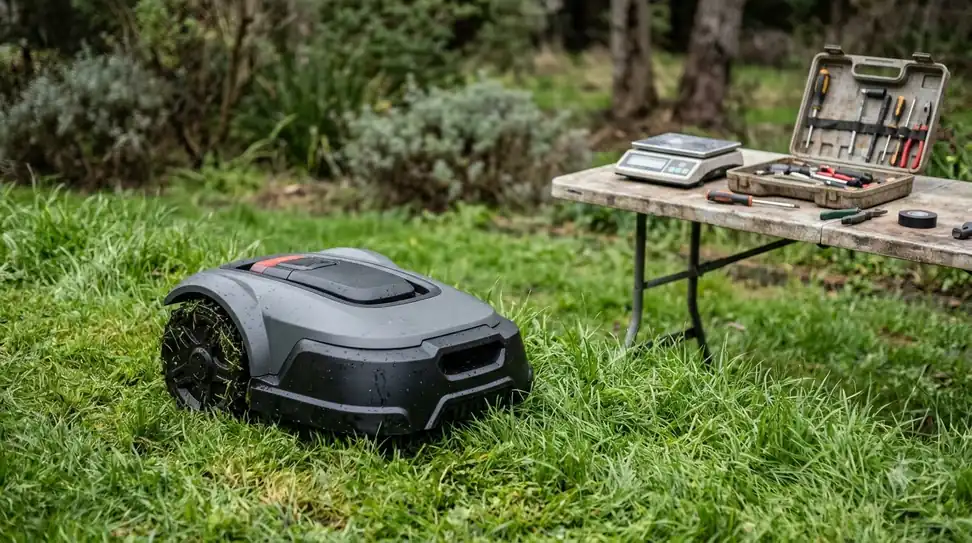
UC IPM says to mow regularly in spring when the grass is growing actively, to mow less often in summer when growth slows, and to expect more frequent mowing as growth picks up again in fall. Purdue adds that mowing should be done as often as needed to keep the desired height.
Our reading: set a robot mower’s schedule by growth, not by the calendar. Run it more in spring and fall, and cut back in summer when fine fescue slows down.
What to check on a robot mower before you buy
Can a robot mower cut fine fescue on your lawn? Check the specs against the height ranges above before you compare models. Each step below is one check the sources support, and our fescue cutting height guide has the height detail.
- Minimum cutting height. Look for a lowest setting at or below 2 inches, since the winter range starts at 1.5 inches and reaches 2.5 inches.
- Maximum cutting height. It should reach the 2.5 to 3 inch summer range, with room for the upper settings you may need in shade.
- Lawn size and layout. UF/IFAS describes autonomous mowers as suited to small and medium lawns with simple layouts, so check size and obstacles first.
- Sprinkler heads. UF/IFAS warns that sprinkler heads can make the mower unstable, which can stop it or damage it.
- Blade schedule. Plan to replace blades every six to eight weeks in the growing season, as UF/IFAS recommends.
Model-specific height ranges are in each manufacturer’s manual. Check them against the same extension numbers before you rely on a spec sheet.
Frequently asked questions
Is fine fescue cut lower than tall fescue?
Yes, in winter. Clemson HGIC lists 1.5 to 2.5 inches for fine fescue and 2 to 3 inches for tall fescue. In summer both move up, to 2.5 to 3 inches for fine fescue and 3 to 3.5 inches for tall fescue.
What summer cutting height suits fine fescue?
Clemson HGIC gives 2.5 to 3 inches for summer. The Tennessee guide gives 1.5 to 3.0 inches for hot, dry climates, so the right setting depends on where you live and how the lawn is growing.
Does shade mean a higher cut?
Yes. Purdue Extension says to cut shaded turf 0.5 to 1.0 inch higher than turf in full sun. Clemson HGIC gives the same rule for turf under shade, heat or drought.
How often should robot mower blades be replaced?
UF/IFAS recommends replacing robot mower blades every six to eight weeks during the growing season. A regular schedule keeps the cut clean, which reduces leaf damage and yellowing.
Sources
- Mowing Lawns (Factsheet 1205) (Clemson HGIC): fine and tall fescue heights by season, the one-third rule and the stress and shade rule.
- Mowing Cool-Season Turf (UC IPM): red and hard fescue set heights, mowing frequency by season and the one-third rule.
- TURF-65-W (Purdue Extension): home lawn height range, shade adjustment and the one-inch rain rule in summer.
- W161-I (University of Tennessee Extension): fine fescue height ranges for cool, humid and hot, dry climates.
- Mowing Your Lawn (Illinois Extension): creeping red fescue height range.
- Autonomous or Robotic Mower Use on Florida Lawns (ENH1402) (UF/IFAS Extension): mower design for cool-season grass, lawn fit, sprinkler heads and blade replacement interval.
 Up next8 min readBy YardBest Mowing Height for Fescue: Tall vs Fine Fescue GuideUpdated Nov 11, 2026
 8 min readBy YardRobot Mower for Tall Fescue Lawns: Height Limits That MatterUpdated Nov 11, 2026
 9 min readBy YardCan a Robot Mower Cut Zoysia? Height and LimitsUpdated Nov 11, 2026
 8 min readBy YardCan a Robot Mower Cut Centipede Grass? Heights and LimitsUpdated Nov 11, 2026
 10 min readBy YardWhen to Mow New Sod: First Cut Height and Root TestUpdated Nov 11, 2026
 8 min readBy YardRobot Mower and Fall Leaves: What Clogs, What Is FineUpdated Nov 11, 2026