
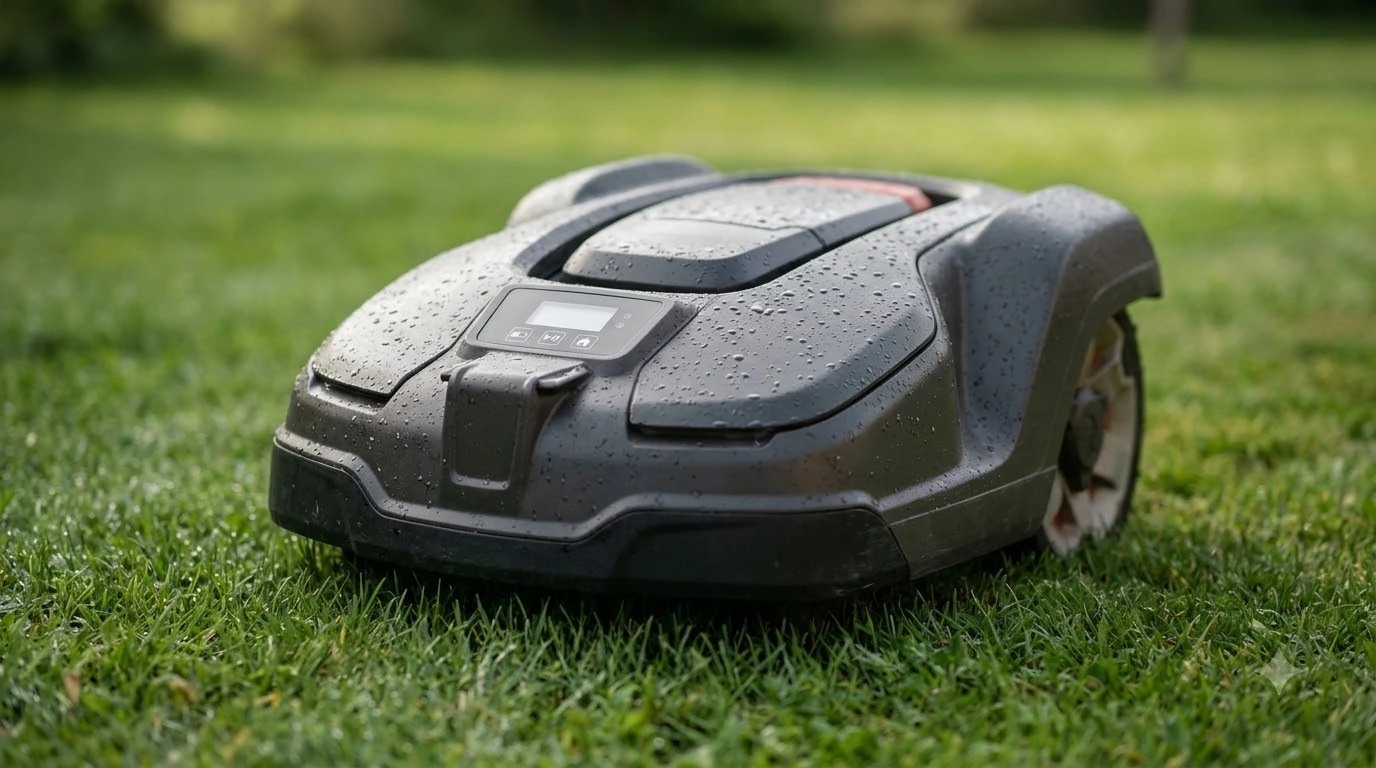

Can you use a robot mower with sprinklers? Yes, but the two should not run at the same time. A common setup is to have the mower finish and return to its dock before the sprinklers start, and to mow again only after the grass has dried. Our reading is that this schedule is the practical answer for most homeowners.
The short answer
- Timing: keep the mower and the sprinkler cycles apart, with the mower docked before water starts.
- Sprinkler heads: pop-up heads that stick up into the mowing path are the main hardware risk.
- Wet grass: wait until the lawn is dry before mowing again after watering or rain.
- Watering amount: the EPA puts a typical lawn at about one inch of water a week, including rainfall.
Can you use a robot mower with sprinklers on the same day?
Yes, the same day works when the schedule keeps them apart. The simplest rule is a gap. Water outside the middle of the day, since the EPA advises against midday watering, and set the mower to work in the hours between cycles. That leaves a practical window for mowing once the water has soaked in and the surface starts to dry. Our guide to how many hours a day a robot mower runs helps you size that window.
Sprinklers and a robot mower become a problem when they overlap. A mower that starts while a sprinkler is still spraying will run over wet ground and may meet the spray itself. A gap also gives the lawn time to dry, which matters more than the exact minute. Our reading is that a buffer of at least an hour between the last sprinkler zone and the mower’s start time is a sensible default, then you can widen it if your lawn stays soggy. This buffer is our recommendation, not a number from a manufacturer.
Check the mower’s schedule and the sprinkler controller together. If the mower runs a fixed morning slot and the controller starts a zone at the same time, one of them will need to move. Our reading is that a late-afternoon or evening mow is often easier to keep clear of morning watering, though the controller settings decide the real answer.
Heads up
Watering schedules differ by zone. A zone that runs longer, or a second zone that starts later, can overlap a mow window you thought was clear. Read the full run time for every zone before you set the mower.
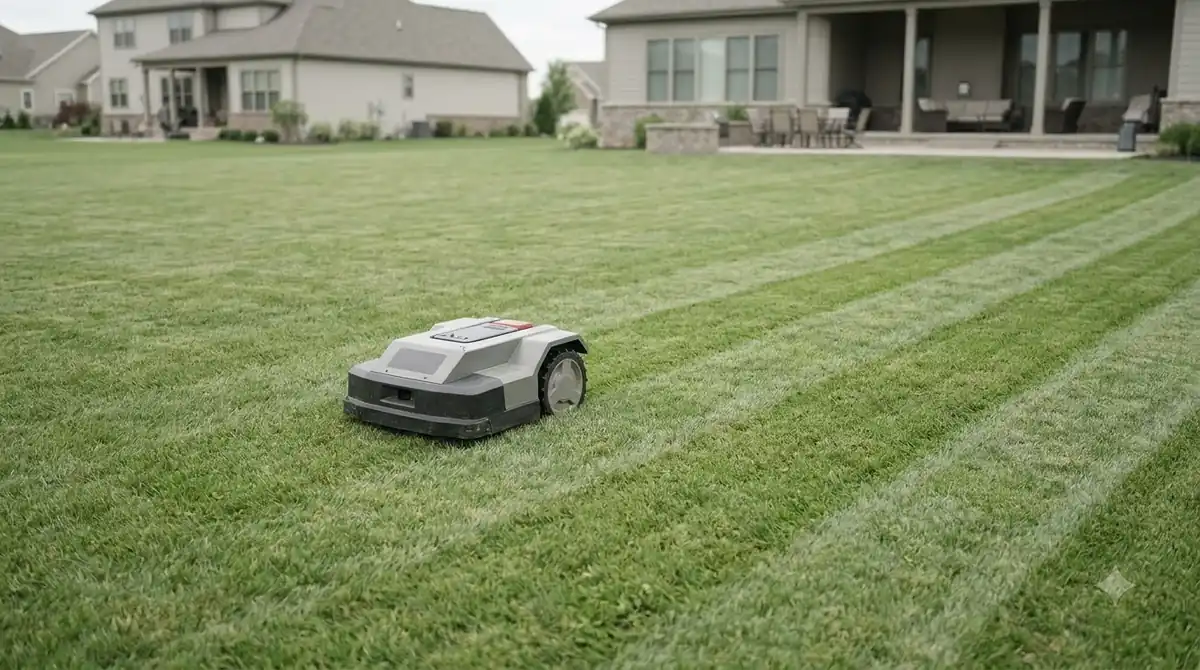
Protect sprinkler heads, hoses and garden objects
When people ask whether a robot mower with sprinklers in the same yard is safe, the sprinkler heads are the part to check first. They are the part most likely to meet the mower. A head that sits flush with the lawn is safe, but a pop-up head that rises above the grass is an obstacle. Walk the lawn during a watering cycle and look for heads that stay raised, then lower them, move them or mark their position.
Hoses are the other common problem. A garden hose left across the lawn can get caught in the wheels or blades. Husqvarna’s FAQ says small objects such as pine cones and branches do not damage the mower, but they make the blades wear faster, and it asks owners to clear the lawn of small objects before running the mower. Our guide on how often to replace robot mower blades covers wear. Keep hoses coiled and off the grass during mowing windows.
Can you use a robot mower with sprinklers that have tall heads? Start with the manual. Some models include object detection, and a boundary setup can keep the mower away from flower beds, trees and other areas; wire-free vs boundary wire robot mowers compares the two ways of setting one. The protection varies by model and setup, so read the manual for your mower before you assume it will stop at a sprinkler head. Treat sensors as a backup, not a substitute for clearing the path.
- Before mowing: check for raised heads, loose hoses and toys.
- After a sprinkler change: recheck head height, since a repositioned head can rise into the mow path.
- In the boundary plan: keep a safe margin around heads that cannot be lowered.
Rain and wet grass after watering
Wet grass is the second reason a robot mower and sprinklers clash in practice, even when the timing is right. Ecovacs advises mowing after watering only once the grass is dry, and notes that mowing wet grass causes clumping, uneven cuts and soil compaction. The same page gives rough drying times: about three to five hours after a light shower, and 24 hours or longer after a heavy storm. These are general guidance for rain, not a rule for sprinkler water, so the lawn’s appearance is the better test.
Rain sensors help but do not replace a look at the lawn. Ecovacs says its mower resumes three hours after the rain sensor detects that rain has stopped, and that owners can change that delay in its app. Mammotion makes the same point: a rain sensor should not replace a check of conditions after heavy rain.
If the mower has a rain delay, check that it is switched on and set to a delay that suits your lawn. A sprinkler cycle can wet the grass even when no rain falls, and our reading is that a rain sensor is built to detect rain, not spray from a sprinkler, so the schedule is still your job. So can you use a robot mower with sprinklers in a rainy week? Yes, with the rain delay on and a look at the lawn first. For more on wet weather, read do robot mowers work in the rain; for water getting onto the machine itself, see robot mower IP rating explained.
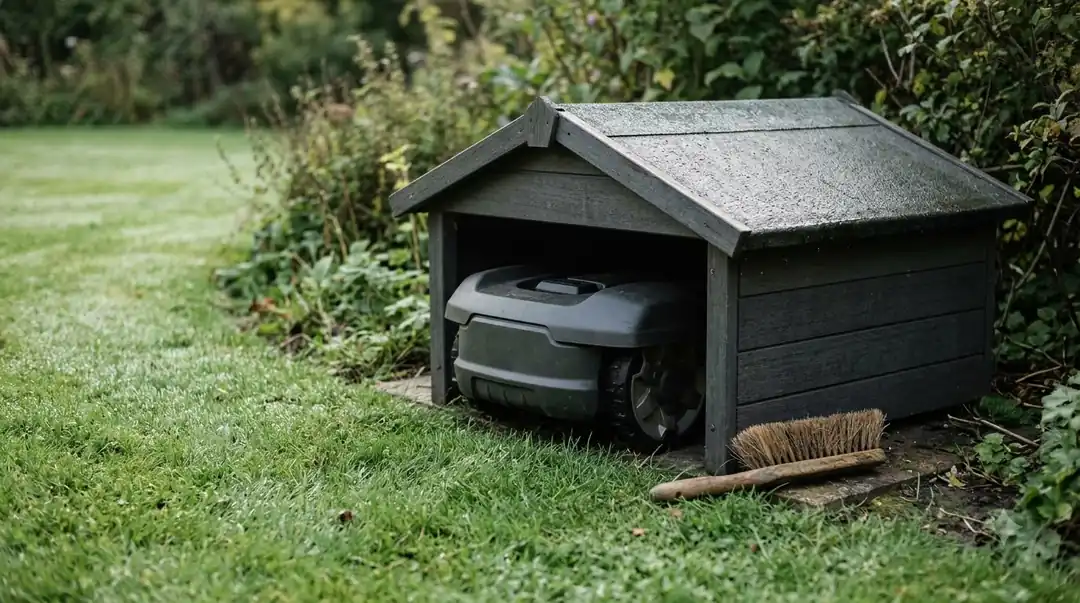
Watering amounts that affect mowing
How much you water changes how often the grass grows and how wet it stays, which in turn decides how often a robot mower can run with sprinklers in the same yard. The EPA says a landscape typically needs one inch of water a week, including rainfall, and that this figure can vary with location, weather and plant type. The agency also suggests a simple coverage test: place empty cans around the lawn, time how long the sprinkler takes to fill them with half an inch, then water for that time about twice a week.
The EPA also recommends setting sprinklers to keep water on the lawn and off the pavement. Our reading is that this also helps mowing, because spray kept off hard surfaces is less likely to wet the mower’s path.
Can you use a robot mower with sprinklers on a set cycle? Yes, and our reading is that a more frequent watering routine keeps the grass wet for longer, which pushes the mow window later in the day. The EPA’s can test points to about twice a week, which leaves more dry hours between cycles than daily watering. Pick the watering routine first, then fit the mower around it.
Common mistakes to avoid
Most sprinkler and mower conflicts come from a few habits, and each has a simple fix. Owners who ask can you use a robot mower with sprinklers rarely hit a hardware limit, and most conflicts come from the habits below.
A useful check is to read the controller’s run log for one week and compare it with the mower’s run log. If the two overlap on any day, move one schedule before you change anything else.
- Starting the mower right after the sprinklers stop. The grass is still soaked, so wait for it to dry.
- Setting one mow time without checking the sprinkler controller. Compare both schedules together.
- Ignoring raised heads. A pop-up head that sits above the grass is in the mower’s path.
- Trusting the rain sensor for sprinkler water. The sensor reacts to rain, not to a spray.
- Leaving hoses on the lawn. A hose in the mow path can snag the mower and wear the blades.
Frequently asked questions
Can you use a robot mower with sprinklers at the same time?
It is best not to. Run the mower in a window after the sprinklers have finished and the grass has dried, so the mower does not drive through spray or wet ground.
Will a robot mower damage sprinkler heads?
It can, if a head stands above the grass and sits in the mow path. Lower or mark raised heads, and check the boundary setup and the manual for your model.
How long should I wait to mow after watering?
Ecovacs advises mowing only once the grass is dry. Drying time depends on the weather and the watering amount, so check the lawn itself instead of relying on a fixed number.
How much water does a lawn need each week?
The EPA says a typical landscape needs about one inch of water a week, including rainfall. Local weather, grass type and soil can change that amount, so use a local extension or water utility guide for a firm number.
Sources
- Watering Tips (U.S. EPA WaterSense): one inch a week, midday watering, sprinkler coverage test, keeping water off pavement.
- Can You Cut Grass When It’s Wet Without Damaging Your Lawn? (ECOVACS): mow after grass dries, drying times, rain sensor resume delay.
- Husqvarna Automower Frequently Asked Questions (Husqvarna): small objects and blade wear, clearing the lawn, object detection on some models.
- Can Robot Lawn Mowers Cut Wet Grass? (Mammotion): rain sensors do not replace checking the lawn after heavy rain.
 Up next8 min readBest Robot MowersHow Much Electricity Does a Robot Mower Use?Updated Nov 11, 2026
 8 min readBest Robot MowersWhich Robot Lawn Mower Is the Easiest to Use?Updated Nov 11, 2026
 9 min readBest Robot MowersRobot Lawn Mower Installation Cost: DIY vs Professional in 2026Updated Nov 11, 2026
 7 min readBest Robot MowersRobot Mower Mowing Patterns: Random vs Striped ExplainedUpdated Nov 11, 2026
 9 min readBest Robot MowersHow Many Hours a Day Does a Robot Mower Run?Updated Nov 11, 2026
 9 min readBest Robot MowersQuestions to Ask Before Buying a Robot MowerUpdated Nov 11, 2026