
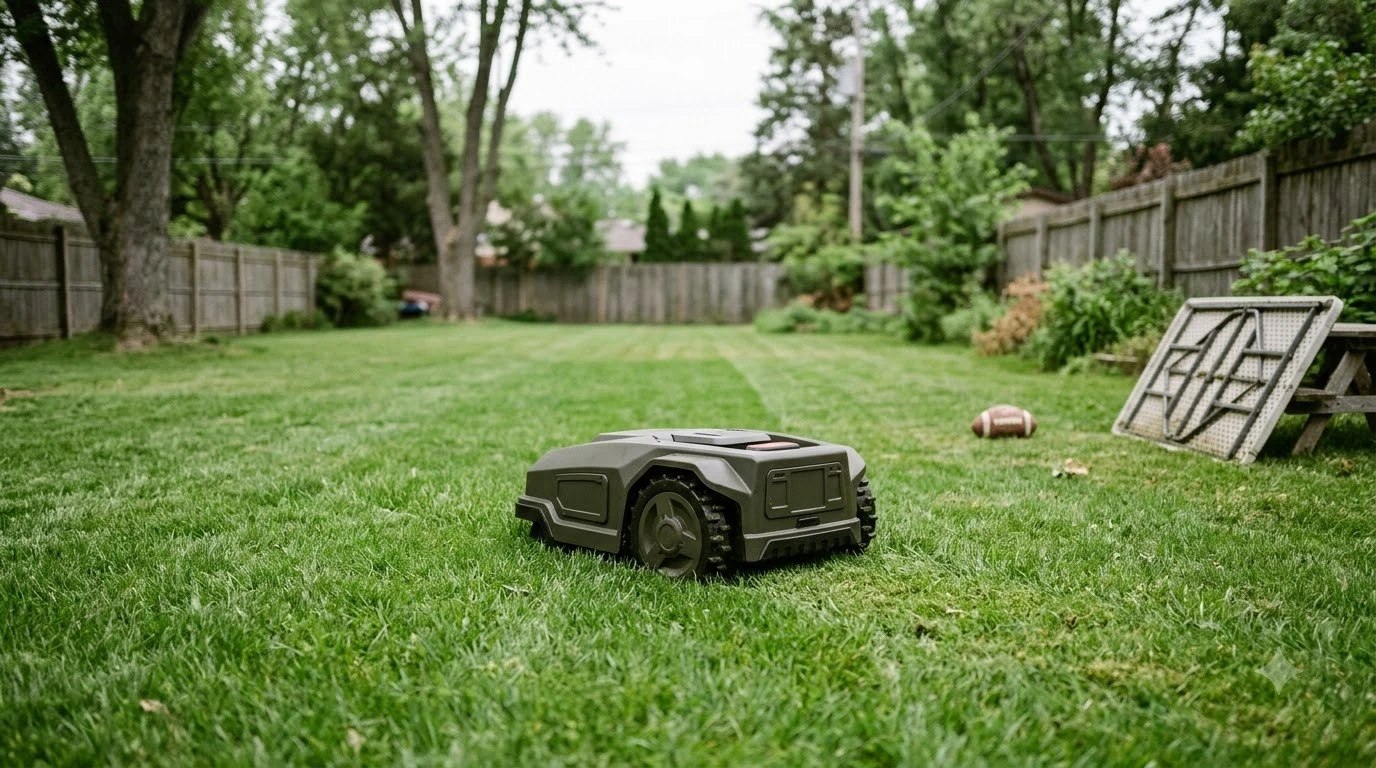

The best robot mower for warm season grass is the one whose cutting range matches your grass’s height and whose cut can be raised in heat, drought and shade. Bermudagrass, zoysiagrass, St. Augustinegrass, centipedegrass and buffalograss are mowed at different heights, and the university sources do not agree on every range. This guide sets out the height ranges and mowing rules from extension sources, then gives a checklist for choosing the best robot mower for warm season grass. It does not rank models.
The short answer
- Match the height range. Most warm-season grasses in the university tables sit between about 0.5 and 2 inches. St. Augustinegrass is the main exception, at 2.5 to 4 inches in Clemson’s table.
- Follow the one-third rule. Remove no more than one-third of the blade height in a single mowing.
- Raise the cut under stress. UC IPM and Clemson both advise a higher cut during heat, drought or shade.
- Check the season settings. Warm-season grass grows most in spring and summer, so the mowing schedule should slow in fall and winter.
What warm-season grass means for mowing
Warm-season grasses grow most actively in spring and summer and slow down or go dormant in fall and winter. The mowing schedule follows that pattern. UC IPM advises mowing often in spring and summer, when growth is active, and mowing less or not at all in fall and winter, as growth slows or the grass goes dormant.
The start of the growing season also varies by place. Clemson’s zoysiagrass calendar says green-up is “quite variable”: coastal and southern areas usually green up in April, while inland areas may be as late as mid-May. Clemson describes zoysia as a turfgrass for the southern U.S. and the transition zones, where both cool-season and warm-season grasses are adapted, so the local climate changes the schedule.
Our reading: a robot that runs on the same weekly schedule all year will cut dormant grass too often in winter. Look for a mower where you can reduce the number of runs or pause them by season, rather than leaving the schedule unchanged from July. The timing of those changes is covered in robot mower season start and end.
Height ranges by species
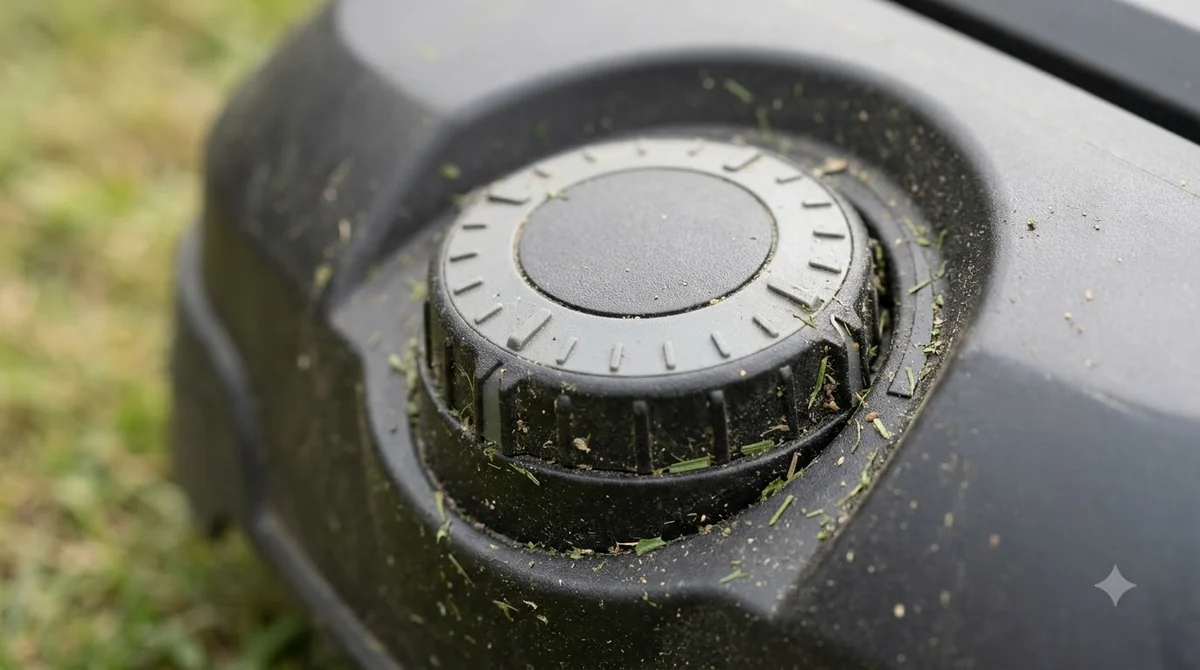
The published ranges differ by species and by source. The table below puts the main extension figures side by side. Where a source does not list a grass, the cell says so. UC IPM gives a set height and a “reach” height, the point at which you should mow. Clemson and LSU give a single range.
| Grass | UC IPM set height | Clemson HGIC 1205 | LSU AgCenter |
|---|---|---|---|
| Common bermudagrass | Not listed | 1 to 2 in | 1 to 2 in |
| Hybrid bermudagrass | 1/2 to 1 in | 0.5 to 1.5 in | Not listed |
| Zoysiagrass | 1/2 to 1 in | 1 to 2 in | 1 to 2.5 in |
| Centipedegrass | Not listed | 1.5 to 2 in | 1 to 2.5 in |
| St. Augustinegrass | 1 to 2 in | 2.5 to 4 in | 2.5 to 3 in |
| Buffalograss | 1 to 2 in | Not listed | Not listed |
St. Augustinegrass shows the widest gap: UC IPM’s set height is 1 to 2 inches, while Clemson gives 2.5 to 4 inches. Hybrid bermudagrass and zoysia also differ between sources, with UC giving a lower range. Clemson’s zoysia calendar gives 1.5 inches as the typical May-to-August height for most cultivars, and K-State lists zoysia at 1 to 1.5 inches.
Our reading: before you pick the best robot mower for warm season grass, decide which extension source your local office follows, then check that the mower’s lowest setting sits within that range. A mower whose lowest setting is 2 inches cannot meet UC’s hybrid bermudagrass range, and one whose highest setting is 2 inches cannot meet Clemson’s St. Augustinegrass range.
How often a robot should run
The one-third rule sets how often grass needs cutting. UC IPM says to “only remove one-third of the height of the lawn at a time,” and Clemson gives the same rule of thumb: remove no more than one-third of the grass height at any one mowing. LSU AgCenter gives the same wording for the leaf blade and adds a homeowner frequency: about once a week, or three to four times a month, during the active growing season.
The arithmetic is simple. A lawn cut at 1.5 inches should not be allowed to grow past about 2.25 inches before the next cut. Warm-season grass in peak growth can get there quickly, so a robot that runs only a few times a week may fall behind on a large lawn.
Our reading: a robot’s run time and its coverage of the lawn decide whether the one-third rule holds in peak season. Check the mower’s rated coverage for your lawn size before buying, and plan for more runs in late spring and summer than in fall.
Blade condition matters too. K-State notes that dull blades tear turf and leave a ragged appearance. Robot blades are easy to overlook because the mower runs unattended, so the blade replacement routine belongs in the buying checklist.
Heat, drought and shade
Sources agree that stressed warm-season grass should be cut higher until the stress ends. UC IPM says to mow turf under stress, such as heat, drought or shade, at a higher level of cut. Clemson’s zoysia calendar says to “slightly raise the mowing height until the stress is eliminated,” and gives a shade height of 2 to 2.5 inches for May to August.
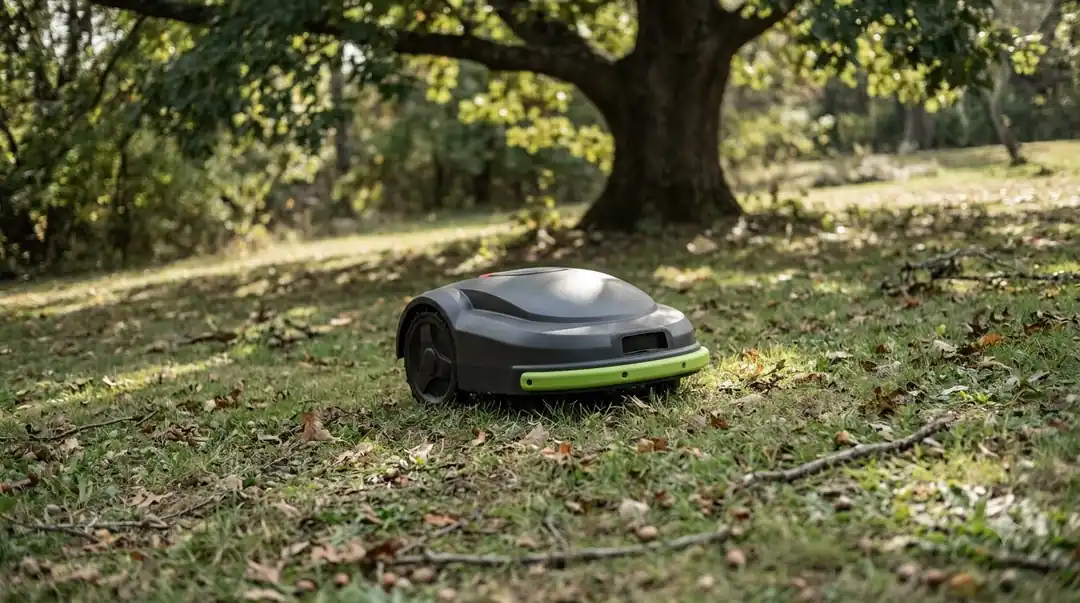
Scalping is the risk on the other side. K-State lists the causes as irregular land contours, excessive thatch, infrequent mowing and poor mower adjustment. Regular mowing at the appropriate height can prevent scalping and reduce weed encroachment, according to LSU AgCenter. For the robot side of height settings, see the best mowing height for a robot-mowed lawn.
Our reading: on a lawn with slopes, a shaded corner or a hot stretch in August, the best robot mower for warm season grass is one whose cut can be raised without a full reset. For a robot, this means a height adjustment you can change in a few steps, and a mower that handles the uneven ground that causes scalping (see robot mowers on an uneven lawn). Look at the slope and height specs in the manufacturer’s manual rather than the headline features.
Seasonal changes
Clemson’s zoysia calendar gives the clearest seasonal pattern among the sources. From January to April, the mower setting should be around 1 to 1.5 inches. In fall, the mower should be raised slightly once nighttime temperatures fall below 70 degrees Fahrenheit, and the calendar gives no number for that change. The calendar also says to water a dormant lawn to prevent excessive dehydration, and to remove dead material left from winter.
UC IPM does not give a dormancy height. Its guidance on dormancy is to mow less often, not to change the height.
Our reading: with the best robot mower for warm season grass, the spring and fall height changes are still the ones most likely to be missed. Set a reminder for the two adjustments, and check whether the mower’s app or settings let you save a seasonal profile.
Best robot mower for warm season grass: a checklist
No source in this guide ranks robot mowers for warm-season grass, so the list below is a checklist, not a ranking. Use it to judge the best robot mower for warm season grass on your own lawn. Each item comes from the extension guidance above, and the robot-specific wording is our reading.
- Height range. The lowest and highest settings should cover the range for your grass from the extension source you follow.
- Raised cut. You need to be able to raise the cut quickly in heat, drought and shade, and lower it again in spring.
- Run schedule. The mower should let you reduce or pause runs in fall and winter, when warm-season grass slows down.
- Coverage for peak season. In summer, the mower must keep grass within the one-third rule on your lawn size.
- Blades. Find out how the blades are replaced, and keep them sharp, since K-State links dull blades to a ragged, torn lawn.
- Ground. Check the slope and level-ground specs, since uneven ground is a common cause of scalping.
Frequently asked questions
Can a robot mower cut warm-season grass?
The university sources reviewed here do not rule out robot mowers for warm-season grass. The question is whether the mower’s height range covers the grass’s range and whether the mower can follow the one-third rule in peak growth. That depends on the species and the lawn size.
What height should warm-season grass be cut at?
It depends on the species and the source. Clemson lists common bermudagrass and zoysia at 1 to 2 inches, centipedegrass at 1.5 to 2 inches, and St. Augustinegrass at 2.5 to 4 inches. UC IPM gives 1 to 2 inches for St. Augustinegrass as a set height, so check which source your local extension office uses.
How often should warm-season grass be mowed?
UC IPM says to mow often in spring and summer, when growth is active, and less or not at all in fall and winter. LSU AgCenter gives a homeowner frequency of about once a week, or three to four times a month, during the active growing season.
Should warm-season grass be cut shorter in summer?
No. UC IPM and Clemson both advise a higher cut for turf under stress from heat, drought or shade. Clemson’s zoysia calendar says to slightly raise the height until the stress is eliminated.
Sources
- UC Healthy Lawns: Mowing warm-season grasses (UC IPM): set and reach heights, one-third rule, seasonal mowing frequency, cut under stress.
- Clemson HGIC Factsheet 1205, Mowing Lawns (Clemson Extension): height table for warm-season grasses and the one-third rule.
- Zoysiagrass Maintenance Calendar (Clemson HGIC): seasonal heights, shade height, stress and fall adjustments, green-up timing.
- One-Third Mowing Rule (LSU AgCenter): one-third wording, homeowner frequency, prevention of scalping, height table.
- Mowing (K-State Research and Extension, Lawn Problem Solver): scalping causes, mowing as needed, dull blades, zoysia height.
 Up next8 min readBy YardCan a Robot Mower Cut Cool Season Grass?Updated Nov 11, 2026
 8 min readBy YardHow Often to Mow Bermuda Grass by SeasonUpdated Nov 11, 2026
 9 min readBy YardHow Often to Mow Kentucky Bluegrass by SeasonUpdated Nov 11, 2026
 8 min readBy YardHow Often to Mow Fescue, Season by SeasonUpdated Nov 11, 2026
 7 min readBy YardBest Mowing Height for Kentucky Bluegrass by SeasonUpdated Nov 11, 2026
 7 min readBy YardBest Robot Mower for Bahia Grass: Check the Cutting Range FirstUpdated Nov 11, 2026