
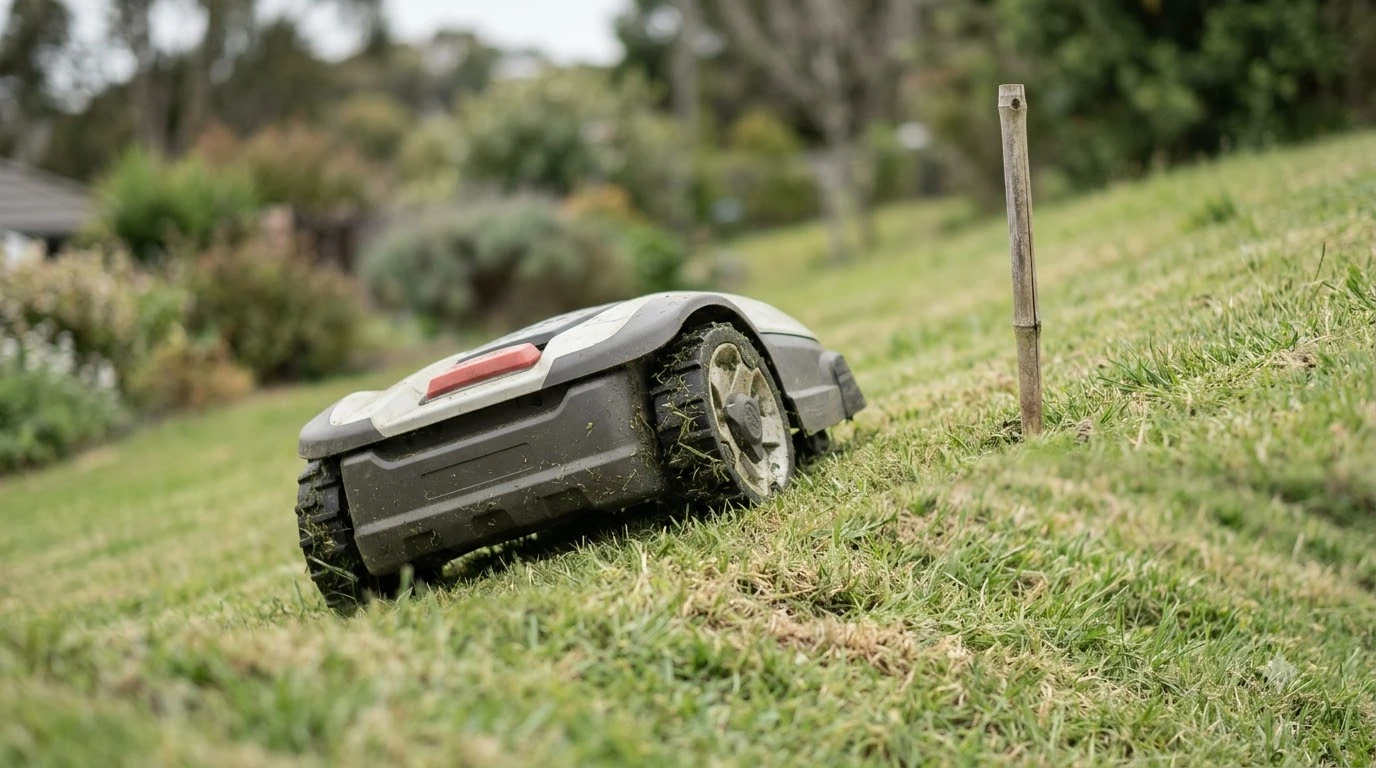

In the Mammotion Luba 3 AWD vs Ecovacs GOAT A1600 RTK comparison, the Luba has the higher published slope rating and the GOAT lists the faster recharge. Mammotion rates the Luba for slopes up to 80% (38.6 degrees), and Ecovacs rates the A1600 RTK for 50% (27 degrees). Ecovacs also claims 2 cm RTK precision. As of November 2026, neither official page gives a price or a warranty term, so check both before you order.
The short answer
- Luba 3 AWD is the better paper fit for steep yards: 80% slope rating, a 400 mm cutting width reported by New Atlas, and no perimeter wire.
- GOAT A1600 RTK suits open lawns that stay inside 27 degrees and need a 3 to 9 cm cutting height, with a 45-minute recharge on a 180 W charger.
- Not on the official pages: Ecovacs noise and cutting width, the warranty term for both mowers, and a current price for either.
- Check first: the sky view at the base spot, because both designs depend on satellite positioning with sensor backups.
How each mower finds its way without a boundary wire
Both mowers skip a perimeter wire, but they navigate differently. The Luba 3 AWD combines LiDAR, RTK and cameras, while the GOAT A1600 RTK pairs LiDAR-enhanced RTK with AI vision and 3D time-of-flight sensing. If RTK is new to you, see how an RTK robot mower works.
Mammotion describes the Luba 3 AWD’s navigation as Tri-Fusion: 360-degree LiDAR, RTK and dual-camera AI vision, with ±1 cm accuracy. That accuracy figure is the manufacturer’s claim, and the overview page gives no test conditions. The same page says the mower needs no perimeter wire.
The Luba can also run without a traditional RTK base. According to New Atlas, NetRTK needs no traditional RTK setup when the mower has cellular or Wi-Fi connectivity, although the base still has to be plugged in. The spec list in the same review says 4G is free for three years.
Ecovacs describes the A1600 RTK as LiDAR-enhanced RTK with 2 cm positioning precision. Its AI vision and 3D ToF LiDAR system is described as able to avoid more than 200 obstacles, including hedgehogs. Ecovacs footnotes a 130% shade-stability figure as a lab result compared against competing mowers, and the footnote does not describe the test conditions.
For the Mammotion Luba 3 AWD vs Ecovacs GOAT A1600 RTK choice, navigation matters less than the sky above your base spot. Our reading: both designs use LiDAR, so the real question is how much of your lawn sits under trees or beside walls. Neither vendor page gives a figure you can apply to a shaded yard.
Mammotion Luba 3 AWD vs Ecovacs GOAT A1600 RTK slope ratings: 80% against 50%
The Mammotion Luba 3 AWD is rated for slopes up to 80% (38.6 degrees), while the GOAT A1600 RTK is rated for 50% (27 degrees), according to each manufacturer’s own page.
Slope percent is rise over run, so the two ratings are not the same scale as degrees, and you should compare them on the same unit. Both pages publish these as maximum ratings. Neither gives a wet-grass limit. For the basics, read robot mower slope ratings explained.
Heads up
A maximum slope rating describes the mower’s limit under the manufacturer’s test, not a guarantee on wet or uneven ground.
The New Atlas review records the more useful warning. During a turn, one front wheel of the Luba went over the edge of a ditch, and the reviewer had to rescue the mower. On a second incident, it spent 78 seconds in the bottom before it found its own way out. The reviewer did not report a separate slope test result.
Our reading: if your steepest section sits between 27 and 38.6 degrees, only the Luba’s published rating covers it. If every part of the lawn is under 27 degrees, both ratings clear the bar, and the decision moves to navigation, cutting width and price.
Cutting width, cutting height and coverage
The Luba 3 AWD has a 400 mm (15.8 in) cutting width and a 56 to 102 mm cutting height range, according to New Atlas. Ecovacs publishes a 3 to 9 cm height range on its page but does not state a cutting width.
| Spec | Luba 3 AWD | GOAT A1600 RTK |
|---|---|---|
| Cutting width | 400 mm, dual 165 W disc deck (New Atlas) | Not stated on the official page |
| Cutting height | 56 to 102 mm (New Atlas) | 3 to 9 cm, adjustable in 1 cm steps from the app (Ecovacs) |
| Coverage | Mammotion’s size table: 1,000 m² (1500), 3,000 m² (3000), 5,000 m² (5000); general claim of up to 7,000 m² a day | 500 m² per charge, with no stated basis for the figure; 400 m² per hour |
| Reviewer test | About 860 m² in 4 hours 4 minutes with one recharge (New Atlas) | No independent test in the sources we read |
| Weight | 18.6 kg (New Atlas) | Not stated on the official page |
In the Mammotion Luba 3 AWD vs Ecovacs GOAT A1600 RTK table, the coverage row is the one most often misread. The coverage figures measure different things. The Ecovacs number is per charge, and the Mammotion figures are daily ratings for each size class. New Atlas measured about 2,276 sq ft (roughly 211 m²) per hour at about half speed, so the daily rating depends on hours and speed. A lawn size check beats either headline number.
Noise, battery and charging time
Mammotion gives a noise figure of 70 dB or less for the Luba 3 AWD and a 15 Ah battery. Ecovacs gives a 32 V platform and a 45-minute recharge, but no noise figure and no amp-hour rating on its official page.
The New Atlas reviewer called the Luba very quiet but did not measure a decibel level. Because the Ecovacs page lists no dB figure, the two manufacturers cannot be compared on noise using their own numbers.
Battery capacity is where the pages differ most. The Luba lists 15 Ah, while the Ecovacs page names only a 32 V platform. Voltage alone does not tell you runtime, so ask Ecovacs for an amp-hour rating before you compare the two.
Charging is the one spec where Ecovacs is faster on paper. It states a recharge in 45 minutes with a 180 W charger. New Atlas gives about 120 minutes for the Luba. Charging time matters most when your lawn is larger than one charge covers.
Base station, setup and sky view
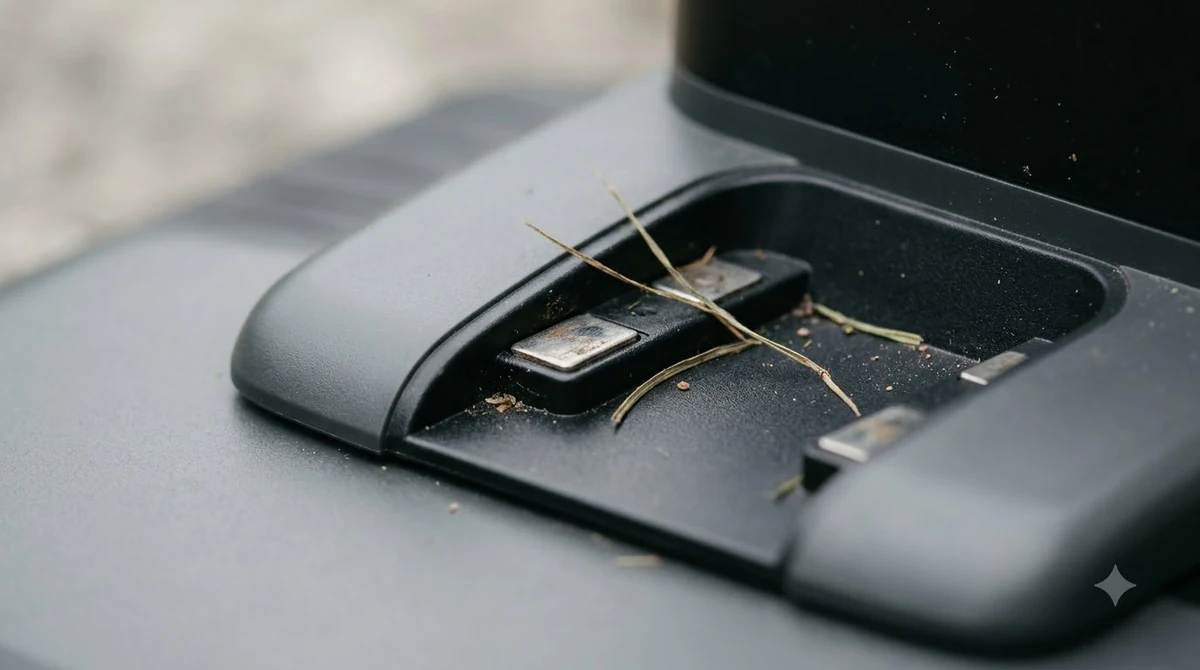
Both mowers still depend on a base or satellite view, so setup time depends on where the base can go, not only on skipping the perimeter wire. New Atlas reports that the Luba’s base station does not come with a roof, and that a roof is an optional extra. The base also has to stay plugged in for NetRTK.
The Ecovacs product page gives no base placement rules. Check the Ecovacs manual for its clearance from walls and trees before you pick a spot, and read where to mount an RTK base station for general guidance.
Our reading: an RTK base needs open sky. The clear view from the base spot matters more than the model name, so walk the spot and look for trees and walls before you buy.
What neither official page confirms
Neither official page gives a current price or a warranty term, and the Ecovacs page also gives no weight, so those gaps should be closed in writing before you order.
- Price: neither official page shows a current price. This article uses no price from retailer listings.
- Warranty: Mammotion’s page shows an extended warranty banner marked “Stay tuned” with no term. Ecovacs states no warranty term on the page we read.
- Noise and width for Ecovacs: neither figure appears on the official page.
The New Atlas review also notes that the Luba’s bumper is sensitive in tall grass, pausing the cutting deck for about five seconds at a time. That behavior matters on rough or unmown edges, and the review does not show how often it happens.
Who each option suits (our reading)
The Luba 3 AWD suits steep, wider lawns where a published 80% slope rating and a 400 mm deck matter. The GOAT A1600 RTK suits open lawns that stay within 27 degrees and need a cutting height between 3 and 9 cm.
Lean toward the Luba 3 AWD if your steepest section is above 27 degrees, you want a published cutting width, and you can provide cellular or Wi-Fi at the base. Budget for the 4G plan after the three free years, since the review gives no later pricing.
In the Mammotion Luba 3 AWD vs Ecovacs GOAT A1600 RTK decision, lean toward the GOAT A1600 RTK if your lawn sits inside its 27-degree rating, your height needs fall in 3 to 9 cm, and the 45-minute recharge matters to you. Get the noise and warranty figures in writing first. For a wider look at each brand’s range, see the guides to the best Mammotion robot mower models and the best Ecovacs GOAT robot mower models.
What to check before you buy
Before you settle on a Mammotion Luba 3 AWD vs Ecovacs GOAT A1600 RTK purchase, measure the steepest slope, the total lawn area and the sky view at the base spot, then get the missing figures in writing.
- Measure the steepest slope. Compare it with 38.6 degrees for the Luba and 27 degrees for the A1600 RTK.
- Match the area to the coverage figure. Luba coverage depends on the size variant. The A1600 RTK is rated at 500 m² per charge.
- Check the sky view at the base spot. Walk the planned spot and note trees and walls nearby.
- Confirm the connectivity plan. The Luba’s NetRTK mode depends on cellular or Wi-Fi at the base, so plan for the 4G fee after three years.
- Get the gaps in writing. Ask Ecovacs for noise, cutting width and warranty, and ask Mammotion for the warranty term and current price.
Frequently asked questions
Does the Mammotion Luba 3 AWD need a boundary wire?
No. Mammotion’s overview page says the Luba 3 AWD needs no perimeter wire. You still need to place and power the base station, and NetRTK keeps the base plugged in.
Which mower handles steeper slopes?
The Luba 3 AWD has the higher published rating, up to 80% (38.6 degrees), against 50% (27 degrees) for the GOAT A1600 RTK. Neither page gives a wet-grass limit, so check each manual before you rely on the figure.
Which one is quieter?
Mammotion states 70 dB or less for the Luba 3 AWD. Ecovacs does not publish a noise figure on its official page, so the two cannot be compared on a like-for-like basis.
Which one charges faster?
Ecovacs states a 45-minute recharge with a 180 W charger. New Atlas gives about 120 minutes for the Luba 3 AWD. The two figures come from different sources, so treat the comparison with that in mind.
Sources
- Mammotion LUBA 3 AWD overview (manufacturer): Tri-Fusion navigation, no perimeter wire, 80% slope, 70 dB or less, 15 Ah battery and the size-variant coverage table.
- Ecovacs GOAT A1600 RTK product page (manufacturer): 3 to 9 cm cutting height, 50% slope, 500 m² per charge, 400 m² per hour, 45-minute recharge, IPX6 and 2 cm positioning precision.
- New Atlas review of the Luba 3 AWD (independent review, May 29, 2026): cutting width, height, weight, charge time, test run, ditch incident, base roof and NetRTK notes.
 Up next8 min readReviews & CompareMammotion Luba 3 AWD vs Dreame A2: Published Specs ComparedUpdated Nov 11, 2026
 7 min readReviews & CompareMammotion LUBA 3 AWD vs MOVA LiDAX Ultra 2000: What the Published Specs ShowUpdated Nov 11, 2026
 8 min readReviews & CompareMammotion LUBA 3 AWD vs Sunseeker X7: Published Specs ComparedUpdated Nov 11, 2026
 7 min readReviews & CompareMammotion LUBA 3 AWD vs Mammotion YUKA: Specs ComparedUpdated Nov 11, 2026
 7 min readReviews & CompareMammotion LUBA 3 AWD vs LUBA 2 AWD: What the Published Specs ShowUpdated Nov 11, 2026
 8 min readReviews & CompareMammotion LUBA 3 AWD vs Husqvarna Automower 450X NERA: How They DifferUpdated Nov 11, 2026