
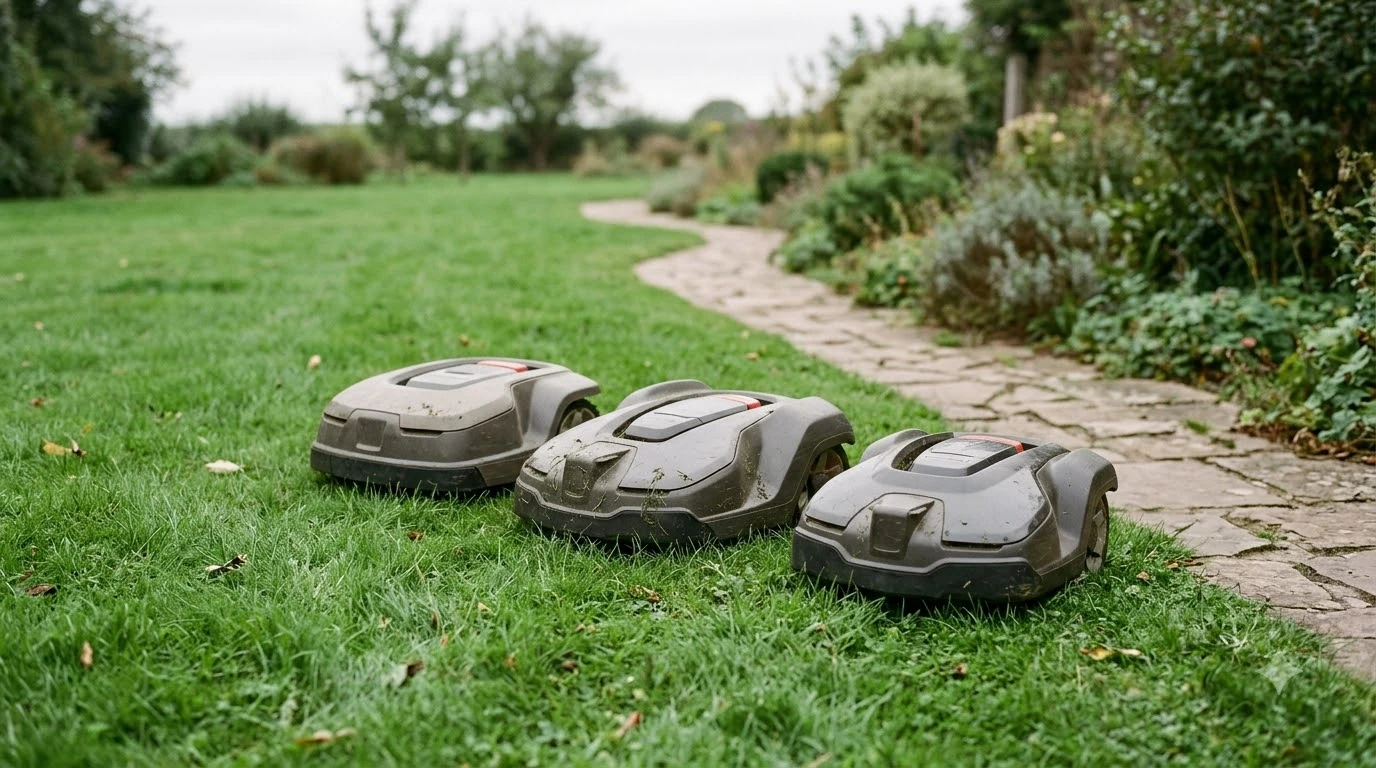

Knowing how to cut an overgrown lawn before using a robot mower comes down to two steps: trim the tallest grass first, then mow in several short sessions until the grass falls inside the robot’s cutting range.
Lower the height over several sessions, and remove no more than about a third of the grass height at each pass. Those two habits make up most of how to cut an overgrown lawn before using a robot mower without stressing the turf.
The short answer
- Trim first: cut any grass above knee height down by about half with a string trimmer.
- Mow in sessions: remove no more than one-third of the grass height at each mowing.
- Wait between cuts: leave 2 to 5 days between sessions, depending on how fast the grass grows.
- Check the limit: hand the lawn to the robot only when it is under the mower’s maximum cutting height.
Check your robot’s maximum cutting height
Robot mowers have a maximum cutting height, and grass taller than that limit must come down before the robot can do useful work. The Ecovacs GOAT A3000 cuts no higher than 3.9 inches, and its cutting height adjusts from 1.2 to 3.6 inches in 0.4-inch steps, according to Ecovacs’ own guide. Other models have different limits, so check the spec sheet or manual for your mower before you start, and see the best mowing height for a robot-mowed lawn for the height to hold afterward.
Our reading is that the maximum height in the manual matters more than the lowest setting. A robot set to its highest blade position can still miss grass that is above its limit, and that is the number to compare when you are shopping for a robot mower for tall grass.
How to cut an overgrown lawn before using a robot mower: trim first
Start with a string trimmer or line trimmer on any grass above knee height, cutting it down by about half. Husqvarna advises this because a mower pushed through long grass can stop, and its motor can overheat. A standard mower can help only if its deck sits high enough to clear the grass without bogging down.
- Walk the area. Look for toys, stones, and other hidden objects before you trim, since they can damage the trimmer.
- Trim the tallest patches. Cut anything above knee height down by about half, working across the lawn rather than in one strip.
- Let the lawn rest. Husqvarna suggests waiting 2 to 4 days before the next cut.
- Trim the edges. A line trimmer also reaches the borders around beds and paths that a mower cannot, so finish those areas at the same time.
The one-third rule still applies
Never remove more than one-third of the grass height in one mowing. Clemson extension calls this a good rule of thumb, and it gives a simple example: a lawn kept at 2 inches should be mowed when it reaches about 3 inches. Cutting off more than one-third at once can stop the roots from growing, so the rule protects the lawn as well as the look of it. Taking too much in one pass is also how lawns get scalped, as explained in what happens if you cut grass too short. Keeping to the rule is central to how to cut an overgrown lawn before using a robot mower.
| Target height | Mow when the grass reaches | Source |
|---|---|---|
| 2 inches | About 3 inches | Clemson Extension |
| 2.5 inches | About 3.5 inches | University of Kentucky Extension |
The University of Kentucky Extension gives a slightly wider range, saying the rule of thumb is to remove one-third to one-half of the grass height at any one time. Husqvarna aims for about half on the first cut of an overgrown lawn. Our reading is to aim for one-third on most passes and to accept up to half only on the first pass through very tall grass. Clemson also advises mowing turf that is under stress from heat, drought, or shade at a higher setting.
Tall grass: raise the deck first
If the grass has become excessively tall, raise the mowing height first, then lower it over several mowings. The University of Kentucky Extension says to raise the height so you do not cut too much grass at once, then mow every two to three days while gradually lowering the mower to the height you want.
- Raise the height. Set the mower to its highest setting that still trims the grass. For a robot, use the highest setting that stays under its maximum cutting height.
- Mow every two to three days. Each pass takes a little more off while staying inside the one-third rule.
- Lower the height gradually. Step the setting down after each pass until it reaches the level you want the robot to hold.
Husqvarna’s example follows the same pattern. After the first trim it aims for a second cut at about 6 inches, then a mower finish at about 4 inches. Our reading is that these figures come from a manufacturer example rather than a fixed rule, so use them as a rough guide and check the grass height yourself before each pass.
Build a session schedule
When planning how to cut an overgrown lawn before using a robot mower, remember that the gap between sessions depends on how fast the grass grows, and the sources do not agree on one number. Husqvarna’s example reaches the mower finish about 8 days after the first cut, while the other sources cluster around 2 to 5 days between sessions.
| Source | Gap between sessions | What it says |
|---|---|---|
| Husqvarna (first cuts) | 2 to 4 days, then about 8 days to the mower finish | Second cut to about 6 inches, finish at about 4 inches |
| Husqvarna (ongoing) | 4 to 5 days | Reduce the height by one-third each time |
| Ecovacs | 3 to 5 days | Lower the height gradually over several sessions |
| University of Kentucky Extension | 2 to 3 days | Raise the height first, then lower it gradually |
Ongoing care matters too. Husqvarna advises changing the mowing direction each session so the blades grow straight, and watering the lawn thoroughly after finishing so it can rest. Ecovacs suggests mowing about once a week during the growing season, and every two weeks when growth slows.
Ecovacs notes that grass usually takes one to two weeks to grow back after mowing, so a lawn cut hard needs a longer rest between passes. Once the grass is near the height you want, Husqvarna says the robot can finish the trim and then keep the lawn maintained through the year, and when to start and stop robot mowing each year covers the seasonal timing. Our reading is to start the robot’s normal schedule only when the grass is near its usual height, not on the first day the grass fits under the limit.
Clear clippings and debris
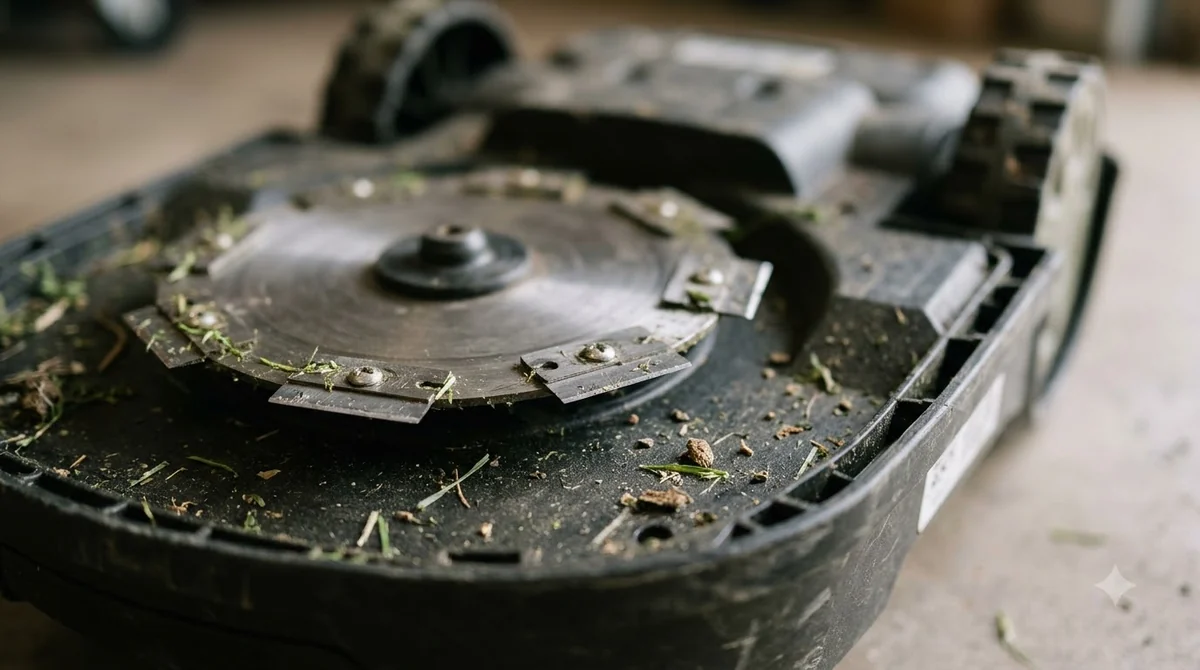
Walk the yard before every session, and rake or bag the first clippings because Ecovacs says they are often too thick for mulching with a robot mower. Clumps left on the lawn can smother the grass underneath, so clear them before the robot runs. Clearing debris is a simple habit, but it matters in how to cut an overgrown lawn before using a robot mower, because the first cuts are the ones most likely to hit hidden objects.
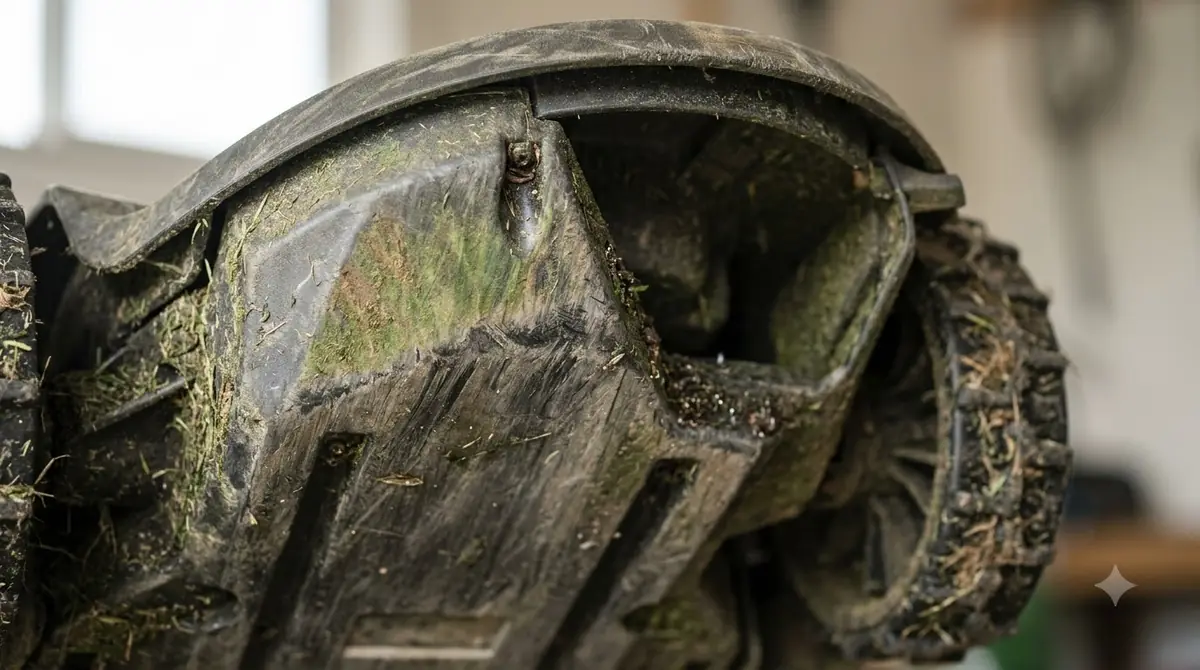
- Remove large debris and sharp objects: they can damage the blades or hurt someone.
- Check for small animals: look through tall grass before you cut it.
- Choose a dry day: wet grass forms clumps that a mower struggles to cut cleanly, which is also why running a robot mower on wet grass is best avoided.
- Bag or compost the first pass: use a compost pile or your municipal yard waste service.
- Follow local rules on burning: do not burn clippings unless your local rules allow it.
Frequently asked questions
Can a robot mower cut very tall grass on its own?
Usually not in one pass. Ecovacs says the GOAT A3000 cuts no higher than 3.9 inches, so grass above that height needs a string trimmer first. Check the maximum cutting height for your own model before you start, because limits differ between brands and models.
How long does it take to bring an overgrown lawn into range?
It depends on how tall the grass is and how fast it grows, so learning how to cut an overgrown lawn before using a robot mower is a matter of patience. The sources space sessions about 2 to 5 days apart, so a lawn that needs several cuts can take a few weeks. Ecovacs adds that grass usually takes one to two weeks to grow back after each mowing.
Is it bad to mow wet grass?
Wet grass tends to clump, and clumps can cling to the cutting system and smother the grass below. Ecovacs recommends choosing a dry day. Dry grass is easier to cut cleanly, so waiting a day or two after rain is a practical choice.
What if the grass is too long for a mower to cut?
Stop and cut the area by hand with a string trimmer. Husqvarna warns that a mower can stop and its motor can overheat in very long grass, so do not push a mower through it. Trim the tallest patches first, then return to the mower once the grass is shorter.
Sources
- Clemson HGIC mowing guidance (Clemson University): the one-third rule, the worked height example, and mowing stressed turf higher.
- Mowing grass for best results (University of Kentucky Extension): raising the height first and mowing every two to three days.
- How to cut an overgrown lawn (Husqvarna, manufacturer): the first cut, the line trimmer threshold, and the session gaps.
- How to cut an overgrown lawn (Ecovacs, manufacturer): the GOAT A3000 height limit, debris checks, dry-day advice, and clippings.
 Up next7 min readBy YardRobot Lawn Mower for 45 Percent Slope: What to Check Before You BuyUpdated Nov 11, 2026
 8 min readBy YardBest Robot Mower for a Mobile Home Lot: What to Check Before You BuyUpdated Nov 11, 2026
 8 min readBy YardBest Robot Mower for a Duplex Yard: What to Check Before You BuyUpdated Nov 11, 2026
 10 min readBy YardCan a Robot Mower Cut St. Augustine Grass?Updated Nov 11, 2026
 9 min readBy YardWhat Happens If You Cut Grass Too Short?Updated Nov 11, 2026
 10 min readBy YardWhen to Mow New Sod: First Cut Height and Root TestUpdated Nov 11, 2026