
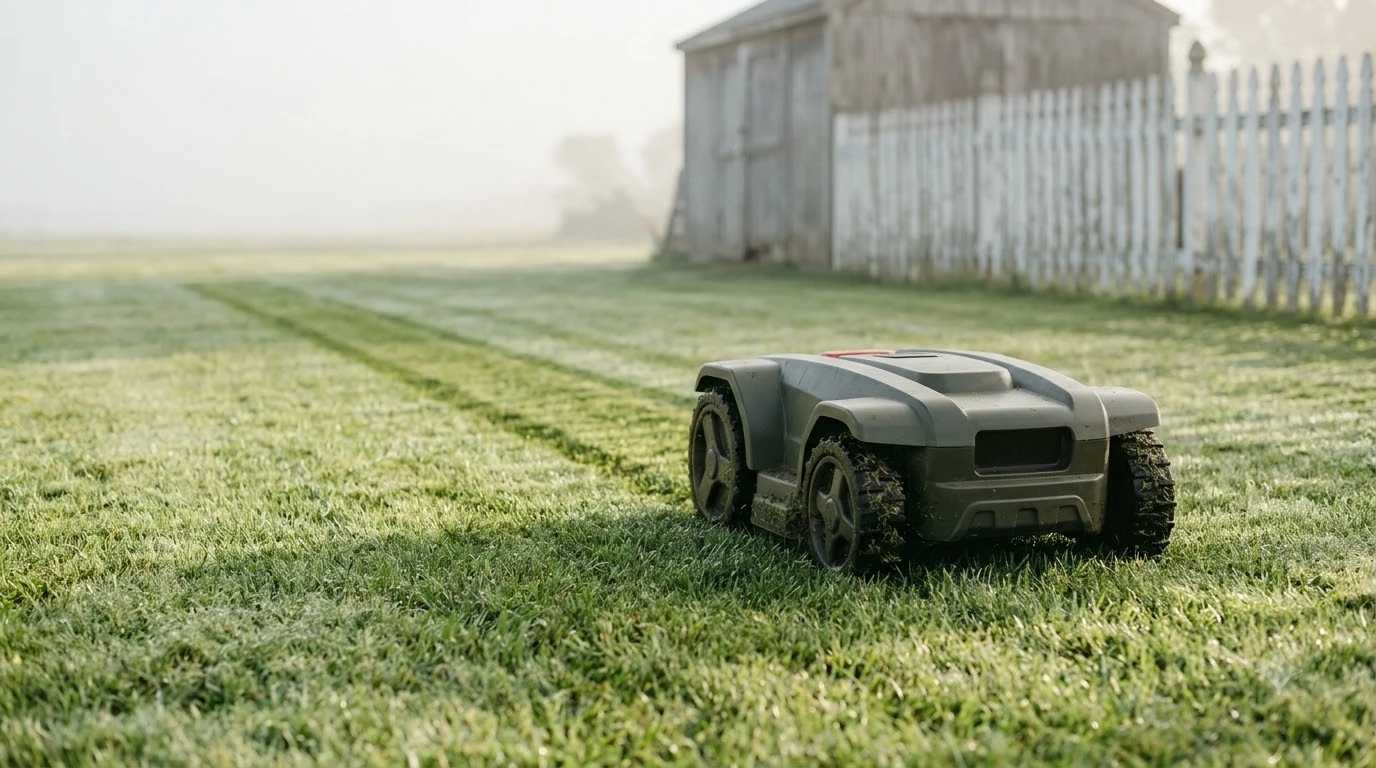

The best lidar robot lawn mower 2026 is the one whose slope rating, coverage and weather behavior match your lawn. LiDAR mowers scan their surroundings with laser pulses, so they do not depend only on satellite signals. As of November 2026, the independent sources we found do not rank LiDAR models against each other.
The short answer
- LiDAR maps the yard with laser pulses, so positioning does not rely only on satellites.
- Weak spots: heavy fog, strong rain or water on the sensor can scatter the laser pulses.
- Slope: common robot mowers handle about 25 to 35 percent, while all-wheel-drive models may reach 45 to 80 percent.
- Before you buy: check the positioning method, the slope rating, the weather behavior and how the sensor gets cleaned.
Brand claims about shade performance come from the manufacturers themselves. The independent sources we read do not test those claims, so the checklist below sticks to limits that the sources state.
How a LiDAR mower maps your yard
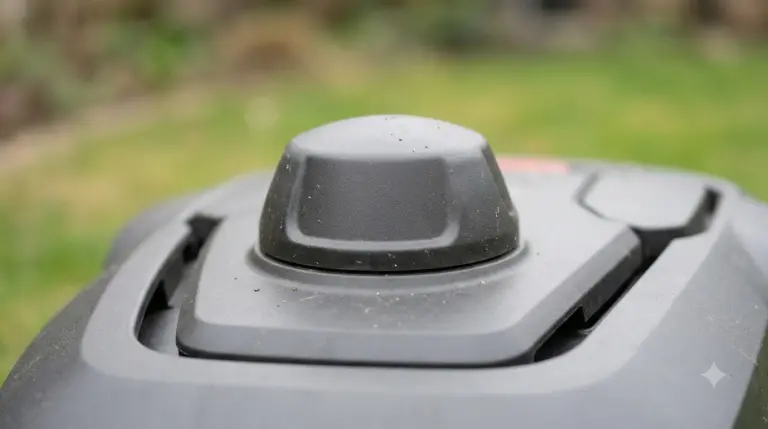
A LiDAR mower sends out laser pulses, times how long each one takes to return, and builds a three-dimensional map of the lawn. According to RESIDENT, the sensor sits on top of the unit and rotates to scan the full 360 degree surroundings. That map is what the mower uses to find its way around the yard.
Setup starts with a guided mapping pass. According to RESIDENT’s article on LiDAR mowers, the robot either follows you around the perimeter or is driven around the edge in manual mode. The article describes virtual exclusion zones that need no physical change to the property, which you set in the app.
Mammotion’s blog describes LiDAR as offering excellent relative accuracy for nearby objects, but it says LiDAR lacks global positioning on its own. In practice, LiDAR knows the shape of your yard well, but it does not place that yard on a satellite map by itself.
Where LiDAR is weaker: fog, rain and dirt
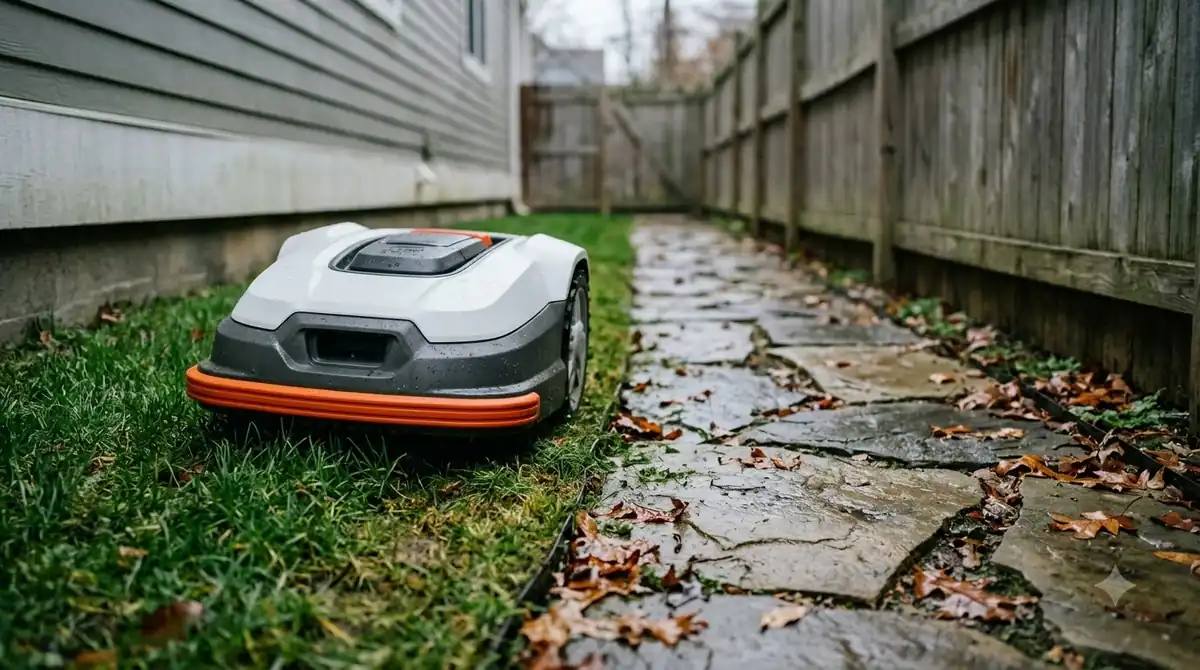
Heavy fog, strong rain or water droplets on the sensor can scatter the laser pulses, and many LiDAR models return to the charger until conditions improve. For the best lidar robot lawn mower 2026 in a wet climate, this is the limit to check first. Anker’s guide to LiDAR robot lawn mowers makes both points. The guide does not give a threshold for when a mower decides to stop, so you cannot predict the exact weather limit from the spec sheet. Our page on whether robot lawn mowers can mow in the rain covers the general rain question.
Sensor care is the other practical issue. The same guide says sensors may need cleaning after rain, mud or dust. We recommend a quick wipe-down after storms or muddy weather, so the sensor keeps reading the yard cleanly. If a sensor error does appear, a troubleshooting page on a Dreame robot mower LiDAR error shows one example.
- Fog and heavy rain: may scatter the laser pulses and reduce reading accuracy.
- Water on the sensor: can have the same effect, so keep the lens dry and clean.
- Poor conditions: many models return to the charging station until the weather improves.
Heads up
The RESIDENT article does not cover rain, fog or weather limits, and the Mammotion blog makes no claim about rain or dark surfaces. Ask the maker how a specific model handles wet weather and dark mulch before you buy.
LiDAR vs RTK for yards with trees
For the best lidar robot lawn mower 2026 in a tree-heavy yard, one point matters first. LiDAR does not depend on satellite signals, while RTK positioning loses accuracy under tree canopy and near tall hedges or fences. RESIDENT’s article says GPS multipath under canopy reduces positioning accuracy. Mammotion’s comparison of AI vision, RTK and LiDAR says LiDAR performs consistently in shade, low light or under tree cover, but that is the brand’s own claim.
| Factor | LiDAR | RTK |
|---|---|---|
| Satellite dependence | Laser-based, does not rely only on satellites | Depends on satellite signal |
| Under tree cover | Brand claims consistent performance; no independent test found | GPS multipath reduces accuracy (RESIDENT) |
| Accuracy figure | Relative accuracy only; no global figure given by the brand | Centimeter-level accuracy (brand claim, Mammotion) |
The table shows a trade-off rather than a winner. LiDAR keeps working without satellite signal, but it cannot classify objects without vision support, according to Mammotion. RTK gives a precise position when the signal is clear, and its accuracy falls off when trees or structures block it. Wooded yards get more detail in LiDAR robot mower for a wooded lot, and VSLAM navigation on a robot mower covers the camera-based alternative.
Slope rating and coverage on the spec sheet
Common robot mowers handle about 25 to 35 percent slopes, while all-wheel-drive models may reach 45 to 80 percent. Anker gives these as general robot-mower figures, not figures for LiDAR models specifically, so read the rating on the model you are considering. Robot mower slope ratings explained covers the units.
Slope is often listed as a percentage, while some sellers use degrees. A 45 percent grade works out to roughly 24 degrees, so convert the number before you compare two listings. Check it against the steepest section of your lawn, not the average.
Coverage matters too. Measure your lawn in square meters, leave room for beds and paths, and check the per-charge figure as well as the total area. Our reading is that a mower that must recharge several times will take longer to finish a large lawn.
Best lidar robot lawn mower 2026: what to check before you buy
Before you buy the best lidar robot lawn mower 2026, check the positioning method, the slope rating, the weather behavior and the sensor care the maker expects. Each item below comes from a source above or is our reading.
- Positioning method. Confirm whether the model uses LiDAR alone, LiDAR with vision, or LiDAR with RTK. Mammotion, for example, markets its YUKA mini 2 as 360 degree LiDAR plus AI vision.
- Slope in your units. Compare the percent rating with the steepest part of your lawn, and convert percent to degrees when a listing uses only one unit.
- Weather behavior. Ask the maker how the sensor handles rain, fog and dew, and whether the mower returns to the charger in poor conditions.
- Sensor maintenance. Plan to clean the sensor after rain, mud or dust, as Anker’s guide advises.
- Dark surfaces and shade claims. Ask for independent test results on shade and dark mulch, because the sources we read do not cover dark surfaces.
LiDAR is not automatically the better choice. If your yard is open with few trees, the trade-offs in the table may matter less. If you have dense shade, LiDAR deserves a closer look, but ask the maker for test data under your kind of canopy. Anker says LiDAR mowers are generally more expensive than RTK or basic vision models, so confirm the claims before you pay the premium.

Frequently asked questions
Does a LiDAR robot mower need an RTK antenna?
Not necessarily. LiDAR positioning is based on laser scanning, so the mower does not need a satellite base station to map the yard. Some LiDAR models add other methods, though. Mammotion, for example, markets its YUKA mini 2 as 360 degree LiDAR plus AI vision, so check the spec sheet for the exact positioning method.
Does LiDAR work under trees?
For the best lidar robot lawn mower 2026 under heavy canopy, the sources are thin. Mammotion’s blog says LiDAR performs consistently under tree cover, but that is a brand claim. RESIDENT says GPS multipath under canopy reduces RTK accuracy. We did not find an independent test that compares the two under the same trees, so ask the maker for results under your kind of canopy.
Does rain affect a LiDAR mower?
Yes, according to Anker. Heavy fog, strong rain or water on the sensor may scatter the laser pulses, and many models return to the charger until conditions improve. Sensors may also need cleaning after rain, mud or dust, so plan a quick wipe-down after wet weather.
Are LiDAR mowers more expensive than RTK models?
Anker says LiDAR mowers are generally more expensive than RTK or basic vision-based models. The guide does not give prices, so compare current listings on the maker’s site and note the date you checked them.
Sources
- Anker, LiDAR Robot Lawn Mower guide (manufacturer guide): weather effects, sensor cleaning, general slope ranges, price comparison.
- Mammotion, AI vision vs RTK vs LiDAR (manufacturer blog): LiDAR shade claim, lack of global positioning, RTK accuracy claim.
- RESIDENT, LiDAR in Robot Lawn Mowers: What It Is and Why It Matters (magazine article): guided mapping pass, virtual exclusion zones, RTK multipath under canopy.
 Up next7 min readBest Robot MowersBest Robot Lawn Mower for Ohio Lawns: What to Check Before You BuyUpdated Nov 11, 2026
 10 min readBest Robot MowersBest No Base Station Robot Lawn Mower 2026: What to Check Before You BuyUpdated Nov 13, 2026
 8 min readBest Robot MowersBest Robot Lawn Mower for 1 Acre: What to Check Before You BuyUpdated Nov 13, 2026
 7 min readBest Robot MowersBest Robot Lawn Mower for Georgia Lawns: What to Check Before You BuyUpdated Nov 13, 2026
 9 min readBest Robot MowersBest Robot Lawn Mower for the Midwest Lawns: What to Check Before You BuyUpdated Nov 13, 2026
 9 min readBest Robot MowersBest Satellite Navigation Robot Lawn Mower 2026: What to Check Before You BuyUpdated Nov 11, 2026