
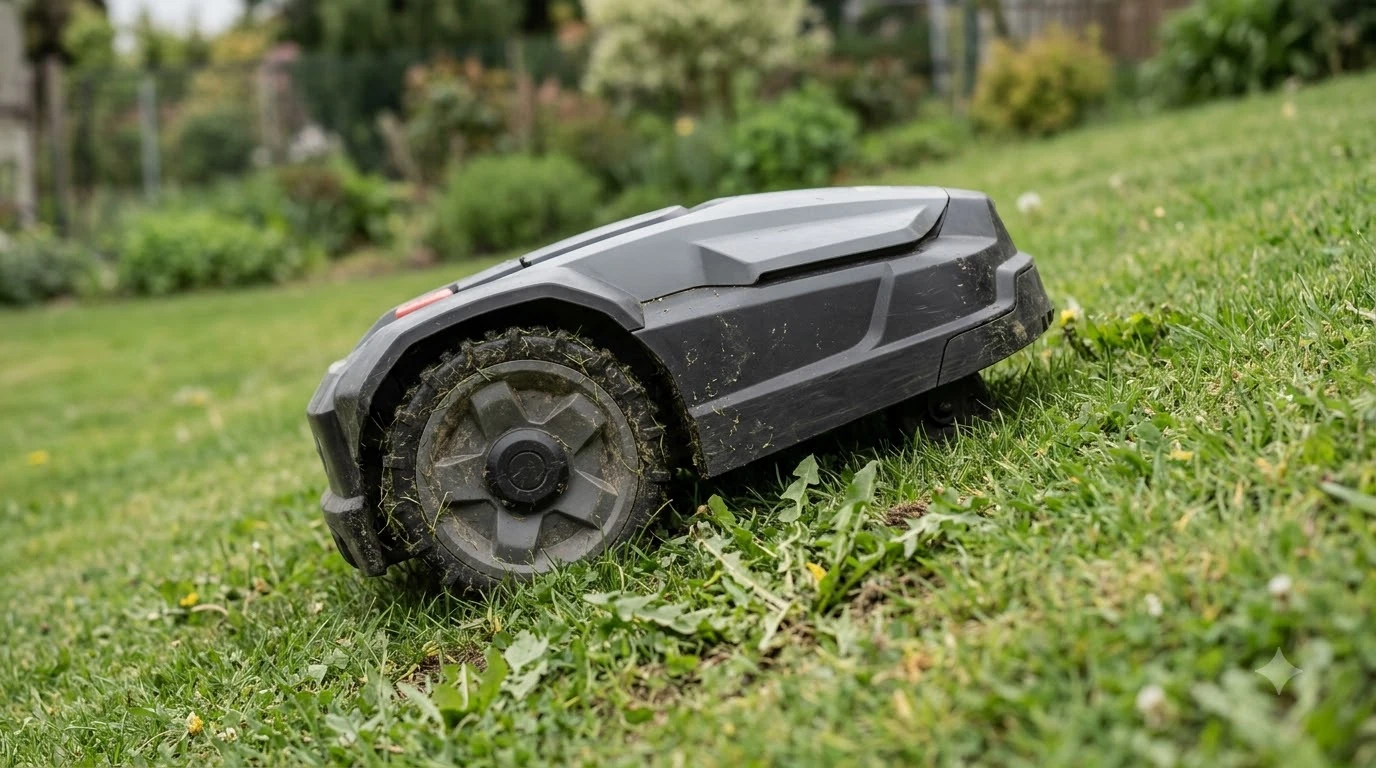

The best robot lawn mower for Colorado lawns is the one that fits your grass type, heat tolerance and cutting height, because no single model suits every Colorado yard. Colorado State University Extension sorts local lawns into cool-season grass that needs regular water and warm-season native grass that can stay green for weeks without it. Start with your grass, then compare mowers.
The short answer
- Grass first. Bluegrass, ryegrass and tall fescue are cool-season; buffalograss and blue grama are warm-season natives.
- Height. CSU gives 2.5 to 3 inches as the preferred cutting height, with 2 inches as the minimum.
- Heat limit. One Husqvarna Automower support page lists 0 to 50 °C (32 to 122 °F) for operation and 0 to 45 °C for charging.
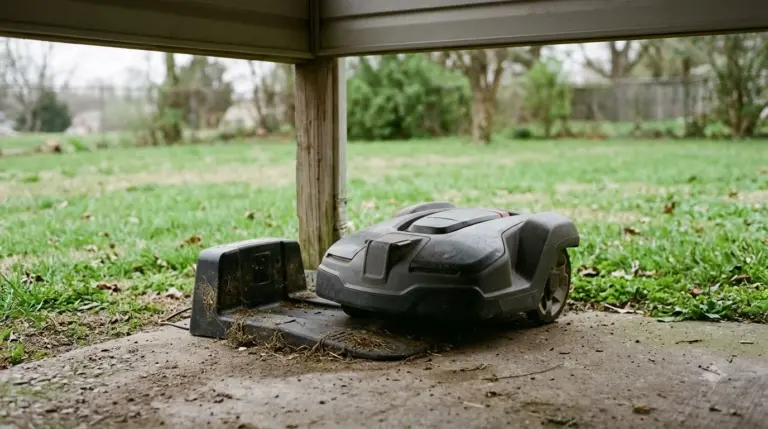
- Charging spot. Keep the charging station out of direct sun to limit overheating.
Best robot lawn mower for Colorado lawns starts with your grass
Colorado lawns usually fall into two groups, and the best robot lawn mower for Colorado lawns depends on which group you have. CSU Extension’s turf table marks bluegrass, ryegrass, tall fescue and fine fescue as cool-season species. It marks buffalograss, blue grama and bermudagrass as warm-season species, and gives them a different fertilizer schedule.
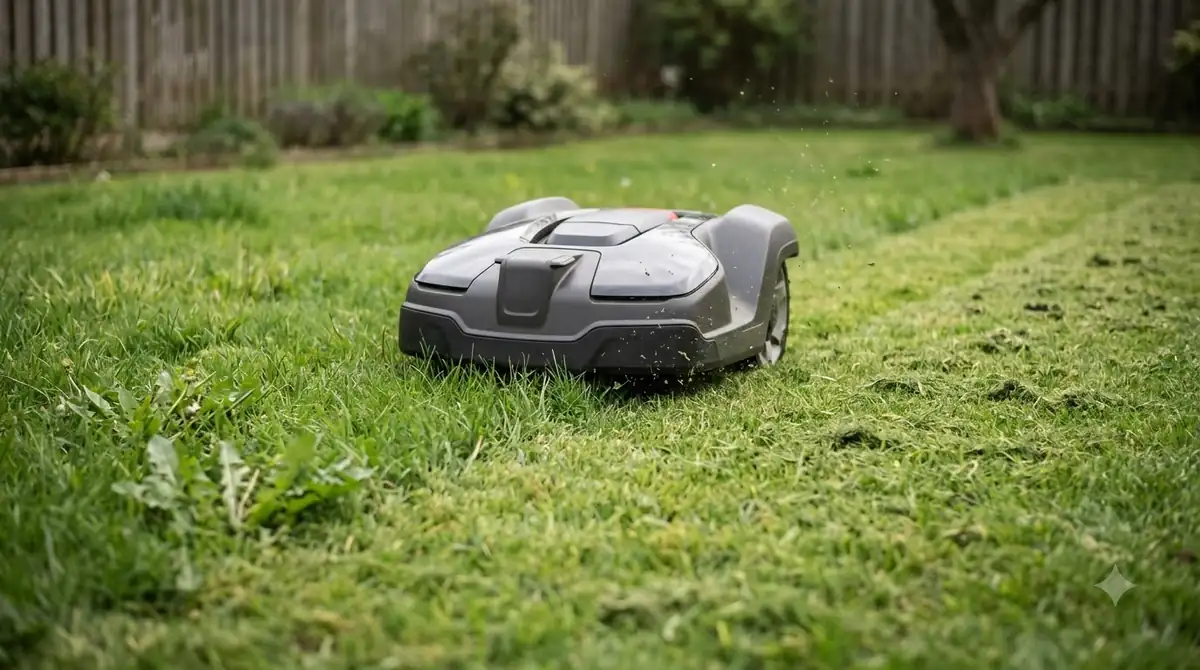
Buffalograss and blue grama are the warm-season natives most owners weigh when they pick a mower for a low-water yard. CSU says they can stay green for weeks without water, even in the hottest summer weather. Tall fescue is different. CSU notes that turf-type tall fescue may do well on less water than bluegrass, but it often needs about as much water as bluegrass to look good.
The grass type sets the rhythm. A bluegrass lawn grows fast in spring and needs frequent cuts. A buffalograss lawn grows slowly and can wait longer between cuts.
Heat, dry wind and the mower’s temperature limits
Colorado summers are often hot, dry and windy, and that is where a robot mower’s own limits matter. Husqvarna’s Automower support article lists an operating range of 0 to 50 °C (32 to 122 °F), a storage range of 0 to 50 °C, and a charging range of 0 to 45 °C (32 to 113 °F). According to the same page, the mower will not start when the temperature falls outside these limits. See also what temperature a robot mower can work in.
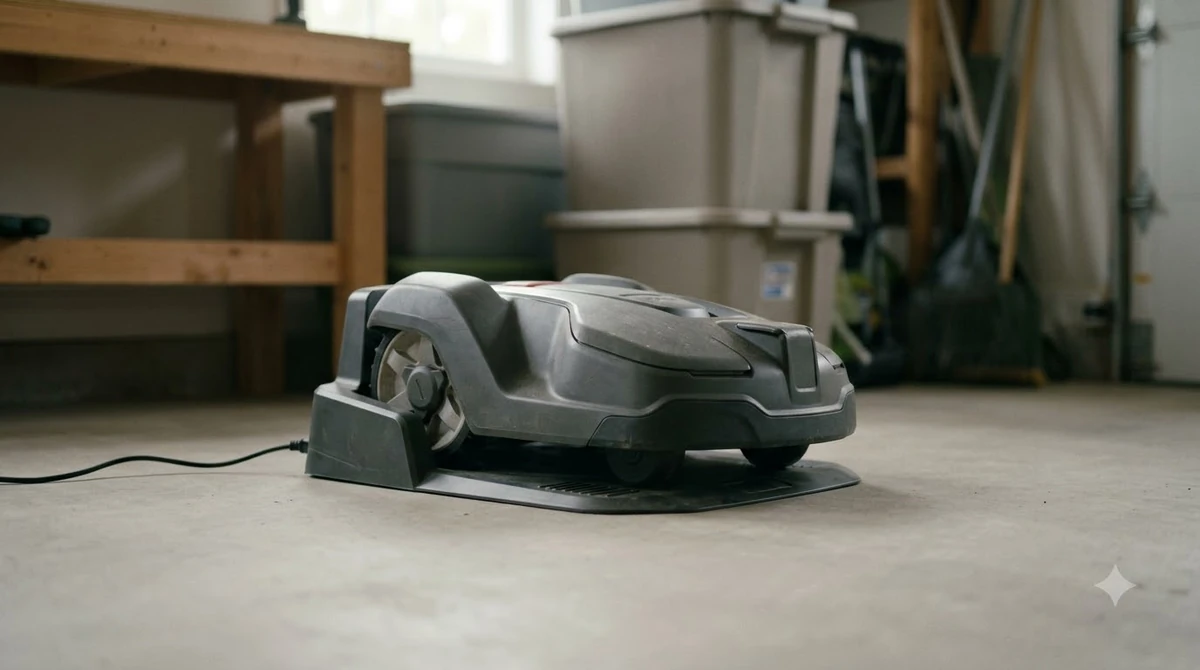
The support article also says the mower’s temperature reading comes from a sensor inside the chassis, so it can differ a little from the air around the mower. For the charging station, Husqvarna advises a spot with protection from the sun, so the mower does not overheat while it charges.
Our reading is that anyone shopping for the best robot lawn mower for Colorado lawns should look up the mower’s own temperature spec in its manual, not assume a range from another brand. Check the number before you buy, and place the charging station in shade if the yard gets full sun all afternoon. For more on summer limits, see whether robot mowers work in hot weather.
Mowing height and the one-third rule
CSU Extension gives 2.5 to 3 inches as the preferred mowing height for all Colorado species, and 2 inches as the minimum. Cutting below 2 inches can reduce drought and heat tolerance by encouraging shallow roots. Mowing too high can also encourage insects, disease and weeds, so the height has to fit the grass.
The one-third rule is the check that matters most when you shortlist a mower. CSU says to remove no more than one-third of the grass height in a single mowing. For a lawn kept at 2 inches, the mower should cut when the grass reaches about 3 inches. A mower that runs too often on a low setting can break that rule even without a person touching it.
How often the mower should run depends on the grass. CSU says bluegrass or fescue may need mowing every three to four days in spring, and every seven to 10 days when growth slows from heat, drought or cold. Buffalograss may need mowing every 10 to 20 days, depending on how much it is watered. Our guide to how often to mow Kentucky bluegrass has more.
How watering changes the mowing schedule
Watering and mowing are linked, and that matters for a robot mower, because water drives growth. CSU says watering should depend on grass species, grass health, soil and weather, not on a fixed number of days. A healthy bluegrass or ryegrass lawn may need up to 2.25 inches of water per week in hot, dry, windy summer weather, and less when it is cool or cloudy.
Soil changes the amount. On clay soil, CSU says 1 to 1 1/2 inches of water moistens a 6-inch root zone. On sandy soil, about 1/2 inch does the same job. Sandy lawns need smaller, more frequent watering, while clay lawns take less often but in larger amounts.
Shade and wind also matter. CSU notes that shade and wind protection reduce water needs, but mature trees and shrubs may need extra water where their roots compete with the grass. For a yard with big trees, the mower still has to follow the grass, not a calendar. Our guide to how to mow in heat and drought has more.
Thatch, soil and aeration on Colorado lawns
Thatch builds up fastest on Kentucky bluegrass, bentgrass and fine fescue, according to CSU. The Extension says thatch slows once the layer goes past 1/2 inch, and it is rarely a problem on tall fescue or buffalograss. A robot mower cuts often, so it can leave fine clippings, but thatch is still mostly a question of grass species and aeration.
CSU gives late August to late September as the best time to aerate a lawn. CSU notes that reduced soil oxygen from compaction leads to shallower rooting, and shallow roots make a lawn less tolerant of heat and dry spells.
What to check before you buy the best robot lawn mower for Colorado lawns
Use this checklist with the manual for the exact model when you shortlist models. Our reading is that these four points cover most of the Colorado-specific risk.
| Check | What to look for | Why it matters in Colorado |
|---|---|---|
| Operating temperature | Range in the manual, in °C and °F | Hot dry afternoons can push a mower past its limit |
| Cutting height | Range that reaches 2.5 to 3 inches | CSU’s preferred height for all Colorado species |
| Charging station | A spot that gets shade | Husqvarna advises protection from the sun while charging |
| Mowing schedule | Ability to set days or intervals by season | Bluegrass and buffalograss need very different cutting rhythms |
Start with the grass you have, then match a mower to it. The best robot lawn mower for Colorado lawns keeps 2.5 to 3 inches, runs on a schedule you can change, and charges in shade. If your lawn is buffalograss, a slower schedule is usually enough.
Frequently asked questions
Can a robot mower cut buffalograss in Colorado?
Yes. CSU Extension says buffalograss can be mowed to 2 to 3 inches but also does well unmowed. It may need mowing every 10 to 20 days, depending on how much it is watered.
How high should a robot mower cut Colorado bluegrass?
CSU gives 2.5 to 3 inches as the preferred height for bluegrass and the other Colorado species, with 2 inches as the minimum. Cutting below 2 inches can reduce drought and heat tolerance.
Do robot mowers need shade in hot weather?
The charging station should have protection from the sun, according to Husqvarna. The mower will not start outside its published temperature limits, so check the spec for your model before buying.
Does dry weather change how often a robot mower should run?
Yes. CSU says cool-season grass may need mowing every seven to 10 days when growth slows from heat, drought or cold, instead of every three to four days in spring. The mowing schedule should follow the grass, not the calendar.
Sources
- Lawn Care Basics (Colorado State University Extension): mowing height, one-third rule, mowing frequency, watering and thatch.
- Basic Turf Management (Colorado State University Extension): cool-season and warm-season species, soil and water notes, aeration timing.
- At what temperature can I use, charge and store my Automower robotic lawn mower? (Husqvarna support): operating, storage and charging temperature ranges and charging station shade.
 Up next8 min readBest Robot MowersWhich Gardena Robot Mower Should I Buy? Limits to Check FirstUpdated Nov 13, 2026
 8 min readBest Robot MowersBest Robot Lawn Mower for North Carolina Lawns: What to Check FirstUpdated Nov 13, 2026
 8 min readBest Robot MowersBest Robot Lawn Mower for California Lawns: What to Check FirstUpdated Nov 13, 2026
 7 min readBest Robot MowersBest Robot Lawn Mower for 1/4 Acre: What to Check FirstUpdated Nov 11, 2026
 8 min readBest Robot MowersBest Robot Lawn Mower for Arizona Lawns: What to Check FirstUpdated Nov 11, 2026
 7 min readBest Robot MowersWhich Dreame Robot Mower Should I Buy? Limits to Check FirstUpdated Nov 13, 2026