
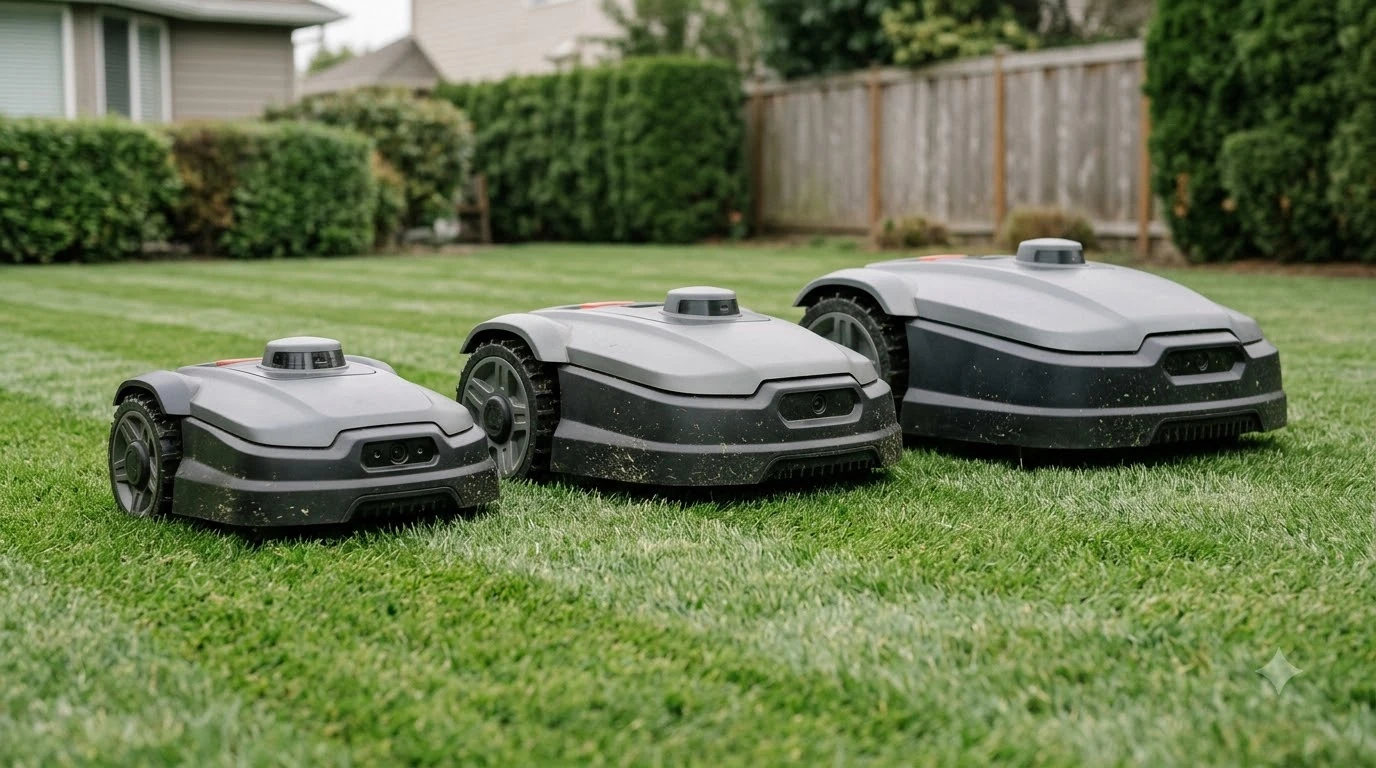

The best robot lawn mower for Arizona lawns is the one whose temperature limits, cutting height range and charging setup fit your grass and your summer. No single model fits every yard in the state, as of November 2026. Heat, watering habits and the grass you have usually matter more than the brand name on the box.
The short answer
- Temperature first: Husqvarna lists an operating range of 0 to 50 C (32 to 122 F) for its Automower, so check that against your summer highs.
- Match the height to the grass: University of Arizona extension gives 1 to 2 inch base heights for common bermudagrass.
- Mow often: at least once a week for non-overseeded bermudagrass, per the same extension office.
- Shade the charger: a shaded charging spot keeps the mower from overheating while it charges.
- Do not mow wet turf: extension guidance says wet grass balls up and clogs the blades and deck.
Best robot lawn mower for Arizona lawns: why the choice changes
Most Arizona lawns sit on low-elevation desert soil and are dominated by heat-tolerant warm-season grasses. The University of Arizona extension notes that common bermudagrass is the grass best adapted to the heat and water needs of Phoenix, Tucson, Casa Grande and Yuma. That makes bermudagrass the most common lawn type to plan around in the state.
Heat changes the mowing routine. Extension guidance for the desert advises raising the height of cut when possible during summer heat stress, because taller grass grows more roots and shades the base of the shoots. The best robot lawn mower for Arizona lawns runs on a schedule that fits this pattern, not one that fights it. Our tips for mowing a lawn in heat and drought cover the same idea for any mower.
Check temperature limits first
Operating temperature is the first spec to check on any best robot lawn mower for Arizona lawns, because a mower outside its range may not run at all. Husqvarna’s support article for its Automower gives these limits for a typical model, and our explainer on robot mowers in hot weather covers the general picture. Confirm the numbers in your own model’s manual, since ratings differ between brands and generations.
| Attribute | Husqvarna Automower limit |
|---|---|
| Operating temperature | 0 to 50 C (32 to 122 F); the mower will not start outside these limits |
| Charging temperature | 0 to 45 C (32 to 113 F) |
| Storage temperature | 0 to 50 C (32 to 122 F) |
Compare these ranges with the hottest days in your area, not the average, because the mower has to run through peak heat. Husqvarna also advises placing the charging station where the sun does not reach it, so the mower does not overheat while it charges. Our reading is that a shaded spot on the north side of a fence or building is the practical choice in Arizona; see also our pick of a garage for a robot mower in hot sun.
Heads up
The rating is a limit, not a target. Our reading is that long, hot midday runs are a poor fit even for a mower rated to 50 C, so schedule runs in the cooler parts of the day where possible.
Mowing height for Arizona grass
For common bermudagrass, the University of Arizona gives three base heights and a mow-at height for each, depending on how intensively you maintain the lawn. The mow-at height is the point where you should cut, and it is set by the base height times 1.33.
| Grass | Base height options | Mow-at heights |
|---|---|---|
| Common bermudagrass | 1 in (high maintenance), 1 1/2 in (intermediate), 2 in (low) | 1 1/3 in, 2 in, 2 2/3 in |
| St. Augustinegrass | 1 in (high), 1 3/4 in (intermediate), 2 1/2 in (low) | 1 1/3 in, 2 1/3 in, 3 1/3 in |
| Zoysiagrass | 1 in (high), 1 1/2 in (intermediate), 2 in (low) | 1 1/3 in, 2 in, 2 2/3 in |
Choosing among the three base heights comes down to how much care the lawn gets. The extension guidance favors the higher settings in summer heat, because taller leaves shade the soil and support root growth. Our reading is that a new or stressed lawn should start at the upper end of its range, then move down one step at a time as the grass recovers.
The extension publication also warns that fine-textured varieties that tolerate a cut of 1 inch or shorter must be mowed more often. That matters for a robot mower, because it can only lower the blade to the minimum setting its model allows. Check the lowest cutting height on the mower’s spec sheet against the base height your grass needs.
Mowing frequency and watering
The best robot lawn mower for Arizona lawns is usually one that runs often in small amounts. The University of Arizona low-elevation guide says non-overseeded bermudagrass should be mowed at least once per week. The one-third rule still applies: never remove more than one-third of the lawn height in one mowing.
- Summer watering: the guide recommends deep and infrequent irrigation every three days, rather than several short sessions each day; our guide to a robot mower for a drought-prone area covers water-saving yards.
- Winter watering: if rain is lacking, irrigate about once a month from December to February to keep the roots moist.
- Overseeded lawns: winter overseeding changes the mowing schedule, so check the extension guidance for that case before setting the mower’s schedule.
Our reading is that the best robot lawn mower for Arizona lawns on a daily or every-other-day schedule can keep the one-third rule without any measuring, which is the main reason it fits fast-growing bermudagrass.
Shade, charging spots and wet grass
Shade helps both the grass and the machine. The extension office advises letting the grass grow taller under trees or on the north side of a building, where heat and light stress are lower (our guide to a robot mower for desert landscaping with a small lawn covers small desert lawns). Those are the same areas where a robot mower may cut less often, so a robot mower in Arizona should run on a zone schedule rather than one schedule for the whole yard.
Wet turf is a separate problem. Extension guidance says to avoid mowing wet grass, because it balls up and clogs the blades and deck. Desert storms can soak a lawn quickly, so any robot mower that runs on a timer should be paused or skipped after heavy rain.
Heads up
We did not find a source that covers monsoon-season storms, lightning, or blowing dust for robot mowers. Before you rely on any robot mower through monsoon season, read the manufacturer’s weather and protection section.
What to check before you buy
Use this checklist to narrow down the best robot lawn mower for Arizona lawns before you compare features. Each item comes from a source above, so you can verify it in the manual.
- Temperature range. Confirm the operating, charging and storage limits cover your hottest days.
- Cutting height range. Make sure the lowest setting matches your grass’s base height, such as 1 to 2 inches for common bermudagrass.
- Charging spot. Plan a shaded charging station, and check the cable run from it to the lawn.
- Watering and mowing plan. Weekly mowing and the one-third rule set the minimum run schedule.
- Weather protection. Look for rain and weather handling in the manual, since no source we read covers monsoon conditions.
Frequently asked questions
Can a robot mower handle Arizona summer heat?
It depends on the model. The best robot lawn mower for Arizona lawns is the one whose rating covers your hottest days. Husqvarna’s Automower lists an operating range of 0 to 50 C (32 to 122 F), so check that rating against your hottest days. Also shade the charging station, since charging is rated to 45 C at most.
What mowing height suits Arizona grass?
For common bermudagrass, the University of Arizona lists base heights of 1, 1 1/2 and 2 inches. Pick a base height that suits your maintenance level, then set the mow-at height at 1.33 times that base.
How often should a desert lawn be mowed?
For non-overseeded bermudagrass, the University of Arizona recommends mowing at least once per week. Water deeply every three days in summer, and keep the one-third rule in mind on every run.
Does monsoon rain matter for a robot mower?
Yes, mainly because wet grass clogs the blades and deck, so extension guidance advises against mowing wet turf. We did not find a source on monsoon storms specifically, so check the manufacturer’s weather protection rating.
Sources
- Husqvarna support: temperature limits for charging and storing Automower (manufacturer): operating, charging and storage ranges.
- Mowing Turfgrasses in the Desert, AZ1681 (University of Arizona Extension): base heights, mow-at heights, shade, wet turf and the one-third rule.
- University of Arizona low-elevation lawn guide (University of Arizona Extension): bermudagrass adaptation, weekly mowing and irrigation schedule.
 Up next8 min readBest Robot MowersBest Robot Mower for Arizona Desert Lawns: Heat, Dock and HeightUpdated Nov 14, 2026
 8 min readBest Robot MowersBest Robot Lawn Mower for North Carolina Lawns: What to Check FirstUpdated Nov 13, 2026
 8 min readBest Robot MowersWhich Gardena Robot Mower Should I Buy? Limits to Check FirstUpdated Nov 13, 2026
 7 min readBest Robot MowersWhich Dreame Robot Mower Should I Buy? Limits to Check FirstUpdated Nov 13, 2026
 7 min readBest Robot MowersBest Robot Lawn Mower for Colorado Lawns: What to Check FirstUpdated Nov 11, 2026
 8 min readBest Robot MowersBest Robot Lawn Mower for California Lawns: What to Check FirstUpdated Nov 13, 2026