
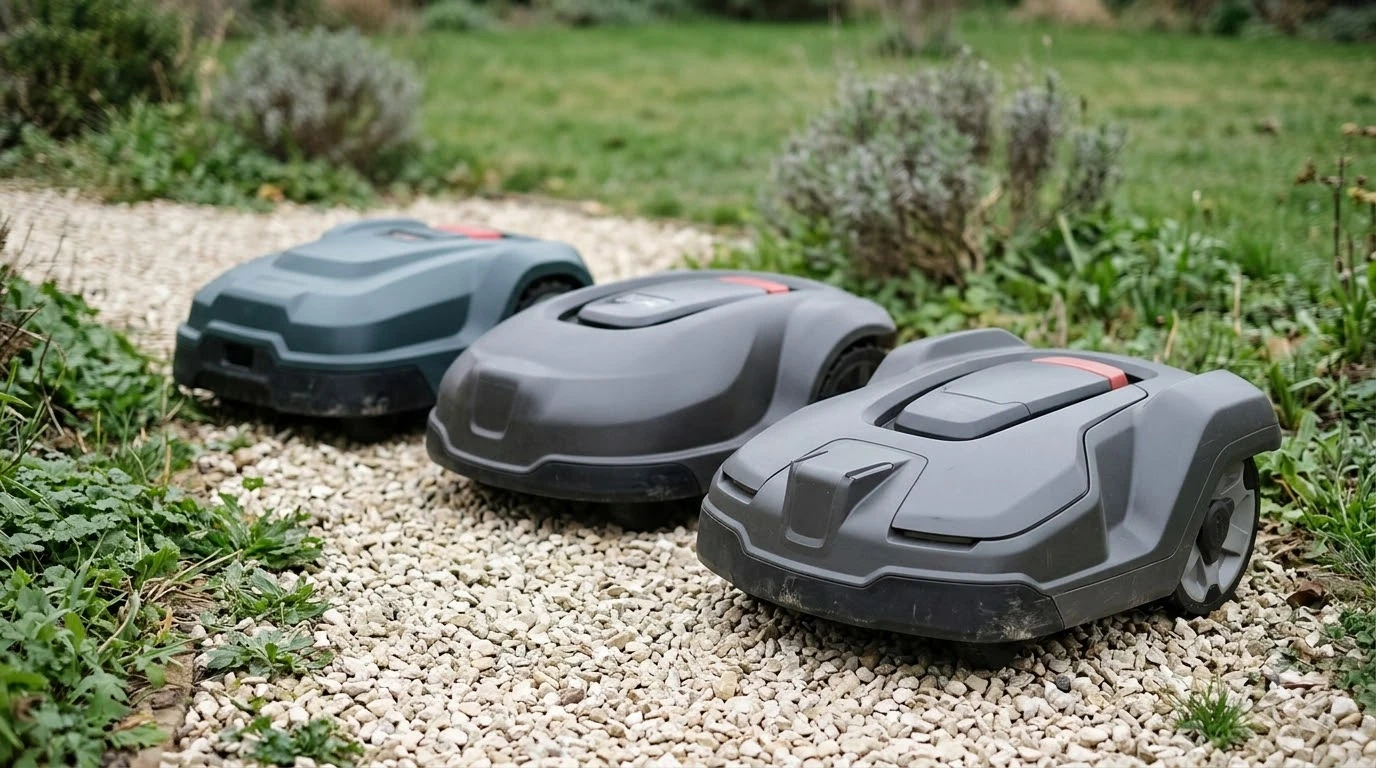

The best robot mower for Arizona desert lawns is one that can handle intense heat and dry, dusty ground, with a charging station kept out of the sun and a cutting height set for the grass you actually have. Desert lawns face a different set of problems from lawns in humid climates. The air is dry, the sun is harsh, and the soil can be sandy or dusty. This guide explains what to check in a robot mower, how to set the cutting height and schedule, and how to protect the dock and the lawn through the hottest months.
The short answer
- Check the heat limits first: Husqvarna’s example lists operation to 50 C (122 F) and charging to 45 C (113 F), with the mower refusing to start outside its range.
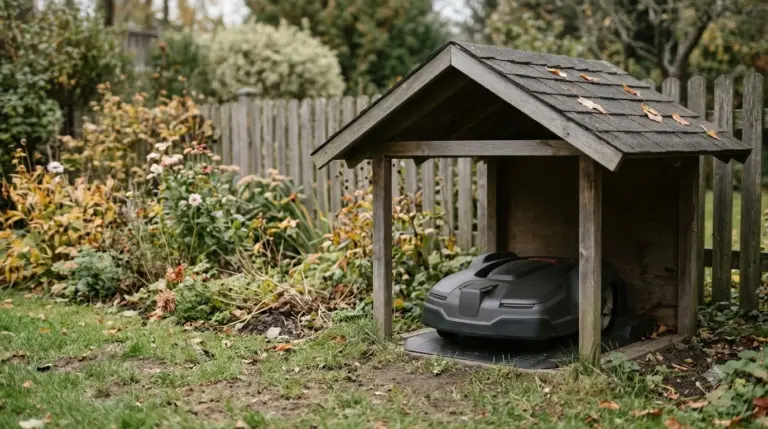
- Shade the dock: the charging station is the part most exposed to desert sun, so give it shade where you can.
- Match the height to the grass: University of Arizona Extension links mowing height directly to how often the turf needs mowing.
- Cut higher in summer: our reading of the extension guidance is that a taller cut through the hot months keeps the turf denser and easier to water.
Why a desert lawn is a different job
A desert lawn does not fail for the same reasons a lawn in a humid state does. The problem is less about rain and more about heat, low humidity, and the cost of water. Turf in a low-elevation Arizona yard often needs to be kept within a narrow range of height and frequency, because the grass is working hard to stay alive through the summer. Desert yards behave differently from humid regions, yet the Southeast regional robot mower overview shows which heat-related checks are shared. A broader statewide comparison is in the robot mower picks for Arizona lawns.
Our reading is that a robot mower suits this kind of lawn well when it keeps the cut steady and small. Frequent light cutting is easier on a stressed lawn than a heavy trim once a week, but the mower still has to work inside its heat limits.
Check the heat limits before you buy
Desert summers push a robot mower to the top of its operating range, so the published limits matter more here than almost anywhere else. Husqvarna’s support article gives an example of how these limits work. Its Automower is rated to operate from 0 to 50 C (32 to 122 F), with storage over the same range and charging from 0 to 45 C (32 to 113 F). The company says the mower will not start when the temperature is outside its operating range. Warm, dry inland valleys in California raise similar temperature questions, so see the California robot mower picks.
Those are one brand’s specifications, not a standard for all models. Compare the operating and charging figures side by side, and check the manual for the exact model you are considering. A mower that sits idle on the hottest afternoons is safe for the machine, but the lawn still needs its cuts, so plan the schedule around the cooler hours.
Heads up
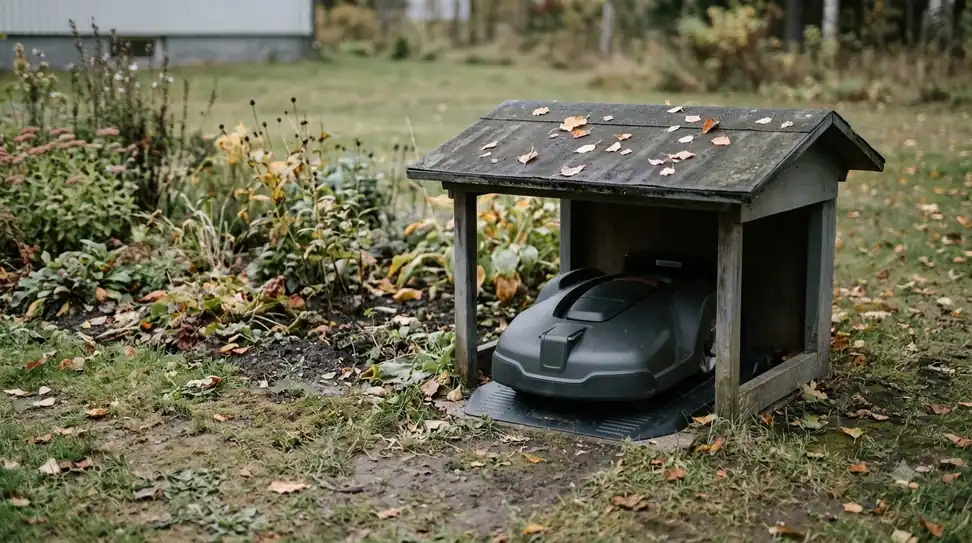
Desert afternoons can push a dock well above the air temperature when it sits in full sun. Shade is the simplest protection, and it matters more to the charging system than the mower’s cutting ability.
Set the cutting height for desert turf
The University of Arizona Extension guidance on mowing in the desert links cutting height to frequency. Turf that is cut short grows upright faster, so it needs mowing sooner than taller turf. Fine-textured varieties that tolerate close cutting, around 1 inch or shorter, need more frequent mowing than wider, upright grasses. Desert turf needs a deliberate cut, so read about setting an adjustable cutting height before you buy.
The same guidance says that cutting within a variety’s tolerance range tends to make the turf denser, with narrower blades. For a robot mower, that means picking a height the grass can tolerate and keeping it there, instead of dropping the cut each time the lawn looks ragged.
- Identify the grass. Find out whether the lawn is a fine-textured or a wider-bladed variety before you set the height.
- Set a steady height. Choose a height within the grass’s tolerance range and keep it there through the summer.
- Adjust the frequency. Shorter cuts mean more frequent runs, so set the schedule to match the height.
- Check after the hot spell. If the turf looks thin or stressed, raise the height rather than cutting harder.
Schedule the mower around the heat and the water
Desert lawns depend on irrigation, and the mowing schedule should work with the watering schedule rather than against it. Our reading is that a higher cut in summer gives the lawn more shade on the soil, so it tends to need watering less often than a low-cut lawn. Nevada faces similar heat and water limits, so Nevada lawn picks for robot mowers are a useful parallel.
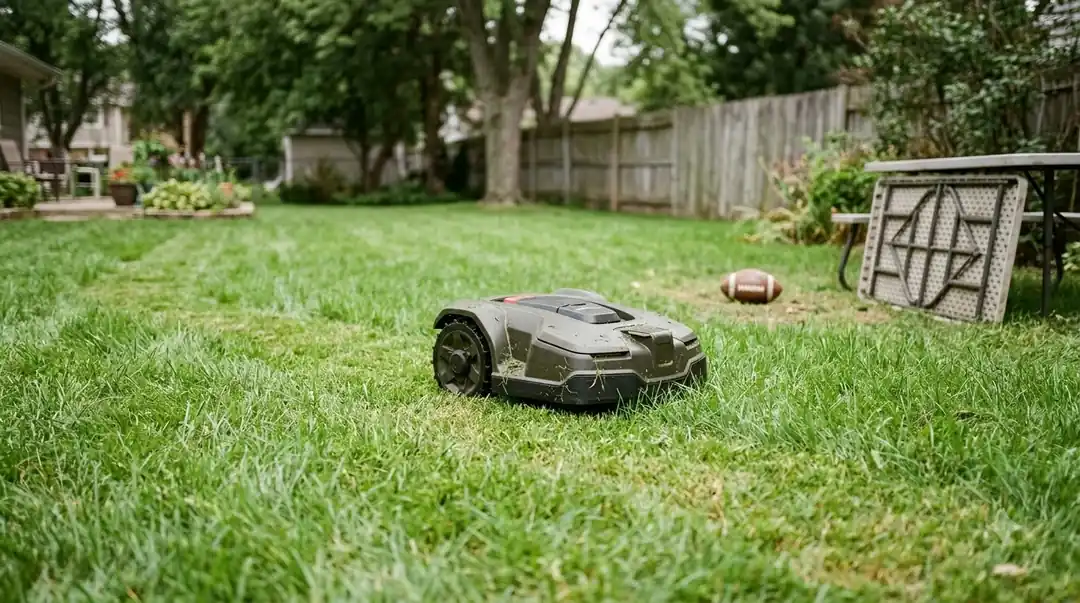
Run the mower in the cooler hours, early morning or late evening, and avoid cutting on the hottest afternoons. Keep the schedule consistent, since a predictable routine is easier on the grass than an irregular one. Our reading is that the best schedule is the one that keeps the cut steady without asking the mower to run in the worst heat.
Dust, sand, and the cut
Dust is a common complaint on desert lawns, and it can blow onto the mower and the dock. Keep the dock clear of loose sand, and check the blades and the underside of the mower after a windy day. A clean mower runs more reliably, and clean contacts charge more consistently.
Clippings are less of a concern when the mower cuts at the right height and frequency, because small clippings break down quickly. Excess clumps are the bigger issue, since they shade and weaken the grass. Frequent light cutting keeps clippings small and reduces clumping.
Best robot mower for Arizona desert lawns: what to check before you buy
Use this table to compare the features that matter most on a desert lawn. Start with the heat limits and the charging options, then look at the height range and scheduling flexibility. For a high-elevation, dry-climate contrast with the desert, read the Colorado robot mower picks in the neighboring region.
| Feature | Why it matters on a desert lawn | What to look for |
|---|---|---|
| Operating temperature range | Sets the hottest day the mower will run | A published upper limit above your typical summer highs |
| Charging temperature range | The dock is the most exposed part in full sun | A published charging range and advice on sun protection |
| Cutting height range | Summer turf needs a taller cut | A height range that goes high enough for a summer cut |
| Scheduling | Lets you mow in the cooler hours | Flexible timers and an easy way to pause on hot days |
Our recommendation is to confirm the temperature limits and the dock placement before comparing other features. A mower that handles the heat and keeps its charging system cool will serve a desert lawn better than one with a higher headline spec.
Related reads: Parking the mower out of direct sun is easier with a garage to shade the mower between runs.
Frequently asked questions
Can a robot mower work on a desert lawn in summer?
It depends on the model. Check the published operating and charging ranges, and plan the schedule for the cooler hours so the mower stays inside its limits.
Should the charging station be in the shade?
Yes, where possible. Husqvarna advises protecting the charging station from the sun, which matters a great deal in a desert yard.
Should I cut the lawn higher in an Arizona summer?
Generally, a steady height within the grass’s tolerance range is the goal. University of Arizona Extension links mowing height to frequency and notes that cutting within the tolerance range keeps turf denser.
How often does a desert robot mower need to run?
It depends on the height you set. Shorter cuts need more frequent runs, and taller cuts need fewer. Set the schedule to match the grass, not a fixed number of days.
Sources
- At what temperature can I use, charge and store my Automower (Husqvarna): used for the operating and charging temperature ranges and the advice to protect the charging station from the sun.
- Mowing Turfgrasses in the Desert (University of Arizona Extension): used for the link between mowing height and frequency, the note on fine-textured varieties, and the denser turf from cutting within the tolerance range.
 Up next8 min readBest Robot MowersBest Robot Lawn Mower for Arizona Lawns: What to Check FirstUpdated Nov 11, 2026
 10 min readBest Robot MowersBest Robot Mower With Auto Return to Dock: How to Choose One That Docks ReliablyUpdated Nov 11, 2026
 9 min readBest Robot MowersBest Robot Mower for Oklahoma Lawns: Grass and Heat GuideUpdated Nov 18, 2026
 7 min readBest Robot MowersBest Robot Mower for Florida Summers: Rain, Heat and ScheduleUpdated Nov 17, 2026
 8 min readBest Robot MowersBest Robot Mower for Nevada Lawns: Heat and Water GuideUpdated Nov 18, 2026
 7 min readBest Robot MowersBest Robot Mower for Texas Heat: Charger, Schedule and LimitsUpdated Nov 17, 2026