
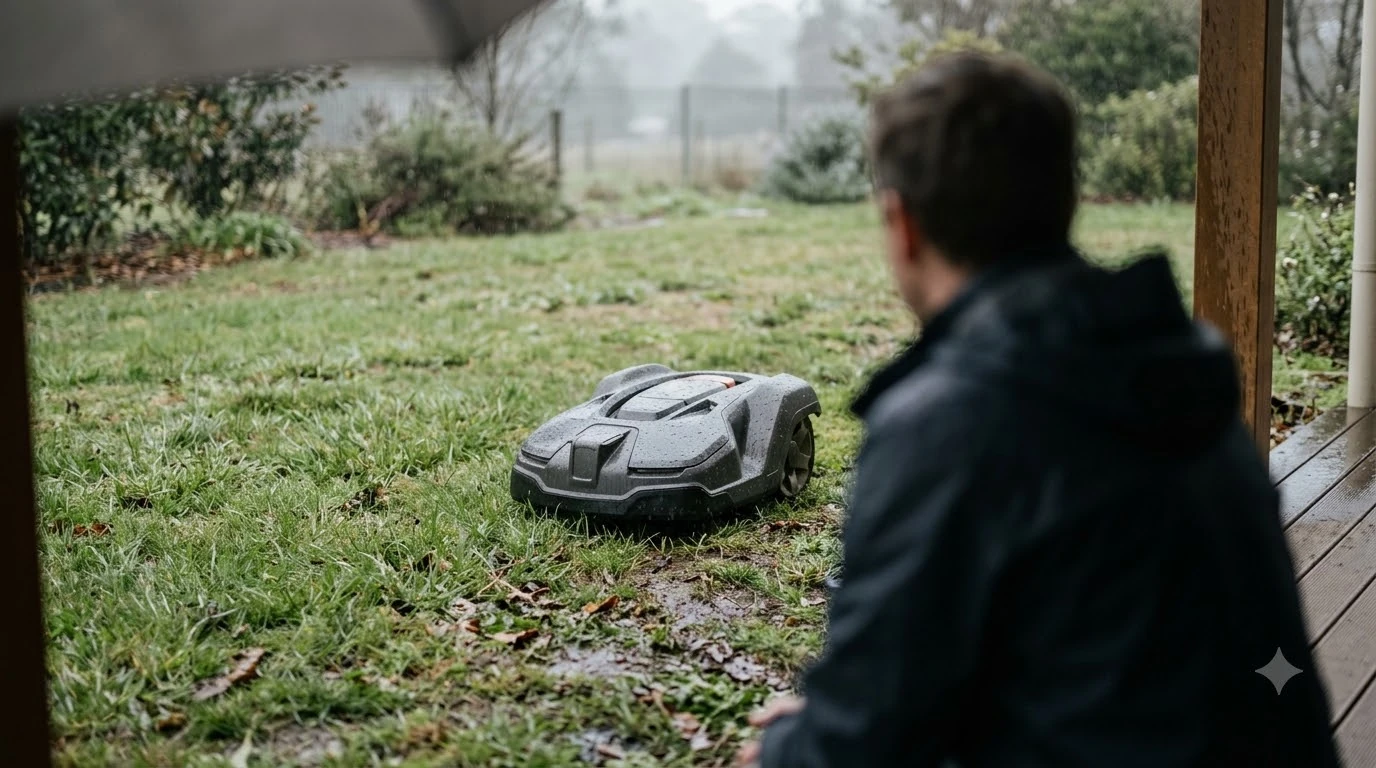

The best robot mower for Florida summers is one that is rated for rain and humidity, with a schedule that works around the afternoon storms and a lawn that stays healthy through the rainy season. Florida summers bring daily heat, high humidity, and short, heavy downpours that can arrive without much warning. A robot mower handles this well in some ways, since many are built to run in wet conditions, but the schedule and the lawn still need planning. This guide explains what to check, how to time the cuts, and how to handle wet grass.
The short answer
- Look for weather-resistant builds: Husqvarna says many robot mowers are certified to operate in the rain and are lightweight enough to avoid compacting soil.
- Plan around storms: a rain or wet-grass schedule keeps the mower from running into a downpour and leaving ruts.
- Wait after heavy rain: Husqvarna recommends waiting about 24 hours after rain before mowing, if the grass is still damp.
- Check the heat limits too: operating and charging ranges still matter on the hottest days.
Why Florida summers are different
Florida summers are not as dry as Texas or Arizona, and that changes what matters for a robot mower. The main challenges are humidity, frequent rain, and grass that grows quickly when it is wet and warm. Instead of a single hot dry spell, you get a steady rhythm of sun, a sudden storm, and then damp grass. Florida summers are one extreme of the region, and the robot mower picks across the Southeast show how other states compare. For a year-round view beyond summer, read the Florida lawn picks for robot mowers.
Our reading is that the biggest decisions are the schedule and the wire layout, not the mower’s headline features. A mower that runs right after a storm can leave wheel ruts and clumps, while a lawn that is cut on a regular, predictable schedule usually looks better through the season.
Choose a mower built for wet conditions
Many robot mowers are designed to keep working in damp weather, and Husqvarna’s guidance on wet grass says robot mowers handle wet conditions better than other types. The company notes that many robot mowers are certified to operate in the rain and are usually lightweight enough not to cause soil compaction. Because they cut less grass at once, they also tear and clump wet grass less than a larger machine would. Afternoon storms are routine, so shortlist rain-tolerant robot mowers before you compare other specs.
That does not mean every model is equal in a storm. Look for a weather-resistant build and check the manual for the rain rating. Husqvarna describes its Automower models as built to withstand the elements so the schedule stays on track in wet weather, which is the kind of claim to verify against the model you are buying.
Set the schedule around the afternoon rain
Florida thunderstorms often build in the afternoon, so the schedule matters more than the mower. Setting the cuts for the morning gives the lawn time to dry before the storms arrive, and it keeps the mower off the grass while it is most likely to be soaked. A related page on the humid southern summers mowing guide explains how to space runs through heat and humidity.
- Start in the morning. Schedule the main cut before the usual afternoon build-up.
- Allow a drying window. If it rained overnight, let the lawn dry before the mower runs. Husqvarna suggests waiting about 24 hours after rain for mowing in general.
- Check the grass. Wet grass that feels clumpy, or footprints that leave marks in the soil, are signs to wait.
- Pause on storm days. If a storm is forecast, let the mower rest and resume once the grass has dried.
Handle wet grass and ruts
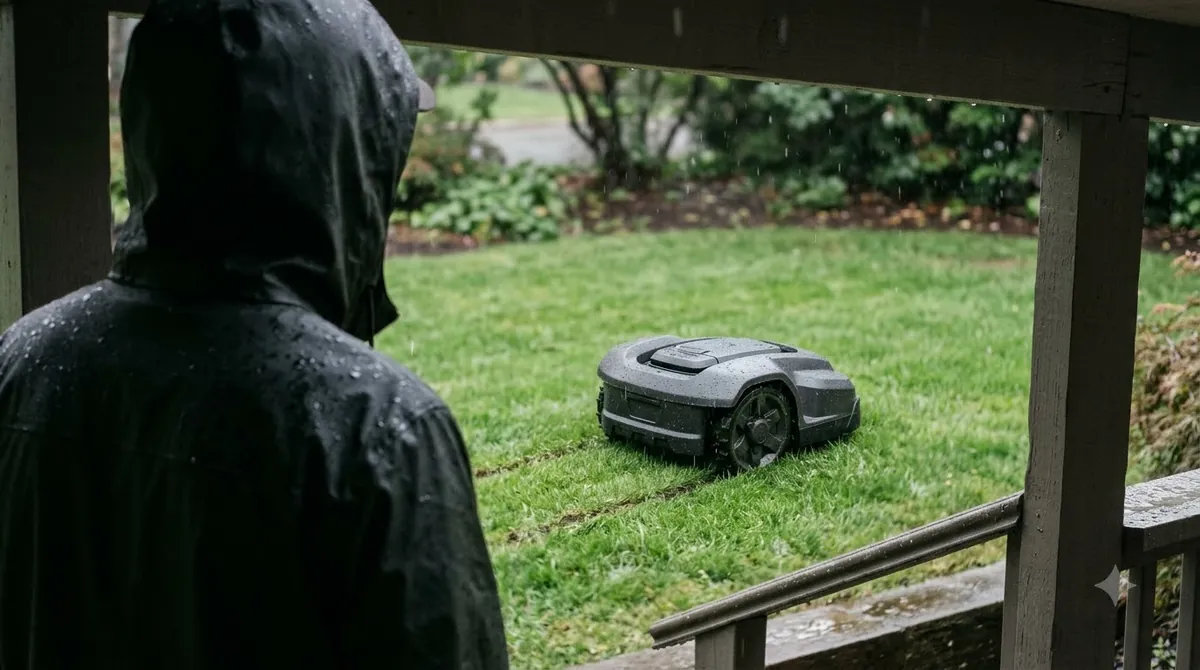
Wet grass is where most of the trouble starts. Husqvarna’s guidance says mowing wet grass can cause uneven cuts, clogging, soil compaction, wheel ruts, and the spread of disease. A robot mower reduces some of that risk because it is light and cuts small amounts, but the lawn is still exposed on damp days. Summer growth can leave thick, wet turf, so check mowers that handle thick, wet grass before buying.
Avoid sharp turns on wet ground, since they are one of the main causes of ruts in damp soil. If the wire layout forces the mower into tight corners, consider widening the turns or moving the charging station so the mower can leave and return on a gentler path. Rake up clumped clippings if they build up after a storm.

Keep the charging station and the heat in check
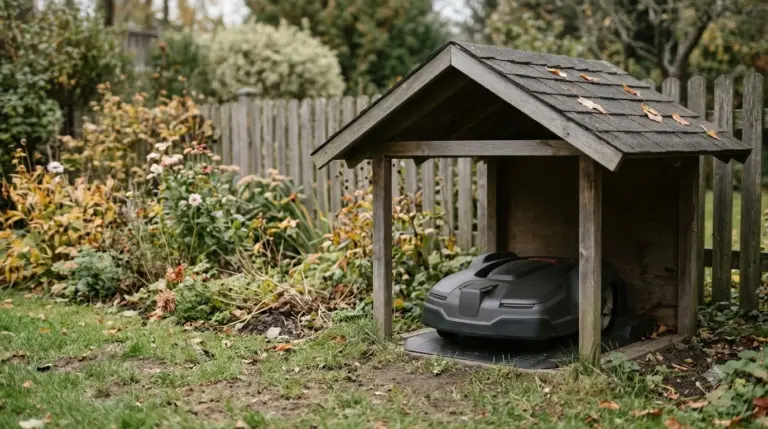
Florida heat is less extreme than the desert, but it still reaches the upper part of a robot mower’s range on many summer afternoons. Husqvarna’s example lists operation from 0 to 50 C (32 to 122 F), charging from 0 to 45 C (32 to 113 F), and advises protecting the charging station from the sun. A dock in full sun on a Florida afternoon can get hot, so a bit of shade or a covered spot helps. Heat affects battery health, so see the guidance on battery charge level for storage before leaving the mower idle.
Keep the dock clean and dry, and check that the contacts are not corroded after a wet season. A dock that stays damp for long periods is more likely to have charging problems, so check it after storms.
Best robot mower for Florida summers: what to check before you buy
Use this table to compare the features that matter most in a humid, wet climate. Start with the rain rating and the schedule options, then look at the heat limits and the cutting features. Lightning is a regular concern, which the thunderstorm-ready robot mower options page addresses.
| Feature | Why it matters in Florida summers | What to look for |
|---|---|---|
| Rain rating | Frequent storms and wet grass | A published rain or weather-resistant rating |
| Scheduling | Lets you mow before the afternoon storms | Flexible timers and an easy way to pause on storm days |
| Weight | Light machines are less likely to compact wet soil | A lightweight build for a wet-season lawn |
| Temperature limits | Hot afternoons and dock heat | A published operating and charging range that covers your heat |
Our recommendation is to confirm the rain rating and the schedule options before comparing features. A model that handles a wet lawn well and offers a simple way to pause is more useful in Florida than one with a larger headline spec.
Frequently asked questions
Can a robot mower run in the rain in Florida?
Many are certified to operate in the rain, but the rating differs by model. Check the manual for the model you are considering, and avoid running it during a heavy storm.
How long should I wait to mow after rain?
Husqvarna’s guidance on mowing in general is to wait about 24 hours after rain, and to check that the grass is not damp or clumpy before cutting.
Does wet grass hurt a robot mower?
Wet grass is more of a lawn problem than a mower problem. It can cause uneven cuts, ruts, and clumps. A lightweight robot mower reduces the risk, but the schedule still matters.
Should the charging station be in the shade in Florida?
Where possible, yes. Husqvarna advises protecting the charging station from the sun, which helps the mower stay within its charging range on hot afternoons.
Sources
- Can you mow wet grass (Husqvarna): used for the notes on robot mowers in wet conditions, the rain certification claim, the 24-hour wait after rain, and the risks of wet mowing.
- At what temperature can I use, charge and store my Automower (Husqvarna): used for the operating and charging temperature ranges and the advice to protect the charging station from the sun.
 Up next7 min readBest Robot MowersBest Robot Mower for Texas Heat: Charger, Schedule and LimitsUpdated Nov 17, 2026
 7 min readBest Robot MowersBest Robot Mower for Humid Southern SummersUpdated Nov 18, 2026
 7 min readBest Robot MowersBest Robot Lawn Mower for Florida Lawns: 6 ChecksUpdated Nov 11, 2026
 8 min readBest Robot MowersBest Robot Mower for Arizona Desert Lawns: Heat, Dock and HeightUpdated Nov 14, 2026
 9 min readBest Robot MowersBest Robot Mower for Oklahoma Lawns: Grass and Heat GuideUpdated Nov 18, 2026
 8 min readBest Robot MowersBest Robot Mower for Nevada Lawns: Heat and Water GuideUpdated Nov 18, 2026