
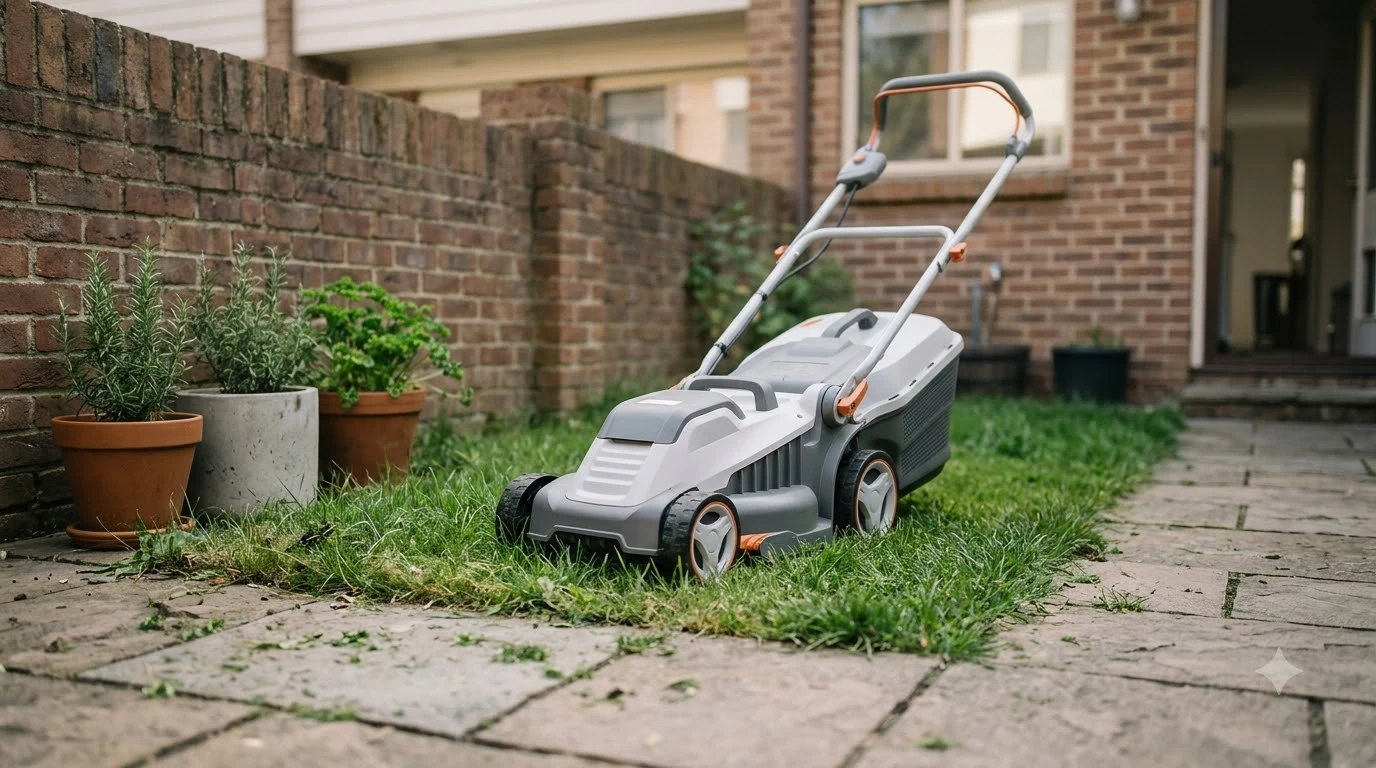

The best robot mower for humid southern summers is one you can set to a high cutting height and schedule for the cool part of the day: Texas A&M AgriLife Extension advises increasing mowing height during the warmer months so turf can withstand heat and other stress, and Iowa State Extension recommends mowing in the cool of the morning or evening. A robot mower can do both, but only if its height range and schedule are set up for the heat from the start.
The short answer
- Raise the height: Texas A&M says to mow higher in the warmer months, and the range of your mower should reach that high setting.
- Cut in the cool: Iowa State says to mow in the cool of the morning or evening and avoid midday mowing.
- One-third rule: remove no more than about one-third of the grass height in a single pass.
- Watch the runs: a robot that runs often can break the one-third rule, so set the schedule and height together.
- Check the base: the charging station should sit where shade and airflow keep it cool and dry.
Why humid southern summers change the mowing plan
Hot, humid weather stresses warm-season grass in two ways. Heat pushes the turf into a more upright, fast-growing habit, and humidity keeps the blades wet for longer, which makes the lawn slower to dry after a run. Texas A&M’s mowing guidance for warm-season turfgrasses notes that in summer, turfgrasses tend to have a more upright growth habit and should be mowed higher to compensate. Humid summers define the Southeast, so the Southeast lawn robot mower roundup gives the regional overview. Alabama is a good example of the humid pattern, so read the Alabama lawn picks for robot mowers.
That is the core of the problem for a robot mower. A machine that cuts on a steady schedule can keep the grass short through the hottest weeks, when the lawn most needs its leaf area. The first job is to set the height, and the second is to decide when the mower runs.

Best robot mower for humid southern summers: the cutting height
Texas A&M says to mow higher in the warmer months, and it lists drought and shade among the stresses to consider when choosing a height. Its warm-season guidance also gives a general rule that no more than one-third of the above-ground green tissue should be removed at any one time. The exact numbers depend on the grass, so check your variety in your state’s extension guidance before you set the mower. Heat and humidity drive the cutting height across the South, and a robot mower for Oklahoma lawns applies the same logic to a drier, windier state.
For a robot mower, the practical test is simple. Make sure the high end of the height range is comfortably above the height your grass will be in July, and that you can change the setting in the app without going to the mower. A model whose top setting is too low forces you to cut shorter than the heat allows.
Schedule the runs for the cool part of the day
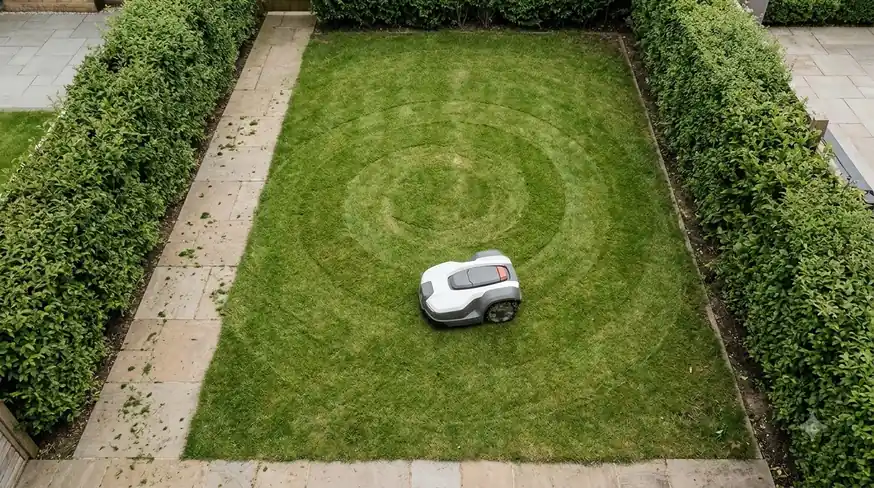
Iowa State Extension advises mowing in the cool of the morning or evening, and avoiding the midday heat that adds stress to turf. Robot mowers can be set to run in a time window, so the schedule is one of the most useful settings for a humid climate. Pick a window that ends well before the afternoon heat builds, and keep the runs out of the hottest hours.
Iowa State also ties mowing to grass height rather than to the calendar. Its example is a lawn kept at 3 inches that should be cut when it reaches 4.5 inches. A robot mower does not decide that for you. If the schedule runs every day, the mower may cut too often, and the one-third rule will be broken even at a high setting.
Frequency, the one-third rule and robot runs
The one-third rule matters more for a robot than for a push mower, because a robot cuts a little at a time, every day. That is the right pattern for keeping grass tidy, but in summer the amount removed per run should still be small. Our reading is that a robot set to run every day at a high height is a better fit than one set to run every other day at a low height. If you are new to robot mowing, start with starter-friendly robot mower picks.
If the grass is growing fast in humid weather, shorten the schedule gap rather than dropping the height. That keeps each cut within the one-third limit and avoids a sudden drop in leaf area.
Wet grass, shade and the charging station
Humidity means the lawn stays wet longer, especially under trees and near fences. Wet grass is harder on a machine and on the turf, so set the mower to skip runs after heavy rain or when the lawn is still soaked from a morning storm. Many lawns in the South have shade from mature trees, and shade thins turf over time, so the mower may need to spend longer in those patches. Another southern state with wet grass and shade is covered in the North Carolina lawn picks for robot mowers. Wet grass, shade and charging station placement matter in humid regions, and a guide to a robot mower for the Carolinas covers many of the same points.
The charging station is part of the summer setup too. Place it where it gets shade and airflow, and keep it off low, damp ground that stays wet after every storm. A station that sits in standing water is a poor choice in a humid climate, however good the mower is.
Heat, humidity and the pests that follow
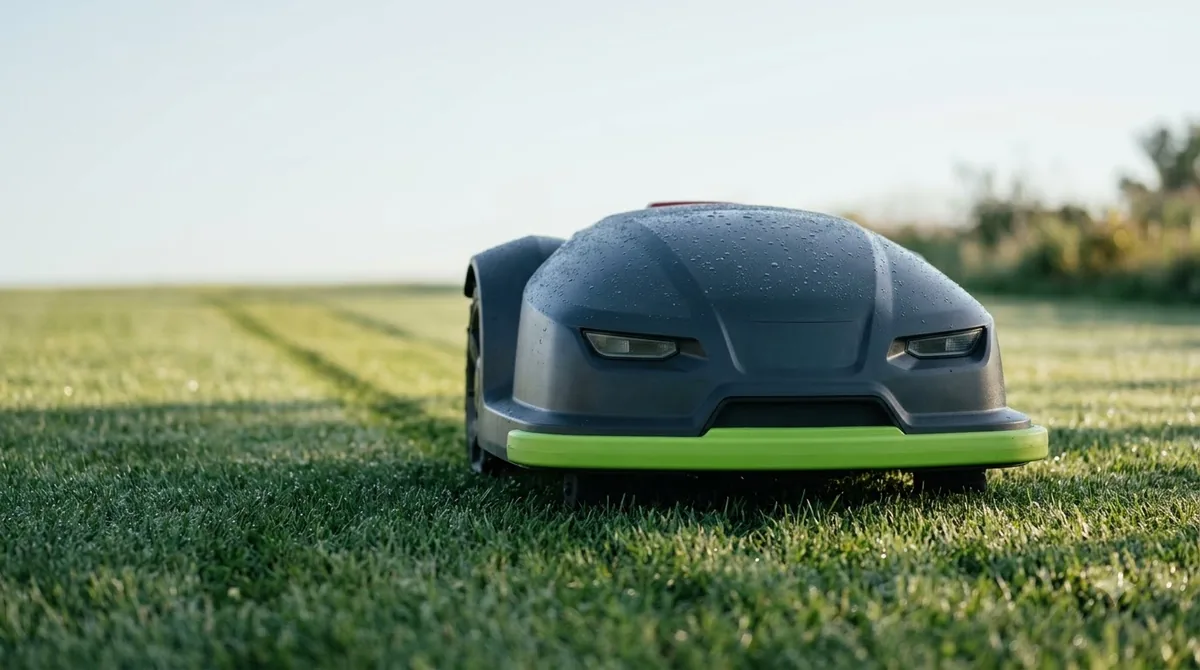
Closely cut lawns in heat can look fine for a while and then decline. Iowa State’s summer advice is to keep the blade high in the summer heat. Our reading is that a robot mower’s biggest summer risk is not a bad cut, but a lawn that is kept short through a long humid stretch and then stressed by dry spells.
What to check before you buy
For the best robot mower for humid southern summers, check four things: the top of the height range, whether the schedule can run in a fixed time window, how quickly you can change the height from the app, and whether the charging station can sit in shade with good airflow. Those four settings do more for a humid lawn than any single feature in the box.
Frequently asked questions
What height should a robot mower use in a hot, humid summer?
Texas A&M AgriLife Extension advises mowing higher in the warmer months, because turf grows more upright in summer heat. The exact height depends on the grass type, so check your variety in your state’s extension guidance.
When should a robot mower run in summer?
Iowa State Extension recommends mowing in the cool of the morning or evening and avoiding midday. Set the robot’s time window to end before the afternoon heat builds.
How much grass should a robot remove each run?
No more than about one-third of the height at a time. Because robots cut often, keep each pass small by setting a high height and a schedule that matches how fast the grass grows.
Should the charging station go in the shade?
Shade and airflow help keep the station cool and dry. Avoid low spots that stay wet after storms, since standing water is a poor place for a charging base.
Sources
- Texas A&M AgriLife Extension, Mowing Recommendations for Warm-Season Turfgrasses (university extension): raise height in summer, one-third rule, stress-based height choice.
- Iowa State University Extension, Summer Lawn Care (university extension): cool-hour mowing, height tied to growth, keeping the blade high in heat.
 Up next7 min readBest Robot MowersBest Robot Mower for Florida Summers: Rain, Heat and ScheduleUpdated Nov 17, 2026
 6 min readBest Robot MowersBest Robot Mower for Louisiana Lawns: Heights and What to CheckUpdated Nov 13, 2026
 7 min readBest Robot MowersBest Robot Mower for Indiana Lawns: Bluegrass and FescueUpdated Nov 18, 2026
 7 min readBest Robot MowersBest Robot Mower for a Lawn With Thatch BuildupUpdated Nov 13, 2026
 7 min readBest Robot MowersBest Robot Mower for Alabama Lawns: Grass and Height GuideUpdated Nov 13, 2026
 8 min readBest Robot MowersBest Robot Mower for Wisconsin Lawns: Cool-Season Cut GuideUpdated Nov 18, 2026