
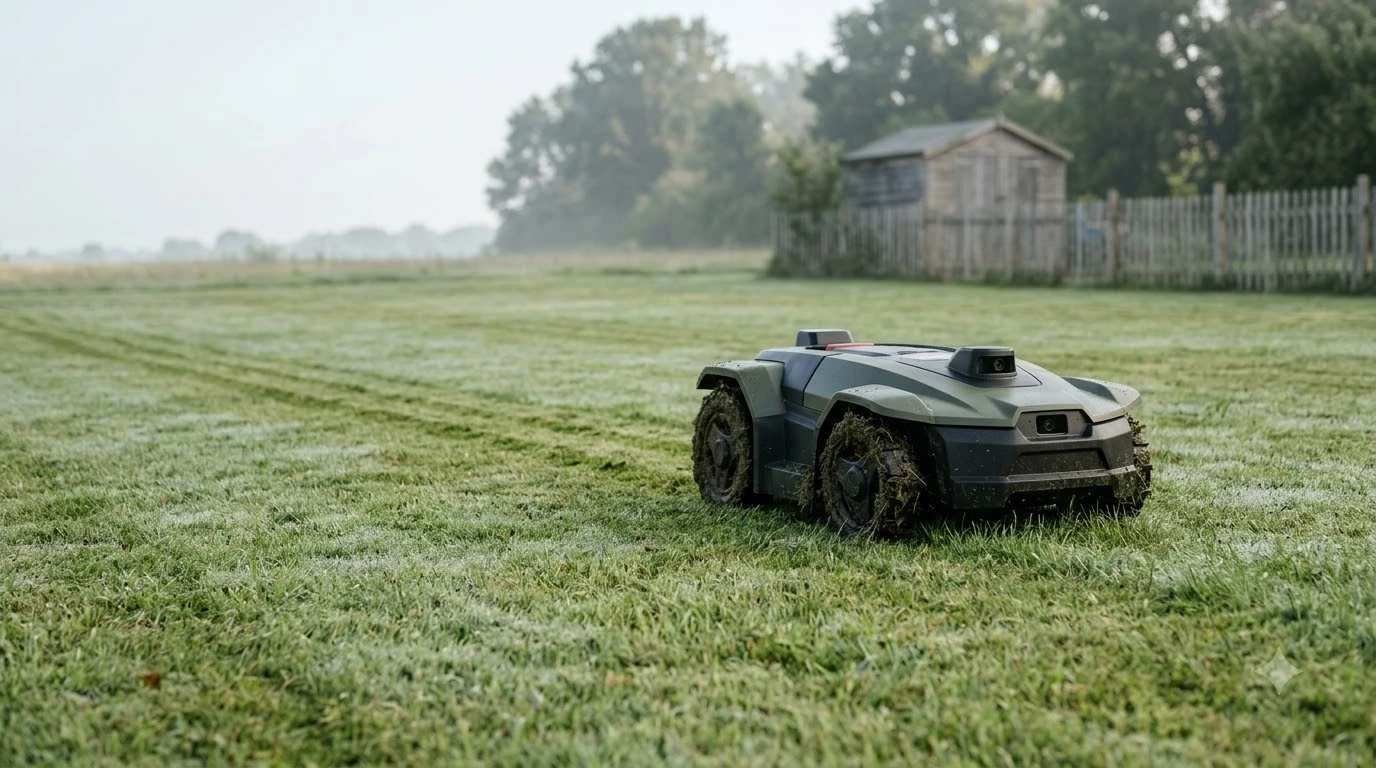

The best robot mower for a lawn with thatch buildup is one with a wide, reliable height range and sharp, balanced blades, because the thatch itself does not come from the mower. Extension sources agree that grass clippings do not cause thatch, and that thatch builds up from grass type, too much nitrogen, frequent shallow watering, and mowing too high. This guide covers which mower features matter on a thatchy lawn, how to set the cutting height, and what to check before you buy.
The short answer
- Thatch is a layer, not a mower problem: a robot mower does not add to it by itself, according to Penn State and Oregon State extension guidance.
- Thickness sets the action: Colorado State says to try to slow buildup when thatch exceeds about 1/2 inch.
- Mow at the right height: remove no more than one-third of the blade at a time, and do not let the deck sink into a spongy lawn.
- Pick for control: a height range that fits your grass, reliable blades, and a deck that stays level on the turf.
What thatch is and why it matters for a robot mower
Thatch is a tightly intermingled layer of partially decomposed stems and roots that sits between the living grass and the soil surface. Penn State Extension describes it that way, and UC IPM adds that a thin layer, less than 1/2 inch thick, can be beneficial. The problem starts when the layer gets thick. Oregon State Extension notes that excess thatch can make the mower sink and cut the grass too short, which leads to stressed turf. Thick turf and thatch often go hand in hand, as the guide to mowing thick grass and thatch explains.
That is the link to a robot mower. A thatchy lawn is softer underfoot, so the deck and wheels may sit lower than they do on firm turf. Our reading is that a mower on a thick thatch layer needs a height setting that keeps the blades clear of the soil, and a deck that does not scrape the crown of the grass. Those two things matter more than raw cutting power.
Do robot mowers cause thatch?
Usually not. Penn State Extension says grass clippings are mostly leaf tissue that decomposes rapidly, and that they do not contribute to thatch. Oregon State Extension is more direct: research on turf has shown that clippings do not increase thatch. Colorado State Extension says the same. The causes are the grass species, nitrogen, irrigation, and the cutting height, which is why a robot mower can be a good fit for a thatch-prone lawn when it is set up well. Overgrown areas leave clippings behind, as tall grass handling in a robot mower shows.
What actually causes thatch
The UC IPM Healthy Lawns guidance names the main drivers. Grass species matter, since some grasses make little thatch while others build it faster. Too much nitrogen fertilizer pushes fast growth that the lawn cannot break down, and frequent, shallow irrigation on an established lawn keeps the surface wet and encourages buildup. Colorado State Extension links thatch problems mainly to Kentucky bluegrass, bentgrass, and fine fescue, and says tall fescue and buffalograss rarely develop a serious layer. Soil type also affects thatch, as heavy clay lawns explains if you want to read further before deciding. Weeds are another factor, so see whether robot mowers cut dandelions alongside the guidance above.
| Cause | Why it matters | What helps |
|---|---|---|
| Grass species | Some grasses build thatch faster than others | Know your grass type before setting a schedule |
| Excess nitrogen | Fast, soft growth that breaks down slowly | Follow a fertilizer plan rather than extra doses |
| Frequent shallow watering | Keeps the surface wet and encourages buildup | Water deeply but less often |
| Mowing too high | Oregon State notes thatch can increase as the mowing height rises | Keep a steady height that fits the grass |
Where a robot mower fits in
Because a robot mower cuts often and in small amounts, it can fit a thatch-prone lawn well. Oregon State Extension gives the one-third rule, which says to remove no more than one-third of the grass blade at a time. A robot mower that runs frequently naturally cuts small amounts, which suits that rule. Colorado State recommends mowing at the same height all year, with a minimum of 2 inches for its cool-season species. Weak turf needs different care, as thin patchy lawns and robot mowers describes. Organic debris adds to the layer, as leaf fall and robot mowers explains.
Our reading is that the best use of a robot mower on a thatchy lawn is steady, frequent cutting at one height, not a deep cut on a rare schedule. Frequent cutting keeps clippings short, and short clippings are the ones extension sources say do not add to thatch.
When to dethatch and what a mower can and cannot do
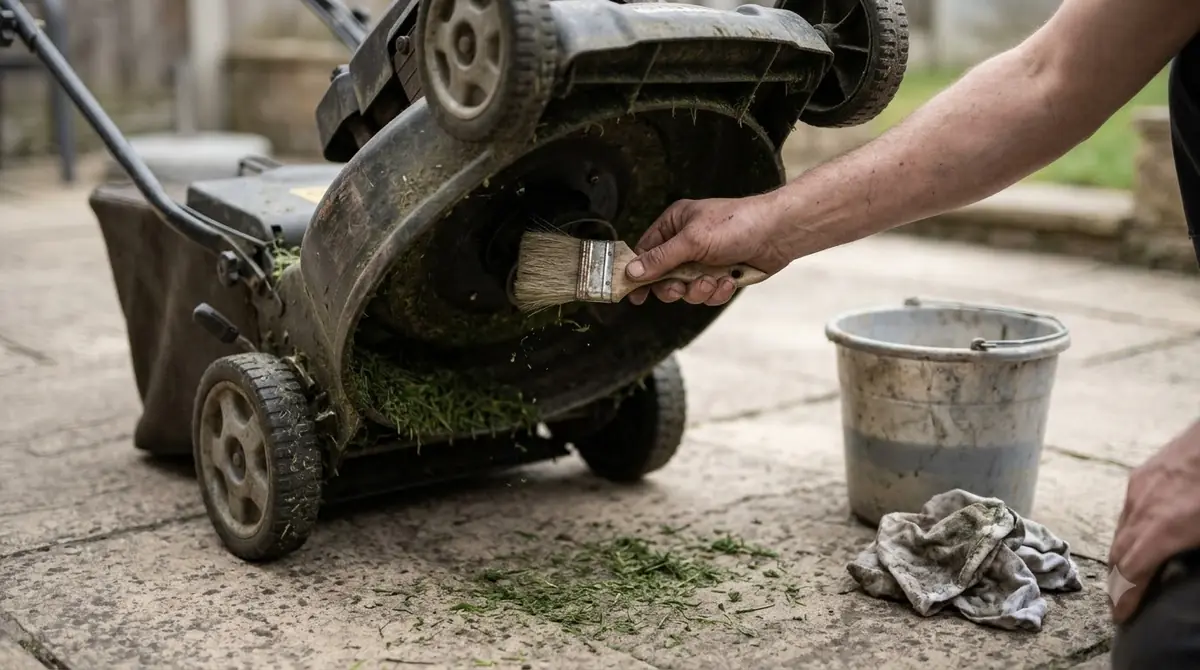
Dethatching is a separate job. UC IPM does not give a thickness threshold for dethatching, but Colorado State says light power raking may be useful if done often, while deep power raking can damage the living turf and remove a substantial part of it. A robot mower does not dethatch, so a lawn with a thick layer needs a different tool or a service visit first. Timing the first run after raking is covered in mowing after dethatching.
Timing matters too. The timing guidance we checked points to late summer or early fall for cool-season lawns, and to late spring or early summer for warm-season lawns, with St. Augustinegrass especially sensitive. Check your regional extension calendar before you book the work. Plan dethatching for that window, then return the mower to its regular schedule once the lawn recovers.
Best robot mower for a lawn with thatch buildup: what to check
When you compare models for a thatchy lawn, look for features that help with a soft, uneven surface.
- Cutting height range: confirm the mower goes high enough for your grass and that you can set one steady height across the lawn.
- Deck and wheel design: check whether the deck stays level on soft ground, since a sinking deck cuts too low.
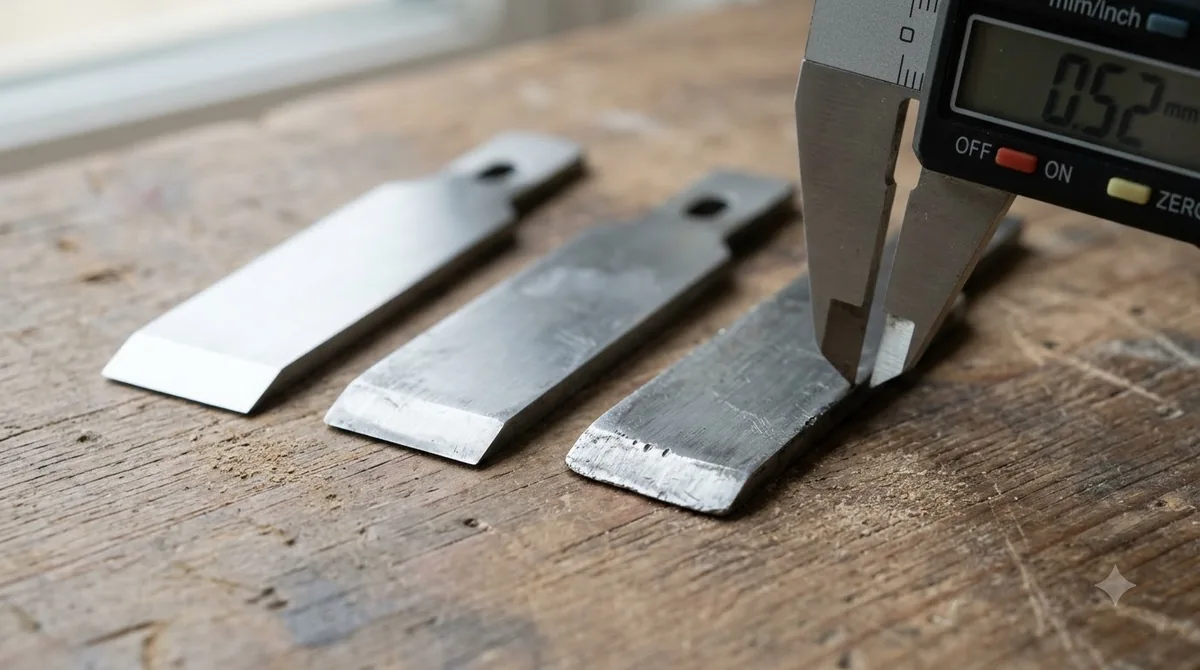
- Blade quality: sharp, matched blades give a cleaner cut, and worn blades tear the grass.
- Run frequency: a schedule that cuts often in small amounts suits a lawn trying to keep clippings short.
- Slope and traction: thatch can make the surface slippery and soft, so check the mower’s slope rating for your yard.
Our reading is that a mower with a wide height range, a stable deck, and a schedule you can adjust is a better match than a model chosen only for cutting speed.
Frequently asked questions
Do robot mowers add to thatch?
Penn State and Oregon State extension sources say grass clippings do not contribute to thatch. Thatch depends mainly on grass type, nitrogen, irrigation, and cutting height.
How thick is too much thatch?
Colorado State Extension says to try to slow buildup when the layer exceeds about 1/2 inch. UC IPM notes that a thin layer under 1/2 inch can be beneficial.
Can a robot mower remove thatch?
No. Thatch removal is a dethatching job, usually done with a power rake or a service. A robot mower keeps the grass cut evenly, which helps the lawn recover afterward.
What height should I set on a thatchy lawn?
Set one steady height that fits your grass, and follow the one-third rule so no more than a third of the blade is removed in one cut. Colorado State suggests a minimum of 2 inches for its cool-season species.
Sources
- Penn State Extension, recycling turfgrass clippings (university extension): clippings and thatch.
- Oregon State Extension, leave grass clippings (university extension): clippings do not increase thatch, one-third rule, excess thatch effects.
- UC IPM Healthy Lawns, thatch (university program): causes of thatch and thin-layer note.
- Colorado State Extension, lawn care basics (university extension): 1/2 inch threshold, power raking, mowing height.
 Up next9 min readBest Robot MowersBest Robot Lawn Mower for Lawns With Thick Thatch Layers: What to CheckUpdated Nov 19, 2026
 7 min readBest Robot MowersBest Robot Mower for Indiana Lawns: Bluegrass and FescueUpdated Nov 18, 2026
 6 min readBest Robot MowersBest Robot Mower for Louisiana Lawns: Heights and What to CheckUpdated Nov 13, 2026
 7 min readBest Robot MowersBest Robot Mower for Humid Southern SummersUpdated Nov 18, 2026
 7 min readBest Robot MowersBest Robot Mower for a Lawn with Short Growing SeasonUpdated Nov 18, 2026
 7 min readBest Robot MowersBest Robot Mower for Alabama Lawns: Grass and Height GuideUpdated Nov 13, 2026