

For a lawn with heavy leaf fall, the best robot mower is one with a star blade, a mulch-capable deck and strong traction, and you should still rake off the thick piles first. A robot mower handles a light dusting of leaves without trouble, but a deep layer of wet leaves clogs the deck, slows the blades and can make the mower spin its wheels. The points below come from manufacturer guidance we read, plus our reading of how to choose a model for a leafy yard, as of November 2026.
The short answer
- Small amounts are fine. Robomow says smaller amounts of leaves are generally not a problem for the lawn or the mower.
- Large amounts need help. Robomow says the mower “increasingly struggles with larger amounts of leaves,” and that its motor may wear out sooner.
- Remove leaves before mowing. Robomow says it is “extremely important to remove leaves before mowing” for models without a boundary wire.
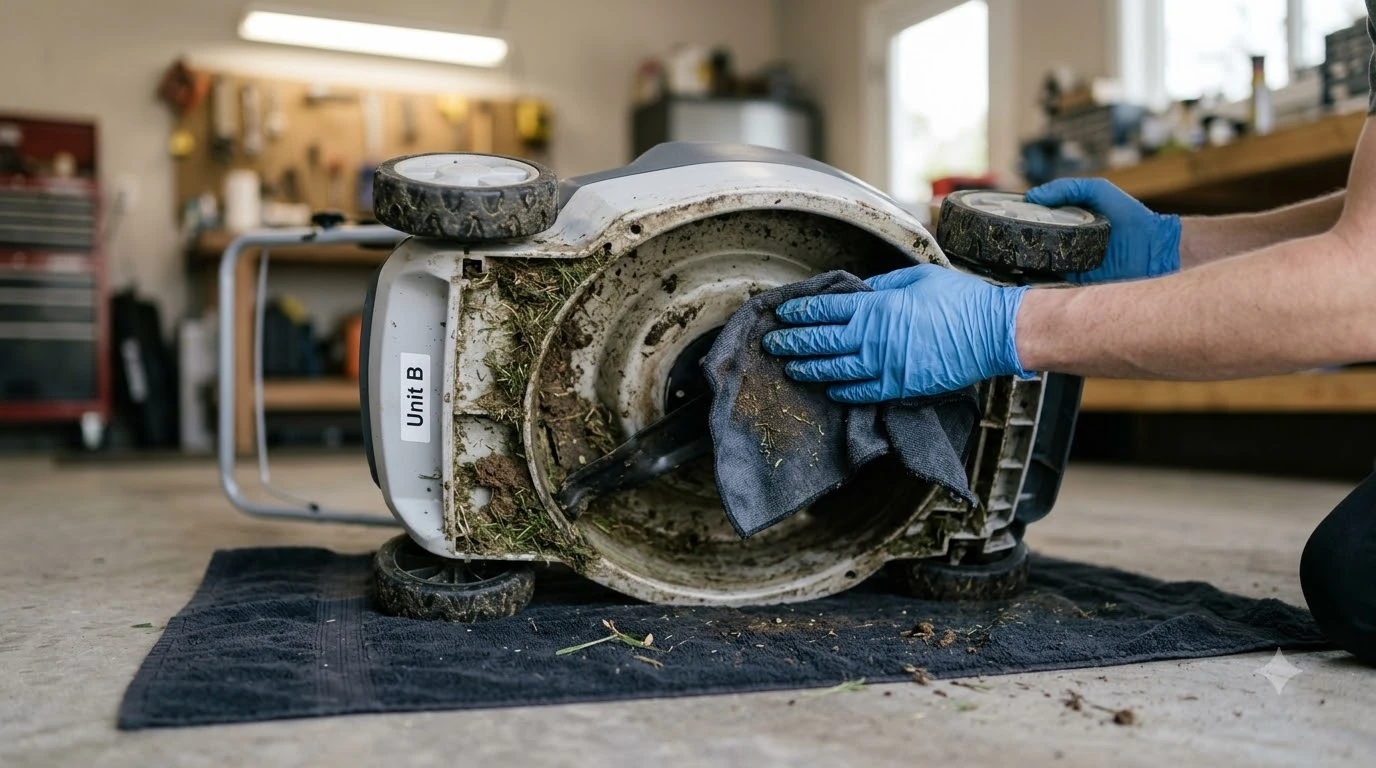
- Clean the underside often. Mammotion advises removing leaves, twigs and mud from the underside, wheels and sensors, because wet debris can rust metal parts and block sensors.
How leaves affect the lawn and the mower
Leaves do two kinds of harm. The first is to the lawn. Robomow says leaves “can affect the health of the lawn and, therefore, should be removed regularly,” because leaves left down too long can lead to mold and rot and cut the lawn’s air exchange. It also warns that “fungal diseases also spread more easily under the layer of leaves.” Autumn growth varies, and the broader guide to mowing thick grass in the fall covers the general case. Other debris causes similar problems, which yards covered in pine needles addresses.
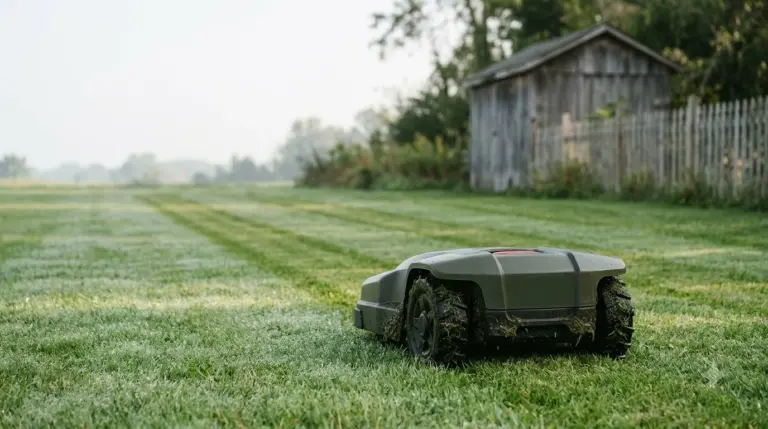
The second is to the mower. Robomow describes three levels. A small amount of leaves is not a problem. A medium amount mainly wears the blades faster and leaves on the wheels reduce traction. A large amount is where the mower struggles, and the motor may wear out sooner. Our reading is that most autumn problems come from the medium-to-large stage, which is why the choice of model and the clean-up routine both matter.
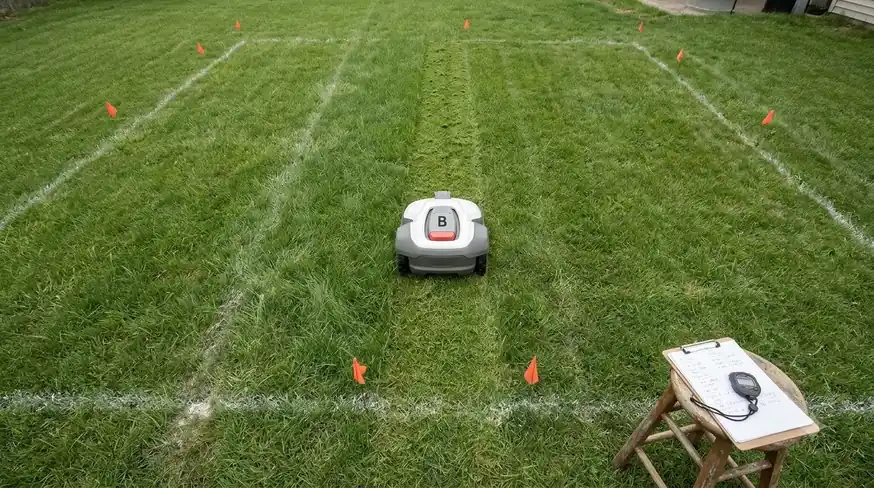
Mammotion’s seasonal guide adds a related point for damp weather. It says to avoid “large piles of wet foliage,” and in its FAQ it recommends removing large piles of wet leaves by hand before the mower runs. Damp leaves also make the mower slip and spin, especially on slopes, which is why traction is the next thing to check.

Blade type and mulching: what to look for
Robomow says that “star blades are generally robust enough to shred leaves,” but it also states that “robotic mowers were not designed as leaf shredders.” That is the balance to keep in mind. A star-blade model with a mulch remover can chop light, dry leaves into the turf, which the lawn can use. A heavy layer is a different job, and the mower should not be asked to do it alone. Blade choice also matters in overgrown areas, as handling tall grass in a robot mower explains.
Our reading is that a leafy yard should favour a star blade, a mulch remover that stops the deck from packing, and a deck that is easy to open and clean. Our reading is to check the deck after each leafy session and clear any buildup, since uncut patches on the lawn are a common sign of a clogged deck.
Traction and cutting height in autumn
Robomow recommends choosing a model with strong traction wheels, because leaves on the wheels reduce grip. Mammotion’s guide gives a practical tip for damp grass: adjust the cutting height to prevent the mower bogging down. The guide does not say which way to change it, so test the setting on a small area first. Late-season cutting height is covered in lawns with a short growing season. Wet leaves and soft soil go together, so see mowing clay soil in wet autumns.
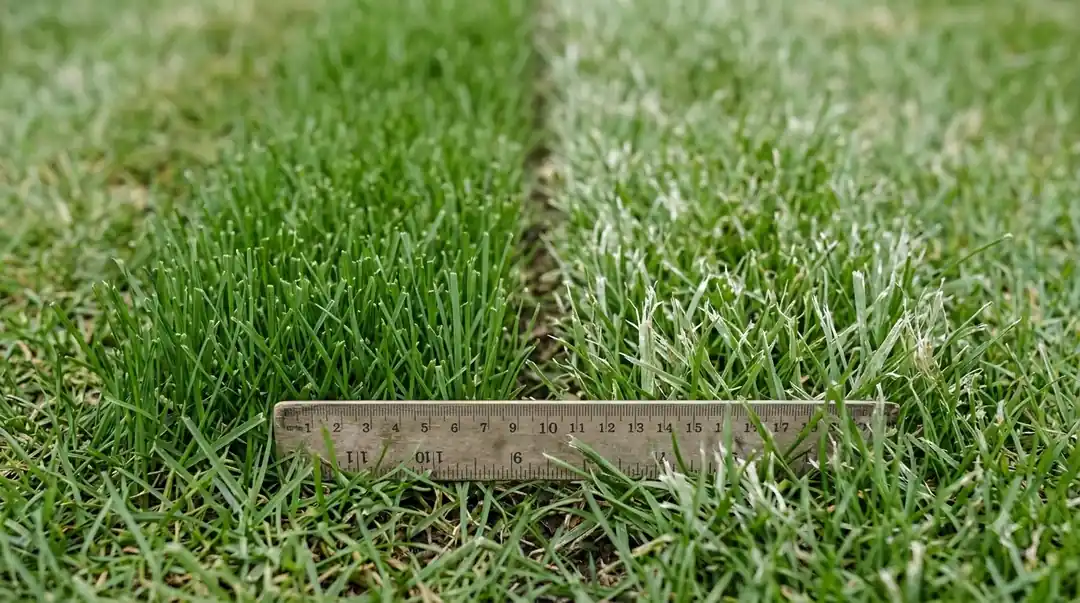
Our reading is that a slightly higher cut in autumn gives the blades room to handle the leaves and reduces the chance of a clogged deck, but you should follow the manual’s range for your model rather than set a height that the manual does not allow.
A clean-up routine that keeps the mower working
A robot mower works best in a leafy yard when the clean-up is planned around it. Rake or blow the heavy piles off the lawn before mowing, and use a leaf blower or a grass-catcher mower for the worst weeks. Check the lawn for stones and hidden wildlife under the leaf layer, since both can damage the blades or stop the mower. Then let the robot take over for the light layers that come after. Leaf residue can contribute to thatch, as thatch buildup and robot mowers describes.
Our reading is that a yard with large oak or maple cover needs more hands-on work, not less. A robot mower can keep the lawn tidy between clean-ups, but it does not replace raking in the heaviest weeks.
What to check before you buy for a leafy yard
- Blade type. Look for a star blade and a mulch remover, and confirm the manual allows mulching in autumn.
- Traction. Choose strong, wide wheels or all-wheel drive, especially for slopes under trees.
- Deck access. Check that the deck and underside are easy to clean after a leafy session.
- Boundary method. For a wire-free model, plan a leaf-clearing routine, because Robomow says leaves should be removed before mowing.
The best robot mower for a lawn with heavy leaf fall is the one that can cope with the light layers you leave behind, with a clean-up plan for the heavy weeks.
Frequently asked questions
Can a robot mower handle a thick layer of fall leaves?
Not well. Robomow says the mower increasingly struggles with larger amounts of leaves and that its motor may wear out sooner. Rake or blow the heavy piles off first, then let the mower run over what is left.
Is a star blade better for leaves?
Robomow says star blades are generally robust enough to shred leaves, though it also says robotic mowers were not designed as leaf shredders. Our reading is that a star blade with a mulch remover is the better fit for a leafy yard.
Should I mow wet leaves?
Avoid it. Mammotion advises against large piles of wet foliage and recommends removing them by hand before mowing. Damp leaves also make the mower slip, especially on slopes.
How often should I clean the mower in autumn?
Mammotion recommends removing leaves, twigs and mud from the underside, wheels and sensors, because moisture-soaked debris can rust metal parts and block sensors. Our reading is that checking after each leafy session is the safe routine.
Sources
- Robomow, what a robotic lawnmower does with leaves (manufacturer): leaf amounts, blade type, mold risk and removal advice.
- Mammotion, seasonal maintenance tips (manufacturer): deck and sensor cleaning, wet foliage and damp-grass cutting height.
 Up next7 min readBest Robot MowersBest Robot Mower for a Lawn With Heavy Dog TrafficUpdated Nov 14, 2026
 10 min readBest Robot MowersChoosing the Best Robot Lawn Mower for Lawns with Heavy Pine Cone DropUpdated Nov 19, 2026
 7 min readBest Robot MowersBest Robot Mower for People with Allergies: What to CheckUpdated Nov 17, 2026
 6 min readBest Robot MowersBest Robot Mower With Replaceable Battery: What to CheckUpdated Nov 14, 2026
 7 min readBest Robot MowersBest Robot Mower for Florida Summers: Rain, Heat and ScheduleUpdated Nov 17, 2026
 7 min readBest Robot MowersBest Robot Mower for a Lot with No Outlet Nearby: Power PlanUpdated Nov 14, 2026