
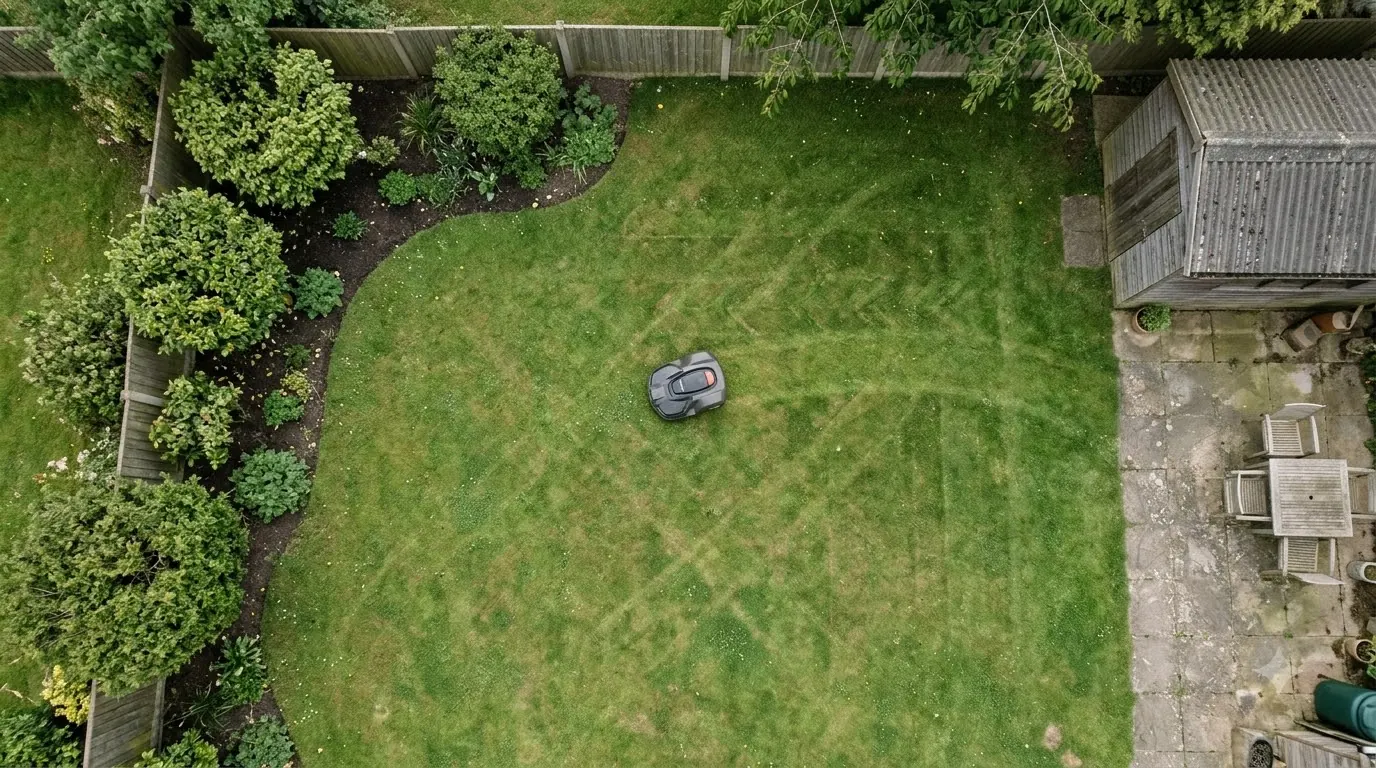

Which satellite navigation robot mower is the most accurate? The spec sheet alone cannot name one. Vendors usually quote accuracy for the correction service, not the mower. Husqvarna’s EPOS documentation lists 1-6 cm for its cloud option and 1-2 cm for its local reference stations, and the real result depends on how the correction arrives and how open the sky is over your lawn.
The short answer
- Look at the correction method first. Cloud correction and local reference stations are specified differently.
- Treat centimeter figures as vendor-stated. No independent field test comparing mowers was found for this question.
- Check the site. A base station needs an open, unobstructed area, and poor setup reduces precision.
- Compare slope and setup separately. Slope rating is a different spec from positioning accuracy.
How satellite navigation accuracy is specified
A satellite navigation robot mower uses GNSS signals, usually corrected with RTK (real-time kinematic) positioning, to work out where they are on the lawn. The accuracy figure a brand quotes describes that correction layer. Husqvarna’s EPOS page gives “typically 1-6 cm” for its cloud option and “typically 1-2 cm” for its RS 4G and RS5 reference stations. In that description, both the mower and the correction source receive satellite signals, and the correction data is what tightens the position. For the basics, read how an RTK robot mower works.
Correction methods compared
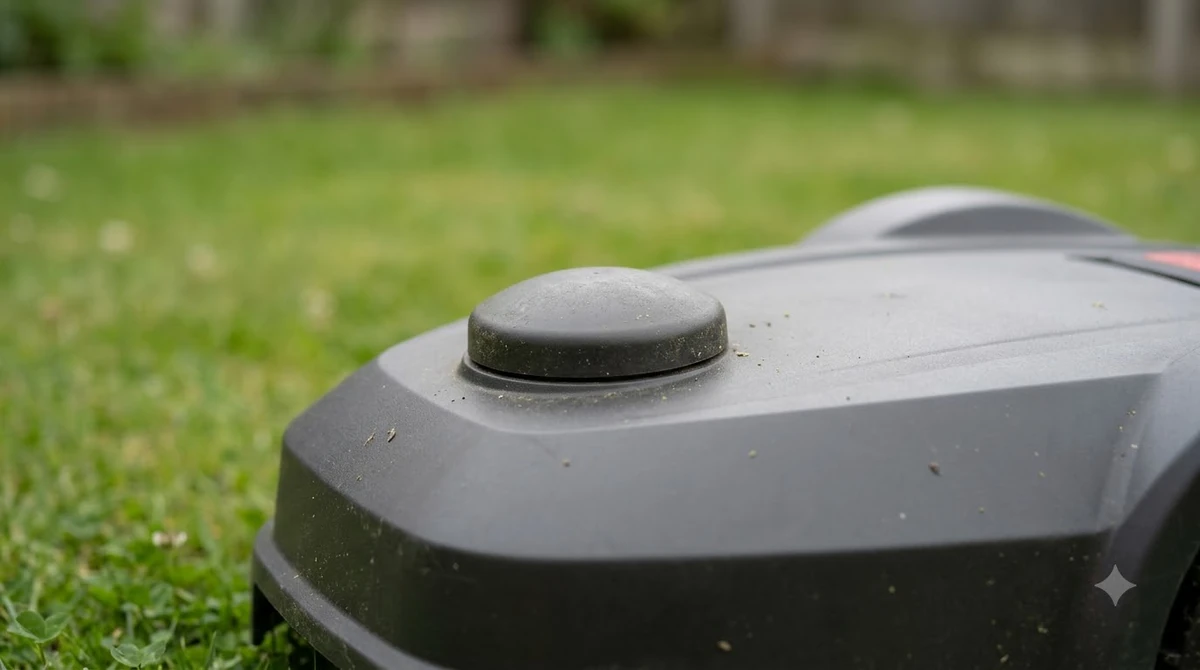
For any satellite navigation robot mower, the correction source sets the accuracy ceiling. Cloud correction removes the need for a base station on the lawn, but the mower still needs a cellular connection. Husqvarna notes the cloud option is not available in all countries and requires cellular coverage on site, and its Fleet Services interface lets you set area preferences and add temporary stay-out zones. Its RS 4G station also needs cellular coverage, and Husqvarna says one single station is needed, with a stated range of up to 25 km and 1-2 cm accuracy within 10 km. The RS5 uses short-range radio up to 500 m, and repeater units can extend it.
| Method | Stated accuracy | Site needs |
|---|---|---|
| Husqvarna EPOS cloud | 1-6 cm | Cellular coverage on site |
| Husqvarna EPOS RS 4G station | 1-2 cm | Cellular coverage, installed station |
| Husqvarna EPOS RS5 station | 1-2 cm | Radio range up to 500 m, extendable |
| Mammotion LUBA mini AWD (NetRTK, LiDAR-assisted) | Vendor claim, no figure used here | No base station or antenna, per the brand |
Our reading is that the cloud and station figures are not directly comparable with each other, because each vendor measures and states them differently. The table shows what each method asks of your yard, which matters as much as the number.

Where RTK accuracy breaks down
Which satellite navigation robot mower is the most accurate in your yard depends heavily on the reference point and the sky above the lawn. Ecovacs states that an RTK base station must be set up in an open, unobstructed area, and that incorrect setup reduces positioning precision. For placement ideas, see where to mount an RTK base station and where to place an RTK antenna in a yard with trees.
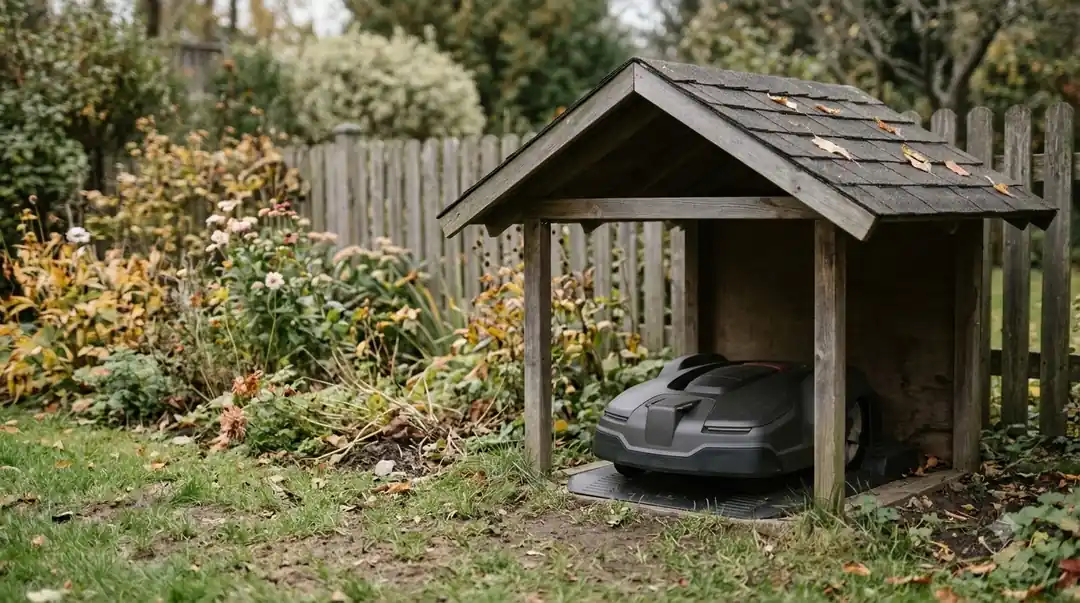
- Base placement. The reference receiver needs open sky, so placement under dense cover is a poor choice.
- Setup quality. Ecovacs says incorrect setup reduces positioning precision, so the install matters as much as the spec.
- Calibration time. Ecovacs lists calibration, placement and extra installation time as RTK requirements.
- Sky view on the lawn. Our reading is that trees, walls and roof overhangs can block the satellite view across parts of a yard, though this article does not cite a figure for how much. Tall structures are a special case, covered in RTK robot mower near tall buildings.
How LiDAR and vision compare on accuracy
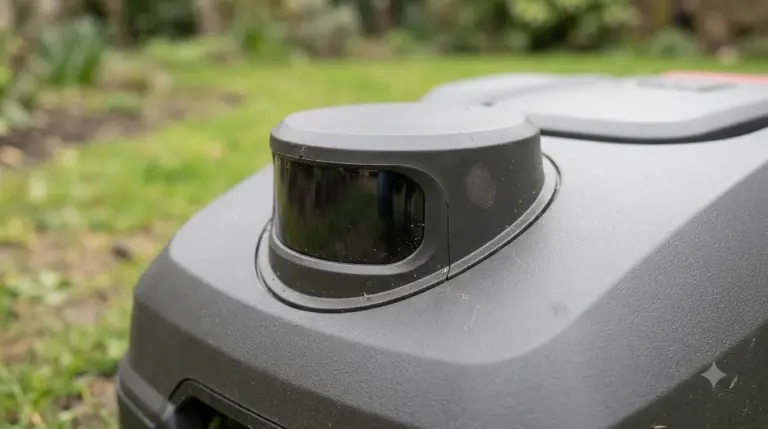
LiDAR-based mowers do not depend on a base station the way RTK systems do. Ecovacs says LiDAR needs no extra base station or setup, but warns that fog and heavy rain may scatter and absorb the laser beams. Mammotion describes its LUBA mini AWD LiDAR model as using NetRTK through its iNavi service, with no base station or antenna, though that is a vendor claim.
For a satellite navigation robot mower, LiDAR is not a substitute for RTK in every yard. No sourced head-to-head accuracy figure between LiDAR and RTK was found. Our reading is that the two systems measure different things and fail under different conditions, so a single accuracy number does not settle the choice. See RTK vs LiDAR vs vision robot mowers for how they differ.
What the spec sheets do not tell you
Asking which satellite navigation robot mower is the most accurate only makes sense once the correction method is fixed. Positioning accuracy and slope capability are separate specs, and one does not predict the other. Husqvarna’s steep-slope guide lists up to 70% for its AWD models, which says nothing about how precisely it positions itself on the lawn.
- Correction figure. It describes the correction service under the brand’s test conditions.
- Slope rating. It describes how steep a lawn the mower can climb, not how accurately it navigates.
- Field conditions. No independent field data comparing mowers across real yards was found in this research.
Checklist: which satellite navigation robot mower is the most accurate for your yard
- Confirm the correction method. Know whether the mower uses cloud correction, a local station, or LiDAR.
- Check cellular coverage. Cloud and 4G stations need a signal at the lawn itself.
- Map the sky view. Note where trees, walls and roof overhangs sit over the lawn.
- Plan base placement. If a local station is used, choose an open, unobstructed spot.
- Budget setup time. Ecovacs lists calibration and extra installation time for RTK systems.
When you compare which satellite navigation robot mower is the most accurate, start with the correction method, then the sky view, then the setup. Those three decide more of the real result than any single spec figure.
Frequently asked questions
Is RTK accurate to the centimeter?
Vendors state centimeter-class figures for the correction service. Husqvarna’s EPOS documentation gives 1-6 cm for cloud correction and 1-2 cm for its local reference stations. The mower’s real accuracy depends on setup and sky view.
Do RTK robot mowers need a base station?
Not always. Cloud correction services avoid a local base on the lawn, but they need cellular coverage at the site. Husqvarna says its cloud option is not available in every country.
Is LiDAR more accurate than RTK?
No sourced head-to-head accuracy figure was found. LiDAR needs no base station, but Ecovacs notes fog and heavy rain can scatter and absorb laser beams, so the two systems fail under different conditions.
Which satellite navigation robot mower is the most accurate?
No independent comparison of satellite navigation robot mowers in real yards was found. Use the correction method, cellular coverage and sky view at your lawn to judge the options, rather than a single spec number.
Sources
- Husqvarna EPOS (manufacturer): cloud 1-6 cm, reference station 1-2 cm, cellular and radio range.
- Ecovacs, LiDAR vs RTK robot lawn mowers (manufacturer): open-area base placement, setup precision, calibration time, LiDAR weather limits.
- Husqvarna steep-slope installation guide (manufacturer): AWD slope rating.
- Mammotion LUBA mini AWD LiDAR (manufacturer): NetRTK correction without a base station, stated as a vendor claim.
 Up next8 min readBest Robot MowersMost Accurate Robot Lawn Mower Navigation for Your YardUpdated Nov 12, 2026
 9 min readBest Robot MowersBest Satellite Navigation Robot Lawn Mower 2026: What to Check Before You BuyUpdated Nov 11, 2026
 7 min readBest Robot MowersWhich 4-Wheel Drive Robot Mower Is the Most Accurate?Updated Nov 14, 2026
 8 min readBest Robot MowersWhich Vision AI Camera Robot Mower Is the Most Accurate?Updated Nov 14, 2026
 8 min readBest Robot MowersWhich 4G Cellular Robot Mower Is the Most Accurate?Updated Nov 12, 2026
 8 min readBest Robot MowersWhich 3D LiDAR Robot Mower Is the Most Accurate? What the Numbers ShowUpdated Nov 16, 2026