
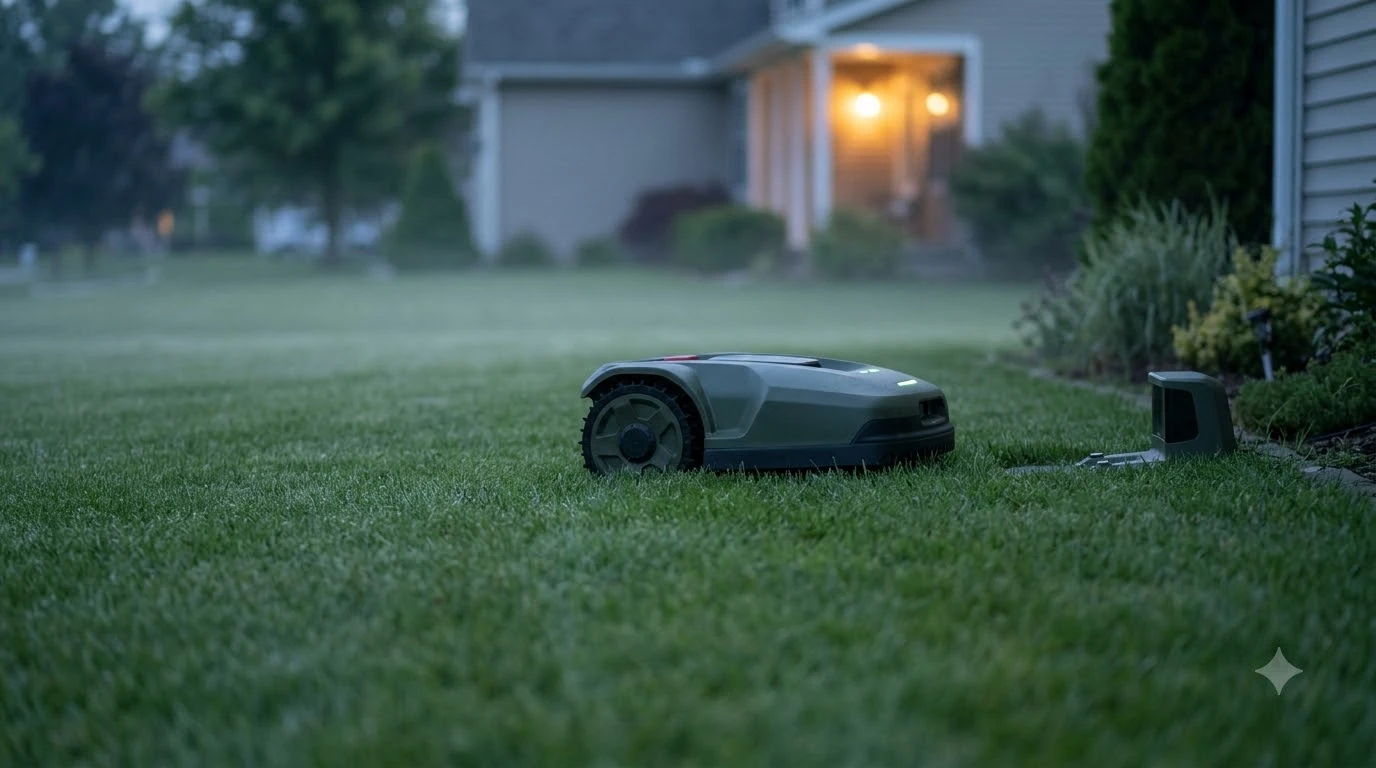

There is no single best robot lawn mower for Pacific Northwest lawns, but the region narrows the choice. Mild, wet winters, moss, shade from tall trees and cool-season grass change what a robot mower has to handle. Start with wet-weather behavior, the cutting height range, how the mower finds its way under trees and its slope rating. This guide sets out what the published sources say about each point, as of November 2026.
The short answer
- Wet weather: Manufacturers generally advise against mowing wet grass or standing water. Most models include a rain sensor, and rain delay settings differ by brand.
- Cutting height: WSU Extension lists 1 to 2½ inches for Kentucky bluegrass, fine fescue and perennial ryegrass west of the Cascades. Check that the mower’s range covers that band.
- Trees and shade: Satellite positioning can weaken under a canopy, so a wire fallback matters. Our reading is that yards with heavy shade deserve a closer look at navigation before you buy.
- Slope: Treat the rated maximum as a ceiling, not a target, and size the mower with margin for slopes, obstacles and weather.
Why Pacific Northwest lawns change the buying decision
Western Washington’s climate is the main reason regional advice differs from the generic buying guides, and it is why a best robot lawn mower for Pacific Northwest lawns needs different checks than one for a dry climate. WSU Extension says mild, wet winters in western Washington encourage moss in lawns, and that moss moves in where grass is already weak, shaded or constantly wet. Moss establishes mostly in fall, when lower temperatures and low light slow grass growth and reduce its competition.
WSU’s first recommendation is a healthy lawn: adequate fertilizer, less shade and less excess moisture. Robot mowers do not fix any of those causes by themselves. A mower that keeps the grass cut at the right height and on a steady schedule supports the lawn, but the root causes are shade, drainage and soil condition.
Wet grass and rain: what the manuals say
Manufacturers generally treat wet grass as a condition to avoid, and most robot mowers include a rain sensor that sends them back to the dock. Husqvarna advises waiting at least 24 hours after rain before mowing, and longer after heavy rain or on overcast days, while strong sun can help dry a lawn within a few hours. Wet-weather behavior is the first filter for the best robot lawn mower for Pacific Northwest lawns, and our guide to robot mower wet grass goes deeper on it.
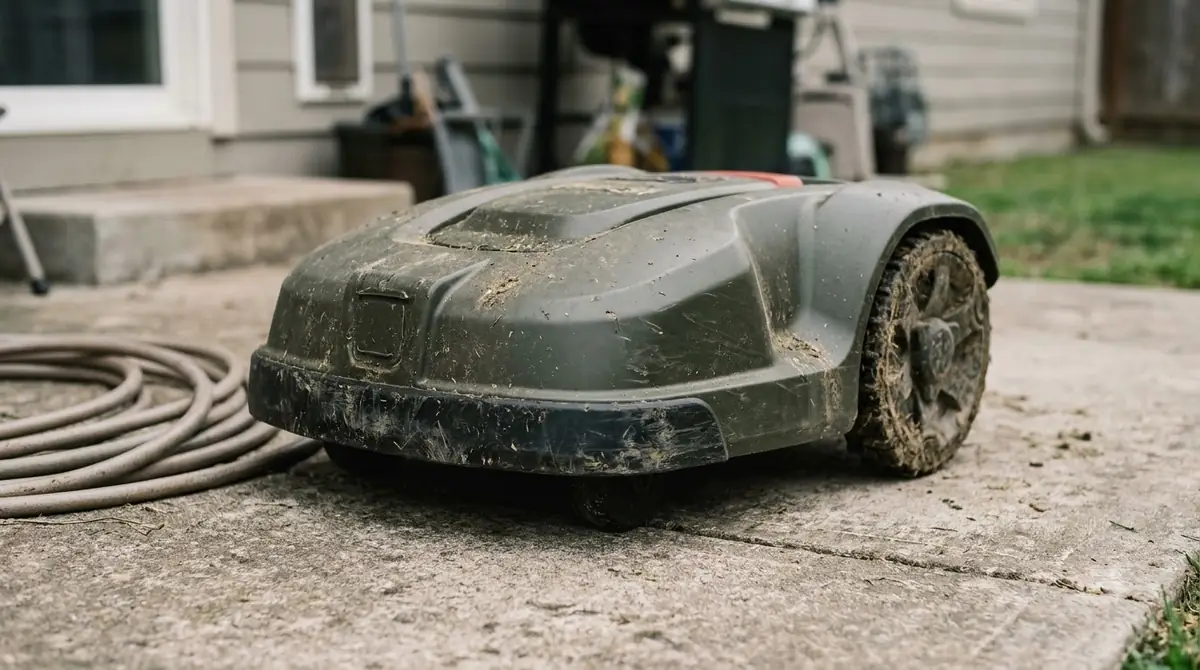
Robomow describes a rain sensor that interrupts mowing and holds the mower at its station until the rain stops. Its sensitivity is adjustable, so a mower can keep working in light rain and stop in a downpour. The same guidance says a mower should not run on standing water, and that wet grass can stick to the wheels and the deck. Navimow’s H2 and X4 use a capacitive rain sensor with weather sync and a rain delay adjustable up to 12 hours.
Sources differ on light rain. Some brand material says mowers can work in light rain, while other guidance says not to run them in rain at all. Our reading is that anyone in a region with long wet stretches should check three things before buying: whether the rain delay can be set, whether the sensor sensitivity can be adjusted, and whether the wheels and deck handle wet clippings. The University of Missouri IPM also notes that wet mowing leaves clumps of clippings that can smother turf, so the wet-day rule applies to the lawn as well as the mower. For a model-by-model view of rain ratings, read whether robot lawn mowers can mow in the rain.
Heads up
Rain behavior is set per model and can change with firmware and app settings. Read the manual for the exact model you are considering rather than relying on a brand’s general statement.
Grass height and mowing frequency
Extension guides give different cutting heights by region, so use the guide for your own state before you set the mower. WSU Table 3 lists Kentucky bluegrass, fine fescue and perennial ryegrass at 1 to 2½ inches west of the Cascades, and tall fescue at 2 to 3 inches. The University of Missouri IPM gives 2.5 to 4.0 inches for bluegrass, tall fescue and perennial ryegrass in its own region. The two ranges reflect different climates, so a robot mower with a narrow height range can suit one region and not another.
WSU also says not to remove more than 30 percent of the leaf blade in one mowing, and not to lower the height by more than ½ inch in one pass to avoid scalping. Missouri’s one-third rule says much the same. In practice, a mower that cuts often and in small steps fits a cool-season lawn that grows fast in the wet season better than one that runs once a week at a large step.
Heads up
WSU’s mowing section also recommends mowing at two to three inches once per week for most cool-season lawns in Washington. That figure conflicts with its own Table 3 range, so check it against the grass species in your yard before you set a height.
Clemson HGIC advises raising the cut under stress such as shade, heat or drought. A robot mower that can cut higher in shaded zones is a practical feature for a yard with mixed sun and shade.
Trees, shade and navigation
Shade is often the biggest difference between a generic robot mower purchase and a good one for a Pacific Northwest yard. WSU says that where more than 50 percent of a site is shaded, ground covers or mulch around the trees can work better than grass. It describes roughstalk bluegrass as the most shade-tolerant grass grown in the Northwest, fine fescues as suited to moderate shade, and Kentucky bluegrass and perennial ryegrass as not very shade-tolerant. If your mower will mostly work in shade, the grass type may matter more than the brand. See also the best robot mower for a shaded lawn and the robot mower for a yard with heavy tree canopy.
Navigation under trees is the second question. Husqvarna’s documentation describes traditional models that use buried or stapled boundary wire, and an RTK-GNSS virtual boundary as the wire-free option, with physical wire as the fallback when satellite coverage is poor. Our reading is that a canopy is exactly the situation where that fallback matters. Ask the vendor what the mower does when the satellite signal drops, and where the base station must sit. Mammotion’s RTK guidance says not to install the reference station under a tree or at a corner of a building, which means a shaded yard may need the base placed in an open spot.
Slopes, drainage and lawn size
Slope ratings are maximums, and the sources treat them as limits rather than targets. Eufy’s published tiers run from basic models rated for 10 to 25 percent slopes to advanced all-wheel-drive models rated up to 70 percent, or 35 degrees. Eufy also states that a slope maximum is an absolute limit: running at it strains the motor, drains the battery faster and increases tire slip.
Consumer NZ, an independent consumer group, tested robot mowers on 19-degree slopes, about 35 percent, and reports that some models claim up to 39 degrees, about 80 percent. Its guide notes that some user manuals allow the steepest settings only for short spells. Robomow adds that a manufacturer’s maximum coverage applies under “truly perfect conditions”, and that slopes, obstacles, weather and lawn layout can reduce coverage by up to 30 percent. Our reading is that a rated lawn size close to your yard’s real size leaves no room for that reduction, so size up when the lawn is sloped or cluttered. This explainer on how robot mower slope ratings work covers how to read the numbers.
Drainage matters too. WSU recommends grading a lawn away from the house, ideally with a slope of one to two percent where possible. Good drainage reduces the standing water that a robot mower should not run on.
Choosing the best robot lawn mower for Pacific Northwest lawns
A short checklist covers the points the sources above raise. None of these steps requires a brand ranking, and a best robot lawn mower for Pacific Northwest lawns is simply the one whose rules match your yard.
- Wet-weather behavior. Check whether the rain delay can be set, whether the sensor sensitivity can be adjusted, and what the manual says about standing water.
- Cutting height range. Match the mower’s range to your regional extension guide, such as WSU’s 1 to 2½ inches west of the Cascades.
- Navigation under trees. Ask for the wire fallback or the satellite-free option, and check where the reference station needs an open sky view.
- Slope and size margin. Start from the rated slope and lawn size, then allow for slopes, obstacles and weather.
- Wheels and deck for wet grass. Look for traction wheels and an easy way to clear clippings and mud.
- Storage and charging plan. Confirm the storage temperature and charging guidance in the manual before winter.
| Lawn condition | What to look for | Why the sources point there |
|---|---|---|
| Heavy shade or dense tree cover | A wire fallback or a second positioning method, and a base with a clear sky view | Satellite positioning can weaken under canopy (Husqvarna) |
| Frequent wet days | An adjustable rain delay and a sensor you can tune | Manuals advise against wet grass, and delay settings vary (Husqvarna, Robomow, Navimow) |
| Moss-prone or weak turf | A cut height in range and frequent mowing in small steps | Moss spreads where grass is weak (WSU); one-third and ½ inch limits (WSU, Missouri) |
| Sloped or cluttered yard | A rated slope and lawn size with margin | Maximums are absolute limits; coverage can drop by up to 30 percent (Robomow) |

Maintenance and storage in a wet climate
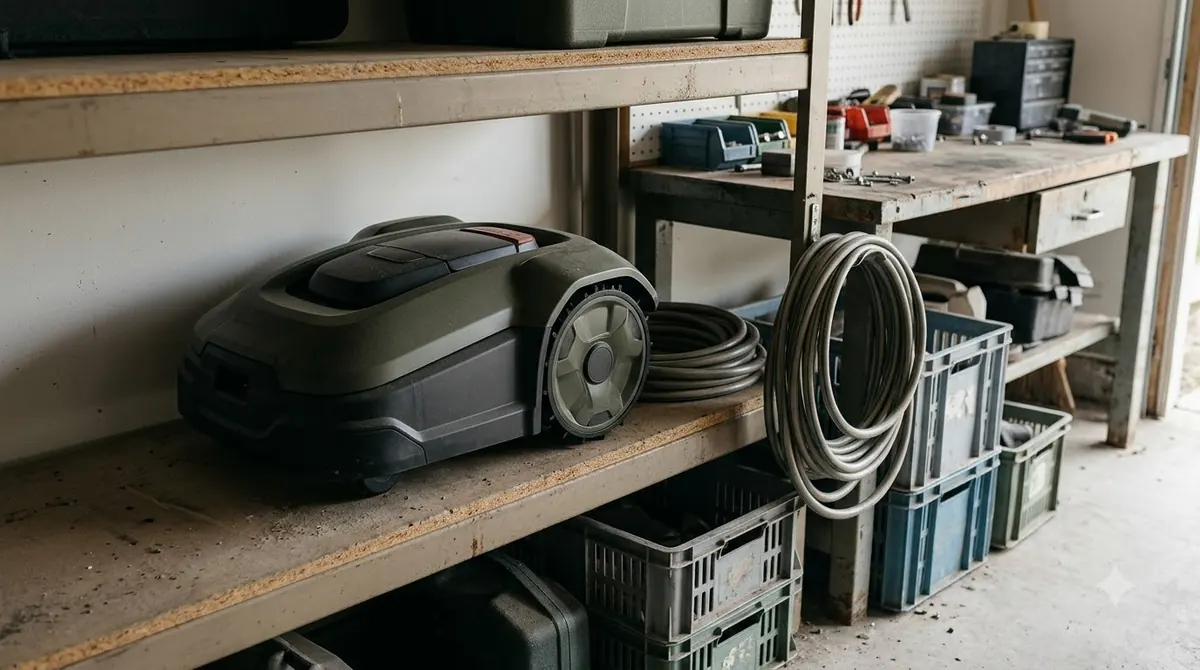
Wet conditions mean more cleaning, and the manuals ask you to keep the mower and battery dry. Husqvarna’s winter storage guidance says to store the mower in a dry, indoor place above freezing, and to charge it fully and switch it off first. Mammotion’s winter guidance advises keeping batteries away from snow, ice and damp floors, and never charging them in freezing conditions.
Robomow notes that wet grass sticks to the wheels and the deck. A quick clean after wet mowing keeps the traction wheels effective and reduces the buildup that can interfere with cutting. Check the manual for the cleaning steps your model recommends, and avoid high-pressure water near the sensors and charging contacts.
Frequently asked questions
Is there one best robot lawn mower for Pacific Northwest lawns?
No single model is named here, because the sources do not support a ranking for the region. Start from wet-weather behavior, the cutting height range, navigation under trees and the slope rating, then compare models against those points.
Should a robot mower run in the rain in Seattle or Portland?
Manufacturers generally advise against mowing wet grass. Husqvarna suggests waiting at least 24 hours after rain before mowing, and longer after heavy rain. Many models have a rain sensor, and some allow the delay to be adjusted, so check the manual for your model.
Does moss mean a robot mower is the wrong choice?
Not by itself. WSU Extension describes moss as a symptom of weak, shaded or constantly wet turf. A mower that keeps the grass at the right height and frequency helps, but shade reduction, drainage and fertilizer address the root causes.
Do I need RTK positioning for a yard under trees?
Not always, but a canopy is the case where it matters most. Satellite positioning can weaken under trees, and some systems fall back to boundary wire. Ask the vendor what the mower does when the satellite signal drops, and where its base station must sit.
Sources
- WSU Extension, PNW Gardener’s Handbook, Chapter 10: Lawns (university extension): moss causes, cutting heights, shade, fall fertilizer and grass species.
- University of Missouri IPM, Proper Mowing Practices for Your Lawn (university extension): one-third rule, wet mowing and cool-season heights.
- Clemson HGIC, mowing guidance (university extension): raising the cut under shade, heat and drought.
- Husqvarna, Can you mow wet grass? (manufacturer): waiting time after rain and wet-grass guidance.
- Husqvarna, How an Automower works (manufacturer): boundary wire, RTK-GNSS virtual boundary and wire fallback.
- Robomow, Robotic mowers with rain sensors (manufacturer): rain sensor behavior, standing water and wet grass on wheels and deck.
- Segway Navimow, how Navimow decides whether to mow in sunny, rainy and frosty conditions (manufacturer): capacitive rain sensor and adjustable rain delay.
- eufy, Robot lawn mower slope limits (manufacturer): slope tiers and the absolute-limit guidance.
- Consumer NZ, Robot lawn mowers guide (independent consumer group): slope testing and manual limits.
- Robomow, Which robotic lawnmower is suitable for which lawn size (manufacturer): coverage reduction of up to 30 percent.
- Mammotion support, How to install an RTK reference station (manufacturer): placement away from trees and building corners.
- Husqvarna, Complete winter storage guide (manufacturer): dry indoor storage above freezing.
- Mammotion, Robot lawn mower winter maintenance guide (manufacturer): battery care around snow, ice and freezing.
 Up next9 min readBest Robot MowersBest Luxury Robot Mower for Large Estates: What to Check in 2026Updated Nov 13, 2026
 7 min readBest Robot MowersWhich Dreame Robot Mower Should I Buy? Limits to Check FirstUpdated Nov 13, 2026
 9 min readBest Robot MowersBest Robot Lawn Mower for the Midwest Lawns: What to Check Before You BuyUpdated Nov 13, 2026
 7 min readBest Robot MowersBest Robot Lawn Mower for Georgia Lawns: What to Check Before You BuyUpdated Nov 13, 2026
 8 min readBest Robot MowersBest Robot Lawn Mower for 1 Acre: What to Check Before You BuyUpdated Nov 13, 2026
 8 min readBest Robot MowersBest Robot Lawn Mower for Arizona Lawns: What to Check FirstUpdated Nov 11, 2026