
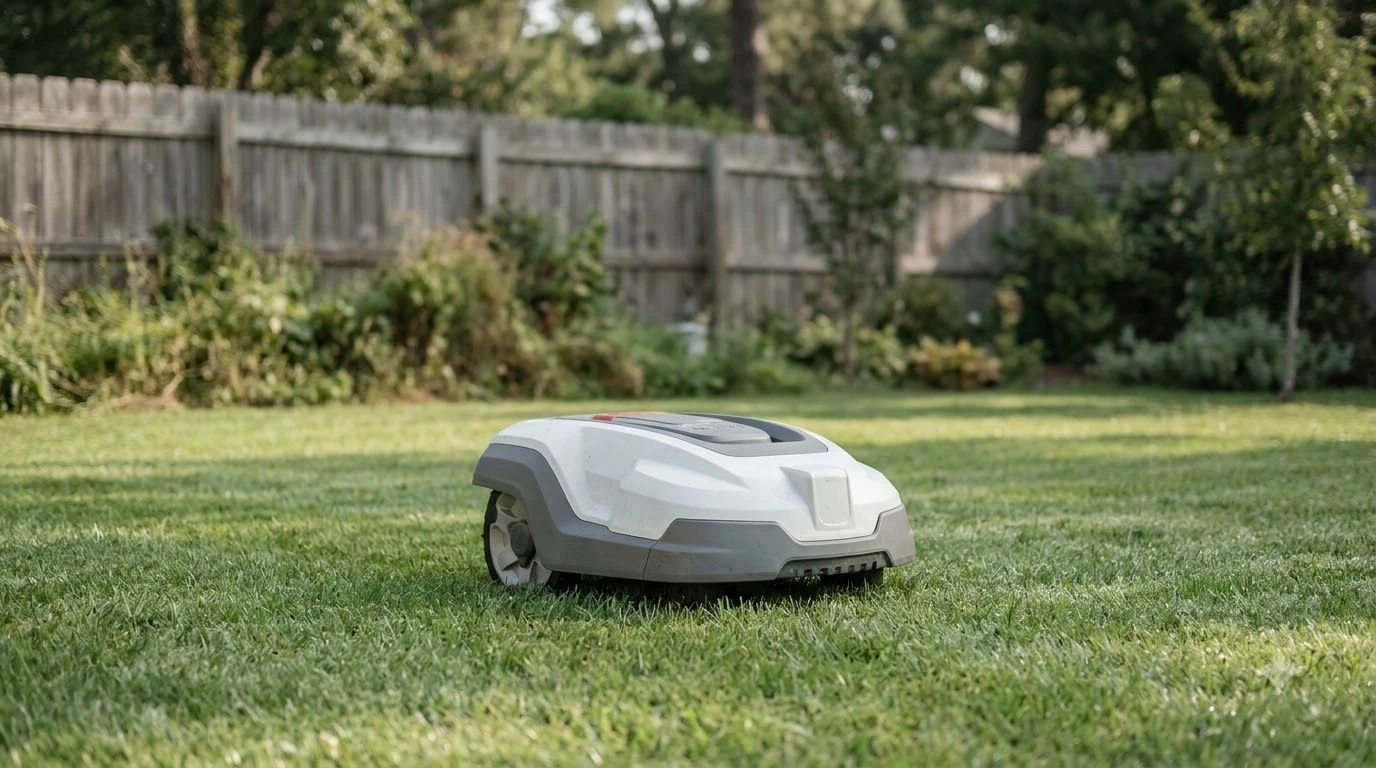

The best robot mower for centipede grass is the one whose lowest cutting setting reaches the 1 to 2 inch range that extension sources give for summer. Centipede grass is a slow, low-growing warm-season turf that scalps easily, so the height limits matter more than the brand name. As of 2026-11-11, the sources read for this guide agree on the core range. This guide explains what to check and does not rank models.
The short answer
- Target 1 to 2 inches. Clemson HGIC gives 1 to 2 inches for May to August, and UF/IFAS gives 1.5 to 2.0 inches as the optimal height.
- Check the lowest setting. A mower that cannot go down to about 1 inch cannot meet the lower end of the range.
- Follow the one-third rule. Remove no more than one-third of the blade height at one mowing.
- Confirm height changes. Look for a mower that lets you raise the cut for shade, heat and fall, and check whether you can change it from an app.
What height should centipede grass be cut at for a robot mower?
Centipede grass should be cut at about 1 to 2 inches during its main growing months (see also our guide to the best mowing height for centipede grass). Clemson HGIC gives 1 to 2 inches for May to August, depending on site and management, and about 2 inches in partial shade. UF/IFAS lists 1.5 to 2.0 inches as the optimal mowing height. The Alabama Cooperative Extension System gives a lower range of 1 to 1.5 inches, and NC State Extension gives 1 to 2 inches in spring and fall, while warning against letting the grass grow past 2.5 inches.
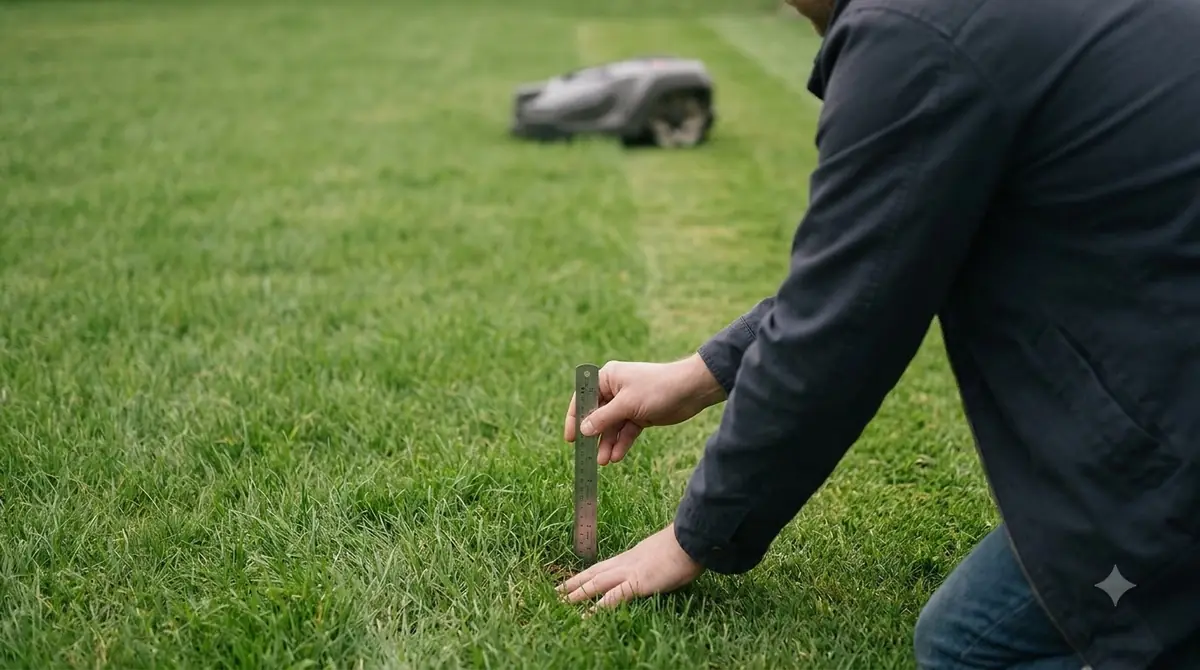
The difference between these sources is small, and it matters for a robot. If your lowest setting is 2 inches, you can meet most of the range, but you cannot reach the 1-inch figure that Clemson uses for spring. If the mower’s highest setting is 2 inches, a shaded or stressed lawn will need a height the mower cannot give.
| Season or condition | Height for centipede grass | Source |
|---|---|---|
| May to August | 1 to 2 inches | Clemson HGIC |
| Partial shade | About 2 inches | Clemson HGIC |
| January to April | About 1 inch, set just before green-up | Clemson HGIC |
| Spring and fall | 1 to 2 inches, not above 2.5 inches | NC State Extension |
| Optimal range | 1.5 to 2.0 inches | UF/IFAS |
Our reading: for a single robot setting that works most of the year, a lowest setting near 1.5 inches and a highest setting near 2 inches covers the range in the table above. A mower that offers that span gives you room to adjust without leaving the range.
Why the lowest setting matters more than the brand
The lowest setting decides how short the mower can cut, and it is the spec most often missed when people look for the best robot mower for centipede grass. LawnRobotHQ, a publisher of robot mower guides, advises buyers to check the lowest cutting setting and not only the highest. It states that “plenty of robot mowers bottom out around 20 to 25 mm (0.8 to 1 inch),” and that some models start at 40 mm, which can be too high for tightly kept grass. The same publisher says most robot mowers cover centipede’s commonly cited 1.5 to 2 inch range, so the lowest setting is the one to verify.
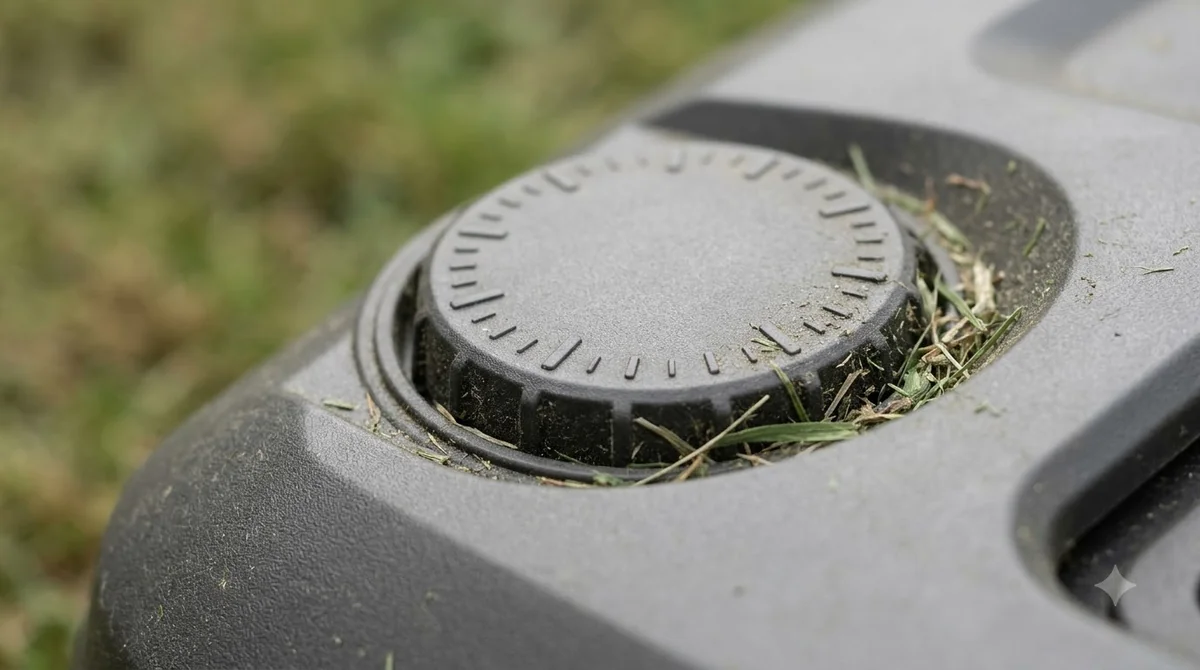
Retail and blog sources list robot mower heights as a range for each model. FinestLawns, a blog that compiles these specs, gives examples such as 1.0 to 2.7 inches for the Mammotion LUBA 2 AWD X series, 1.2 to 3.6 inches for the Ecovacs GOAT series, and 2.2 to 4.0 inches for the Mammotion LUBA 2 AWD HX series. The same blog says the Segway Navimow i Series tops out at 3.6 inches and the Husqvarna 430X at 2.4 inches. These are the blog’s listed figures, not manufacturer pages, so confirm them in the model’s manual before you buy.
Our reading: a model whose range starts at 2.2 inches cannot cut centipede at the 1-inch spring height, and a model that starts at 1.0 inches can. Compare the lowest number in each spec sheet with the centipede range first, then compare everything else.

How scalping and the one-third rule shape a robot schedule
Scalping happens when too much of the grass is removed at once or the cut is set too low, as described in what happens if you cut grass too short. UF/IFAS says removing too much shoot tissue at once can cause long-term turf damage, and recommends removing no more than one-third of the blade height in one mowing. Mammotion, a robot mower maker, uses the same wording in its guide to grass height, and adds that cutting below the appropriate height can expose the crowns or remove too much green leaf tissue.
Clemson gives the same warning for early spring. It says not to set the mower too low, because it may scalp the lawn. Alabama Cooperative Extension takes a slightly different measure and says no more than 30 percent of the leaf area should be removed per mowing, and it notes that when centipede is managed properly it produces little thatch and is not subject to scalping.
Frequency follows from the one third rule for mowing grass. UF/IFAS gives a table of every 10 to 14 days, while Clemson describes centipede as needing infrequent mowing and gives no fixed schedule. Our notes on how often to mow centipede grass cover the details. These two statements do not conflict as much as they seem: a lawn that grows faster in a warm, wet spell needs more runs to keep within the one-third rule.
Our reading: a robot that runs on a fixed daily timer may cut too often in slow months and too rarely in peak growth. Look for a schedule you can change by season, since the best robot mower for centipede grass runs less in slow months and more in late spring and summer.
Seasonal and stress height changes a robot must follow
Centipede grass needs a different height in each season, and Clemson gives the clearest sequence. It advises about 1 inch from January to April, set just before green-up. Once nights fall below 70 degrees Fahrenheit in fall, the cut should go up to about 2 inches. During heat or drought stress, Clemson says to raise the height by half an inch to one inch until the stress ends.
NC State Extension gives a winter note that matters for robot owners. In winter, it says to mow only to remove leaves and debris, at a height of 1 to 2 inches. That means a robot that runs its full schedule in December can cut dormant grass for no benefit.
Our reading: the spring and fall height changes are the ones most often missed. Set a reminder for each change, and check whether the mower can store a seasonal profile or whether you must make the change by hand on the mower.
Model ranges: what published specs show
Published robot mower height specs differ by model, so the best robot mower for centipede grass depends on those numbers. The table below lists the examples from the FinestLawns blog so you can see the spread. The figures are the blog’s listed values and should be checked against each manufacturer’s manual.
| Model series (as listed by FinestLawns) | Listed height range | Fit for centipede’s 1 to 2 inch range |
|---|---|---|
| Mammotion LUBA 2 AWD X | 1.0 to 2.7 inches | Covers 1 inch and up to 2.7 inches |
| Ecovacs GOAT series | 1.2 to 3.6 inches | Starts above 1 inch |
| Mammotion LUBA 2 AWD HX | 2.2 to 4.0 inches | Starts above 2 inches |
| Segway Navimow i Series | Top setting 3.6 inches | Check the lowest setting in the manual |
| Husqvarna 430X | Top setting 2.4 inches | Check the lowest setting in the manual |
The blog also notes an adjustment difference. Premium models let you change the height from the app, while budget models require turning a dial on the mower itself. For centipede, where the cut should move across the seasons, the app method saves a trip to the lawn each time.
Best robot mower for centipede grass: a checklist
No source in this guide ranks robot mowers for centipede grass, so the list below is a checklist for choosing the best robot mower for centipede grass on your own lawn. It draws on the extension and manufacturer figures above, and the robot-specific wording is our reading. If you pick the best robot mower for centipede grass by these checks, you avoid the most common mismatch, a minimum height that is too high.
- Lowest setting. Confirm the mower goes down to about 1 inch, or as close as the manual allows.
- Highest setting. Confirm it reaches about 2 inches for shade and fall.
- Height changes. Choose a mower where you can change the cut from the app, not only from a dial.
- Run schedule. Look for a schedule you can set by season, and reduce runs in winter when the grass is dormant.
- Blades. Clemson advises sharpening the blade about once a month in the growing season, so check how the robot blades are replaced and sharpened.
- Slope and shade. Check the slope rating and any shade or zone setting, since shaded areas need a higher cut.
Frequently asked questions
Does centipede grass need frequent mowing?
The sources differ. UF/IFAS gives a table of every 10 to 14 days, while Clemson describes centipede as needing infrequent mowing. The one-third rule is the safer guide: mow when the grass grows past what that rule allows.
What is the best height for centipede grass in summer?
Clemson HGIC gives 1 to 2 inches for May to August, depending on site and management. In partial shade, Clemson recommends about 2 inches.
Can a robot mower scalp centipede grass?
Yes, if the height is set too low or too much leaf is removed at once. UF/IFAS and Clemson both warn about this, and Alabama Cooperative Extension says properly managed centipede is not subject to scalping.
Should centipede grass be cut lower in spring?
Clemson advises lowering the cut to about 1 inch just before green-up in January to April, but not setting it too low, since that can scalp the lawn. Raise it again in fall once nights fall below 70 degrees Fahrenheit.
Sources
- Centipedegrass Maintenance Calendar (Clemson HGIC): summer, shade, spring and fall heights, stress raising, spring scalping warning, blade sharpening.
- Mowing Your Florida Lawn (UF/IFAS): optimal height, one-third rule, scalping damage, mowing frequency table.
- Home Lawns: Centipedegrass (Alabama Cooperative Extension System): height range, 30 percent leaf-area rule, stress mowing, scalping note.
- Centipedegrass Lawn Maintenance Calendar (NC State Extension): spring and fall heights and the winter note on leaves and debris.
- Best Height to Cut Grass (Mammotion, robot mower maker): typical centipede height, one-third rule wording, scalping explanation.
- Robot Mowers on Bermuda, Zoysia and St. Augustine Grass (LawnRobotHQ): centipede range, lowest-setting advice, robot mower minimum heights.
- Robotic Lawn Mower Specs Explained (FinestLawns): how cutting height is listed per model, and the example ranges and adjustment methods.
 Up next9 min readBy YardBest AWD Robot Mower for Hilly Backyard: 6 Things to Check Before You BuyUpdated Nov 13, 2026
 11 min readBy YardBest Robot Mower for Complex Yards: 6 Checks to MakeUpdated Nov 16, 2026
 8 min readBy YardCan a Robot Mower Cut Centipede Grass? Heights and LimitsUpdated Nov 11, 2026
 7 min readBy YardBest Mowing Height for Centipede GrassUpdated Nov 11, 2026
 8 min readBy YardHow Often to Mow Centipede GrassUpdated Nov 11, 2026
 7 min readBy YardBest Robot Mower for Perennial Ryegrass: What to Check Before You BuyUpdated Nov 11, 2026