
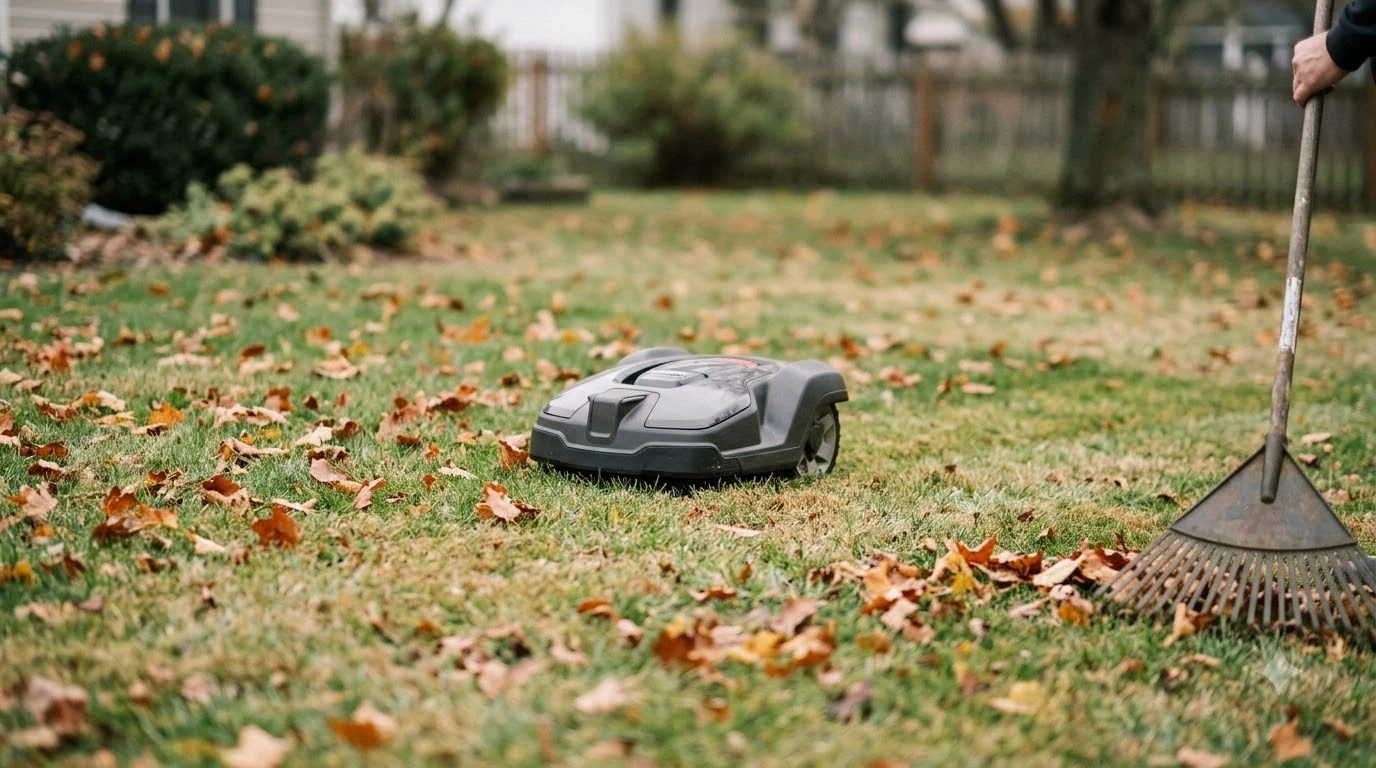

A robot mower for a high altitude yard works the same way as one at lower elevation, but you should check battery temperature limits, charging station placement and your grass type before you buy. The sources we read do not give a separate altitude rule for robot mowers. The checks that matter most are heat, cold, direct sun and the cutting height your grass can handle.
The short answer
- Altitude alone: no altitude-specific rule for robot mowers appeared in the sources we read.
- Battery: Husqvarna says a battery temperature message usually needs no action, and the mower resumes once the battery is back in range.
- Charging station: place it in a shaded or cool spot to help the battery run reliably for longer.
- Cutting height: CSU Extension gives 2 to 3.5 inches for Colorado turfgrass.
- Mowing frequency: never remove more than one-third of the blade in one mowing.
What a robot mower for a high altitude yard changes
Elevation on its own is not a setting you adjust on a robot mower. A robot mower for a high altitude yard reads its own battery temperature and its position in the yard, then runs the schedule you set, just as it would at sea level. We did not find an extension guide or manufacturer manual that states an altitude limit for robot mowers, so this guide does not invent one.
What changes at elevation is usually the climate around the yard: larger swings between day and night temperatures, stronger sun, and a shorter cool growing season for some grasses. Those factors affect the battery and the grass, and the sections below cover what the sources say about each. If winter in your high elevation yard brings snow, see the temperature and storage limits for a snowy region.
Battery temperature and the charging station
Battery temperature is the first thing to check for a robot mower for a high altitude yard. Husqvarna explains that its Automower shows the message “Battery temperature outside limits” when the battery leaves its operating range. The company says that in most cases no action is needed, and the mower will resume its schedule once the battery returns to the acceptable range.
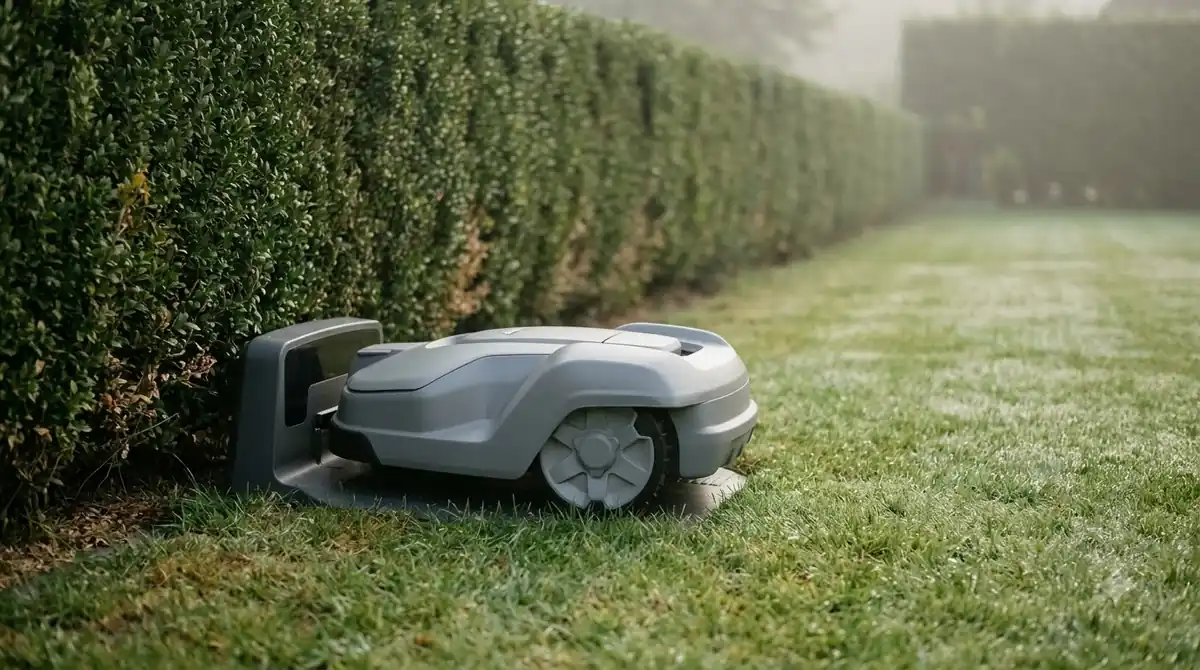
If the message appears often while the mower charges, Husqvarna suggests the station may be exposed to excessive heat or direct sun, and advises moving it to a shaded area. The same company page recommends a shaded or cool location, saying it can help keep the battery running reliably for longer.
- Occasional message: usually no action needed, per Husqvarna.
- Frequent message while charging: check the station for direct sun or heat, then move it to shade.
- Mower returns to the station too often: Husqvarna lists this as a sign of a worn battery.
Husqvarna says batteries last on average around 2 to 4 years, depending on the running time set and the size of the lawn. That is a manufacturer figure for its own mowers, so check the battery specification for the model you are considering. Cold weather is a separate question, covered in our note on whether a robot mower can stay outside in winter.
Choosing a cutting height for lawns at elevation
The grass, not the mower, sets the cutting height in a high altitude yard. Colorado State University Extension gives 2 to 3.5 inches as the preferred height for Colorado turfgrass. Denver Water, citing CSU Extension and the Associated Landscape Contractors of Colorado, gives 2.5 to 3 inches for Kentucky bluegrass and recommends raising the blade to 3 to 4 inches in dry conditions.
| Source | Grass | Recommended height |
|---|---|---|
| CSU Extension (Plant Talk 1515) | Colorado turfgrass in general | 2 to 3.5 inches |
| Denver Water, citing CSU and ALCC | Kentucky bluegrass | 2.5 to 3 inches |
| Denver Water, citing CSU and ALCC | Kentucky bluegrass in dry conditions | 3 to 4 inches |
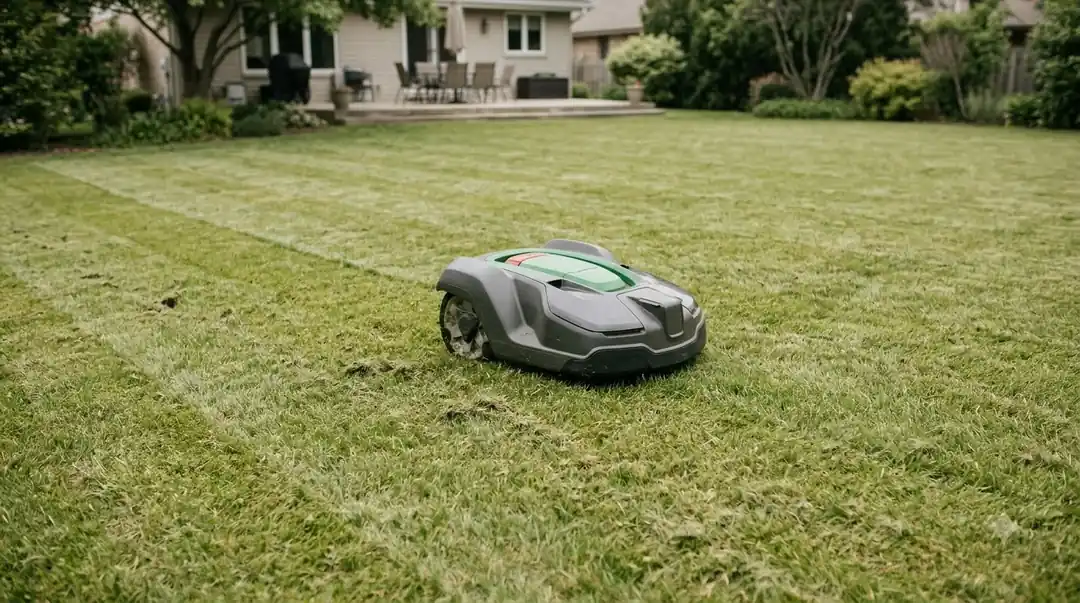
For a robot mower for a high altitude yard, CSU warns that mowing below 2 inches can reduce drought and heat tolerance and raise the risk of insect, disease and weed problems. It also says scalping is never recommended. If your robot mower’s lowest setting is below 2 inches, keep it at the higher end of the range during hot or dry spells. The lowest cutting height a robot mower allows varies by model, so check it before you rely on a low setting.
Heads up
The Denver Water page is dated September 2022, and it covers only Kentucky bluegrass. Check the current guidance from your county extension office before you set the height.
How often a robot mower should run
The one-third rule is the main guide to frequency. CSU Extension says to mow often enough that no more than one-third of the grass blade is removed in a single mowing. Its page notes that mowing may be needed every 4 to 10 days, depending on how fast the grass grows.
For a robot mower for a high altitude yard, this rule matters because the grass can grow fast in the warm months. A robot mower suits this rule well because it can run in short sessions. Our reading is that the schedule should follow growth rather than the calendar: more runs in spring and early summer, fewer when the grass slows down in dry or cold weather. A dry summer calls for different mowing settings for a drought-prone lawn, and cool-season lawns have their own robot mower choices for Kentucky bluegrass and fescue.
Frequently asked questions about a robot mower for a high altitude yard
Does altitude affect a robot mower battery?
The sources we read do not give an altitude figure for robot mower batteries. Husqvarna’s guidance is about temperature, so watch for the “Battery temperature outside limits” message and keep the charging station shaded or cool.
What cutting height should I use at elevation?
CSU Extension gives 2 to 3.5 inches as the preferred range for Colorado turfgrass. Denver Water gives 2.5 to 3 inches for Kentucky bluegrass, and 3 to 4 inches in dry conditions. Stay above 2 inches to protect against heat and drought stress.
Where should I put the charging station?
Husqvarna advises a shaded or cool location, which can help the battery run reliably for longer. If the temperature message appears often while charging, move the station out of direct sun or heat.
How long does a robot mower battery last?
Husqvarna says its batteries last around 2 to 4 years on average, depending on running time and lawn size. A mower that returns to its station too often may have a worn battery.
Sources
- Battery temperature outside limits: Automower error message (Husqvarna): temperature message, resume behavior, shaded charging station.
- Battery life of a robot lawn mower (Husqvarna): shaded or cool station, 2 to 4 year battery life, worn battery signs.
- 1515 Mowing Guidelines (Colorado State University Extension): preferred height, low-cut stress, one-third rule.
- Your lawn mower right height (Denver Water, 2022): Kentucky bluegrass height and dry-condition advice, citing CSU Extension.
 Up next7 min readBy YardRobot Mower for a Drought Prone Area: 4 Settings to ChangeUpdated Nov 11, 2026
 8 min readBy YardRobot Mower Under Trees: What Changes and What to DoUpdated Nov 11, 2026
 8 min readBy YardMowing Lawn in Summer Heat and Drought: What to ChangeUpdated Nov 11, 2026
 8 min readBy YardBest Robot Mower for a Yard With Tree Roots: What to CheckUpdated Nov 13, 2026
 9 min readBy YardBest Robot Mower for a Yard With Sprinkler Heads: 5 ChecksUpdated Nov 13, 2026
 6 min readBy YardBest Robot Mower for a Yard With a 3 Foot Side Passage: What to CheckUpdated Nov 13, 2026