
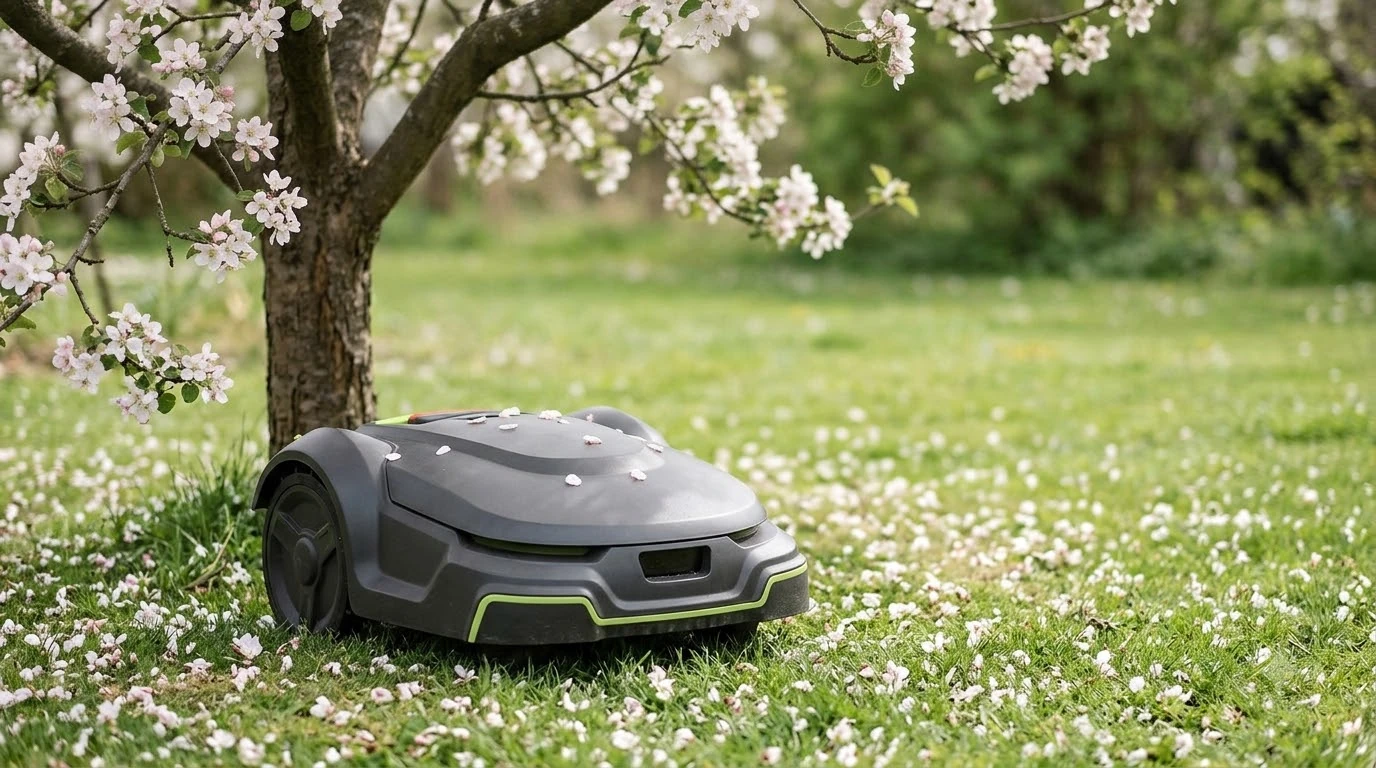

Do robot mowers hurt bees and pollinators? In the sources we read, no study measures bee deaths caused by a robot mower. The documented risk falls mainly on small wildlife such as hedgehogs, and on short lawns that leave fewer flowers and safe spaces for insects. Cutting height, daylight-only running and no-mow zones change the picture most.
The short answer
- Direct harm to bees: not documented in the sources we found, so it is undetermined rather than disproven.
- Best-studied risk: small animals, mainly hedgehogs, which some models failed to detect.
- Biggest pollinator factor: a short lawn with few flowers.
- Practical fixes: mow in daylight, raise the cutting height, and keep a no-mow zone for flowers.
Do robot mowers hurt bees and pollinators directly?
No study we found measures bee losses caused by robot mowers, so direct harm to bees is undocumented rather than disproven. The manufacturer material we read does not claim a bee-specific risk either. Gardena lists bees alongside hedgehogs and butterflies when it explains that a shorter lawn means fewer safe spaces for wildlife. That is a habitat point, not a claim that the mower kills bees.
Husqvarna takes the same habitat angle, which is why the question “do robot mowers hurt bees and pollinators” is mostly about the lawn around the machine. Its bee guidance says that the welfare of bees and other insects matters to many people, and it names yellow sweet clover as a good source of nectar. For a reader, the practical question is therefore less “does the mower strike a bee” and more “how much forage does the lawn still offer.” Whether robot mowers hurt bees and pollinators depends mostly on that forage.
Why hedgehogs are the wildlife risk that is documented
Robot mowers have a documented, measured risk to small animals, and hedgehogs are the best-studied case. A 2021 study tested 18 models of robotic lawn mowers in 216 tests, all carried out during daylight. None of the mowers was able to detect dependent juvenile hedgehogs under 200 g. Our guide to robot mowers and night-time wildlife covers that study in more detail. The authors wrote that they cannot be confident that any of the robotic lawn mowers tested were entirely safe to hedgehogs.
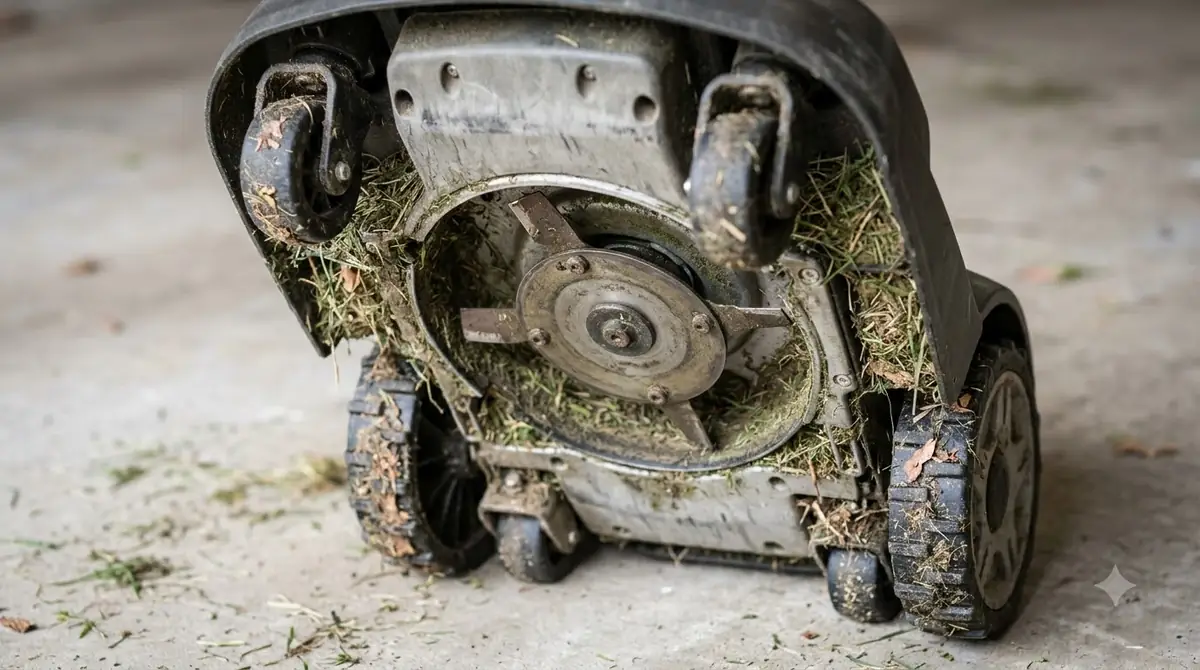
Blade design made a difference in that study. The authors describe pivoting blades that fold into a protective frame when they hit something harder than grass, and the study links pivoting blades to fewer damages during the tests. Gardena says its mowers use pivoting blades, and that most models add skid plates or front wheel drive as further safety features.
- Run in daylight: Gardena says to mow only in daylight because hedgehogs are crepuscular and nocturnal.
- Check first: the Oxford biology team advises checking the lawn for hedgehogs before switching the mower on.
- Look at the blades: pivoting blades and skid plates are the design features the sources name.
Why short lawns leave pollinators less to feed on
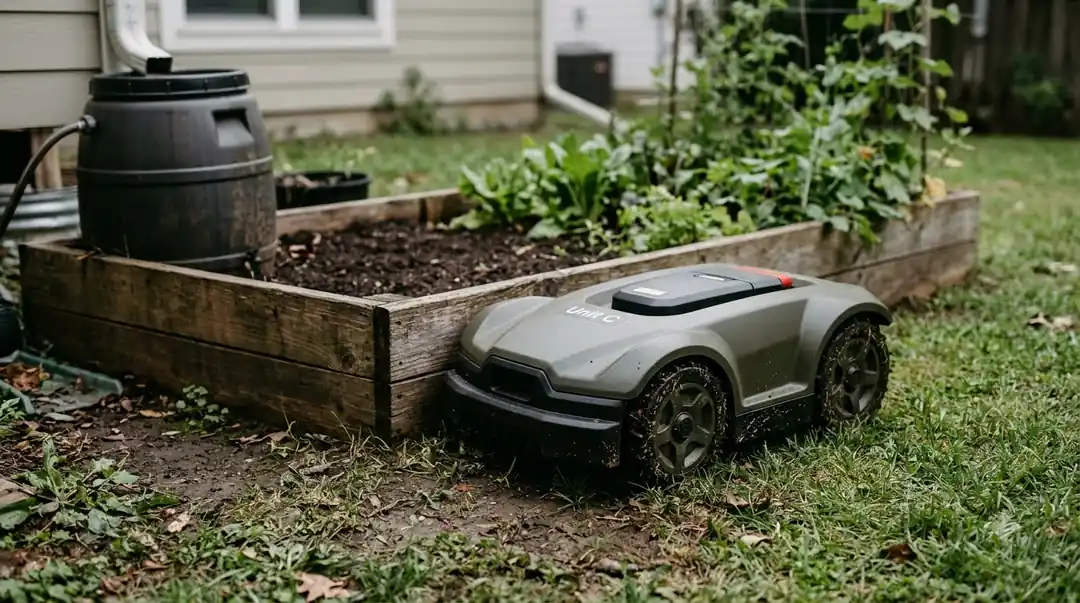
Lawns are generally poor pollinator habitat, and cutting height is the simplest lever a homeowner controls when thinking about whether robot mowers hurt bees and pollinators. See what height a robot mower should cut grass for the general settings. Colorado State Extension states that lawns generally are not abundant or diverse resources for pollinators. The same page suggests raising the mower to 3.5 inches, or 4 inches if the mower allows. It also states the one-third rule: mowing more than one-third of the grass height stresses the grass.
Clover and dandelions are the flowers most lawns already have, and they tolerate mowing. Colorado State says the flowers often found in lawns, including dandelions, clovers and black medic, flower under most mowing heights. Husqvarna says that setting its robotic mower to the highest level, up to 7 cm, lets low plants such as clover and daisies bloom at a lower level, which creates a short meadow. That is a manufacturer statement and we did not find an independent test of it.
| Source | Cutting height guidance | Relevance to pollinators |
|---|---|---|
| Colorado State Extension | 3.5 inches, or 4 inches if the mower allows | Lawns are generally not rich pollinator resources |
| Iowa State Extension (No Mow May) | 3.5 inches, or a little higher in May | Higher height in May gives flowers time to bloom |
| Husqvarna (robotic mower guidance) | Highest level, up to 7 cm | Clover and daisies can bloom at a lower level |
Taller cutting is not a complete fix for pollinators, so the answer to whether robot mowers hurt bees and pollinators is never just about height. Husqvarna itself notes that many families want a lawn without clover and other intruders, so a higher setting trades some tidy-lawn look for flowers. The sources we read do not say how many extra flowers a given height produces, so treat the height as a direction, not a guaranteed result.
How no-mow zones and rewilding modes work
A no-mow zone leaves part of the lawn uncut so flowers can bloom and set seed. Most brands call it a no-go zone, and we explain how to set up no-go zones on a robot mower separately. Gardena advises defining no-mow areas in its app and sowing wildflowers in them, and it suggests including hedges, shrubs and patches of wild flowers. Husqvarna describes the same idea as a stay-out zone, and says the flowers can reseed in the same place each year.
- Rewilding mode: Husqvarna’s rewilding mode keeps about 10% of the lawn unmown, according to a PopSci report on the feature.
- Zone shape: owners can change the zone’s shape, size and placement, and the mower’s GPS keeps it out of those areas.
- Company figure: the 10% number comes from Husqvarna, and the article quotes no independent pollinator researchers.
Our reading is that a no-mow zone is most useful when it is planted or left to bloom, not simply left to grow. The sources we read do not measure how quickly a neglected patch turns into useful forage, so plan for a season or more of observation rather than an immediate result.
What to check before running a mower near pollinator areas
Set up the mower so that the hedgehog and pollinator risks are both covered. The steps below combine the daylight advice with the height and zone guidance above.
- Schedule daylight only. Gardena and Oxford both point to daytime running, because hedgehogs are mainly active at night.
- Check the lawn before each run. Look for hedgehogs before you switch the mower on.
- Raise the cutting height. Colorado State suggests 3.5 to 4 inches, and Husqvarna’s highest setting is up to 7 cm.
- Mark a no-mow zone. Use the app’s stay-out or no-go feature around a flower patch or a bed of clover. The robot mower for a yard with flower beds guide lists what to check.
- Pick a mower with pivoting blades. The 2021 study links them to fewer damages during its tests.
Scope note: these steps, which are our practical answer to “do robot mowers hurt bees and pollinators”, reduce documented risks to hedgehogs and improve forage for pollinators. They do not prove that a mower is harmless to every insect, and the sources do not give a clearance distance from flowers.
Frequently asked questions
Do robot mowers kill bees?
The sources we read do not measure it. We found no study of bee deaths caused by robot mowers. Gardena and Husqvarna name bees as wildlife that benefits from taller lawns and flowers, which points to habitat as the bigger factor.
Should I run my robot mower at night?
No, according to Gardena and the Oxford biology team, who both advise daylight running. Hedgehogs are mainly nocturnal, and Gardena warns that an overnight mower may endanger animals whether they hear it or not. The 2021 hedgehog study also ran all its tests during daylight.
Does cutting higher help clover bloom?
Husqvarna says a higher setting lets clover and daisies bloom at a lower level. Colorado State Extension says the flowers often found in lawns, including clovers and dandelions, flower under most mowing heights. A higher height helps, but the sources do not give a number of flowers it will produce.
Does a robot mower hurt butterflies?
Gardena lists butterflies among the wildlife affected by very short lawns and by overnight running. We found no study that measures butterfly deaths caused by robot mowers, so the evidence we read is about habitat and timing rather than direct harm.
Sources
- Robotic lawn mower hedgehog study (Animals journal, 2021) (peer-reviewed study): 18 models, 216 daylight tests, juvenile hedgehog detection, blade design.
- Colorado State Extension, No Mow May and pollinators (university extension): lawns and pollinators, mowing height, one-third rule.
- Iowa State Extension, tips for No Mow May (university extension): 3.5-inch height in May.
- Gardena, protecting hedgehogs and butterflies (manufacturer): daylight mowing, blades, no-mow zones, shorter lawns and wildlife.
- Husqvarna, tips for a bee-friendly garden (manufacturer): highest mowing level, clover and daisies, stay-out zones.
- Popular Science, Husqvarna rewilding mode (publisher): about 10% of the lawn kept unmown; company figure.
- University of Oxford, hedgehog safety test for robotic lawnmowers (university research): hedgehogs mainly nocturnal, daylight running, check the lawn first.
 Up next7 min readLearnDo Robot Mowers Hurt Frogs and Toads?Updated Nov 11, 2026
 7 min readLearnDo Robot Mowers Scalp the Lawn? Causes and How to Prevent ItUpdated Nov 12, 2026
 8 min readLearnDo Noise Ordinances Apply to Robot Lawn Mowers?Updated Nov 12, 2026
 7 min readLearnHow Much Does a Robot Mower Charging Station Cost to Replace?Updated Nov 12, 2026
 9 min readLearnRobot mower wifi keeps disconnecting: causes and fixesUpdated Nov 12, 2026
 8 min readLearnHow Long Does the Worx Landroid Vision Battery Last?Updated Nov 12, 2026