

Can a robot mower work in an irregular shaped lawn? Yes, in most cases. The outline matters less than the narrow passages, tight corners and steep slopes it creates. Manufacturer manuals give the numbers that decide it: a minimum passage width of about 60 cm with a guide wire, or 1.5 m to 2 m without one, and a maximum incline that depends on the model.
The short answer
- Most irregular lawns are workable. Husqvarna describes irregular mowing as ideal for lawns with complex work areas and many obstacles.
- Passages set the limit. Gardena lists 60 cm wire to wire as the minimum for its models, and 1.5 m for a long narrow passage without a guide wire.
- Corners stay partly uncut. Husqvarna notes that grass in sharp corners can stay uncut because of the mower’s size and turning space.
- Check the slope. Gardena lists maximum inclines of 25% to 35% depending on the model.
Can a robot mower work in an irregular shaped lawn? How shape matters
Shape matters when it creates narrow strips, pockets and sharp corners that the mower has to turn in. A plain rectangle is the easiest case. Robomow notes that a robotic lawnmower achieves maximum area output on a simple, optimally rectangular area, and that rarely describes a real garden. The more the outline bends, the more the mower has to navigate around beds, trees and walkways.
Uneven ground adds a second problem. Robomow says bumps and rough spots always produce an irregular cutting pattern that looks messy, so an irregular lawn that is also uneven will show more patchy cutting than a flat one.
- Narrow strips: the mower needs a corridor it can enter and leave.
- Pockets and corners: the mower needs room to turn, so edges may be missed.
- Obstacles: trampolines, flower beds and trees add turns and blind spots.
Mowing modes for irregular lawns
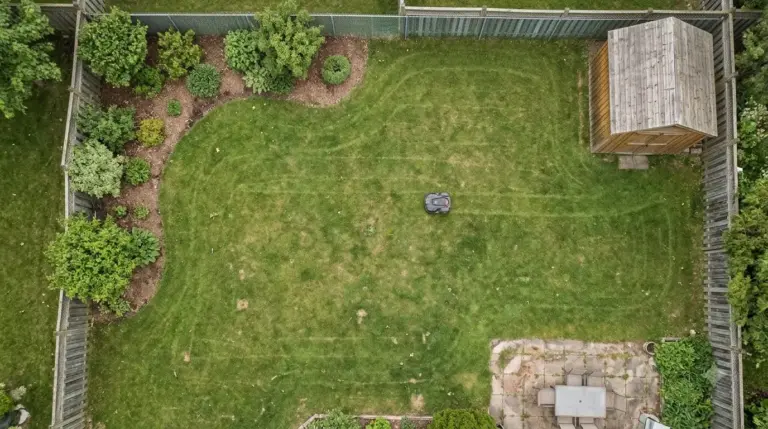
Husqvarna describes two main patterns for its Automower range. Systematic mowing gives the striped effect and suits flat, open areas with few obstacles. Irregular mowing is the mode it recommends for lawns with slopes, complex work areas and many obstacles, and it gives an even cut because the lawn is mowed uniformly from all directions.
| Mode (Husqvarna) | Suited to | What the source says |
|---|---|---|
| Systematic (striped) | Flat, open areas with few obstacles | Increases work area capacity by at least 50% on typical residential lawns |
| Irregular | Lawns with slopes, complex work areas, many obstacles | Cuts uniformly from all directions; no numeric figures given |
Systematic mowing gives the larger capacity gain, but Husqvarna ties it to open ground. For a lawn full of pockets, our reading of its guidance is that the irregular mode is the better fit, though it does not give a number for that mode. So can a robot mower work in an irregular shaped lawn full of pockets? Husqvarna’s guidance points to irregular mode as the answer.
Narrow passages and corridors
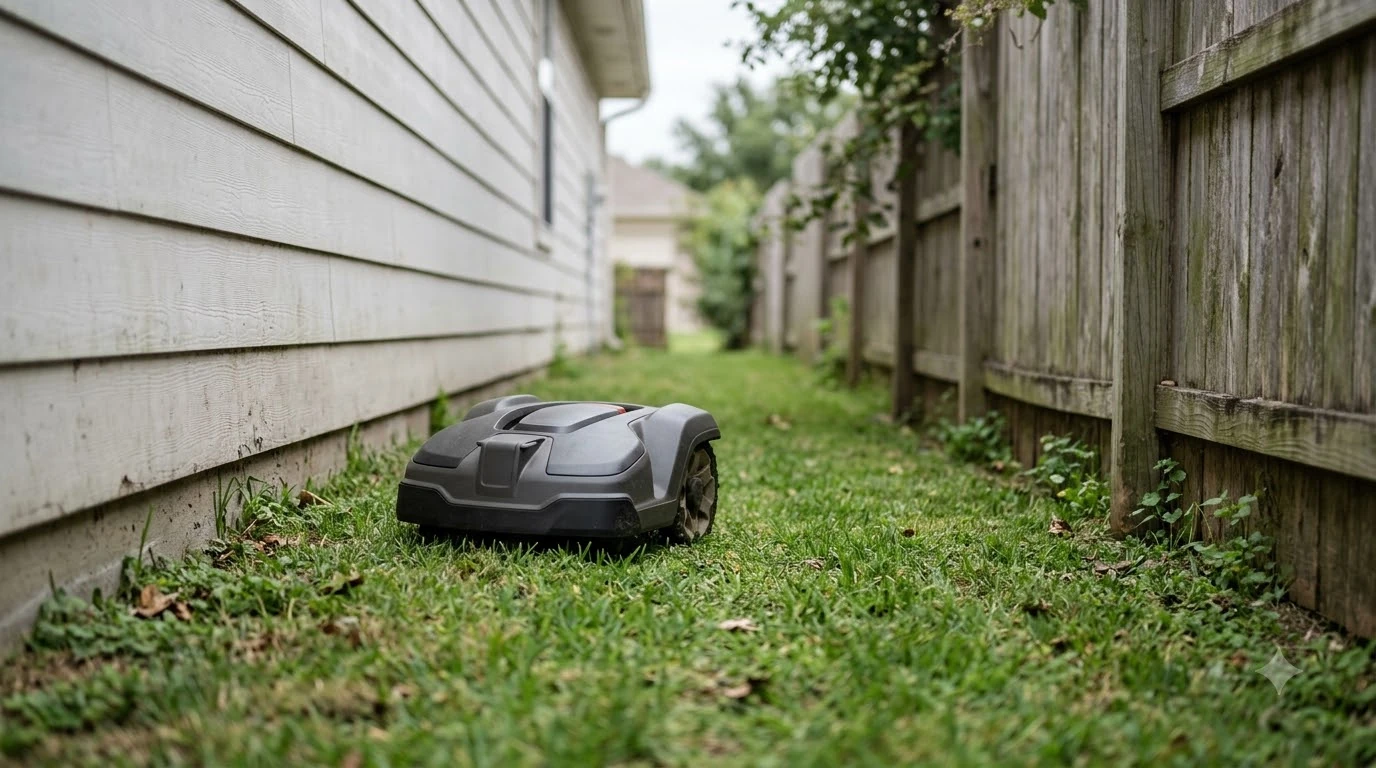
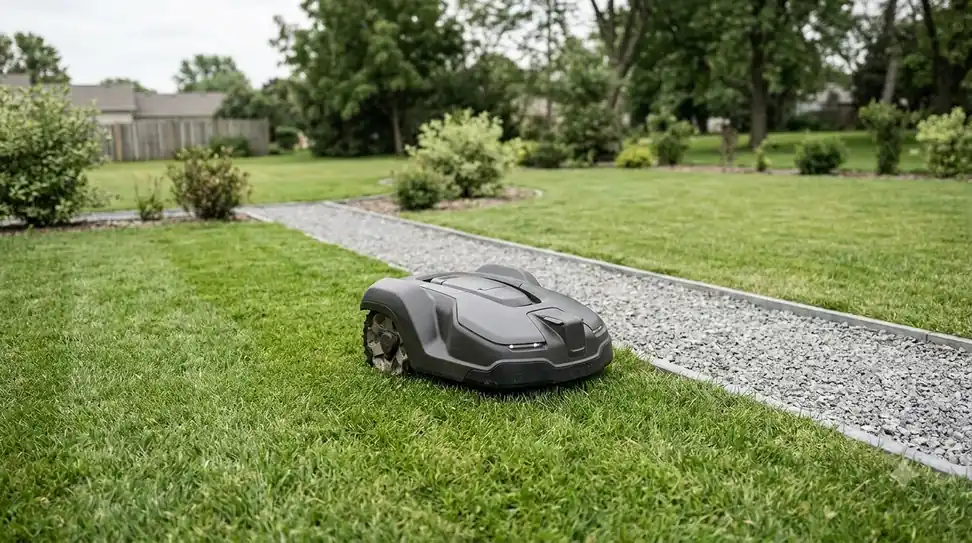
A narrow passage is the most common limit on an irregular lawn. The figures below come from manufacturer manuals, and they differ depending on whether a guide wire is installed. Read them as minimums, and check the operating manual for the exact model before you lay wire. So can a robot mower work in an irregular shaped lawn with a tight corridor? Yes, as long as the corridor meets the minimum width for the model. For a different case, see how a mower handles narrow side yard passages.
| Brand | Condition | Minimum width |
|---|---|---|
| Gardena Sileno | All listed models, wire to wire | 60 cm |
| Gardena Sileno | Long narrow passage without a guide wire | 1.5 m |
| Husqvarna Automower | With a guide wire, between boundary wires | 60 cm (24 in) |
| Husqvarna Automower | Without a guide wire, between boundary wires on each side | 2 m (6 ft 6 in) |
Gardena adds that a 60 cm corridor can be mowed with its CorridorCut function, but only if a guide wire is installed. Husqvarna recommends a guide wire at least 30 cm (12 in) away from the boundary wire, and notes that the mower always runs to the left of the guide wire when facing the charging station, so the free space should be on that side.
If a passage is too tight, the mower can get stuck following the wire through it, and Husqvarna advises adjusting the corridor width. A dead-end passage is handled differently: the mower turns around and mows back through it.
Corners, obstacles and pockets
Corners are where irregular lawns lose the most grass. Husqvarna says that on its 435X AWD model, uncut grass can occur in sharp corners because of the mower’s size and the space it needs to turn. The same source notes that when an unexpected obstacle sits within about 1 m of the virtual boundary, the strip between them stays uncut.
- Sharp inside corners: expect some uncut grass. We recommend a trimmer for the last strip.
- Obstacles within about 1 m of the boundary: the strip between them can stay uncut.
- Dead-end passages: the mower goes in, turns and comes back out through the same passage.
Boundary wire and layout
An irregular lawn usually needs more boundary wire than a rectangle, because every bend and island must be followed. Worx says that laying wire takes a long time and that changing a garden layout means reworking the cable, which is why it promotes its off-limits option. That option places a stripe to create an invisible fence around no-go zones instead of a buried wire. That is a manufacturer claim, so compare it with the model you are considering.
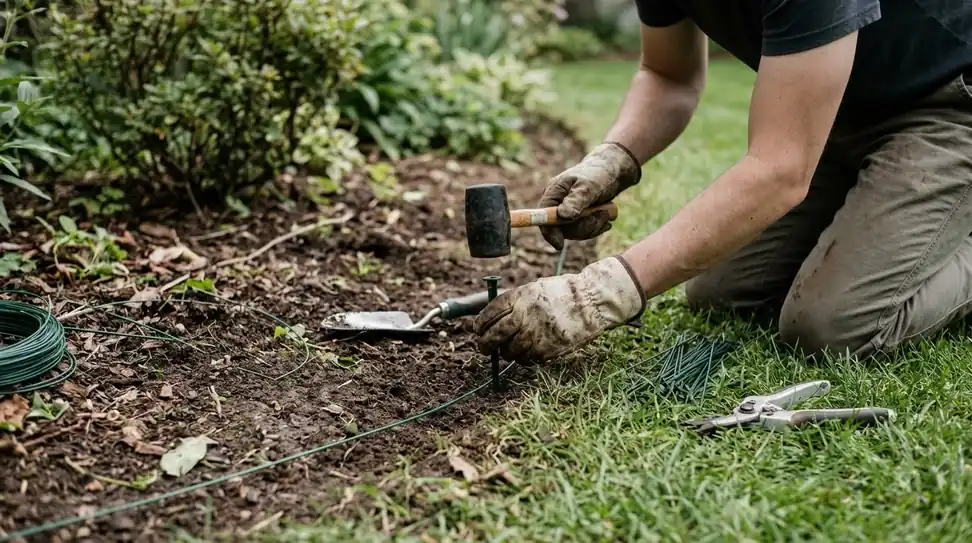
Husqvarna advises measuring the distance from the charging station to the inside of a passage before setting up a guide wire, and keeping the guide wire at least 30 cm from the boundary wire. Measure the passages first, then plan the wire around them. Lawns made of separate sections add another layer, covered in mowing multiple separate lawns.
Slopes on odd-shaped lawns
Irregular lawns often include slopes, and the incline limit is listed in the specifications. Gardena lists a maximum incline of 25% for the SILENO minimo and 35% for the SILENO city, SILENO life and SILENO+ lines. Robomow says the maximum incline is often only 20% to 25% for smaller robots and 45% or more for larger ones. Compare figures from the same manufacturer, since the two brands list different model classes. Can a robot mower work in an irregular shaped lawn that also slopes? Yes, if the steepest part stays within the incline limit of the model.
| Source | Model class | Maximum incline |
|---|---|---|
| Gardena | SILENO minimo | 25% |
| Gardena | SILENO city, SILENO life, SILENO+ | 35% |
| Robomow | Smaller robots (often) | 20% to 25% |
| Robomow | Larger robots (often) | 45% or more |
To estimate the slope in your own yard, Worx suggests placing a stud about one metre long along the steepest part of the lawn and reading the angle with a phone level app. Worx also says to confirm the mower can climb any steep parts before you buy. Robomow adds that wet weather makes slipping a risk on slopes, so check the tread as well.
What to check before you buy
The fastest way to answer “can a robot mower work in an irregular shaped lawn” for your own yard is to measure three things and compare them with the manual, not the marketing page. The guide to robot mowers in a long narrow yard covers a related shape, and the roundup of the best robot lawn mower for complex yards is a good next step.
- Narrowest passage. Measure the tightest point you need the mower to cross, and compare it with 60 cm, 1.5 m or 2 m depending on guide wire use.
- Steepest slope. Use a stud and level app, then compare with the manufacturer’s maximum incline.
- Corners and obstacles. Note the sharp corners and any obstacle within about 1 m of your planned boundary.
Heads up
Minimum widths and inclines are the manufacturer’s figures for the conditions in each manual. A lawn that just meets them may still cut unevenly in corners, so plan for some hand trimming.
Frequently asked questions
Does a robot mower need a guide wire for a narrow passage?
For the narrower widths, yes. Gardena says a 60 cm corridor can use its CorridorCut function only with a guide wire, and Husqvarna’s 60 cm figure also assumes a guide wire. Without one, Husqvarna recommends 2 m between boundary wires on each side.
What happens when a passage is a dead end?
Husqvarna says the mower turns around and mows back through the passage, so that section gets cut twice. Plan the mowing frequency with that in mind.
Is a steep slope a problem for an irregular lawn?
It can be. Gardena lists maximum inclines of 25% to 35% depending on the model, and Robomow says smaller robots often top out at 20% to 25%. Measure the steepest part before you buy.
Does an irregular lawn need more boundary wire?
Usually, because each bend and island has to be followed. Worx says laying wire takes a long time, and it offers a stripe-based off-limits option as an alternative. Check which method the model you are considering uses.
Sources
- How to create a passage in an Automower boundary wire installation (Husqvarna): passage widths, guide wire distance and dead-end behaviour.
- What is systematic mowing (Husqvarna): mowing modes, capacity figure, sharp corners and the 1 m uncut strip.
- Robotic mower support center FAQ (Gardena): minimum passage widths, CorridorCut and maximum incline by model.
- Can a robotic lawnmower mow well on uneven, difficult surfaces? (Robomow): rectangular area output, bumpy ground, and incline ranges.
- Robot mowers and complex lawns (Worx): slope estimate with a stud, boundary wire effort and off-limits option.
 Up next9 min readBy YardCan a Robot Mower Work in an L-Shaped Yard?Updated Nov 11, 2026
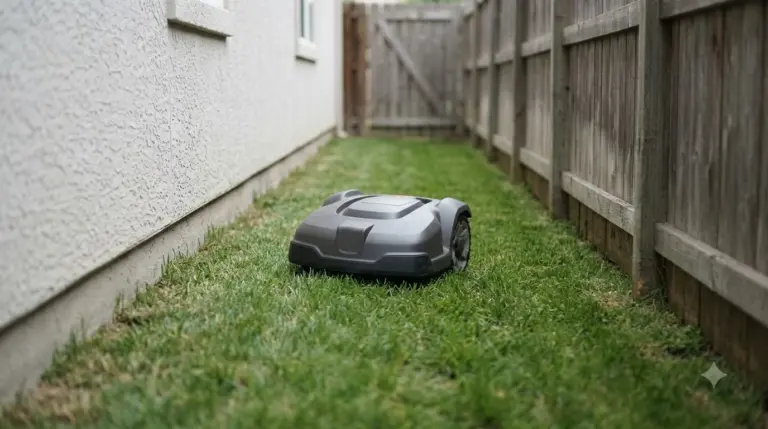 8 min readBy YardRobot Mower for Narrow Side Yard Passages: What Widths Work?Updated Nov 11, 2026
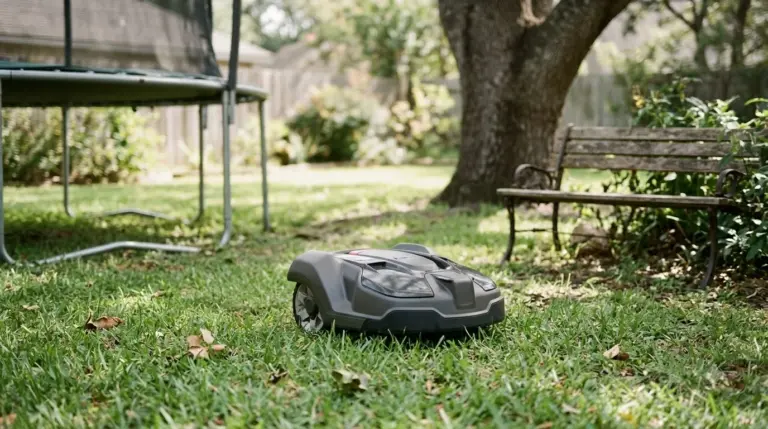 8 min readBy YardRobot Mower That Works Under Trees Without RTK: What to Look ForUpdated Nov 11, 2026
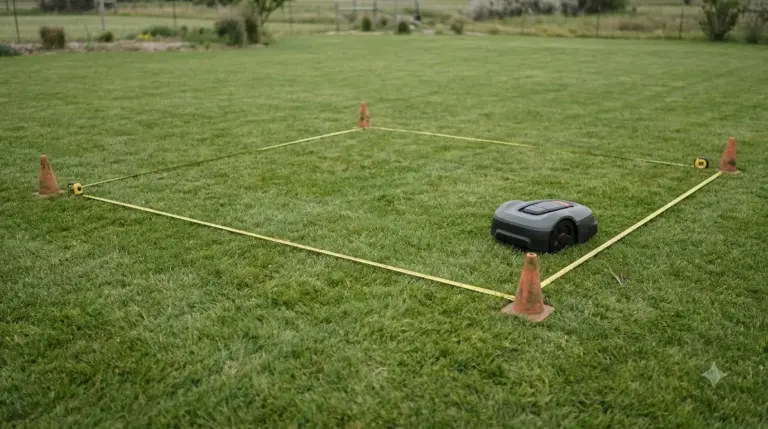 9 min readBy YardHow Do I Know If a Robot Mower Will Work in My Yard?Updated Nov 11, 2026
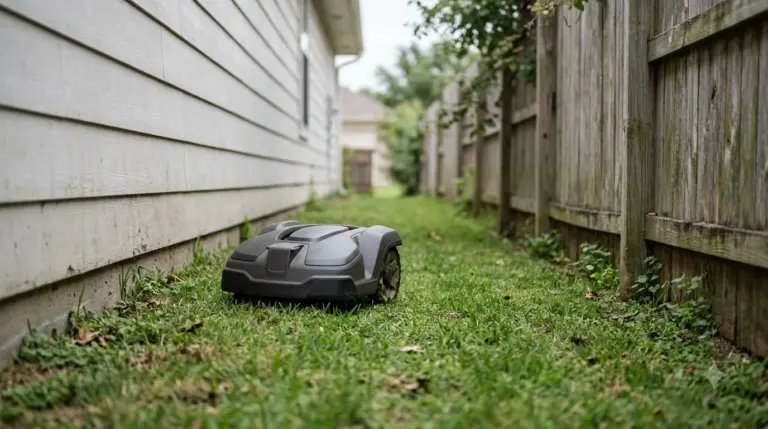 7 min readBy YardCan a Robot Mower Work in a Long Narrow Yard?Updated Nov 11, 2026
 8 min readBy YardRobot Mower and Moles or Gophers: What Actually WorksUpdated Nov 11, 2026