


Ecovacs GOAT O1000 LiDAR PRO vs Navimow i110N: the two spec sheets measure slope, runtime and navigation differently, so compare them with care. The O1000 LiDAR PRO relies on LiDAR navigation and lists a 45% work-area slope rating. The i110N is a wire-free, front-drive mower that reviewers say cannot detect cliffs, and its listed runtime is longer.
This Ecovacs GOAT O1000 LiDAR PRO vs Navimow i110N comparison uses only the manufacturer page and review or listing sources named at the end. Where a figure is missing or the sources disagree, the gap is marked rather than filled in.
The short answer
- Slope: the O1000 LiDAR PRO lists 45% (24 degrees) for its work area, while the i110N is listed at about 16 degrees, or 30%, depending on the source.
- Runtime: the O1000 LiDAR PRO is rated for 90 minutes of mowing, and the i110N for 120 minutes per charge.
- Cliffs and smart home: a PCWorld reviewer says the i110N cannot detect cliffs, and it supports Alexa, Google Home and Home Assistant.
- Warranty: the i110N is listed with a 3-year warranty, and the O1000 LiDAR PRO page does not state a term.
Spec sheet side by side for the Ecovacs GOAT O1000 LiDAR PRO vs Navimow i110N
The two mowers differ most on slope, runtime and warranty disclosure, and several fields are blank on one side. The table below shows what each source states, and “not stated” marks a figure the sources we read do not give.
| Spec | GOAT O1000 LiDAR PRO | Navimow i110N |
|---|---|---|
| Cutting height | 1.18 to 3.15 in (spec table); 1.2 to 3.1 in (description) | 2 to 3.6 in (51 to 91 mm), set by a manual dial |
| Max slope | 45% (24 degrees) work area; 17% virtual boundary | About 16 degrees (PCWorld); 30% (smarthomecompared) |
| Coverage rate | About 120 m2/h delicate; about 180 m2/h efficient | Not stated in the sources we read |
| Lawn size | Not stated | Up to 0.25 acre (10,890 sq ft) |
| Cutting width | 8.66 in mower; 7.09 in trimmer | 7.1 in |
| Navigation | HoloScope 360 Dual-LiDAR; multiline LiDAR | Wire-free; praised by PCWorld for navigation |
| Noise | 61 dBA body; 81 dBA trimmer | 58 dB (PCWorld) |
| Battery | 18 V, 5,200 mAh | Not stated in the sources we read |
| Runtime and charge | 90 min mowing; 70 min charge | 120 min per charge; 180 min charge (PCWorld) or 120 min (smarthomecompared) |
| Drive | Not stated | Front-wheel (two-wheel) drive, no all-wheel drive |
| Cliff detection | Not described on the page we read | Reviewer says it cannot detect cliffs |
| Weather rating | Not stated | IP66 (PCWorld) |
| Weight | Not stated | 24 lb (smarthomecompared) |
| Smart home | Not confirmed | Alexa, Google Home, Home Assistant (via HACS); no HomeKit, SmartThings or Matter |
| Warranty | Not stated; the page links to a returns and warranty policy | 3 years (smarthomecompared) |
Cutting height: the O1000 page gives two different ranges
The O1000 LiDAR PRO listing gives a cutting height range that is not consistent within the page. The spec table shows 1.18 to 3.15 inches with a 0.43 inch step, while the product description shows 1.2 to 3.1 inches with a 0.20 inch step. Both figures come from the Ecovacs US product page for the O1000 LiDAR PRO, and they cannot both be exact, so we would confirm the value in the owner’s manual or app before relying on either.
For the Navimow i110N, the 2 to 3.6 inch range (51 to 91 mm) appears in both PCWorld and smarthomecompared. According to smarthomecompared, the height is adjusted with a manual dial on the mower. Check the dial on your own unit before comparing the two cut heights.
Our reading: if you keep the grass short, the low end of the O1000 range matters more than the top end, and the i110N’s 2-inch floor is the number to compare against your current mower.

Slopes and cliffs are where the two mowers differ most
In this Ecovacs GOAT O1000 LiDAR PRO vs Navimow i110N slope check, the O1000 LiDAR PRO page lists a 45% slope rating (24 degrees) for its work area and a separate 17% rating for its virtual boundary. The virtual boundary figure describes a boundary limit and should not be read as the mower’s climbing limit. Because the i110N is front-wheel drive, our guide to AWD vs 2WD robot mowers for hills explains why drive type matters on slopes.
For the i110N, PCWorld’s review gives a maximum of 16 degrees and quotes the reviewer as being hesitant to recommend it for larger or sloped yards. Smarthomecompared lists 30%, which is close to 16 degrees once converted, so the two i110N sources agree within rounding.
The same PCWorld reviewer names the cliff problem directly: “My biggest criticism of the Navimow i110N is its inability to detect cliffs.” The reviewer also says the mower can be unpredictable on uneven terrain or cliffs. The O1000 LiDAR PRO page describes a multiline LiDAR and 3D time-of-flight setup, but the page we read does not make a cliff claim either way. Neither page therefore settles the cliff question on its own.
- Measure the steepest section. Use a slope app or a level, then compare the result with both ratings, converted to the same unit.
- Check for drop-offs. A retaining wall, a bank or a pond edge is where the i110N reviewer’s cliff warning matters most.
- Read the boundary figure separately. The O1000’s 17% virtual boundary limit is not the same measure as its 45% work-area slope.
Navigation: LiDAR on the O1000 and wire-free mapping on the i110N
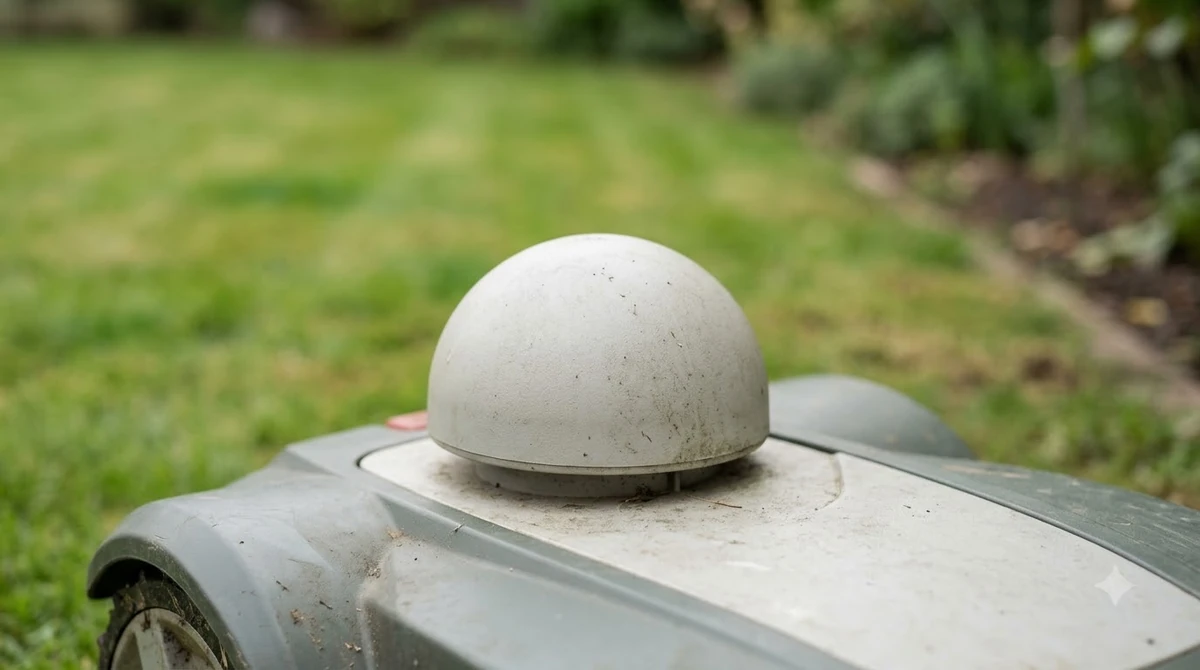
Both mowers are described as working without a perimeter wire, but they rely on different sensing. The Ecovacs page calls the O1000 LiDAR PRO’s system HoloScope 360 Dual-LiDAR, which combines a 360-degree rotating LiDAR with a 3D time-of-flight LiDAR, and it lists multiline LiDAR as the navigation type. The page says the mower can detect and remember all types of boundaries without physical wires.
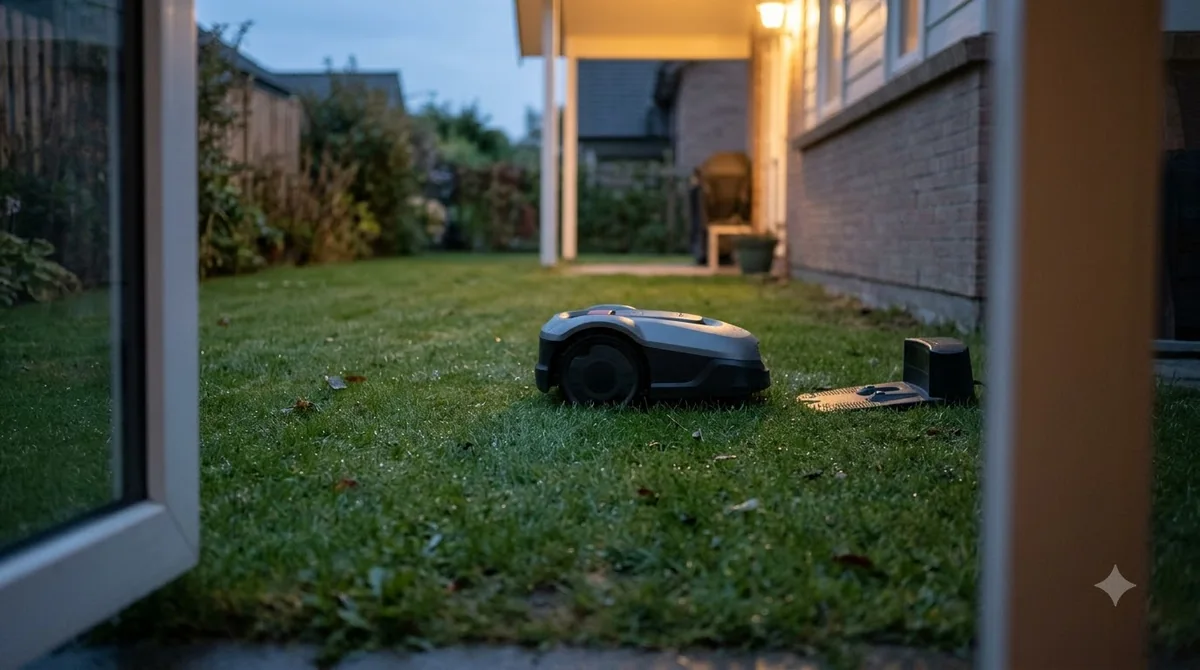
The i110N’s reviewers focus on navigation as well. PCWorld says the i110N has “the best navigation of any low-cost robot mower,” and then adds that it can be unpredictable on uneven terrain or cliffs. That praise and that caveat come from the same review, so a buyer should read both before deciding how much the navigation matters for a specific yard.
Our reading: a wire-free system removes the job of burying a perimeter wire, but it does not remove the need to check edges, obstacles and slope. Neither source says how well either mower handles a yard with many tight corners, so that is a question to ask a dealer or check in owner reports.
Runtime, charging and coverage rates
On runtime, the i110N is listed with 120 minutes of runtime per charge, against 90 minutes of mowing for the O1000 LiDAR PRO. The O1000 page gives a 70 minute charge time for its 18 V, 5,200 mAh battery. For the i110N, the charge time is reported as 180 minutes by PCWorld and as 120 minutes by smarthomecompared, so check the figure against the manual rather than relying on one source. For battery life in daily use, see how long the Segway Navimow i110N battery lasts and how long the Ecovacs GOAT O1000 battery lasts.
Coverage rates are a different kind of figure. The O1000 LiDAR PRO page lists about 120 square meters per hour in delicate mode and about 180 square meters per hour in efficient mode. We could not find an equivalent hourly rate for the i110N in the sources we read, so a direct speed comparison is not possible.
Our reading: a rated rate is a best case with no overlap, turns or charging. A full acre at 180 square meters per hour works out to about 22.5 hours of theoretical mowing, and the real figure will be longer. The i110N’s stated lawn size of up to 0.25 acre gives a smaller job to compare against.
Noise and smart home support
On noise, Ecovacs lists 61 dBA for the O1000 LiDAR PRO body and 81 dBA for its trimmer. PCWorld lists 58 dB for the i110N. The two sources do not state the same weighting, so the gap between them is small and should not be treated as a precise comparison.
On connectivity, smarthomecompared lists Amazon Alexa, Google Home and Home Assistant (through the official HACS integration) for the i110N, and says HomeKit, SmartThings and Matter are not supported. The O1000 LiDAR PRO page we read does not list smart home platforms, so we did not confirm support for any platform on that model.
Warranty and what the sources do not say
On warranty, the gap is clear: the i110N is listed with a 3-year warranty by smarthomecompared, and PCWorld does not mention a term. The Ecovacs page links to a Returns and Warranties page but does not state a warranty length, so read that page before buying.
The O1000 LiDAR PRO page also leaves its RTK field blank and points RTK to a separate GOAT O1000 RTK Care Kit product. It does not say whether the LiDAR PRO model uses RTK. No independent test data for either model was used in this article, so the figures above are maker, review and listing claims.
What to check before you buy
Check slope, cliff handling, cutting height and warranty first before you choose between the Ecovacs GOAT O1000 LiDAR PRO vs Navimow i110N, because those are the areas where the sources disagree or leave gaps. Work through these steps with the exact models and your own yard.
- Confirm the cutting height on the unit. Use the manual or dial to check the range, since the O1000 listing gives two different ones.
- Get the warranty in writing. Read the Ecovacs returns and warranty page and the Navimow warranty terms before you order.
- Ask about cliffs on your lawn. If the yard has a drop-off, a bank or a retaining wall, the i110N reviewer’s warning applies, and the O1000 page does not answer that question.
- Compare runtime with your lawn size. Work out how many charge cycles your largest mowing area needs, using the rated runtime and a realistic charge time.
Our reading on the Ecovacs GOAT O1000 LiDAR PRO vs Navimow i110N choice: on a mostly flat lawn up to a quarter acre, the i110N’s longer runtime and stated 3-year warranty are useful points in its favor. On a sloped or varied yard, the O1000 LiDAR PRO’s higher slope rating is the figure to verify first, against the maker page and your own measurements. For a verdict on one model alone, see is the Segway Navimow i110N worth it and our guide to the Ecovacs GOAT robot mower model to buy.
Frequently asked questions
Which is better, the Ecovacs GOAT O1000 LiDAR PRO vs Navimow i110N?
Neither model wins on every spec in the sources we read. The O1000 LiDAR PRO lists a higher slope rating and a coverage rate, while the i110N has a longer runtime, a 3-year warranty and a reviewer-flagged cliff gap. The better fit depends on your slope, edges and smart home needs.
Does either mower need a perimeter wire?
The Ecovacs page says the O1000 LiDAR PRO can detect and remember boundaries without physical wires. The i110N is also described as wire-free in the review sources. Neither source suggests a perimeter wire is needed for normal use, but edges and obstacles still need checking before you buy either one.
Can the i110N handle a steep yard?
PCWorld gives a maximum of 16 degrees and quotes a reviewer who is hesitant to recommend it for larger or sloped yards. Smarthomecompared lists 30%, which is close to the same grade. Measure your steepest section before you buy, and compare it with the O1000 slope figures above.
Are the cutting heights the same on both mowers?
No. The O1000 LiDAR PRO page lists 1.18 to 3.15 inches in its spec table and 1.2 to 3.1 inches in its description. The i110N sources give 2 to 3.6 inches, set by a manual dial on the mower, so confirm the range on your unit before you compare cut heights.
Sources
- GOAT O1000 LiDAR PRO product page (Ecovacs): cutting height, slope, coverage rate, navigation, noise, battery, runtime and the warranty link.
- Segway Navimow i110N robot lawn mower review (PCWorld): slope, cliff detection, drive type, cutting height, runtime, charge time, noise and IP66.
- Segway Navimow i110N (smarthomecompared): lawn size, slope percentage, smart home support, warranty and weight.
 Up next8 min readReviews & CompareSegway Navimow i110n vs Ecovacs GOAT O1000 RTK: What the Specs SayUpdated Nov 13, 2026
 7 min readReviews & CompareMOVA LiDAX Ultra 1000 vs ECOVACS GOAT O1000 LiDAR PRO: Which Fits Your Lawn?Updated Nov 16, 2026
 8 min readReviews & CompareEcovacs GOAT O1000 LiDAR PRO Review: LiDAR + Edge TrimmerUpdated Nov 16, 2026
 8 min readReviews & CompareECOVACS GOAT A3000 LiDAR PRO Review: Specs, Limits and What to CheckUpdated Nov 16, 2026
 9 min readReviews & CompareEcovacs GOAT A2000 LiDAR PRO Review: Specs, Mapping and LimitsUpdated Nov 16, 2026
 8 min readReviews & CompareEcovacs GOAT O1000 RTK vs Ecovacs GOAT A1600 RTK: What the Specs ShowUpdated Nov 11, 2026