
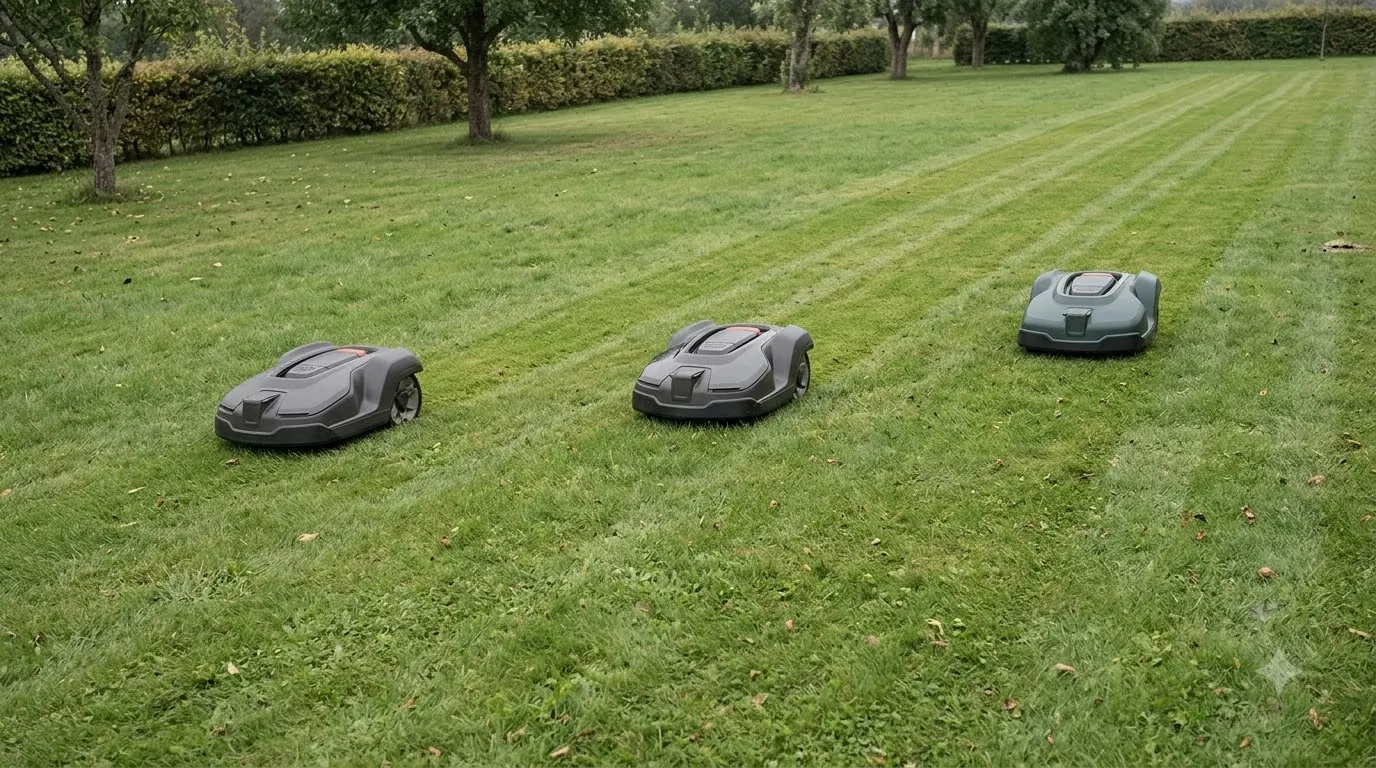

Boundary wire vs RTK installation time comes down to a simple gap: wire usually takes several hours, while an RTK base station is often set up in under two hours. Published figures vary widely, and they come from installation guide sites and one brand blog, so read them as rough ranges rather than promises.
The short answer
- Boundary wire: about 3 to 8 hours for a typical residential lawn, depending on the guide and yard size.
- Burying the wire roughly doubles the job, according to one vendor guide.
- RTK base station: 30 to 90 minutes once the base is positioned, or under two hours in total.
- First satellite fix: 5 to 15 minutes on a cold start.
- The bigger RTK risk is base placement, because the base needs a clear view of the sky.
How long boundary wire installation takes
Boundary wire installation typically takes 4 to 8 hours for a residential lawn, according to one installation guide, while another puts an average yard at 3 to 5 hours. Most of the spread comes from yard size and the number of obstacles. For many homeowners, the boundary wire vs RTK installation time question turns on how many beds and trees sit inside the perimeter.
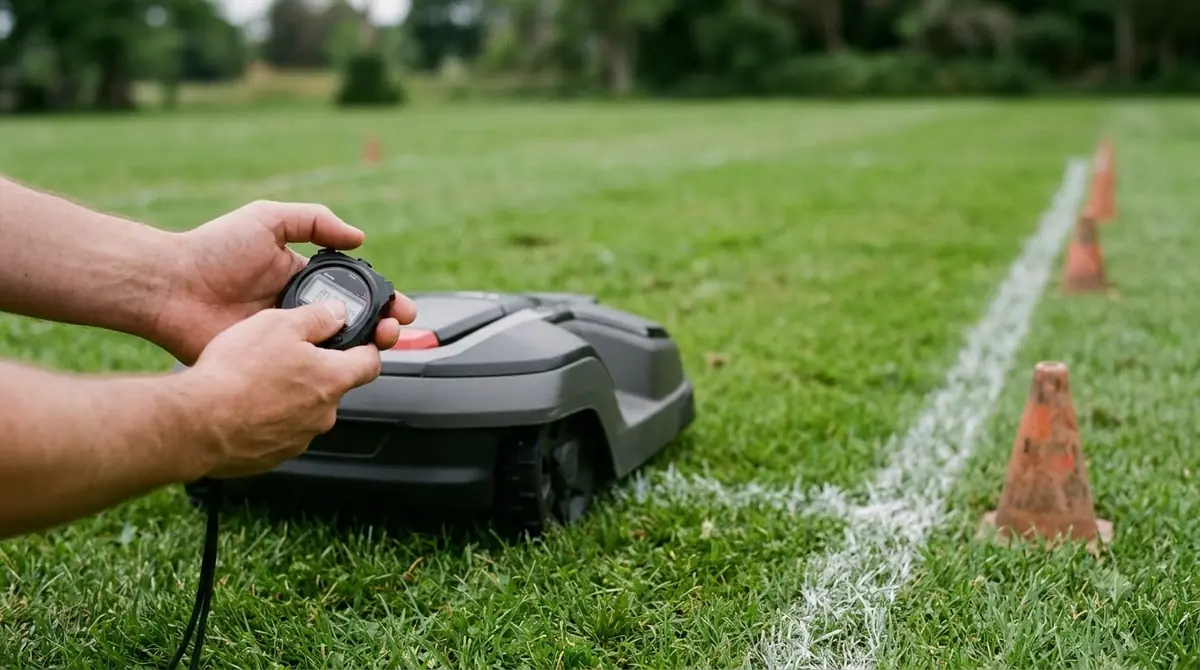
The householdrobot.net installation guide gives 4 to 8 hours for a typical residential lawn. The MowerBot Lab installation guide gives about 3 to 5 hours for an average yard and notes that a quarter-acre perimeter needs “a few hundred pegs and a few hours of work.” The Lymow blog, published by a company that sells wire-free mowers, estimates 2 to 5 hours for a typical suburban yard and 3 to 6 hours for just over half an acre.
Lymow splits the work into stages, which shows where the hours go. For the full procedure, see how to install a robot mower boundary wire.
- Preparation: 15 to 30 minutes.
- Laying the boundary wire along the perimeter: 2 to 4 hours.
- Each obstacle loop: 30 to 60 minutes per feature.
- Connection and testing: 30 to 60 minutes.
How long RTK base station setup takes
RTK setup usually takes 30 to 90 minutes once the base station is in position, and one guide puts the total under two hours. The longest part is usually choosing the spot, not the software. That placement step is the one most people underestimate when they weigh boundary wire vs RTK installation time. If the basics are new, read how an RTK robot mower works first.
householdrobot.net says the base needs a clear view “30° above horizon in all directions,” should sit 3 to 5 meters off the ground, and should be within 100 meters of the lawn; our guide on where to mount an RTK base station goes deeper on the spot. After that, the mower has to reach a fixed satellite position, which householdrobot puts at 5 to 15 minutes on a cold start.
Lymow’s wireless system is quicker on its own numbers: 5 to 10 minutes for the reference station, another 5 to 10 minutes for app setup and mapping, and 10 to 15 minutes in total on a quarter-acre rectangular lawn. Lymow does not say whether these are measured or estimated.

Boundary wire vs RTK installation time, side by side
A number without a yard size tells you little, so this table keeps each figure next to the lawn it describes. Read across a row, not down a column, because a boundary wire vs RTK installation time comparison only holds when the yard descriptions match.
| Source | Setup | Stated time | Lawn or condition |
|---|---|---|---|
| householdrobot.net | Boundary wire | 4 to 8 hours | Typical residential lawn |
| MowerBot Lab | Boundary wire | 3 to 5 hours | Average yard |
| Lymow (vendor blog) | Boundary wire | 3 to 6 hours | Just over half an acre |
| householdrobot.net | RTK base station | 30 to 90 minutes | After the base is positioned |
| MowerBot Lab | RTK | Under 2 hours total | Not stated |
| Lymow (vendor blog) | Wireless (RTK) | 10 to 15 minutes | 0.25-acre rectangular lawn |
The overlap in the wire rows, roughly 3 to 6 hours for a yard of half an acre or less, is the most useful range to plan around. For RTK, the 30 to 90 minute figure and the 10 to 15 minute figure describe different parts of the job.
Why the estimates disagree
The figures differ because the sources describe different yards, start the clock at different steps, and one of them comes from a seller of the product. Our reading is that the RTK gap mostly reflects where each guide starts timing, though none of the sources says so directly. Before you trust any single boundary wire vs RTK installation time figure, check which steps it includes.
Heads up
Lymow’s own wire estimate changes across its page: 2 to 5 hours in the introduction, 3 to 5 hours in the FAQ, and 3 to 6 hours for a half-acre lawn in the body. Lymow also sells the wire-free mower its blog promotes, so weigh its figures accordingly.
What adds time to each setup
Burial, obstacle loops, and layout changes add the most time to a wired install, while tree cover and base placement drive RTK time.
- Burying the wire: Lymow says burying turns “a 5-hour project into a 10-hour weekend commitment.” Its figures put surface pegging at 3 to 5 hours against 8 or more hours buried. See whether to bury or peg boundary wire for the trade-off.
- Clearances: keep wire at least 30 cm from metal obstacles such as rebar or fencing, and about 30 cm from hard edges like walls and beds. Those clearances mean extra pegs and loops.
- Layout changes: Lymow puts each change to an installed wired layout at 1 to 3 hours. Adjusting boundaries on its wireless system takes about 5 minutes.
- Tree cover: householdrobot advises no trees within 5 meters of the base and warns that a spot under a canopy lowers fix quality.
Which setup fits which yard
A simple open yard with clear sky suits RTK best on time, while many beds, trees, or metal fencing narrow the gap. These points are our reading of the figures above, not results from a test.
- Open rectangle with clear sky: RTK likely saves the most install time, because there is no perimeter to lay.
- Many beds and obstacles: wire time climbs with each loop, so the gap closes.
- Tree cover over the spot: the RTK base may not get a good fix, which can rule RTK out and leave wire as the fallback.
- Future changes: on the vendor figures, adding a wire layout change costs hours each time, while RTK boundary edits take minutes.
Our suggestion: pick the row closest to your own yard rather than the headline number. If your yard is open with a clear sky, RTK is the quicker install on these figures. If it is crowded with beds or tree cover, expect the wired route to take several hours, and test the base spot before you buy. For the cost side of the same choice, see robot mower installation cost.
Frequently asked questions
How long does boundary wire installation take?
For a typical residential lawn, one installation guide gives 4 to 8 hours, and another gives 3 to 5 hours for an average yard. Lymow estimates 3 to 6 hours for just over half an acre, and says burying the wire roughly doubles the job.
How long does RTK base station setup take?
Once the base is in position, householdrobot.net gives 30 to 90 minutes, and MowerBot Lab says the whole RTK setup usually takes under 2 hours. Lymow’s wireless system takes 10 to 15 minutes on a quarter-acre lawn in its own scenario.
Is RTK always faster than boundary wire?
On these published figures, usually yes, because the base replaces laying a perimeter. A base placed without a clear sky view can fail to reach a good fix, though the guides do not put a number on that delay, so check the spot before you start.
Does burying the boundary wire take much longer?
Yes. Lymow says burying roughly doubles the job, with surface pegging at 3 to 5 hours against 8 or more hours buried. The extra time is the trade-off to weigh against how the wire will sit on your lawn.
Sources
- Robotic Lawn Mower Installation: Wired Perimeter vs RTK GPS Setup (householdrobot.net, installation guide): wire time of 4 to 8 hours, RTK time after positioning, base placement and wire clearances.
- How to Install a Robot Lawn Mower: 2026 Step-by-Step Setup Guide (MowerBot Lab, installation guide): wire time for an average yard, RTK total time, and wire clearance from hard edges.
- Robot Mower Setup: Wire vs Wireless Time Guide (Lymow, vendor blog): stage times, burial effect, layout changes, and wireless setup times.
 Up next8 min readReviews & CompareRTK vs Vision Robot Mower: Which Navigation Suits Your YardUpdated Nov 11, 2026
 8 min readReviews & CompareRobot Mower Reddit Owners Favorite: What the Evidence SaysUpdated Nov 11, 2026
 7 min readReviews & CompareLymow One Review: What the Sourced Specs Say Before You BuyUpdated Nov 11, 2026
 9 min readReviews & CompareMammotion Luba 3 AWD vs Ecovacs GOAT A1600 RTK: Which Fits Your Lawn?Updated Nov 11, 2026
 9 min readReviews & CompareCheap vs Expensive Robot Mower DifferencesUpdated Nov 11, 2026
 8 min readReviews & CompareMammotion vs Segway Navimow Robot Mower: 5 Specs ComparedUpdated Nov 11, 2026