
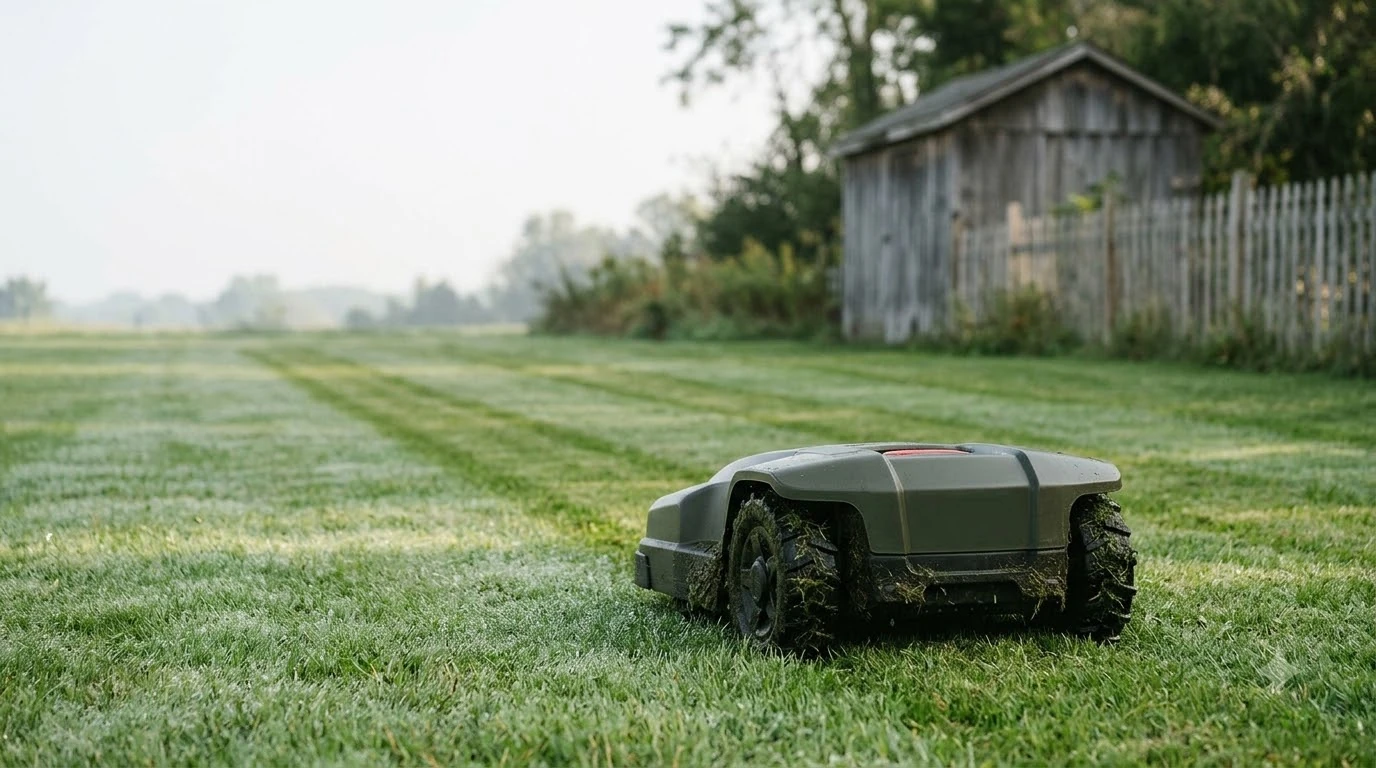

Ecovacs vs Navimow comes down mostly to how each mower finds its position. Ecovacs GOAT A-series models lean on LiDAR, the O1000 RTK pairs RTK with a camera, and the Navimow i110N and X430 pair satellite positioning (RTK) with vision. On the spec pages we read, the Navimow models list a 3-year warranty and smart home support, and the Ecovacs pages list neither, so the right pick depends on your yard and how much you need the listing to tell you.
The short answer
- Navigation: Ecovacs A2000 and A3000 use multiline or dual LiDAR; the O1000 RTK uses RTK with a camera and 3D ToF. Navimow i110N uses RTK with vision, and X430 uses RTK with vision and VIO, with no LiDAR.
- Slope: the listed work-area ratings are 50% for the A-series, 45% for the O1000 RTK, 30% for the i110N, and 84% for the X430. These figures measure different things, so compare them with care.
- Runtime: the i110N (120 minutes) and X430 (110 minutes) list longer runs than the A2000 (50 minutes) and O1000 RTK (65 minutes).
- Warranty and smart home: The Navimow listings we read give 3 years and Alexa, Google Home and Home Assistant. The Ecovacs pages we read give no warranty term and no smart home support.
- Our reading: there is no single winner from these specs alone. Start with the navigation type that suits your trees and boundaries, then check the slope and warranty terms in writing.
Which Ecovacs vs Navimow models the pages compare
Ecovacs and Navimow each sell several lines at different price tiers, so comparing one model from each brand is more useful than comparing two brand names. This guide uses five product pages: Ecovacs GOAT O1000 RTK, GOAT A2000 LiDAR PRO and GOAT A3000 LiDAR PRO from Ecovacs’ US site, and the Navimow i110N and X430 as described on SmartHomeCompared’s model pages.
| Spec | GOAT O1000 RTK | GOAT A2000 LiDAR PRO | GOAT A3000 LiDAR PRO | Navimow i110N | Navimow X430 |
|---|---|---|---|---|---|
| Navigation | RTK + camera + 3D ToF | HoloScope 360 dual-LiDAR | Multiline LiDAR + 360 rotating LiDAR | RTK + vision (EFLS 2.0) | Network RTK + 360 vision + VIO, no LiDAR |
| Max slope (work area) | 45% (24 deg) | 50% (27 deg) | 50% (27 deg) | 30% | 84% (about 40 deg, derived) |
| Cutting height | 3 to 8 cm (1.2 to 3.2 in) | 1.18 to 3.54 in | 30 to 90 mm | 2 to 3.6 in | 0.75 to 4 in |
| Coverage rate | About 140 to 180 m2/h | About 250 to 400 m2/h | 250 to 400 m2/h | Rated 0.25 acre | Rated 1 acre |
| Runtime / charge | 65 min / about 100 min | 50 min / 50 min | “160” (no unit) / 70 min | 120 min / 120 min | 110 min / 90 min |
| Noise | 57 dBA | Not listed | 62 dBA body | Not on page | Not listed |
| Warranty term | Not stated | Not stated | Not stated | 3 years | 3 years |
| Smart home | Not stated (app only) | Not stated | Not stated | Alexa, Google Home, Home Assistant | Alexa, Google Home, Home Assistant |
Converted from the square-foot figures on the Ecovacs pages, the coverage rates are our arithmetic, not the brand’s stated m2 values. The Ecovacs unit labels are also inconsistent: the A2000 page gives two cutting-height steps (0.28 and 0.39 inches). Read the table as a guide, and check the manual before you buy.
Navigation: RTK, vision, or LiDAR
The biggest practical difference between these models is how each one knows where it is, because that decides how it behaves near trees, walls and open sky. The A2000 and A3000 rely on LiDAR, which the Ecovacs pages describe as dual or multiline LiDAR (see how RTK and LiDAR compare), with a rotating 360-degree unit and 3D ToF listed on the A3000. The O1000 RTK pairs satellite RTK positioning with a camera and 3D ToF, and its page calls the result LiDAR-enhanced RTK navigation.
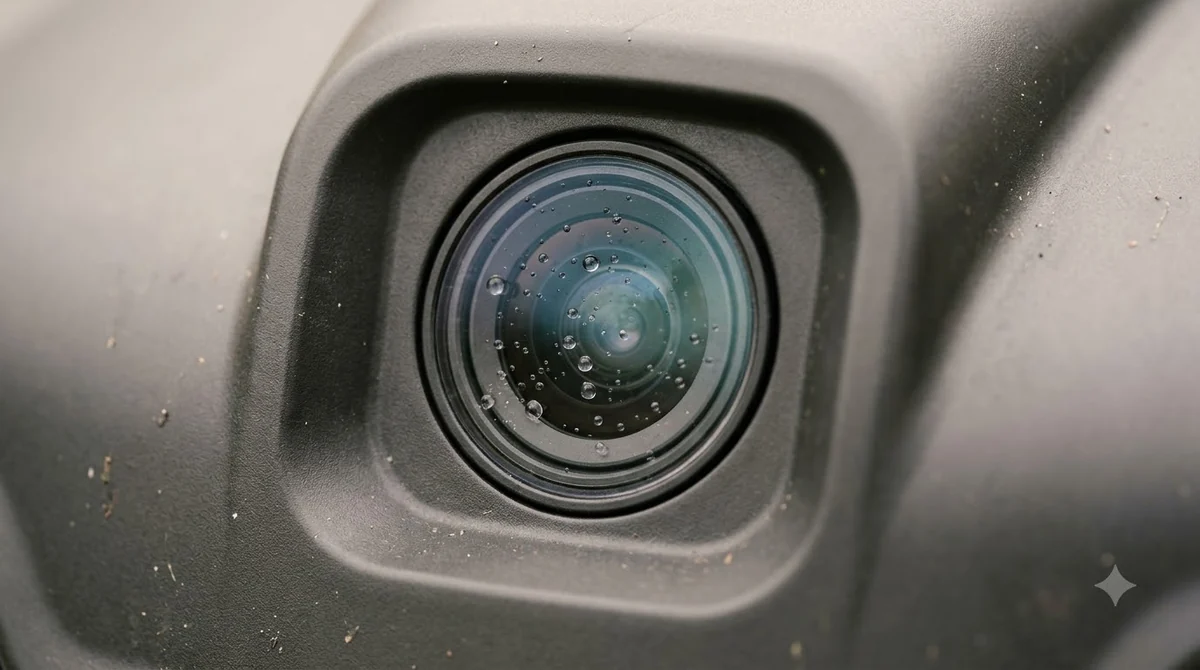
On the Navimow side of the Ecovacs vs Navimow comparison, the i110N uses RTK with vision, called EFLS 2.0 on its listing, and the X430 uses network RTK with a 360-degree vision system and VIO, with no LiDAR. Both Navimow listings state that no perimeter wire is needed, which is a useful point if you want a wire-free install. The Ecovacs pages we read describe their navigation but do not say whether a wire is needed, so check the manual for the exact model.
Heads up
Our i110N figures come from one review site, which describes its navigation as RTK plus vision. Navigation descriptions can change between firmware and product generations, so confirm the system on the model’s current manual before you buy.

Ecovacs vs Navimow slope ratings: check what the number measures
On paper, the A-series and the O1000 RTK rate higher than the i110N, but the figures do not always describe the same thing. The Ecovacs pages list the work-area slope and, separately, a lower virtual-boundary slope: 50% (27 deg) and 20% for the A2000 and A3000, and 45% (24 deg) and 17% for the O1000 RTK. The i110N page gives a single 30% maximum, and the X430 page gives 84% with no degree figure.
For a broader view of how makers define these limits, see choosing a robot mower for slopes. Our arithmetic converts the ratings for easier comparison: 50% is about 26.6 degrees, 30% is about 16.7 degrees, and 84% is about 40 degrees by the page’s own rise-over-run definition. Before comparing, keep three points in mind:
- A slope rating is a ceiling for the mower, not a promise for wet or uneven grass. None of the pages we read says how the rating changes when the grass is wet.
- Check whether the figure applies to the work area or to the boundary, because a boundary limit is often lower.
- Measure your steepest section with a level or a phone app, and compare that number with the rating; how to measure yard slope shows the steps.
Cutting height and coverage rate
Every model in this Ecovacs vs Navimow comparison offers an adjustable cutting height, but the ranges and units do not line up. The O1000 RTK lists 3 to 8 cm, which is about 1.2 to 3.2 inches, with 0.5 cm steps in the feature text, as covered in our GOAT O1000 RTK review. The A2000 lists 1.18 to 3.54 inches, and the A3000 lists 30 to 90 mm. The i110N ranges from 2 to 3.6 inches and is set with a dial on the mower. The X430 ranges from 0.75 to 4 inches and is set in the app; the Navimow X430 review covers that model in more detail.
Coverage is harder to compare across Ecovacs vs Navimow. The A-series pages give a range of 250 to 400 m2 per hour, which depends on mowing speed. The Navimow listings give a rated lawn size instead: 0.25 acre for the i110N and 1 acre for the X430. As our arithmetic, a full acre (about 4,047 m2) would take roughly 10 to 16 hours at 250 to 400 m2 per hour, before overlap or charging stops.
Runtime, charging and battery
On runtime, the Ecovacs vs Navimow models split clearly. The Navimow models list the longest runs on the pages we read: 120 minutes for the i110N and 110 minutes for the X430, with 120 and 90 minutes of charge time. The O1000 RTK runs about 65 minutes and recharges in about 100 minutes. The A2000 is the shortest on the list, at 50 minutes of mowing and 50 minutes of charging. The A3000 has a 7500 mAh, 32-volt battery and a 70-minute charge, but its runtime shows only as “160” with no unit, so we did not use that figure.
Warranty, smart home and ongoing fees
This is the clearest gap in the Ecovacs vs Navimow sources. The i110N and X430 listings both give a 3-year warranty. The O1000 RTK, A2000 and A3000 pages link to a returns and warranty page but do not state a term, so you need the term from the seller or the warranty document.
Smart home support follows the same pattern. The i110N and X430 both work with Alexa and Google Home, and with Home Assistant through an official integration installed from HACS. Neither lists HomeKit, SmartThings or Matter. The Ecovacs pages we read mention only their own app for scheduling and control, with no third-party assistant listed.
The X430 page also lists an ongoing cost: the included year of 4G data is followed by a renewal fee of $32.9 a year in the US and Canada, as listed on that page as of November 2026.
What the sources leave out
Several gaps mean you should ask the seller before deciding. These are missing details on the pages we read, not proof that a product lacks them.
- Warranty term: missing for all three Ecovacs models.
- Smart home support: missing for all three Ecovacs models.
- Noise: not listed for the A2000 or the X430, and not on the i110N page we read.
- Lawn size: the A2000 and A3000 pages give no maximum area, only the coverage rate.
Which brand suits which yard (our reading)
For an Ecovacs vs Navimow choice on an open lawn with steep banks, the A-series and O1000 RTK have the higher listed slope ratings, so they are worth a close look once you have measured your slope. For a yard with trees, fences or narrow beds, navigation matters more than the slope number, and this is where the sources are weakest. None of the pages we read says how RTK or LiDAR systems perform under heavy canopy, and we have no independent test data to fill that gap.
If you want a 3-year warranty and voice assistant support in writing, the Navimow listings state both. If you want a LiDAR system and can confirm the warranty term with the seller, the A-series pages describe LiDAR navigation, which is a different system from the RTK models, so the choice comes down to how your yard suits each system.
What to check before you buy
- Confirm the navigation type. Check the exact model’s manual for RTK, LiDAR or vision, and whether a perimeter wire is needed.
- Measure your steepest slope. Compare it with the work-area rating, not the boundary rating.
- Check the cutting height unit. Confirm the range in inches or millimetres, and whether the step is 0.28 or 0.39 inches on the A2000.
- Get the warranty term in writing. The Ecovacs pages we read do not state one.
- Confirm your smart home platform. Navimow lists Alexa, Google Home and Home Assistant; check any other platform you use.
- Estimate charging time for your lawn. Use the coverage rate and the runtime to plan how many charge cycles your yard needs.
Frequently asked questions
Is Ecovacs better than Navimow?
The sources do not rank Ecovacs vs Navimow. Ecovacs lists higher slope ratings on its A-series, and the Navimow listings give a warranty term and smart home support that the Ecovacs pages we read do not. The better choice depends on your yard and which of those points matter most to you.
Do Navimow mowers need a perimeter wire?
The i110N and X430 listings we read both say no perimeter wire is needed. The Ecovacs pages we read describe their navigation systems but do not state the wire requirement, so check the manual for the exact model before you buy.
Can these mowers handle a 50% slope?
The A2000 and A3000 pages list 50% (27 degrees) as the maximum work-area slope, and the O1000 RTK lists 45%. Those are ratings from the manufacturer. Check whether the figure is the work-area limit or the virtual-boundary limit, and measure your own slope before relying on it.
Which model runs the longest on one charge?
Among the models we read, the Navimow i110N lists 120 minutes and the X430 lists 110 minutes. The O1000 RTK lists 65 minutes and the A2000 lists 50 minutes. The A3000 lists “160” with no unit, so we could not compare it directly.
Sources
- ECOVACS US, GOAT O1000 RTK (manufacturer): navigation, slope, cutting height, runtime, noise and the missing warranty and smart home fields.
- ECOVACS US, GOAT A2000 LiDAR PRO (manufacturer): LiDAR navigation, slope, coverage rate, runtime and the two cutting-height steps.
- ECOVACS US, GOAT A3000 LiDAR PRO (manufacturer): navigation, slope, battery, charge time and noise.
- SmartHomeCompared, Segway Navimow i110N (review site): RTK with vision, cutting height, slope, runtime, 3-year warranty and smart home support.
- SmartHomeCompared, Segway Navimow X430 (review site): rated lawn size, slope, navigation, runtime, warranty, smart home support and the 4G renewal fee.
 Up next7 min readReviews & CompareNavimow i105N vs i110N: Which One to BuyUpdated Nov 11, 2026
 8 min readReviews & CompareHusqvarna Automower Alternatives: Navimow, Mammotion and ECOVACS GOAT ComparedUpdated Nov 16, 2026
 11 min readReviews & CompareEcovacs GOAT O1000 LiDAR PRO vs Navimow i110N: Specs ComparedUpdated Nov 16, 2026
 9 min readReviews & CompareMammotion vs ECOVACS vs Navimow: How the Three Robot Mower Brands CompareUpdated Nov 16, 2026
 6 min readReviews & CompareEcovacs GOAT vs Segway Navimow App Comparison: What DiffersUpdated Nov 14, 2026
 8 min readReviews & CompareSegway Navimow i110n vs Ecovacs GOAT O1000 RTK: What the Specs SayUpdated Nov 13, 2026