
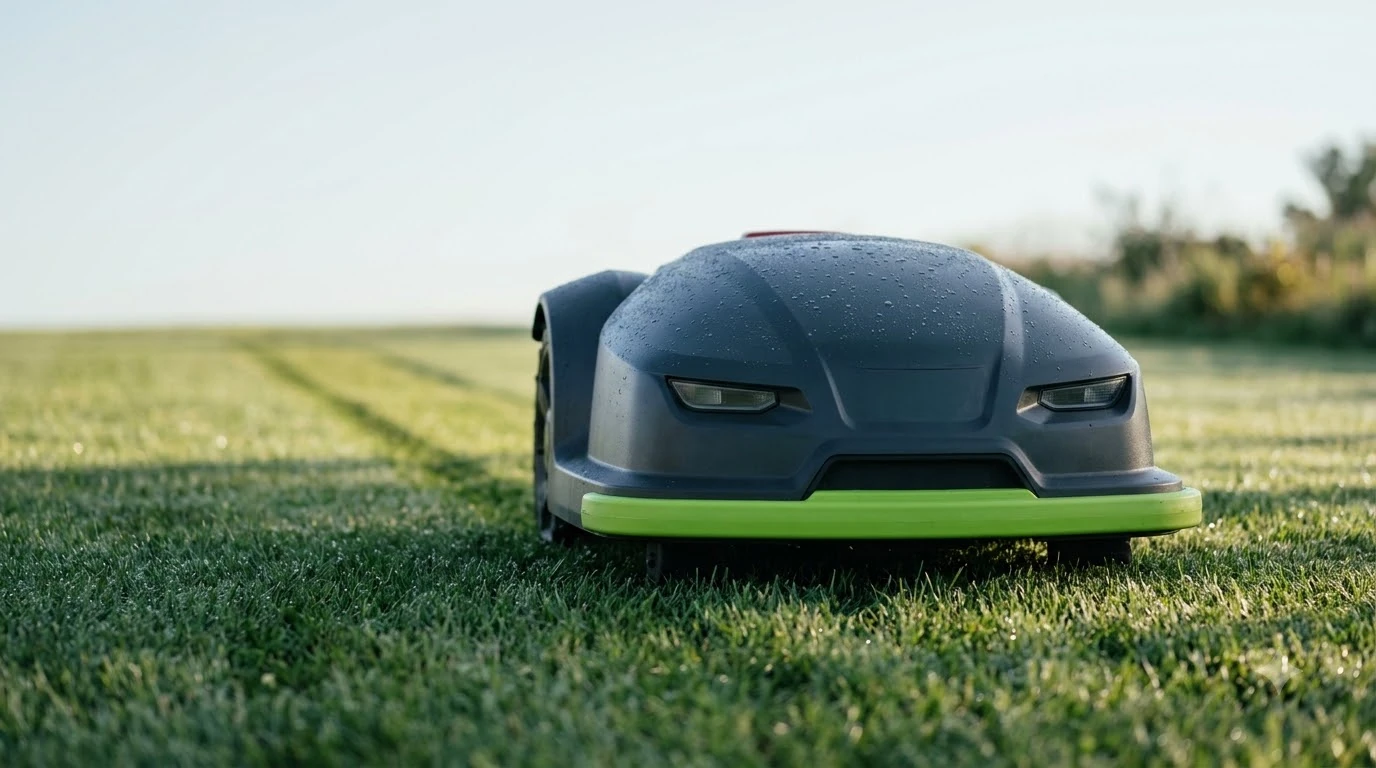

Why does my robot mower stop on a slope? Most stops come from one of four causes: the grade is near the mower’s limit, the drive wheels lose grip, the body is tilted past its sensor limit, or the boundary and grass setup sends it into an alarm. Husqvarna’s support guidance lists high grass, a boundary wire placed too close to a slope, and an unstable body among the causes of lifted alarms. This guide walks through each cause in the order most owners can check, so you can tell a normal pause from a fault that needs a fix.
The short answer
- Check the rating first. If the slope is near or above the mower’s maximum, it may stop or refuse to climb.
- Check the wheels. Wet grass, worn tread and a rear-heavy climb can make the drive wheels slip and stall.
- Check the body and tilt. The tilt sensor stops the mower when its angle passes the maker’s limit.
- Check the setup. A boundary wire too close to a slope or grass that is too tall can trigger a lifted alarm.
- Reset and retest. Clear the alarm, then run a supervised test up and down the slope.
Cause 1: the slope is near the mower’s rated limit
The first question is simple: is the slope inside the rating? Slope ratings are usually given as a percentage, and a mower rated for a given grade is designed to work below that figure, not at it. A slope close to the maximum leaves little margin for wet grass, uneven ground or a turn partway up the hill. In that case, the mower may stop, back off, or report that it cannot climb. Before checking faults, compare your grade with the slope climb rating ranges to see whether the mower is simply at its limit.
Measure the steepest section of the yard before you blame the mower. A rounded estimate can mislead you, because a few degrees make a large difference in percent. If the measured grade is at or above the rating, the stop is the mower doing what it was designed to do, and the fix is a better layout or a model with more margin.
Cause 2: the drive wheels lose grip
Wheel slip is the most common reason a robot mower stops partway up a hill. Robomow notes that moisture often makes wheels spin more easily or the mower slip. Mammotion makes a related point about drive layout: front-wheel drive mowers are generally suited only to gentle slopes, because on a climb the weight shifts rearward and can cause slip on steeper gradients. Damp turf is a common cause of lost grip, and traction loss on wet slopes covers it in more depth. Wheel grip is one limit, and mowers that climb steep slopes are covered in more detail in the slope guide.
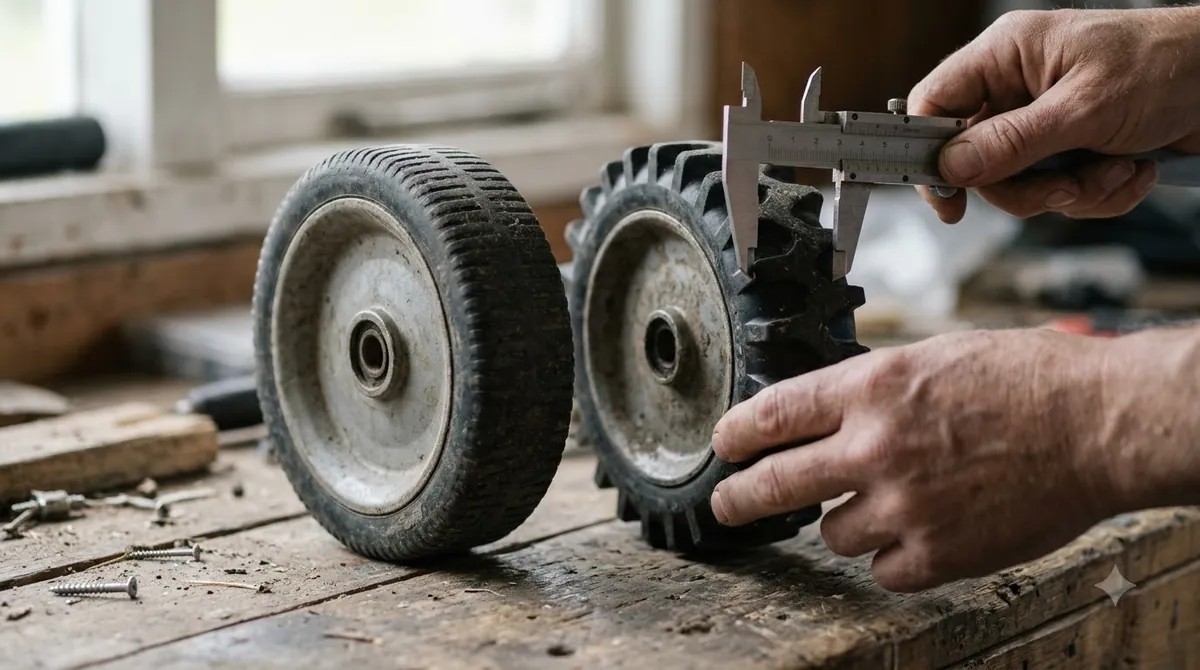
When the wheels spin, the mower may stop, retry, or stall in the same spot. Check the tread for wear and debris, and clean the wheels after cutting wet grass. If the stop happens only after rain, the grass and the wheels are the first suspects, not the sensor.
Cause 3: the tilt sensor stops the mower
Many robot mowers have a tilt sensor that measures the body’s angle against gravity. When the angle passes the maker’s limit, the mower stops the blades or the drive as a safety measure. This is different from the slope rating, because the sensor reads the body’s position rather than the ground’s grade. A mower can be inside its rated slope and still stop if the body is tipped, for example by a wheel that drops into a rut or climbs over a hump.
Look for the body sitting unevenly on the grass, a wheel that dropped into a dip, or a hump at the bottom of the climb. Moving the mower by hand to level the body, then restarting it, often clears a stop like this. Repeated stops at the same bump usually mean the ground there needs leveling or the path needs to change.
Cause 4: the boundary and grass setup trigger a lifted alarm
Husqvarna’s lifted alarm guidance lists several causes that can make a mower stop on a slope. The list includes a cutting height that is too low for the grass, or grass that is too high, roots or stones that stick up under the deck, and a boundary wire or virtual boundary placed too close to a slope. It also lists debris under the cutting deck and a body that is not fully attached. A boundary that runs close to the slope can trigger alarms, which the hillside lawn grass and boundary setup helps avoid.
The boundary is the setup point most owners can change. If the wire runs right at the edge of a slope, the mower may stop when it tries to turn near the edge. Move the wire back from the drop, or add flat ground at the bottom of the grade, then test again. Clear the grass and debris under the deck before restarting, because a jammed deck can look like a slope fault.
Why does my robot mower stop on a slope? Steps to find the cause
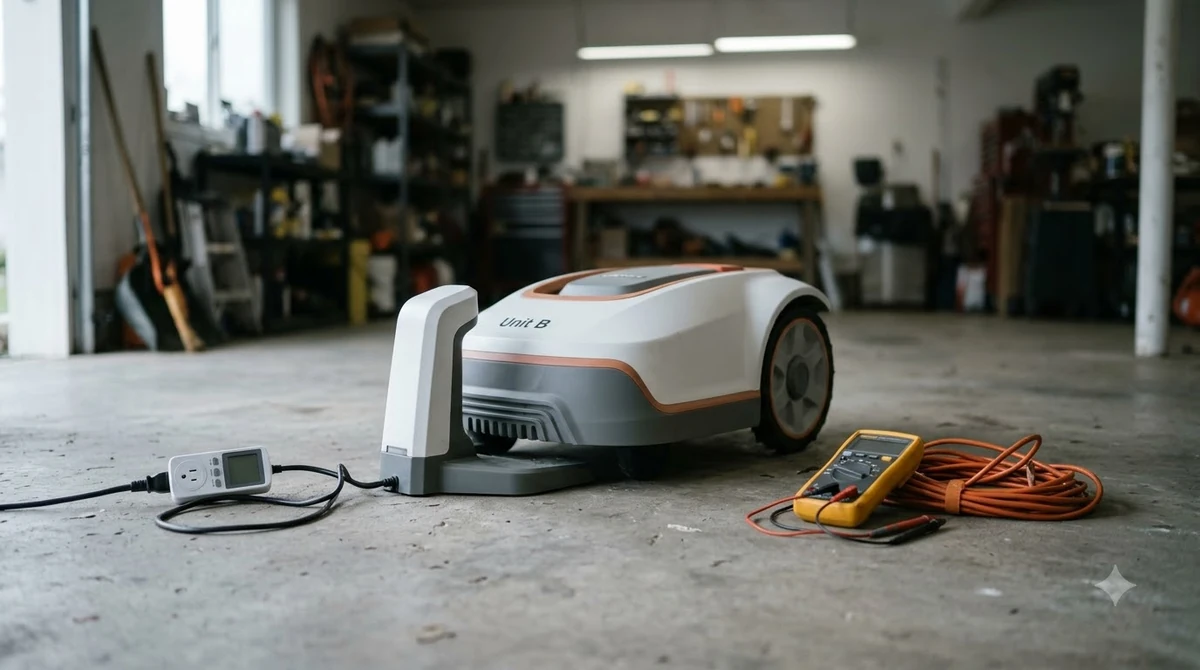
Work through the causes in this order so you do not change several things at once. Asking why does my robot mower stop on a slope is easier to answer when each check is isolated. Start with the slope measurement. Next, check the wheels and the grass. Then check the body and the tilt sensor. Finally, review the boundary and deck. After each change, run a supervised test up and down the slope and watch for slipping, strain or a repeated stop at the same spot. If the stop happens during turns, cutting direction for slope traction may be the fix.
- Measure the grade. Compare the steepest section with the rated maximum, and leave a margin rather than working at the limit.
- Clean and inspect the wheels. Remove clippings and mud, and check the tread for wear.
- Level the body. Check for a wheel in a rut or a hump at the foot of the climb.
- Review the boundary. Keep the wire away from the drop, and add flat run-out where the turns happen.
- Adjust the grass. Keep the cutting height in the range the mower and the grass need, and avoid letting grass grow too tall between runs.
- Clear the alarm and retest. Reset the mower as the manual describes, then run a supervised test before you leave it alone.
When a stop is a fault, not a limit
Some stops are normal. A mower that pauses on a steep, wet bank and resumes after the grass dries is working as designed. A stop that repeats on flat ground, appears with no slope in the route, or comes with an error code points to a fault. In that case, note the error code, check the manual, and contact the manufacturer’s support, because a sensor or drive fault is not something to fix by trial and error on a slope. When the stop is a true limit rather than a fault, mowers built for hilly lawns may be the better answer.
Keep a short log for two or three weeks. Record the date, the weather, the spot where the stop happened and the message on the display. A pattern in that log usually points to the cause faster than repeated tests.
Related reads: Models with extra drive wheels behave differently, as the all-wheel-drive grip on hilly backyards shows.
Frequently asked questions about a robot mower stopping on a slope
Why does my robot mower stop halfway up a hill?
The most common causes are wheel slip on wet or worn tread, a slope near the rated limit, or a tilt stop when the body is tipped. Check the wheels and the grade first.
Can wet grass make a robot mower stop on a slope?
Yes. Robomow notes that moisture often makes wheels spin more easily or the mower slip. Wait for the lawn to dry and clean the wheels before trying the climb again.
Is a lifted alarm on a slope always a fault?
Not always. Husqvarna lists causes such as high grass, a boundary wire too close to a slope and debris under the deck. Check those before assuming a sensor fault.
How do I test a slope after a fix?
Run a supervised test up and down the slope, watching for slipping, strain or a stop at the same spot, before leaving the mower to work alone.
Sources
- Husqvarna, lifted alarm error message (Husqvarna): used for the list of causes, including high grass, debris under the deck and the boundary wire too close to a slope.
- Mammotion, FWD vs RWD vs AWD robot lawn mowers (Mammotion): used for the point that front-wheel drive suits gentle slopes because weight shifts rearward on a climb.
- Robomow, robotic mowers for slopes buying tips (Robomow): used for the note that moisture makes wheels spin and slip, and the role of wheel size in tilt resistance.
 Up next9 min readBy YardRobot Mower Wheel Ruts and Brown Patches: Causes and FixesUpdated Nov 11, 2026
 8 min readBy YardWhen to Start and Stop Robot Mowing Each YearUpdated Nov 11, 2026
 7 min readBy YardRobot Mower for a Lawn Under Solar Panels: Signal and Shade FixesUpdated Nov 14, 2026
 8 min readBy YardWhy a Robot Mower Loses Signal Near House WallsUpdated Nov 10, 2026
 8 min readBy YardOne Third Rule for Mowing Grass: How It Works and Why It MattersUpdated Nov 11, 2026
 8 min readBy YardShould I Level My Lawn Before Getting a Robot Mower?Updated Nov 10, 2026