
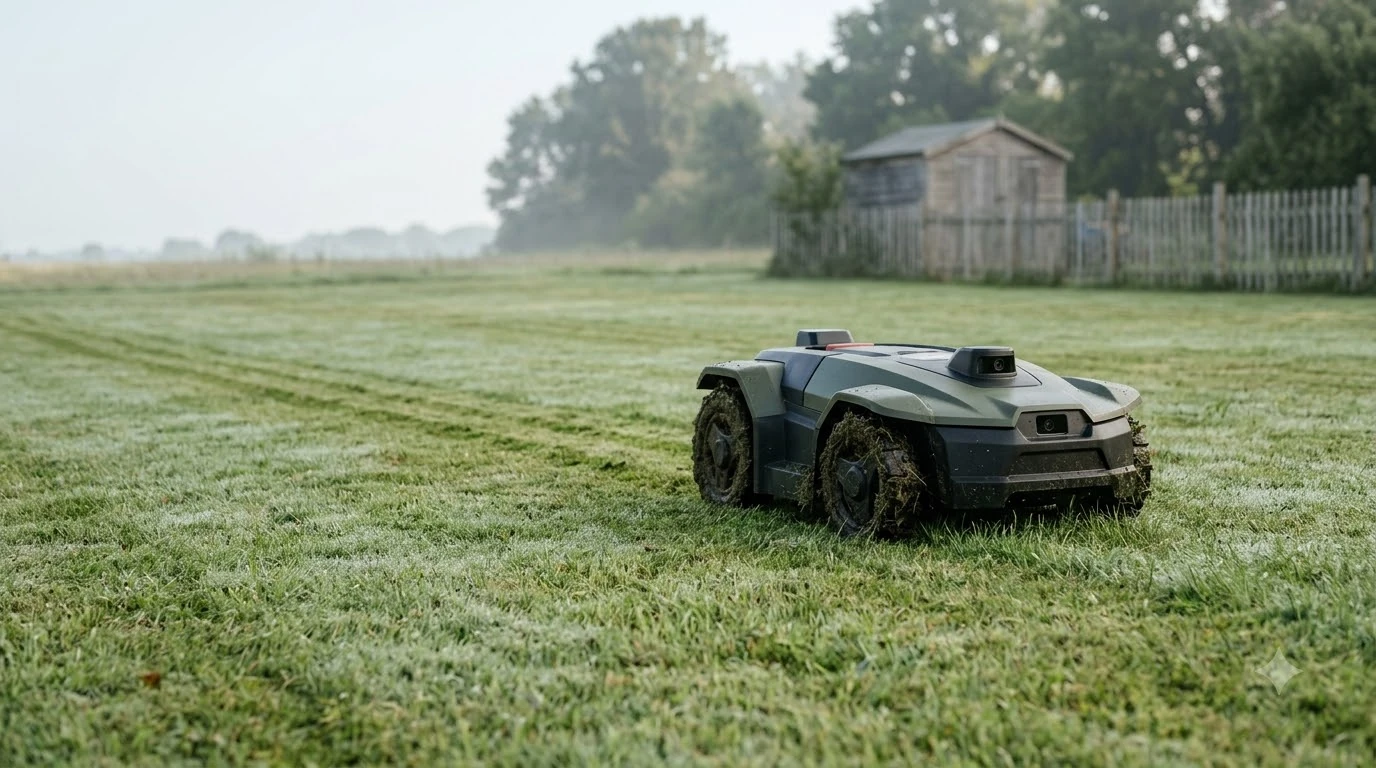

Should a robot mower cut across or up and down a slope? Where the grade allows, cut straight up and down, and keep the mower’s turns away from the steepest ground. Husqvarna advises setting mowing patterns straight up the slope where possible, because climbing in a straight line keeps the drive wheels in better contact with the grass. Honda notes that turning across a slope is often more demanding than climbing straight up. This guide explains when each pattern makes sense and how to plan the layout around the mower’s limits.
The short answer
- Prefer up and down when the slope is within the mower’s rating, because a straight climb keeps traction steadier.
- Avoid long turns on the slope, since turning across the grade can cause wheel slip and stalling.
- Lay the boundary wire diagonally across the slope, as Husqvarna recommends, to reduce grass wear on the line.
- Keep a flat run-out zone at the top or bottom of the slope where the mower can turn safely.
- Test first with a supervised run up and down before you leave the mower to work alone.
Should a robot mower cut across or up and down a slope: why up and down is safer
A robot mower with a slope rating climbs best when its wheels push straight into the grade. In that position the weight shifts evenly across the drive wheels, and the cutting path stays in one direction. Husqvarna’s installation guidance for steep slopes recommends setting patterns straight up the slope where possible, which is the same advice many owners hear from their dealers. A mower that stops partway up may be reacting to the pattern, which why a mower halts on a slope explains.
The reason is traction. A straight climb gives the mower a steady line of grip. A turn on the grade shifts the load sideways and can lift one drive wheel off the grass, which is the situation where slipping and stalling begin.
When turning across the slope cannot be avoided
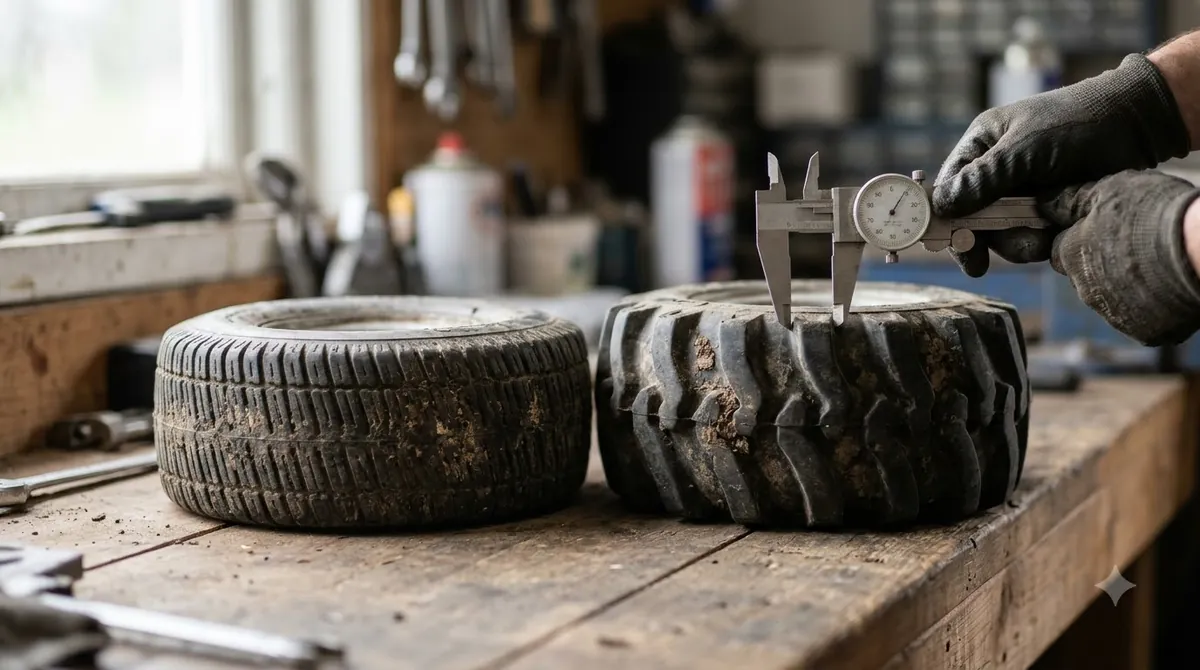
Some lawns force the mower to turn near the edge of a slope or along a side bank. Honda’s guidance on robotic mowers on slopes says turning across a slope, mowing near edges and moving on wet grass are all more demanding than climbing straight up. That does not mean the mower cannot cut those areas, but it does mean the layout should keep the turns short and on the flattest ground available.
The same logic applies to a side bank that runs along the grade rather than up it. A mower working along that bank has to turn at the end of each pass, and those turns happen on the slope itself. Our reading of the sources is that the safer fix is to shorten the pass, add a flat run-out at each end, or move the boundary so the turns fall on ground the mower can handle without losing contact.
Where a turn is unavoidable, the practical rules are simple. Keep the slope within the mower’s rating, avoid starting a turn partway up the grade, and check that the wheels maintain contact after each turn. If the mower stalls or slips at the same point every time, that spot is the limit of the layout.
A checklist for choosing the pattern on your slope
Before you decide between across and up-and-down paths, measure the grade and walk the ground. The checklist below turns the general advice into steps you can apply to your own yard. For a specific grade, the 30 percent slope mowing plan shows how the pattern and boundary fit together. Slope pattern is one part of the choice, and mowers for uneven rough ground covers the wider terrain question.
- Measure the steepest section and compare it with the mower’s rated maximum, not with a rounded figure. Treat the rating as a limit rather than a target for daily work.
- Look for dips and humps along the slope, because a bump can lift a wheel and turn a short climb into a turn on the grade.
- Check where the turns happen. If the mower must turn on the steepest part, move the boundary or add flat ground at the top or bottom.
- Note wet patches. Honda flags wet grass as harder on slopes, so a damp side bank may need a shorter run or a different route.
- Run a supervised test up and down first, then watch the first few automatic cycles before trusting the layout.
If the slope is close to the rated limit, the safer choice is usually a mower with more margin, or a layout that keeps the steepest ground out of the working path altogether.
How to lay out the boundary and the run-out zone
The boundary wire has a bigger effect on slope behaviour than most owners expect. Husqvarna’s guidance says to lay the guide wire diagonally across the slope, which helps traction and reduces grass wear along the line. The same guidance calls for a flat margin at the bottom of the slope, so the mower can make its turns before it reaches the grade. A front slope near the street is a typical case, and the sloped front yard boundary layout covers where to run the wire.
Robomow’s installation advice describes a similar idea in its wire layout guidance, with curved corners on inclines. Whatever the brand, the goal is the same: keep the working path straight where the slope is steep, and give the mower room to turn on flatter ground.
Related reads: If the pattern advice is leading you to choose a new model, the hilly yard buying overview is a good place to start. At the bottom of a slope, the ditch edge run-out space matters as much as the cutting direction.
Frequently asked questions about slope mowing direction
Should a robot mower go up and down a slope or across it?
Up and down is usually better where the slope is within the mower’s rating, because a straight climb keeps traction steadier. Avoid long turns across the grade.
Why does a robot mower slip when it turns on a slope?
A turn on the grade shifts weight sideways and can lift a drive wheel off the grass. Honda notes that turning across a slope is more demanding than climbing straight up.
Where should the boundary wire go on a slope?
Husqvarna recommends laying the guide wire diagonally across the slope for traction and less grass wear, with a flat margin at the bottom of the grade.
Do I need a test run before letting the mower work alone?
Yes. Run a supervised test up and down the slope, watching for slipping and strain, before leaving the mower to work on its own.
Sources
- Husqvarna, how to optimise an Automower installation for steep slopes (Husqvarna): used for the up-the-slope pattern and the diagonal guide wire.
- Honda, can robotic lawn mowers handle slopes and uneven gardens (Honda): used for the note that turning across a slope is more demanding than climbing straight up.
 Up next6 min readBy YardWhat Cutting Height Should a Robot Mower Use on a Slope?Updated Nov 14, 2026
 7 min readBy YardShould a Robot Mower Run on Dormant Grass?Updated Nov 12, 2026
 8 min readBy YardWhat Cutting Height Should a Robot Mower Use for St Augustine Grass?Updated Nov 10, 2026
 7 min readBy YardWhat Cutting Height Should a Robot Mower Use for Kentucky Bluegrass?Updated Nov 10, 2026
 8 min readBy YardShould I Level My Lawn Before Getting a Robot Mower?Updated Nov 10, 2026
 9 min readBy YardRobot Mower and Dog Poop: Should You Let It Mow Over Waste?Updated Nov 11, 2026