

Mammotion YUKA pros and cons: the main pros are dual navigation with RTK and 3D vision, an optional sweeper that collects leaves, and a wide US cutting-height range. Its main cons are a slope rating that the sources do not agree on, a coverage limit near half an acre, and noise and runtime that a reviewer found limiting. The pros and cons depend on which YUKA model you mean, because the line includes several models with different specs.
The short answer
- Pros: RTK plus 3D vision navigation, a sweeper that a reviewer found collected most leaf debris, and a US cutting range of 30 to 100 mm.
- Cons: the maximum slope is listed two ways, and the 1500 and 2000 models cover up to about 0.5 acre.
- Other trade-offs: a reviewer measured noise near 70 dB with the sweeper and a short runtime per charge.
- Who it suits: a yard that fits the model’s area, with clear passages and a moderate slope.
Mammotion YUKA pros and cons depend on the model
The YUKA name covers several models, and the figures change with each one. Mammotion’s support spec sheet lists the YUKA 1500 and 2000 with 1,500 and 2,000 square meters of coverage, which is about 0.37 and 0.5 acre. The YUKA Mini 600 is listed for up to 0.15 acre, and a mini 2 1000H is listed for about 0.25 acre in Mammotion’s budget roundup. A reviewer of the 1000 and 2000 models gives recommended areas of 1,000 and 2,000 square meters, with maximum areas of 1,600 and 2,800. The line is split by size, so Yuka Mini advantages and drawbacks cover the smaller version in the same format. The numbers behind these pros and cons are laid out in the Mammotion YUKA full spec review.
Check the exact model number before you compare any figure in this article. A pro that applies to the 2000 may not apply to the Mini 600.
Pro: navigation with RTK and vision
The YUKA 1500 and 2000 use RTK positioning together with 3D vision, which Mammotion’s spec sheet lists as the core navigation method. The RTK station is rated IPX7 for water resistance, and the mower and dock are rated IPX6. That combination matters in a yard with trees or buildings that block the sky, because vision can keep the mower working where satellite signal is weak. Navigation is the headline pro, and YUKA against Segway Navimow i110N puts it against a direct rival.
The reviewer also noted an optional navigation package called iNavi, which adds NetRTK and vision over Wi-Fi or 4G. It was free until the end of 2025, and its 2026 price had not been announced when the review was written, so treat that cost as unknown.
Pro: the sweeper and leaf collection
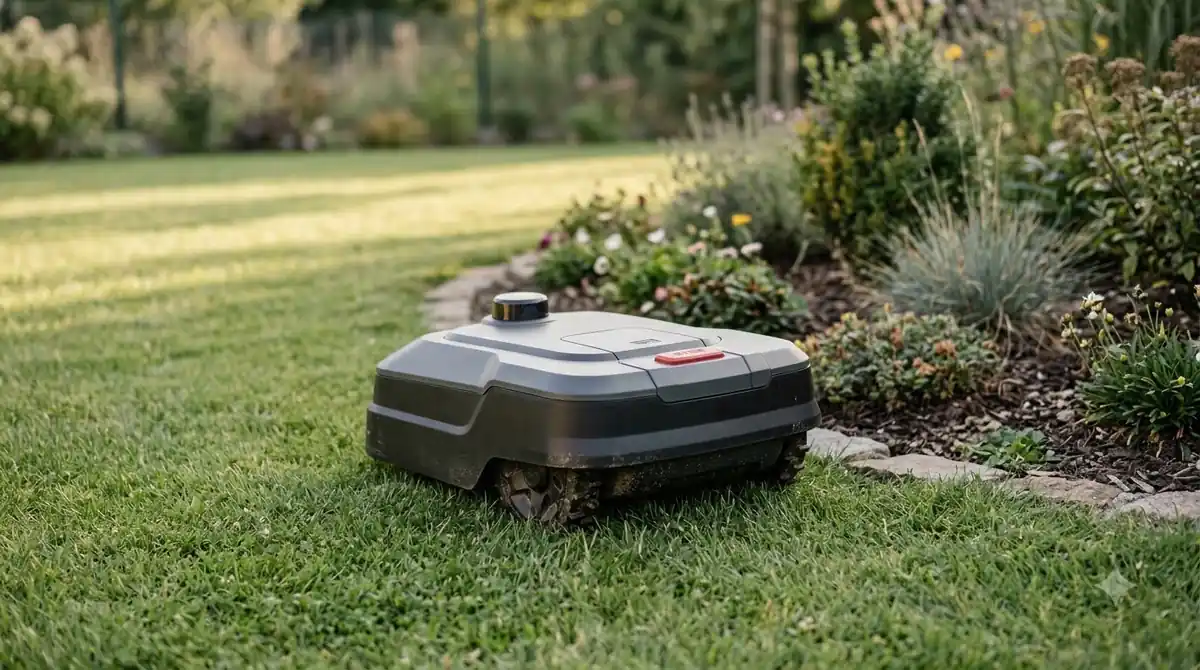
The sweeper is the feature that sets the YUKA line apart for autumn yards. It uses a rubber brush roller to move debris into a grass catcher, and the reviewer found it collected most of the debris on the test lawn. For a yard with heavy leaf fall, that can save a separate cleanup pass. It also adds weight, and the spec sheet lists a 9 Ah battery with the sweeper fitted against 4.5 Ah without it, so the sweeper is a trade-off rather than a free upgrade.

Pro: a wide US cutting range
The US spec for the YUKA 1500 and 2000 lists a cutting height of 30 to 100 mm, which is about 1.2 to 3.9 inches. The EU, UK, and Australian listings for the same models give 20 to 90 mm, so the US range is wider at the top. A higher setting helps during hot spells or when the lawn has been left to grow, and the 32 cm cutting width gives a clear swath for most mowing jobs.
Con: the slope rating is inconsistent
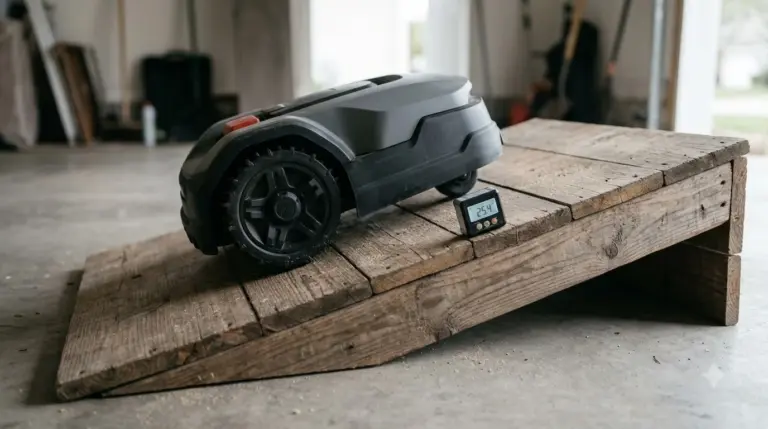
This is the figure to check carefully. Mammotion’s support sheet gives a maximum slope of 28 degrees without a sweeper and lists no percentage, which conflicts with a 45 percent figure given elsewhere. With the sweeper fitted, the same sheet gives 18 percent, or 10 degrees, in text that is partly garbled. The YUKA 1000 and 2000 are listed at 45 percent or 24 degrees by the manufacturer, and a reviewer’s ramp test confirmed 45 percent and 24 degrees. The slope rating makes the Luba line a natural alternative, as Mammotion YUKA versus the Luba range explains.
The 45 percent figure is the one a reviewer confirmed on a ramp, but the sweeper figure is much lower, so a buyer with a sloped yard should plan around the lower number. Eufy’s general guidance treats a maximum slope as an absolute limit, not a daily target, and that approach fits here too.
Heads up
Measure the steepest section of your lawn in degrees and as a percent, then compare both numbers with the sweeper rating if you plan to use one. The lower figure should decide the purchase.
Con: coverage and lawn size
The 1500 and 2000 models top out around half an acre, and the reviewer’s recommended areas are lower than the maximums. A lawn near the limit will keep the mower busy for long runs, so buy a model with room to spare. The Mini 600 covers less, and Mammotion’s own roundup says it may not perform well on very uneven terrain. Because coverage is a stated con on the standard model, the Mammotion Yuka Mini review is worth reading for smaller lawns.
Con: noise and runtime
The reviewer measured noise of almost 70 dB with the sweeper running, which is loud enough to notice from inside the house during a long run. Runtime was shorter. On the test, the 1000 and 2000 covered about 230 square meters per charge with no sweeper and standard settings, in just under two hours. That figure comes from one reviewer’s test and may not match your yard, but it shows why a model with headroom in its rated area is the safer choice.
Con: passage width and edges
The reviewer found the mower needs a passage at least 100 cm wide, and an edge strip of at least 10 cm, or 11 cm on high edges. Gates, narrow side paths, and tight beds around a patio may need manual trimming. Measure those spots before you buy.
Who the YUKA line suits
The YUKA line suits a yard that fits the model’s coverage with room to spare, has a moderate slope or a slope rating you have measured, and has clear passages of at least 100 cm. It is a strong choice if leaves are a seasonal problem and you want one machine for mowing and sweeping. It is a weaker choice for a very steep lawn, a lawn close to the coverage limit, or a yard with narrow passages and a noise-sensitive household. A shorter yes-or-no summary appears in the Mammotion YUKA worth-it verdict for readers who are ready to decide.
What to check before you buy
- Confirm the model number. Match each figure to the exact YUKA model you are considering.
- Measure the slope both ways. Take the steepest section in degrees and percent, and compare with the sweeper rating if you need one.
- Measure the lawn area. Pick a model with headroom above your area.
- Check the passages. Confirm gates and side paths are at least 100 cm wide.
- Ask about iNavi pricing. The 2026 cost was not announced in the source we read.
Related reads: If the cons are too many, see alternatives that suit YUKA shoppers across navigation and slope ratings. Maintenance costs are part of the picture, so see spare parts for the YUKA line before you buy.
Frequently asked questions
Are the Mammotion YUKA pros and cons the same for every model?
No. The line includes several models with different coverage, slope ratings, and features. Check the figures against the exact model number, especially the 1500 and 2000 versus the Mini 600.
What is the main con of the Mammotion YUKA?
The slope rating is inconsistent across sources, and the sweeper figure is much lower than the headline 45 percent. Measure your own slope and plan around the lower number if you need the sweeper.
Does the YUKA sweeper collect leaves well?
A reviewer found it collected most of the debris on a test lawn. It adds weight and changes the battery setup, so treat it as a trade-off rather than a free feature.
How much lawn does a YUKA cover?
The YUKA 1500 and 2000 are listed for about 0.37 and 0.5 acre. The Mini 600 is listed for up to 0.15 acre. Choose a model with room above your lawn size.
Sources
- Mammotion support, YUKA specs (manufacturer): used for coverage, cutting height, cutting width, slope figures, battery, navigation, and IP ratings of the YUKA 1500 and 2000.
- Notebookcheck, Mammotion YUKA review (independent review): used for the ramp test, the noise and runtime measurements, the passage and edge requirements, the sweeper test, and the iNavi pricing note.
- Mammotion, best robot lawn mower under 1000 (manufacturer article): used for the YUKA Mini 600 coverage and slope figures.
 Up next8 min readReviews & CompareMammotion YUKA Review: Specs, Slope and CoverageUpdated Nov 11, 2026
 9 min readReviews & CompareMammotion Yuka Mini Pros and Cons: What the Specs SupportUpdated Nov 12, 2026
 9 min readReviews & CompareAnthbot M5 vs Mammotion YUKA: Specs, Slope and NavigationUpdated Nov 11, 2026
 8 min readReviews & CompareMammotion YUKA Mini vs eufy E15: Specs, Slope and Lawn SizeUpdated Nov 11, 2026
 8 min readReviews & CompareMammotion LUBA 2 AWD Pros and Cons: What the Specs SupportUpdated Nov 12, 2026
 9 min readReviews & CompareRobot Mower Spec Comparison: Coverage, Slope and NoiseUpdated Nov 11, 2026