
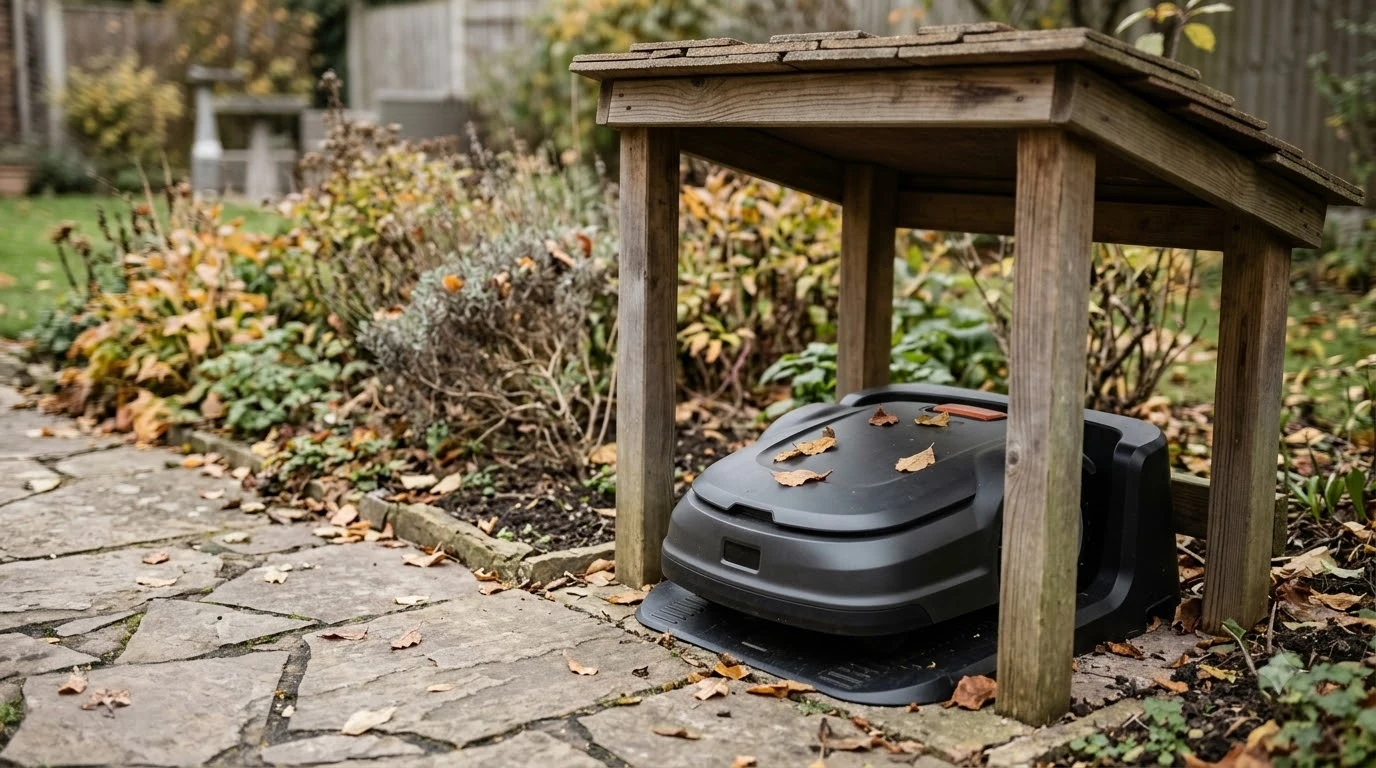

A robot mower charging station shade sail helps when it blocks direct sun without trapping hot air around the base. Both Husqvarna and Worx support pages tell owners to move the charging station into shade when battery temperature errors show up. A sail can do that job, but only if it is set up with airflow in mind. This guide covers why the dock overheats, what a sail can and cannot do, how to place and size one, and the mistakes that defeat the purpose.
The short answer
- Why it matters: Worx says charging is blocked when the battery is too hot, above 131°F (about 55°C). Direct sun on the dock adds to the heat the battery already makes while charging.
- What a sail does: it blocks sun from the dock during the hottest part of the day.
- What it must not do: trap hot air or touch the dock and its contacts.
- Where to put it: over the dock and the approach path, with open space on every side.
- What to check first: the sun path on your lawn and your mower’s temperature messages in the app or display.
Why a charging station gets too hot
A charging station is a small, dark, plastic base that often sits in the open. It can be hot to the touch even when the air around it is only warm, because sun lands directly on the top and sides. The mower’s battery also warms up while it charges, so the dock is not a cool place to begin with. A sail is only one way to manage sun and rain, and a solid cover instead of a sail has different trade-offs.
Husqvarna’s support article on the “battery temperature outside limits” message says that if the message appears often while charging, the charging station may be exposed to excessive heat or direct sunlight. Its fix is to move the station into shade. Worx lists the same fix and gives the upper limit: charging is blocked above 131°F. Its pages do not give a cold limit, so check your own model’s manual for that number.
Our reading is that the problem is sun plus charging heat together. If your dock sits in afternoon sun, a shade sail is a sensible first step before you buy a new battery or move the whole station.
What a shade sail does and does not do
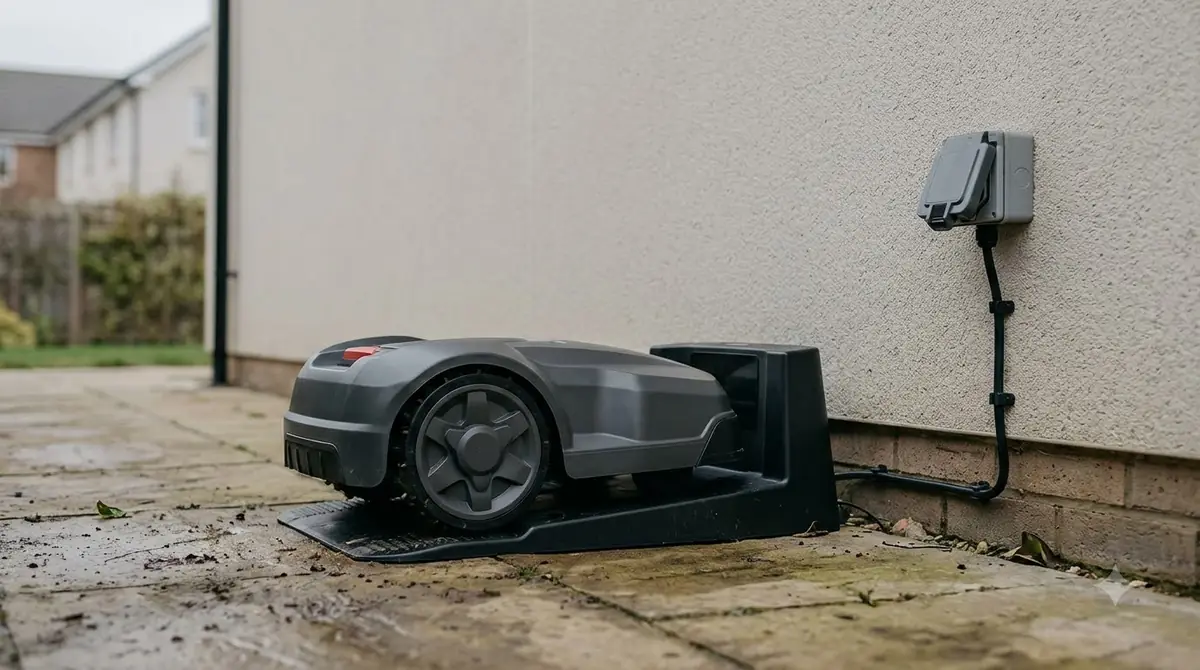
A robot mower charging station shade sail is a sun shield, not an enclosure. It works by blocking direct sun from the top and side of the dock, so the surface and the air around it stay cooler. It does not cool the air by itself, and it will not keep water off the base unless you build a roof over it. Some models state how much airflow they need, and the YUKA dock cover ventilation notes are one example. Smaller docks may need less shelter, and the E15 cover airflow notes show how that plays out on a compact base.
That difference matters. Husqvarna sells its own Automower House, which is a full cover that protects the mower from long-term rain and sun while it charges. A sail gives you sun protection without the closed box, and the box is the part that can trap heat. For most lawns, an open sail is the better choice. If your region gets heavy rain, a sail will not replace a covered housing, and you should read the manufacturer’s notes on water exposure before you assume it is safe.
Our reading is that a sail should be treated as a shade tool only. If you want rain protection too, look for a product your mower brand names for that purpose.
How to set up a robot mower charging station shade sail
Placement decides most of the result. A sail in the wrong spot blocks the sun from the lawn but not from the dock, or it sits so close that air cannot move. Work through these steps before you drill anything. A sail tied to posts is only as stable as the base underneath, so anchor screws for dock stability are worth considering.
- Track the sun. Check where the shadow falls at midday and in the afternoon. The sail has to cover the dock during the hottest hours, not only in the morning.
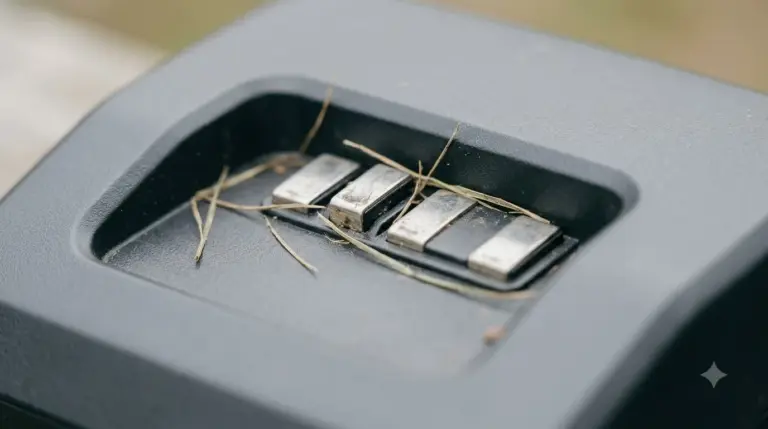
- Keep the dock clear. Keep the sail above and to the side of the dock, not on top of it. Never cover the charging contacts or the guide plates the mower drives onto.
- Leave airflow on all sides. A sail that sits tight to the dock traps the heat it was meant to block. Open space around the base lets warm air leave.
- Set a height that lets air move. Mount the sail high enough that air can pass under its edges, and tilt it slightly so rain and sprinkler spray run off rather than pooling.
- Anchor it for wind. A loose sail can lift or tear. Use posts or brackets rated for the wind in your area, and check the anchors after the first storm.
- Test the first charge. After installation, watch for a battery temperature message during the next charge. If it still appears on hot afternoons, move the sail or shift the dock.
Sizing and materials to look for
Sizing a sail for a charging station is less about the mower and more about the sun path and the space you have. The table below lists the factors that matter and what to check for each one. Product claims vary, so treat each as a question to ask the seller or read on the packaging. Materials matter for heat and signal, and GOAT dock cover materials are discussed alongside the RTK base. Sizing and materials also decide how well a shade sail works, so a garage or house cover for a mower is a worthwhile alternative to compare.
| Factor | What to look for | Why it matters |
|---|---|---|
| Fabric | UV-resistant, breathable mesh or open weave | Blocks sun while letting warm air escape. Solid, heavy fabric traps heat under it. |
| Coverage area | Covers the dock and the approach path the mower uses | Shade is only useful where the mower sits while it charges. |
| Mounting | Posts, a wall bracket, or a frame set away from the dock | A fixed frame keeps the sail off the base and gives air room to move. |
| Anchoring | Ground anchors or brackets with a wind rating | A loose sail can lift in wind and fall onto the dock or lawn. |
| Drainage | A tilt that lets water run off the edges | Pooled water can drip onto the dock and its power connections. |
The sail’s color also matters less than most buyers think. Lighter fabric reflects more sun, but a well-ventilated mesh in a darker color can work just as well if the airflow is good. Check the sun path first, then the fabric.
Mistakes that defeat the purpose
Most failed sail setups come down to a few repeat errors. They are easy to avoid once you know what to look for. A sail placed too close can break approach rules, so Automower station clearance rules are a useful benchmark. Another mistake is ignoring the ground, and dock mats that keep the base flat help with drainage and level mounting.
Heads up
A sail that sits tight to the dock, or a solid tarp draped over the base, can make the heat problem worse. Keep the dock open to air on every side, and never cover the charging contacts.
- Covering the contacts. The mower needs clean contact with the charging plates. Any fabric or strap over them can block charging or leave a film of moisture.
- Enclosing the dock. A box with a sail on top holds in heat. Keep the sides open unless the manufacturer sells a ventilated housing.
- Ignoring the afternoon sun. A sail that only covers the morning sun is not doing the job. Check the shadow at the hottest time of day.
- Using the sail as the only fix. If the battery temperature message keeps coming back, check the manufacturer’s temperature limits and consider waiting for the battery to cool before the next charge.
Frequently asked questions
Does a shade sail really cool a robot mower charging station?
It can reduce direct sun on the dock, which is the factor manufacturers name most often. It does not cool the air by itself, so its benefit depends on blocking the sun during the hottest part of the day and leaving airflow around the base.
What temperature stops charging?
Worx support pages say charging is blocked when the battery is too hot, above 131°F (about 55°C). The same pages give no cold limit, so check your model’s manual for the exact range on your mower.
Should I cover the charging station completely?
Usually not. A closed cover traps heat, and a cover over the contacts can stop charging. Husqvarna offers its own housing for sun and rain, but a shade sail with open sides is the simpler option for most lawns.
How do I know if the sail is working?
Watch for battery temperature messages during hot afternoon charges. If they stop after you install the sail, it is doing its job. If they keep appearing, move the sail, check the airflow, or give the mower time to cool before the next charge.
Sources
- Worx support: battery temperature out of range (manufacturer): gave the 131°F charging limit and the shade-or-wait fix.
- Husqvarna support: battery temperature outside limits (manufacturer): linked the message to heat or direct sun at the charging station and described the Automower House option.
 Up next7 min readGearEcovacs GOAT Charging Station Cover: What to Check FirstUpdated Nov 20, 2026
 7 min readGearBest Ground Stakes for Robot Mower Charging Station: 4 PicksUpdated Nov 14, 2026
 6 min readGearEufy E15 Charging Station Cover: What the Spec Sheet SaysUpdated Nov 14, 2026
 7 min readGearSegway Navimow Charging Station Cover: What to Check FirstUpdated Nov 20, 2026
 6 min readGearMammotion YUKA Charging Station Cover: What to Check FirstUpdated Nov 20, 2026
 7 min readGearMammotion Luba Charging Station Cover: What to Check FirstUpdated Nov 20, 2026